Miner JJ et al. (MAR 2011)
The Journal of biological chemistry 286 11 9577--86
Cytoplasmic domain of P-selectin glycoprotein ligand-1 facilitates dimerization and export from the endoplasmic reticulum.
P-selectin glycoprotein ligand-1 (PSGL-1) is a homodimeric transmembrane mucin on leukocytes. During inflammation,reversible interactions of PSGL-1 with selectins mediate leukocyte rolling on vascular surfaces. The transmembrane domain of PSGL-1 is required for dimerization,and the cytoplasmic domain propagates signals that activate β(2) integrins to slow rolling on integrin ligands. Leukocytes from knock-in ΔCD" mice express a truncated PSGL-1 that lacks the cytoplasmic domain. Unexpectedly�
View Publication
产品号#:
03434
03444
产品名:
MethoCult™ GF M3434
MethoCult™ GF M3434
Kim M-H et al. (MAR 2011)
Blood 117 12 3343--52
Neutrophil survival and c-kit(+)-progenitor proliferation in Staphylococcus aureus-infected skin wounds promote resolution.
Polymorphonuclear neutrophils (PMNs) are critical for the formation,maintenance,and resolution of bacterial abscesses. However,the mechanisms that regulate PMN survival and proliferation during the evolution of an abscess are not well defined. Using a mouse model of Staphylococcus aureus abscess formation within a cutaneous wound,combined with real-time imaging of genetically tagged PMNs,we observed that a high bacterial burden elicited a sustained mobilization of PMNs from the bone marrow to the infected wound,where their lifespan was markedly extended. A continuous rise in wound PMN number,which was not accounted for by trafficking from the bone marrow or by prolonged survival,was correlated with the homing of c-kit(+)-progenitor cells from the blood to the wound,where they proliferated and formed mature PMNs. Furthermore,by blocking their recruitment with an antibody to c-kit,which severely limited the proliferation of mature PMNs in the wound and shortened mouse survival,we confirmed that progenitor cells are not only important contributors to PMN expansion in the wound,but are also functionally important for immune protection. We conclude that the abscess environment provides a niche capable of regulating PMN survival and local proliferation of bone marrow-derived c-kit(+)-progenitor cells.
View Publication
产品号#:
03434
03444
产品名:
MethoCult™ GF M3434
MethoCult™ GF M3434
Christopher MJ et al. (FEB 2011)
The Journal of experimental medicine 208 2 251--60
Expression of the G-CSF receptor in monocytic cells is sufficient to mediate hematopoietic progenitor mobilization by G-CSF in mice.
Granulocyte colony-stimulating factor (G-CSF),the prototypical mobilizing cytokine,induces hematopoietic stem and progenitor cell (HSPC) mobilization from the bone marrow in a cell-nonautonomous fashion. This process is mediated,in part,through suppression of osteoblasts and disruption of CXCR4/CXCL12 signaling. The cellular targets of G-CSF that initiate the mobilization cascade have not been identified. We use mixed G-CSF receptor (G-CSFR)-deficient bone marrow chimeras to show that G-CSF-induced mobilization of HSPCs correlates poorly with the number of wild-type neutrophils. We generated transgenic mice in which expression of the G-CSFR is restricted to cells of the monocytic lineage. G-CSF-induced HSPC mobilization,osteoblast suppression,and inhibition of CXCL12 expression in the bone marrow of these transgenic mice are intact,demonstrating that G-CSFR signals in monocytic cells are sufficient to induce HSPC mobilization. Moreover,G-CSF treatment of wild-type mice is associated with marked loss of monocytic cells in the bone marrow. Finally,we show that bone marrow macrophages produce factors that support the growth and/or survival of osteoblasts in vitro. Together,these data suggest a model in which G-CSFR signals in bone marrow monocytic cells inhibit the production of trophic factors required for osteoblast lineage cell maintenance,ultimately leading to HSPC mobilization.
View Publication
产品号#:
03434
03444
产品名:
MethoCult™ GF M3434
MethoCult™ GF M3434
Kovats S et al. (NOV 2016)
Clinical and experimental immunology 186 2 214--226
West Nile virus-infected human dendritic cells fail to fully activate invariant natural killer T cells.
West Nile virus (WNV) infection is a mosquito-borne zoonosis with increasing prevalence in the United States. WNV infection begins in the skin,and the virus replicates initially in keratinocytes and dendritic cells (DCs). In the skin and cutaneous lymph nodes,infected DCs are likely to interact with invariant natural killer T cells (iNKTs). Bidirectional interactions between DCs and iNKTs amplify the innate immune response to viral infections,thus controlling viral load and regulating adaptive immunity. iNKTs are stimulated by CD1d-bound lipid antigens or activated indirectly by inflammatory cytokines. We exposed human monocyte-derived DCs to WNV Kunjin and determined their ability to activate isolated blood iNKTs. DCs became infected as judged by synthesis of viral mRNA and Envelope and NS-1 proteins,but did not undergo significant apoptosis. Infected DCs up-regulated the co-stimulatory molecules CD86 and CD40,but showed decreased expression of CD1d. WNV infection induced DC secretion of type I interferon (IFN),but no or minimal interleukin (IL)-12,IL-23,IL-18 or IL-10. Unexpectedly,we found that the WNV-infected DCs stimulated human iNKTs to up-regulate CD69 and produce low amounts of IL-10,but not proinflammatory cytokines such as IFN-γ or tumour necrosis factor (TNF)-α. Both CD1d and IFNAR blockade partially abrogated this iNKT response,suggesting involvement of a T cell receptor (TCR)-CD1d interaction and type I interferon receptor (IFNAR) signalling. Thus,WNV infection interferes with DC-iNKT interactions by preventing the production of proinflammatory cytokines. iNKTs may be a source of IL-10 observed in human flavivirus infections and initiate an anti-inflammatory innate response that limits adaptive immunity and immune pathology upon WNV infection.
View Publication
产品号#:
19059
19059RF
产品名:
EasySep™人单核细胞富集试剂盒
RoboSep™ 人单核细胞富集试剂盒含滤芯吸头
T. Ulas et al. (MAY 2017)
Nature immunology
S100-alarmin-induced innate immune programming protects newborn infants from sepsis.
The high risk of neonatal death from sepsis is thought to result from impaired responses by innate immune cells; however,the clinical observation of hyperinflammatory courses of neonatal sepsis contradicts this concept. Using transcriptomic,epigenetic and immunological approaches,we demonstrated that high amounts of the perinatal alarmins S100A8 and S100A9 specifically altered MyD88-dependent proinflammatory gene programs. S100 programming prevented hyperinflammatory responses without impairing pathogen defense. TRIF-adaptor-dependent regulatory genes remained unaffected by perinatal S100 programming and responded strongly to lipopolysaccharide,but were barely expressed. Steady-state expression of TRIF-dependent genes increased only gradually during the first year of life in human neonates,shifting immune regulation toward the adult phenotype. Disruption of this critical sequence of transient alarmin programming and subsequent reprogramming of regulatory pathways increased the risk of hyperinflammation and sepsis. Collectively these data suggest that neonates are characterized by a selective,transient microbial unresponsiveness that prevents harmful hyperinflammation in the delicate neonate while allowing for sufficient immunological protection.
View Publication
产品号#:
19669
19669RF
产品名:
EasySep™ Direct人单核细胞分选试剂盒
RoboSep™ Direct人单核细胞分选试剂盒
Deonarain R et al. (NOV 2003)
Proceedings of the National Academy of Sciences of the United States of America 100 23 13453--8
Critical roles for IFN-beta in lymphoid development, myelopoiesis, and tumor development: links to tumor necrosis factor alpha.
We have generated mice null for IFN-beta and report the diverse consequences of IFN-beta for both the innate and adaptive arms of immunity. Despite no abnormalities in the proportional balance of CD4 and CD8 T cell populations in the peripheral blood,thymus,and spleen of IFN-beta-/- mice,activated lymph node and splenic T lymphocytes exhibit enhanced T cell proliferation and decreased tumor necrosis factor alpha production,relative to IFN-beta+/+ mice. Notably,constitutive and induced expression of tumor necrosis factor alpha is reduced in the spleen and bone marrow (BM) macrophages,respectively,of IFN-beta-/- mice. We also observe an altered splenic architecture in IFN-beta-/- mice and a reduction in resident macrophages. We identify a potential defect in B cell maturation in IFN-beta-/- mice,associated with a decrease in B220+ve/high/CD43-ve BM-derived cells and a reduction in BP-1,IgM,and CD23 expression. Circulating IgM-,Mac-1-,and Gr-1-positive cells are also substantially decreased in IFN-beta-/- mice. The decrease in the numbers of circulating macrophages and granulocytes likely reflects defective maturation of primitive BM hematopoiesis in mice,shown by the reduction of colony-forming units,granulocyte-macrophage. We proceeded to evaluate the in vivo growth of malignant cells in the IFN-beta-/- background and give evidence that Lewis lung carcinoma-specific tumor growth is more aggressive in IFN-beta-/- mice. Taken altogether,our data suggest that,in addition to the direct growth-inhibitory effects on tumor cells,IFN-beta is required during different stages of maturation in the development of the immune system.
View Publication
产品号#:
03434
03444
产品名:
MethoCult™ GF M3434
MethoCult™ GF M3434
Li Q et al. (AUG 2005)
Proceedings of the National Academy of Sciences of the United States of America 102 35 12425--30
Enhanced NF-kappaB activation and cellular function in macrophages lacking IkappaB kinase 1 (IKK1).
IkappaB kinase (IKK) complex plays a key regulatory role in macrophages for NF-kappaB activation during both innate and adaptive immune responses. Because IKK1-/- mice died at birth,we differentiated functional macrophages from embryonic day 15.5 IKK1 mutant embryonic liver. The embryonic liver-derived macrophage (ELDM) showed enhanced phagocytotic clearance of bacteria,more efficient antigen-presenting capacity,elevated secretion of several key proinflammatory cytokines and chemokines,and known NFkappaB target genes. Increased NFkappaB activity in IKK1 mutant ELDM was the result of prolonged degradation of IkappaBalpha in response to infectious pathogens. The delayed restoration of IkappaBalpha in pathogen-activated IKK1-/- ELDM was a direct consequence of uncontrolled IKK2 kinase activity. We hypothesize that IKK1 plays a checkpoint role in the proper control of IkappaBalpha kinase activity in innate and adaptive immunity.
View Publication
产品号#:
02532
02832
09600
09650
产品名:
StemSpan™ SFEM
StemSpan™ SFEM
Newman SL et al. (FEB 2006)
Journal of immunology (Baltimore,Md. : 1950) 176 3 1806--13
Human macrophages do not require phagosome acidification to mediate fungistatic/fungicidal activity against Histoplasma capsulatum.
Histoplasma capsulatum (Hc) is a facultative intracellular fungus that modulates the intraphagosomal environment to survive within macrophages (Mphi). In the present study,we sought to quantify the intraphagosomal pH under conditions in which Hc yeasts replicated or were killed. Human Mphi that had ingested both viable and heat-killed or fixed yeasts maintained an intraphagosomal pH of approximately 6.4-6.5 over a period of several hours. These results were obtained using a fluorescent ratio technique and by electron microscopy using the 3-(2,4-dinitroanilo)-3'-amino-N-methyldipropylamine reagent. Mphi that had ingested Saccharomyces cerevisae,a nonpathogenic yeast that is rapidly killed and degraded by Mphi,also maintained an intraphagosomal pH of approximately 6.5 over a period of several hours. Stimulation of human Mphi fungicidal activity by coculture with chloroquine or by adherence to type 1 collagen matrices was not reversed by bafilomycin,an inhibitor of the vacuolar ATPase. Human Mphi cultured in the presence of bafilomycin also completely degraded heat-killed Hc yeasts,whereas mouse peritoneal Mphi digestion of yeasts was completely reversed in the presence of bafilomycin. However,bafilomycin did not inhibit mouse Mphi fungistatic activity induced by IFN-gamma. Thus,human Mphi do not require phagosomal acidification to kill and degrade Hc yeasts,whereas mouse Mphi do require acidification for fungicidal but not fungistatic activity.
View Publication


 EasySep™小鼠TIL(CD45)正选试剂盒




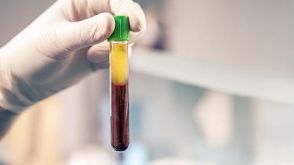 实验方案How to Collect Plasma from Whole Blood Before Cell Isolation
 实验方案Optimizing Delivery Efficiency with Fluorescent Dextran Using the CellPore™ Transfection System

 沪公网安备31010102008431号