Nuclear factor of activated T cells (NFAT) mediates CD154 expression in megakaryocytes.
Platelets are an abundant source of CD40 ligand (CD154),an immunomodulatory and proinflammatory molecule implicated in the onset and progression of several inflammatory diseases,including systemic lupus erythematosus (SLE),diabetes,and cardiovascular disease. Heretofore considered largely restricted to activated T cells,we initiated studies to investigate the source and regulation of platelet-associated CD154. We found that CD154 is abundantly expressed in platelet precursor cells,megakaryocytes. We show that CD154 is expressed in primary human CD34+ and murine hematopoietic precursor cells only after cytokine-driven megakaryocyte differentiation. Furthermore,using several established megakaryocyte-like cells lines,we performed promoter analysis of the CD154 gene and found that NFAT,a calcium-dependent transcriptional regulator associated with activated T cells,mediated both differentiation-dependent and inducible megakaryocyte-specific CD154 expression. Overall,these data represent the first investigation of the regulation of a novel source of CD154 and suggests that platelet-associated CD154 can be biochemically modulated.
View Publication
产品号#:
09600
09650
产品名:
StemSpan™ SFEM
StemSpan™ SFEM
Schü et al. (MAY 2008)
Blood 111 9 4532--41
The MADS transcription factor Mef2c is a pivotal modulator of myeloid cell fate.
Mef2c is a MADS (MCM1-agamous-deficient serum response factor) transcription factor best known for its role in muscle and cardiovascular development. A causal role of up-regulated MEF2C expression in myelomonocytic acute myeloid leukemia (AML) has recently been demonstrated. Due to the pronounced monocytic component observed in Mef2c-induced AML,this study was designed to assess the importance of Mef2c in normal myeloid differentiation. Analysis of bone marrow (BM) cells manipulated to constitutively express Mef2c demonstrated increased monopoiesis at the expense of granulopoiesis,whereas BM isolated from Mef2c(Delta/-) mice showed reduced levels of monocytic differentiation in response to cytokines. Mechanistic studies showed that loss of Mef2c expression correlated with reduced levels of transcripts encoding c-Jun,but not PU.1,C/EBPalpha,or JunB transcription factors. Inhibiting Jun expression by short-interfering RNA impaired Mef2c-mediated inhibition of granulocyte development. Moreover,retroviral expression of c-Jun in BM cells promoted monocytic differentiation. The ability of Mef2c to modulate cell-fate decisions between monocyte and granulocyte differentiation,coupled with its functional sensitivity to extracellular stimuli,demonstrate an important role in immunity--and,consistent with findings of other myeloid transcription factors,a target of oncogenic lesions in AML.
View Publication
产品号#:
03434
03444
09600
09650
18556
18556RF
产品名:
MethoCult™ GF M3434
MethoCult™ GF M3434
StemSpan™ SFEM
StemSpan™ SFEM
Popovic R et al. (APR 2009)
Blood 113 14 3314--22
Regulation of mir-196b by MLL and its overexpression by MLL fusions contributes to immortalization.
Chromosomal translocations involving the Mixed Lineage Leukemia (MLL) gene produce chimeric proteins that cause abnormal expression of a subset of HOX genes and leukemia development. Here,we show that MLL normally regulates expression of mir-196b,a hematopoietic microRNA located within the HoxA cluster,in a pattern similar to that of the surrounding 5' Hox genes,Hoxa9 and Hoxa10,during embryonic stem (ES) cell differentiation. Within the hematopoietic lineage,mir-196b is most abundant in short-term hematopoietic stem cells and is down-regulated in more differentiated hematopoietic cells. Leukemogenic MLL fusion proteins cause overexpression of mir-196b,while treatment of MLL-AF9 transformed bone marrow cells with mir-196-specific antagomir abrogates their replating potential in methylcellulose. This demonstrates that mir-196b function is necessary for MLL fusion-mediated immortalization. Furthermore,overexpression of mir-196b was found specifically in patients with MLL associated leukemias as determined from analysis of 55 primary leukemia samples. Overexpression of mir-196b in bone marrow progenitor cells leads to increased proliferative capacity and survival,as well as a partial block in differentiation. Our results suggest a mechanism whereby increased expression of mir-196b by MLL fusion proteins significantly contributes to leukemia development.
View Publication
产品号#:
03534
19756
19756RF
产品名:
MethoCult™ GF M3534
Grinshtein N et al. (MAY 2009)
Cancer research 69 9 3979--85
Neoadjuvant vaccination provides superior protection against tumor relapse following surgery compared with adjuvant vaccination.
Tumors that recur following surgical resection of melanoma are typically metastatic and associated with poor prognosis. Using the murine B16F10 melanoma and a robust antimelanoma vaccine,we evaluated immunization as a tool to improve tumor-free survival following surgery. We investigated the utility of vaccination in both neoadjuvant and adjuvant settings. Surprisingly,neoadjuvant vaccination was far superior and provided approximately 100% protection against tumor relapse. Neoadjuvant vaccination was associated with enhanced frequencies of tumor-specific T cells within the tumor and the tumor-draining lymph nodes following resection. We also observed increased infiltration of antigen-specific T cells into the area of surgery. This method should be amenable to any vaccine platform and can be readily extended to the clinic.
View Publication
产品号#:
18751
18751RF
产品名:
Clarke DM et al. (JAN 2009)
Cytotherapy 11 4 472--9
Improved post-thaw recovery of peripheral blood stem/progenitor cells using a novel intracellular-like cryopreservation solution.
BACKGROUND AIMS Peripheral blood stem cells (PBSC) have become the preferred stem cell source for autologous hematopoietic transplantation. A critical aspect of this treatment modality is cryopreservation of the stem cell products,which permits temporal separation of the PBSC mobilization/collection phase from the subsequent high-dose therapy. While controlled rate-freezing and liquid nitrogen storage have become 'routine' practice in many cell-processing facilities,there is clearly room for improvement as current cryopreservation media formulations still result in significant loss and damage to the stem/progenitor cell populations essential for engraftment,and can also expose the patients to relatively undefined serum components and larger volumes of dimethylsulfoxide (DMSO) that can contribute to the morbidity and mortality of the transplant therapy. METHODS This study compared cryopreservation of PBSC in a novel intracellular-like,fully defined,serum- and protein-free preservation solution,CryoStor (BioLife Solutions Inc.),with a standard formulation used by the Fred Hutchinson Cancer Research Center (FHCRC). Briefly,human PBSC apheresis specimens were collected and 5 x 10(7) cells/1 mL sample vial were prepared for cryopreservation in the following solutions: (a) FHCRC standard,Normosol-R,5% human serum albumin (HAS) and 10% DMSO; and (b) CryoStor CS10 (final diluted concentration of 5% DMSO). A standard controlled-rate freezing program was employed,and frozen vials were stored in the vapor phase of a liquid nitrogen freezer for a minimum of 1 week. Vials were then thawed and evaluated for total nucleated cell count (TNC),viability,CD34 and granulocytes by flow cytometry,along with colony-forming activity in methylcellulose. RESULTS The PBSC samples frozen in CryoStor CS10 yielded significantly improved post-thaw recoveries for total viable CD34(+),colony-forming units (CFU) and granulocytes. Specifically,relative to the FHCRC standard formulation,cryopreservation with CS10 resulted in an average 1.8-fold increased recovery of viable CD34(+) cells (P=0.005),a 1.5-fold increase in CFU-granulocyte-macrophage (GM) numbers (P=0.030) and a 2.3-fold increase in granulocyte recovery (P=0.045). CONCLUSIONS This study indicates that use of CryoStor for cryopreservation can yield significantly improved recovery and in vitro functionality of stem/progenitor cells in PBSC products. In addition,it is important to note that these improved recoveries were obtained while not introducing any extra serum or serum-derived proteins,and reducing the final concentration/volume of DMSO by half. Further in vitro and in vivo studies are clearly necessary; however,these findings imply use of CryoStor for cryopreservation could result in improved engraftment for those patients with a lower content of CD34(+) cells in their PBSC collections,along with reducing the requirement for additional apheresis collections and decreasing the risk of adverse infusion reactions associated with higher exposure to DMSO.
View Publication
产品号#:
07933
07953
07949
07930
07931
07940
07955
07956
07959
07954
100-1061
07952
产品名:
CryoStor®CS5
CryoStor®CS5
CryoStor®CS5
CryoStor® CS10
CryoStor® CS10
CryoStor® CS10
CryoStor® CS10
CryoStor® CS10
CryoStor® CS10
CryoStor® CS10
Wu X et al. (JAN 2018)
Cell 172 3 423--438.e25
Intrinsic Immunity Shapes Viral Resistance of Stem Cells.
Stem cells are highly resistant to viral infection compared to their differentiated progeny; however,the mechanism is mysterious. Here,we analyzed gene expression in mammalian stem cells and cells at various stages of differentiation. We find that,conserved across species,stem cells express a subset of genes previously classified as interferon (IFN) stimulated genes (ISGs) but that expression is intrinsic,as stem cells are refractory to interferon. This intrinsic ISG expression varies in a cell-type-specific manner,and many ISGs decrease upon differentiation,at which time cells become IFN responsive,allowing induction of a broad spectrum of ISGs by IFN signaling. Importantly,we show that intrinsically expressed ISGs protect stem cells against viral infection. We demonstrate the in vivo importance of intrinsic ISG expression for protecting stem cells and their differentiation potential during viral infection. These findings have intriguing implications for understanding stem cell biology and the evolution of pathogen resistance.
View Publication
Lentiviral vectors pseudotyped with a modified RD114 envelope glycoprotein show increased stability in sera and augmented transduction of primary lymphocytes and CD34+ cells derived from human and nonhuman primates.
Generating lentiviral vectors pseudotyped with different viral glycoproteins (GPs) may modulate the physicochemical properties of the vectors,their interaction with the host immune system,and their host range. We have investigated the capacity of a panel of GPs of both retroviral (amphotropic murine leukemia virus [MLV-A]; gibbon ape leukemia virus [GALV]; RD114,feline endogenous virus) and nonretroviral (fowl plague virus [FPV]; Ebola virus [EboV]; vesicular stomatitis virus [VSV]; lymphocytic choriomeningitis virus [LCMV]) origins to pseudotype lentiviral vectors derived from simian immunodeficiency virus (SIVmac251). SIV vectors were efficiently pseudotyped with the FPV hemagglutinin,VSV-G,LCMV,and MLV-A GPs. In contrast,the GALV and RD114 GPs conferred much lower infectivity to the vectors. Capitalizing on the conservation of some structural features in the transmembrane domains and cytoplasmic tails of the incorporation-competent MLV-A GP and in RD114 and GALV GPs,we generated chimeric GPs encoding the extracellular and transmembrane domains of GALV or RD114 GPs fused to the cytoplasmic tail (designated TR) of MLV-A GP. Importantly,SIV-derived vectors pseudotyped with these GALV/TR and RD114/TR GP chimeras had significantly higher titers than vectors coated with the parental GPs. Additionally,RD114/TR-pseudotyped vectors were efficiently concentrated and were resistant to inactivation induced by the complement of both human and macaque sera,indicating that modified RD114 GP-pseudotyped lentiviral vectors may be of particular interest for in vivo gene transfer applications. Furthermore,as compared to vectors pseudotyped with other retroviral GPs or with VSV-G,RD114/TR-pseudotyped vectors showed augmented transduction of human and macaque primary blood lymphocytes and CD34+ cells.
View Publication
产品号#:
02690
09600
09650
产品名:
StemSpan™ CC100
StemSpan™ SFEM
StemSpan™ SFEM
Esplugues E et al. (MAY 2003)
The Journal of experimental medicine 197 9 1093--106
Enhanced antitumor immunity in mice deficient in CD69.
We investigated the in vivo role of CD69 by analyzing the susceptibility of CD69-/- mice to tumors. CD69-/- mice challenged with MHC class I- tumors (RMA-S and RM-1) showed greatly reduced tumor growth and prolonged survival compared with wild-type (WT) mice. The enhanced anti-tumor response was NK cell and T lymphocyte-mediated,and was due,at least in part,to an increase in local lymphocytes. Resistance of CD69-/- mice to MHC class I- tumor growth was also associated with increased production of the chemokine MCP-1,diminished TGF-beta production,and decreased lymphocyte apoptosis. Moreover,the in vivo blockade of TGF-beta in WT mice resulted in enhanced anti-tumor response. In addition,CD69 engagement induced NK and T cell production of TGF-beta,directly linking CD69 signaling to TGF-beta regulation. Furthermore,anti-CD69 antibody treatment in WT mice induced a specific down-regulation in CD69 expression that resulted in augmented anti-tumor response. These data unmask a novel role for CD69 as a negative regulator of anti-tumor responses and show the possibility of a novel approach for the therapy of tumors.
View Publication


 EasySep™小鼠TIL(CD45)正选试剂盒




 实验方案Optimizing Delivery Efficiency with Fluorescent Dextran Using the CellPore™ Transfection System
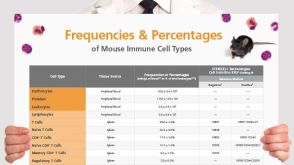 挂图Frequencies and Percentages of Mouse Immune Cell Types List of the frequencies of over 25 immune cell types in C57BL/6 mice

 沪公网安备31010102008431号