Lengi AJ et al. (DEC 2006)
Journal of molecular endocrinology 37 3 421--32
17beta-estradiol downregulates interferon regulatory factor-1 in murine splenocytes.
Interferon regulatory factor-1 (IRF-1) is an important transcription factor that mediates interferon-gamma (IFN-gamma)-induced cell-signaling events. In this study,we examined whether 17beta-estradiol alters IRF-1 in splenic lymphocytes,in view of the immunomodulatory effects of this natural female sex hormone including its ability to alter IFN-gamma levels. We find that IRF-1 expression is markedly downregulated in splenocytes or purified T-cells from estrogen-treated mice at all time points studied when compared with their placebo counterparts. This decrease in IRF-1 in splenocytes from estrogen-treated mice is neither due to upregulation of IRF-1-interfering proteins (nucleophosmin or signal transducer and activator of transcription (STAT)-5) nor due to alternatively spliced IRF-1 mRNA. Given that IFN-gamma is a potent inducer of IRF-1,direct addition of recombinant IFN-gamma to splenocytes from either wild-type or IFN-gamma-knockout mice,or the addition of recombinant IFN-gamma to purified T-cells,was expected to stimulate IRF-1 expression. However,robust expression of IRF-1 in cells from estrogen-treated mice was not seen,unlike what was observed in cells from placebo-treated mice. Diminished IFN-gamma induction of IRF-1 in cells from estrogen-treated mice was noticed despite comparable phosphorylated STAT-1 activation. These studies are the first to show that estrogen regulates IFN-gamma-inducible IRF-1 in lymphoid cells,a finding that may have implications to IFN-gamma-regulated immune and vascular diseases.
View Publication
产品号#:
21000
20119
20155
19751
19751RF
产品名:
RoboSep™- S
RoboSep™ 吸头组件抛光剂
RoboSep™分选管套装(9个塑料管)
Obar JJ et al. (SEP 2006)
Journal of virology 80 17 8303--15
In herpesvirus infections,the virus persists for life but is contained through T-cell-mediated immune surveillance. How this immune surveillance operates is poorly understood. Recent studies of other persistent infections have indicated that virus persistence is associated with functional deficits in the CD8(+) T-cell response. To test whether this is the case in a herpesvirus infection,we used a mutant murine gammaherpesvirus that is defective in its ability to persist in the host. By comparing the immune response to this virus with a revertant virus that can persist,we were able to dissect the changes in the antiviral CD8(+) T-cell response that are induced by virus persistence. Surprisingly,persistently infected mice controlled a secondary challenge infection more rapidly than nonpersistently infected mice,indicating enhanced rather than diminished effector functions. Consistent with this,virus-specific CD8 T cells from these mice exhibited faster upregulation of the cytotoxic mediator granzyme B. Another unexpected finding was that CD8(+) T cells from neither infection responded efficiently to homeostatic cytokines. The unresponsiveness of the memory cells from the nonpersistently infected mice appears to be linked to the prolonged replication of virus within the lungs. Other changes seen in different chronic infection models were also observed,such as changes in Bcl-2 levels,interleukin-2 production,and the immunodominance hierarchy. These data show persistence of gammaherpesvirus type 68 alters the properties of CD8(+) T cells and illustrates that immune surveillance does not require CD8 T cells with the same attributes as classical" memory CD8(+) T cells."
View Publication
产品号#:
18753
18753RF
产品名:
Maes C et al. (MAY 2006)
The Journal of clinical investigation 116 5 1230--42
Placental growth factor mediates mesenchymal cell development, cartilage turnover, and bone remodeling during fracture repair.
Current therapies for delayed- or nonunion bone fractures are still largely ineffective. Previous studies indicated that the VEGF homolog placental growth factor (PlGF) has a more significant role in disease than in health. Therefore we investigated the role of PlGF in a model of semi-stabilized bone fracture healing. Fracture repair in mice lacking PlGF was impaired and characterized by a massive accumulation of cartilage in the callus,reminiscent of delayed- or nonunion fractures. PlGF was required for the early recruitment of inflammatory cells and the vascularization of the fracture wound. Interestingly,however,PlGF also played a role in the subsequent stages of the repair process. Indeed in vivo and in vitro findings indicated that PlGF induced the proliferation and osteogenic differentiation of mesenchymal progenitors and stimulated cartilage turnover by particular MMPs. Later in the process,PlGF was required for the remodeling of the newly formed bone by stimulating osteoclast differentiation. As PlGF expression was increased throughout the process of bone repair and all the important cell types involved expressed its receptor VEGFR-1,the present data suggest that PlGF is required for mediating and coordinating the key aspects of fracture repair. Therefore PlGF may potentially offer therapeutic advantages for fracture repair.
View Publication
产品号#:
03534
03334
03434
03444
18753
18753RF
产品名:
MethoCult™ GF M3534
MethoCult™ M3334
MethoCult™ GF M3434
MethoCult™ GF M3434
Li Q et al. (AUG 2005)
Proceedings of the National Academy of Sciences of the United States of America 102 35 12425--30
Enhanced NF-kappaB activation and cellular function in macrophages lacking IkappaB kinase 1 (IKK1).
IkappaB kinase (IKK) complex plays a key regulatory role in macrophages for NF-kappaB activation during both innate and adaptive immune responses. Because IKK1-/- mice died at birth,we differentiated functional macrophages from embryonic day 15.5 IKK1 mutant embryonic liver. The embryonic liver-derived macrophage (ELDM) showed enhanced phagocytotic clearance of bacteria,more efficient antigen-presenting capacity,elevated secretion of several key proinflammatory cytokines and chemokines,and known NFkappaB target genes. Increased NFkappaB activity in IKK1 mutant ELDM was the result of prolonged degradation of IkappaBalpha in response to infectious pathogens. The delayed restoration of IkappaBalpha in pathogen-activated IKK1-/- ELDM was a direct consequence of uncontrolled IKK2 kinase activity. We hypothesize that IKK1 plays a checkpoint role in the proper control of IkappaBalpha kinase activity in innate and adaptive immunity.
View Publication
产品号#:
02532
02832
09600
09650
产品名:
StemSpan™ SFEM
StemSpan™ SFEM
Fritsch G et al. (AUG 2016)
Vox sanguinis 111 2 187--96
Relevance of flow cytometric enumeration of post-thaw leucocytes: influence of temperature during cell staining on viable cell recovery.
BACKGROUND AND OBJECTIVES Our post-thaw cell recovery rates differed substantially in interlaboratory comparisons of identical samples,potentially due to different temperatures during cell staining. MATERIALS AND METHODS Viable CD34(+) cells and leucocyte (WBC) subtypes were quantified by multiparameter single-platform flow cytometry in leucapheresis products collected from 30 adult lymphoma and myeloma patients,and from 10 paediatric patients. After thawing,cells were prepared for analysis within 30 min between thawing and acquisition,at either 4°C or at room temperature. RESULTS For cell products cryopreserved in conventional freezing medium (10% final DMSO),viable cell recovery was clearly lower after staining at 4°C than at RT. Of all WBC subtypes analysed,CD4(+) T cells showed the lowest median recovery of 4% (4°C) vs. 25% (RT),followed by CD3,CD34 and CD8 cells. The recovery was highest for CD3γδ cells with 44% (4°C) vs. 71% (RT). In the 10 samples cryopreserved in synthetic freezing medium (5% final DMSO),median recovery rates were 89% for viable CD34 (both at 4°C and RT) and 79% (4°C) vs 68% (RT) for WBC. CONCLUSIONS The post-thaw environment and,potentially,the cryoprotectant impact the outcome of cell enumeration,and results from the analysis tube may not be representative of the cells infused into a patient.
View Publication
产品号#:
07930
07931
07940
07955
07956
07959
07954
100-1061
07952
产品名:
CryoStor® CS10
CryoStor® CS10
CryoStor® CS10
CryoStor® CS10
CryoStor® CS10
CryoStor® CS10
CryoStor® CS10
Nijhof IS et al. (OCT 2015)
Leukemia 29 10 2039--49
Upregulation of CD38 expression on multiple myeloma cells by all-trans retinoic acid improves the efficacy of daratumumab.
Daratumumab is an anti-CD38 monoclonal antibody with lytic activity against multiple myeloma (MM) cells,including ADCC (antibody-dependent cellular cytotoxicity) and CDC (complement-dependent cytotoxicity). Owing to a marked heterogeneity of response to daratumumab therapy in MM,we investigated determinants of the sensitivity of MM cells toward daratumumab-mediated ADCC and CDC. In bone marrow samples from 144 MM patients,we observed no difference in daratumumab-mediated lysis between newly diagnosed or relapsed/refractory patients. However,we discovered,next to an expected effect of effector (natural killer cells/monocytes) to target (MM cells) ratio on ADCC,a significant association between CD38 expression and daratumumab-mediated ADCC (127 patients),as well as CDC (56 patients). Similarly,experiments with isogenic MM cell lines expressing different levels of CD38 revealed that the level of CD38 expression is an important determinant of daratumumab-mediated ADCC and CDC. Importantly,all-trans retinoic acid (ATRA) increased CD38 expression levels but also reduced expression of the complement-inhibitory proteins CD55 and CD59 in both cell lines and primary MM samples. This resulted in a significant enhancement of the activity of daratumumab in vitro and in a humanized MM mouse model as well. Our results provide the preclinical rationale for further evaluation of daratumumab combined with ATRA in MM patients.
View Publication
产品号#:
15621
15661
产品名:
RosetteSep™人CD3去除抗体混合物
RosetteSep™人CD3去除抗体混合物
Brooks SE et al. ( 2015)
PloS one 10 10 e0140483
Application of the pMHC Array to Characterise Tumour Antigen Specific T Cell Populations in Leukaemia Patients at Disease Diagnosis.
Immunotherapy treatments for cancer are becoming increasingly successful,however to further improve our understanding of the T-cell recognition involved in effective responses and to encourage moves towards the development of personalised treatments for leukaemia immunotherapy,precise antigenic targets in individual patients have been identified. Cellular arrays using peptide-MHC (pMHC) tetramers allow the simultaneous detection of different antigen specific T-cell populations naturally circulating in patients and normal donors. We have developed the pMHC array to detect CD8+ T-cell populations in leukaemia patients that recognise epitopes within viral antigens (cytomegalovirus (CMV) and influenza (Flu)) and leukaemia antigens (including Per Arnt Sim domain 1 (PASD1),MelanA,Wilms' Tumour (WT1) and tyrosinase). We show that the pMHC array is at least as sensitive as flow cytometry and has the potential to rapidly identify more than 40 specific T-cell populations in a small sample of T-cells (0.8-1.4 x 10(6)). Fourteen of the twenty-six acute myeloid leukaemia (AML) patients analysed had T cells that recognised tumour antigen epitopes,and eight of these recognised PASD1 epitopes. Other tumour epitopes recognised were MelanA (n = 3),tyrosinase (n = 3) and WT1(126-134) (n = 1). One of the seven acute lymphocytic leukaemia (ALL) patients analysed had T cells that recognised the MUC1(950-958) epitope. In the future the pMHC array may be used provide point of care T-cell analyses,predict patient response to conventional therapy and direct personalised immunotherapy for patients.
View Publication
产品号#:
19053
19053RF
产品名:
EasySep™人CD8+ T细胞富集试剂盒
RoboSep™ 人CD8+ T细胞富集试剂盒含滤芯吸头
Zhang L et al. (FEB 2016)
Cell Reports 14 5 1206--17
Mammalian Target of Rapamycin Complex 2 Controls CD8 T Cell Memory Differentiation in a Foxo1-Dependent Manner.
Upon infection,antigen-specific naive CD8 T cells are activated and differentiate into short-lived effector cells (SLECs) and memory precursor cells (MPECs). The underlying signaling pathways remain largely unresolved. We show that Rictor,the core component of mammalian target of rapamycin complex 2 (mTORC2),regulates SLEC and MPEC commitment. Rictor deficiency favors memory formation and increases IL-2 secretion capacity without dampening effector functions. Moreover,mTORC2-deficient memory T cells mount more potent recall responses. Enhanced memory formation in the absence of mTORC2 was associated with Eomes and Tcf-1 upregulation,repression of T-bet,enhanced mitochondrial spare respiratory capacity,and fatty acid oxidation. This transcriptional and metabolic reprogramming is mainly driven by nuclear stabilization of Foxo1. Silencing of Foxo1 reversed the increased MPEC differentiation and IL-2 production and led to an impaired recall response of Rictor KO memory T cells. Therefore,mTORC2 is a critical regulator of CD8 T cell differentiation and may be an important target for immunotherapy interventions.
View Publication
产品号#:
19858
19858RF
产品名:
EasySep™小鼠Naïve CD8+ T细胞分选试剂盒
RoboSep™ 小鼠Naïve CD8+ T细胞分选试剂盒
El-Far M et al. (MAR 2016)
Scientific Reports 6 22902
Proinflammatory isoforms of IL-32 as novel and robust biomarkers for control failure in HIV-infected slow progressors.
HIV-infected slow progressors (SP) represent a heterogeneous group of subjects who spontaneously control HIV infection without treatment for several years while showing moderate signs of disease progression. Under conditions that remain poorly understood,a subgroup of these subjects experience failure of spontaneous immunological and virological control. Here we determined the frequency of SP subjects who showed loss of HIV control within our Canadian Cohort of HIV(+) Slow Progressors and identified the proinflammatory cytokine IL-32 as a robust biomarker for control failure. Plasmatic levels of the proinflammatory isoforms of IL-32 (mainly β and γ) at earlier clinic visits positively correlated with the decline of CD4 T-cell counts,increased viral load,lower CD4/CD8 ratio and levels of inflammatory markers (sCD14 and IL-6) at later clinic visits. We present here a proof-of-concept for the use of IL-32 as a predictive biomarker for disease progression in SP subjects and identify IL-32 as a potential therapeutic target.
View Publication
产品号#:
19852
19852RF
产品名:
EasySep™小鼠CD4+ T细胞分选试剂盒
RoboSep™ 小鼠CD4+ T细胞分选试剂盒
Strainic MG et al. (MAR 2008)
Immunity 28 3 425--35
Locally produced complement fragments C5a and C3a provide both costimulatory and survival signals to naive CD4+ T cells.
Costimulatory signals are critical to T cell activation,but how their effects are mediated remains incompletely characterized. Here,we demonstrate that locally produced C5a and C3a anaphylatoxins interacting with their G protein-coupled receptors (GPCRs),C5aR and C3aR,on APCs and T cells both upstream and downstream of CD28 and CD40L signaling are integrally involved in T cell proliferation and differentiation. Disabling these interactions reduced MHC class II and costimulatory-molecule expression and dramatically diminished T cell responses. Importantly,impaired T cell activation by Cd80-/-Cd86-/- and Cd40-/- APCs was reconstituted by added C5a or C3a. C5aR and C3aR mediated their effects via PI-3 kinase-gamma-dependent AKT phosphorylation,providing a link between GPCR signaling,CD28 costimulation,and T cell survival. These local paracrine and autocrine interactions thus operate constitutively in naive T cells to maintain viability,and their amplification by cognate APC partners thus is critical to T cell costimulation.
View Publication


 EasySep™小鼠TIL(CD45)正选试剂盒




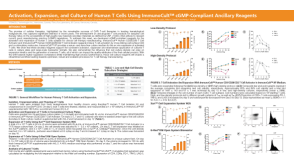 科学海报Activation, Expansion, and Culture of Human T Cells Using ImmunoCult™ cGMP-Compliant Ancillary Reagents
 实验方案Optimizing Delivery Efficiency with Fluorescent Dextran Using the CellPore™ Transfection System
 沪公网安备31010102008431号