Dadaglio G et al. (MAR 2002)
Journal of immunology (Baltimore,Md. : 1950) 168 5 2219--24
Efficient in vivo priming of specific cytotoxic T cell responses by neonatal dendritic cells.
In early life,a high susceptibility to infectious diseases as well as a poor capacity to respond to vaccines are generally observed as compared with observations in adults. The mechanisms underlying immune immaturity have not been fully elucidated and could be due to the immaturity of the T/B cell responses and/or to a defect in the nature and quality of Ag presentation by the APC. This prompted us to phenotypically and functionally characterize early life murine dendritic cells (DC) purified from spleens of 7-day-old mice. We showed that neonatal CD11c(+) DC express levels of costimulatory molecules and MHC molecules similar to those of adult DC and are able to fully maturate after LPS activation. Furthermore,we demonstrated that neonatal DC can efficiently take up,process,and present Ag to T cells in vitro and induce specific CTL responses in vivo. Although a reduced number of these cells was observed in the spleen of neonatal mice as compared with adults,this study clearly shows that neonatal DC have full functional capacity and may well prime Ag-specific naive T cells in vivo.
View Publication
产品号#:
09600
09650
产品名:
StemSpan™ SFEM
StemSpan™ SFEM
Li P et al. (JUL 2016)
Nature medicine 22 7 807--11
Stimulating the RIG-I pathway to kill cells in the latent HIV reservoir following viral reactivation.
The persistence of latent HIV proviruses in long-lived CD4(+) T cells despite antiretroviral therapy (ART) is a major obstacle to viral eradication. Because current candidate latency-reversing agents (LRAs) induce HIV transcription,but fail to clear these cellular reservoirs,new approaches for killing these reactivated latent HIV reservoir cells are urgently needed. HIV latency depends upon the transcriptional quiescence of the integrated provirus and the circumvention of immune defense mechanisms. These defenses include cell-intrinsic innate responses that use pattern-recognition receptors (PRRs) to detect viral pathogens,and that subsequently induce apoptosis of the infected cell. Retinoic acid (RA)-inducible gene I (RIG-I,encoded by DDX58) forms one class of PRRs that mediates apoptosis and the elimination of infected cells after recognition of viral RNA. Here we show that acitretin,an RA derivative approved by the US Food and Drug Administration (FDA),enhances RIG-I signaling ex vivo,increases HIV transcription,and induces preferential apoptosis of HIV-infected cells. These effects are abrogated by DDX58 knockdown. Acitretin also decreases proviral DNA levels in CD4(+) T cells from HIV-positive subjects on suppressive ART,an effect that is amplified when combined with suberoylanilide hydroxamic acid (SAHA),a histone deacetylase inhibitor. Pharmacological enhancement of an innate cellular-defense network could provide a means by which to eliminate reactivated cells in the latent HIV reservoir.
View Publication
产品号#:
17952
17952RF
100-0696
产品名:
EasySep™人CD4+ T细胞分选试剂盒
RoboSep™ 人CD4+ T细胞分选试剂盒
EasySep™人CD4+ T细胞分离试剂盒
Grö et al. (JUL 2016)
Blood
LFA-1 integrin antibodies inhibit leukocyte α4β1-mediated adhesion by intracellular signaling.
Binding of ICAM-1 (intercellular adhesion molecule-1) to the β2-integrin LFA-1 (leukocyte function associated antigen-1) is known to induce crosstalk to the α4β1 integrin. Using different LFA-1 monoclonal antibodies we have been able to study the requirement and mechanism of action for the crosstalk in considerable detail. LFA-1 activating antibodies and those inhibitory antibodies that signal to α4β1 induce phosphorylation of Thr-758 on the β2-chain,which is followed by binding of 14-3-3 proteins and signaling through the G protein exchange factor Tiam1. This results in dephosphorylation of Thr-788/789 on the β1-chain of α4β1 and loss of binding to its ligand VCAM-1 (vascular cell adhesion molecule-1). The results show that with LFA-1 antibodies,we can either 1) activate LFA-1 and inhibit α4β1,2) inhibit both LFA-1 and α4β1,3) inhibit LFA-1 but not α4β1 or 4) not affect LFA-1 or α4β1 These findings are important for the understanding of integrin regulation and for the interpretation of the effect of integrin antibodies and their use in clinical applications.
View Publication
A Cas9 Ribonucleoprotein Platform for Functional Genetic Studies of HIV-Host Interactions in Primary Human T Cells.
New genetic tools are needed to understand the functional interactions between HIV and human host factors in primary cells. We recently developed a method to edit the genome of primary CD4(+) T cells by electroporation of CRISPR/Cas9 ribonucleoproteins (RNPs). Here,we adapted this methodology to a high-throughput platform for the efficient,arrayed editing of candidate host factors. CXCR4 or CCR5 knockout cells generated with this method are resistant to HIV infection in a tropism-dependent manner,whereas knockout of LEDGF or TNPO3 results in a tropism-independent reduction in infection. CRISPR/Cas9 RNPs can furthermore edit multiple genes simultaneously,enabling studies of interactions among multiple host and viral factors. Finally,in an arrayed screen of 45 genes associated with HIV integrase,we identified several candidate dependency/restriction factors,demonstrating the power of this approach as a discovery platform. This technology should accelerate target validation for pharmaceutical and cell-based therapies to cure HIV infection.
View Publication


 EasySep™小鼠TIL(CD45)正选试剂盒




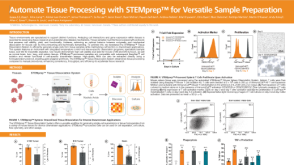 科学海报Automate Tissue Processing with STEMprep™ for Versatile Sample Preparation

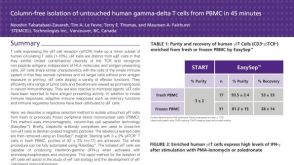
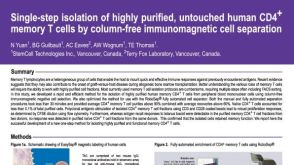 科学海报Cell Isolation of Human CD4+ Memory T Cells By Column-Free Immunomagnetic Cell Separation
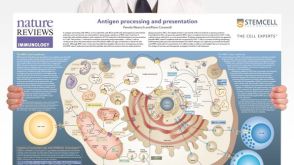 挂图Antigen Processing and Presentation Overview of the mechanisms by which antigens are processed and presented to T cells
 科学海报Positive Selection of PE- or Biotin-Conjugated Antibody Labeled Cells with Releasable Rapidspheres™
 沪公网安备31010102008431号