Role for the conserved N-terminal cysteines in the anti-chemokine activities by the chemokine-like protein MC148R1 encoded by Molluscum contagiosum virus.
Molluscum contagiosum poxvirus (MCV) type 1 and type 2 encode two chemokine-like proteins MC148R1 and MC148R2. It is believed that MC148R proteins function by blocking the inflammatory response. However,the mechanism of the proposed biological activities of MC148R proteins and the role of the additional C-terminal cysteines that do not exist in other chemokines are not understood. Here,we demonstrated in two different assay systems that His-tagged MC148R1 displaces the interaction between CXCL12α and CXCR4. The N-terminal cysteines but not the additional C-terminal cysteines modulate this displacement. His-tagged MC148R1 blocked both CXCL12α-mediated and MIP-1α-mediated chemotaxis. In contrast,MC148R2 blocked MIP-1α-mediated but not CXCL12α-mediated chemotaxis. Immunoprecipitation by antibodies to MC148R1 or CXCL12α followed by immunoblotting and detection by antibodies to the other protein demonstrated physical interaction of His-tagged CXCL12α and His-tagged MC148R1. Interaction with chemokines might mask the receptor interaction site resulting in decreased binding and impairment of the biological activities.
View Publication
产品号#:
70025
70025.1
70025.2
70025.3
70047
70047.1
70047.2
70048
70048.1
70048.2
产品名:
冻存的人外周血单个核细胞
冻存的人外周血单个核细胞
冻存的人外周血单个核细胞
冻存的人外周血单个核细胞
Smith Sa et al. (MAR 2012)
Journal of Virology 86 5 2665--75
Persistence of circulating memory B cell clones with potential for Dengue virus disease enhancement for decades following infection
Symptomatic dengue virus infection ranges in disease severity from an influenza-like illness to life-threatening shock. One model of the mechanism underlying severe disease proposes that weakly neutralizing,dengue serotype cross-reactive antibodies induced during a primary infection facilitate virus entry into Fc receptor-bearing cells during a subsequent secondary infection,increasing viral replication and the release of cytokines and vasoactive mediators,culminating in shock. This process has been termed antibody-dependent enhancement of infection and has significantly hindered vaccine development. Much of our understanding of this process has come from studies using mouse monoclonal antibodies (MAbs); however,antibody responses in mice typically exhibit less complexity than those in humans. A better understanding of the humoral immune response to natural dengue virus infection in humans is sorely needed. Using a high-efficiency human hybridoma technology,we isolated 37 hybridomas secreting human MAbs to dengue viruses from 12 subjects years or even decades following primary or secondary infection. The majority of the human antibodies recovered were broadly cross-reactive,directed against either envelope or premembrane proteins,and capable of enhancement of infection in vitro; few exhibited serotype-specific binding or potent neutralizing activity. Memory B cells encoding enhancing antibodies predominated in the circulation,even two or more decades following infection. Mapping the epitopes and activity of naturally occurring dengue antibodies should prove valuable in determining whether the enhancing and neutralizing activity of antibodies can be separated. Such principles could be used in the rational design of vaccines that enhance the induction of neutralizing antibodies,while lowering the risk of dengue shock syndrome.
View Publication
Makaroff LE et al. (MAR 2009)
Proceedings of the National Academy of Sciences of the United States of America 106 12 4799--804
Postthymic maturation influences the CD8 T cell response to antigen.
Complete T cell development requires postthymic maturation,and we investigated the influence of this ontological period on the CD8 T cell response to infection by comparing responses of mature CD8 T cells with those of recent thymic emigrants (RTEs). When activated with a noninflammatory stimulus or a bacterial or viral pathogen,CD8 RTEs generated a lower proportion of cytokine-producing effector cells and long-lived memory precursors compared with their mature counterparts. Although peripheral T cell maturation is complete within several weeks after thymic egress,RTE-derived memory cells continued to express inappropriate levels of memory cell markers and display an altered pattern of cytokine production,even 8 weeks after infection. When rechallenged,RTE-derived memory cells generated secondary effector cells that were phenotypically and functionally equivalent to those generated by their mature counterparts. The defects at the effector and memory stages were not associated with differences in the expression of T cell receptor-,costimulation-,or activation-associated cell surface markers yet were associated with lower Ly6C expression levels at the effector stage. This work demonstrates that the stage of postthymic maturation influences cell fate decisions and cytokine profiles of stimulated CD8 T cells,with repercussions that are apparent long after cells have progressed from the RTE compartment.
View Publication
产品号#:
19753
19753RF
产品名:
Grimaldi JC et al. (JUN 1999)
Journal of Leukocyte Biology 65 6 846--53
Depletion of eosinophils in mice through the use of antibodies specific for C-C chemokine receptor 3 (CCR3).
We have generated rat monoclonal antibodies specific for the mouse eotaxin receptor,C-C chemokine receptor 3 (CCR3). Several anti-CCR3 mAbs proved to be useful for in vivo depletion of CCR3-expressing cells and immunofluorescent staining. In vivo CCR3 mAbs of the IgG2b isotype substantially depleted blood eosinophil levels in Nippostrongyus brasiliensis-infected mice. Repeated anti-CCR3 mAb treatment in these mice significantly reduced tissue eosinophilia in the lung tissue and bronchoalveolar lavage fluid. Flow cytometry revealed that mCCR3 was expressed on eosinophils but not on stem cells,dendritic cells,or cells from the thymus,lymph node,or spleen of normal mice. Unlike human Th2 cells,mouse Th2 cells did not express detectable levels of CCR3 nor did they give a measurable response to eotaxin. None of the mAbs were antagonists or agonists of CCR3 calcium mobilization. To our knowledge,the antibodies described here are the first mAbs reported to be specific for mouse eosinophils and to be readily applicable for the detection,isolation,and in vivo depletion of eosinophils.
View Publication
产品号#:
03800
03801
03802
03803
03804
03805
03806
产品名:
ClonaCell™-HY杂交瘤试剂盒
ClonaCell™-HY培养基A
ClonaCell™-HY 培养基 B
ClonaCell™-HY 培养基 C
ClonaCell™-HY 培养基 D
ClonaCell™-HY 培养基 E
ClonaCell™-HY PEG
Brandl M et al. (AUG 1999)
Experimental hematology 27 8 1264--70
Bispecific antibody fragments with CD20 X CD28 specificity allow effective autologous and allogeneic T-cell activation against malignant cells in peripheral blood and bone marrow cultures from patients with B-cell lineage leukemia and lymphoma.
Bispecific antibodies directed against tumor-associated target antigens and to surface receptors mediating T-cell activation,such as the TCR/CD3 complex and the costimulatory receptor CD28,are capable of mediating T-cell activation resulting in tumor cell killing. In this study,we used the B-cell-associated antigens CD19 and CD20 as target structures on human leukemic cells. We found that a combination of bispecific antibody fragments (bsFab2) with target x CD3 and target x CD28 specificity induces vigorous autologous T-cell activation and killing of malignant cells in peripheral blood and bone marrow cultures from patients with chronic lymphocytic leukemia and follicular lymphoma. The bsFab2 targeting CD20 were considerably more effective than those binding to CD19. The colony-forming capacity of treated bone marrow was impaired due to large amounts of tumor necrosis factor alpha produced during bsFab2-induced T-cell activation. Neutralizing tumor necrosis factor alpha antibodies were found to reverse this negative effect without affecting T-cell activation and tumor cell killing. CD20 x CD28 bsFab2,when used alone rather than in combination,markedly improved the recognition of leukemic cells by allogeneic T cells. Therefore,these reagents may be capable of enhancing the immunogenicity of leukemic cells in general and,in particular,of increasing the antileukemic activity of allogeneic donor buffy coat cells in relapsed bone marrow transplanted patients.
View Publication


 EasySep™小鼠TIL(CD45)正选试剂盒




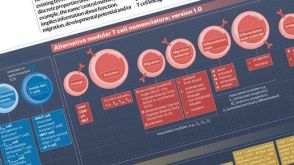 挂图T Cell Nomenclature: From Subsets to Modules A modular framework for classifying T cells by lineage, function, migration, differentiation, and antigen context.
 实验方案How to Collect Plasma from Whole Blood Before Cell Isolation


 沪公网安备31010102008431号