HIF1alpha synergizes with glucocorticoids to promote BFU-E progenitor self-renewal.
With the aim of finding small molecules that stimulate erythropoiesis earlier than erythropoietin and that enhance erythroid colony-forming unit (CFU-E) production,we studied the mechanism by which glucocorticoids increase CFU-E formation. Using erythroid burst-forming unit (BFU-E) and CFU-E progenitors purified by a new technique,we demonstrate that glucocorticoids stimulate the earliest (BFU-E) progenitors to undergo limited self-renewal,which increases formation of CFU-E cells textgreater 20-fold. Interestingly,glucocorticoids induce expression of genes in BFU-E cells that contain promoter regions highly enriched for hypoxia-induced factor 1α (HIF1α) binding sites. This suggests activation of HIF1α may enhance or replace the effect of glucocorticoids on BFU-E self-renewal. Indeed,HIF1α activation by a prolyl hydroxylase inhibitor (PHI) synergizes with glucocorticoids and enhances production of CFU-Es 170-fold. Because PHIs are able to increase erythroblast production at very low concentrations of glucocorticoids,PHI-induced stimulation of BFU-E progenitors thus represents a conceptually new therapeutic window for treating erythropoietin-resistant anemia.
View Publication
产品号#:
03234
09600
09650
产品名:
MethoCult™ M3234
StemSpan™ SFEM
StemSpan™ SFEM
Tzeng Y-S et al. (JAN 2011)
Blood 117 2 429--39
Loss of Cxcl12/Sdf-1 in adult mice decreases the quiescent state of hematopoietic stem/progenitor cells and alters the pattern of hematopoietic regeneration after myelosuppression.
The C-X-C-type chemokine Cxcl12,also known as stromal cell-derived factor-1,plays a critical role in hematopoiesis during fetal development. However,the functional requirement of Cxcl12 in the adult hematopoietic stem/progenitor cell (HSPC) regulation was still unclear. In this report,we developed a murine Cxcl12 conditional deletion model in which the target gene can be deleted at the adult stage. We found that loss of stroma-secreted Cxcl12 in the adult led to expansion of the HSPC population as well as a reduction in long-term quiescent stem cells. In Cxcl12-deficient bone marrow,HSPCs were absent along the endosteal surface,and blood cell regeneration occurred predominantly in the perisinusoidal space after 5-fluorouracil myelosuppression challenge. Our results indicate that Cxcl12 is required for HSPC homeostasis regulation and is an important factor for osteoblastic niche organization in adult stage bone marrow.
View Publication
产品号#:
03434
03444
产品名:
MethoCult™ GF M3434
MethoCult™ GF M3434
Xiao W et al. (DEC 2010)
Blood 116 26 6003--13
Lyn- and PLC-beta3-dependent regulation of SHP-1 phosphorylation controls Stat5 activity and myelomonocytic leukemia-like disease.
Hyperactivation of the transcription factor Stat5 leads to various leukemias. Stat5 activity is regulated by the protein phosphatase SHP-1 in a phospholipase C (PLC)-β3-dependent manner. Thus,PLC-β3-deficient mice develop myeloproliferative neoplasm,like Lyn (Src family kinase)- deficient mice. Here we show that Lyn/PLC-β3 doubly deficient lyn(-/-);PLC-β3(-/-) mice develop a Stat5-dependent,fatal myelodysplastic/myeloproliferative neoplasm,similar to human chronic myelomonocytic leukemia (CMML). In hematopoietic stem cells of lyn(-/-);PLC-β3(-/-) mice that cause the CMML-like disease,phosphorylation of SHP-1 at Tyr(536) and Tyr(564) is abrogated,resulting in reduced phosphatase activity and constitutive activation of Stat5. Furthermore,SHP-1 phosphorylation at Tyr(564) by Lyn is indispensable for maximal phosphatase activity and for suppression of the CMML-like disease in these mice. On the other hand,Tyr(536) in SHP-1 can be phosphorylated by Lyn and another kinase(s) and is necessary for efficient interaction with Stat5. Therefore,we identify a novel Lyn/PLC-β3-mediated regulatory mechanism of SHP-1 and Stat5 activities.
View Publication
产品号#:
03134
产品名:
MethoCult™ M3134
Lidonnici MR et al. (OCT 2010)
Cancer research 70 20 7949--59
Expression of the transcriptional repressor Gfi-1 is regulated by C/EBPalpha and is involved in its proliferation and colony formation-inhibitory effects in p210BCR/ABL-expressing cells.
Ectopic expression of CAAT/enhancer binding protein α (C/EBPα) in p210BCR/ABL-expressing cells induces granulocytic differentiation,inhibits proliferation,and suppresses leukemogenesis. To dissect the molecular mechanisms underlying these biological effects,C/EBPα-regulated genes were identified by microarray analysis in 32D-p210BCR/ABL cells. One of the genes whose expression was activated by C/EBPα in a DNA binding-dependent manner in BCR/ABL-expressing cells is the transcriptional repressor Gfi-1. We show here that C/EBPα interacts with a functional C/EBP binding site in the Gfi-1 5'-flanking region and enhances the promoter activity of Gfi-1. Moreover,in K562 cells,RNA interference-mediated downregulation of Gfi-1 expression partially rescued the proliferation-inhibitory but not the differentiation-inducing effect of C/EBPα. Ectopic expression of wild-type Gfi-1,but not of a transcriptional repressor mutant (Gfi-1P2A),inhibited proliferation and markedly suppressed colony formation but did not induce granulocytic differentiation of BCR/ABL-expressing cells. By contrast,Gfi-1 short hairpin RNA-tranduced CD34(+) chronic myeloid leukemia cells were markedly more clonogenic than the scramble-transduced counterpart. Together,these studies indicate that Gfi-1 is a direct target of C/EBPα required for its proliferation and survival-inhibitory effects in BCR/ABL-expressing cells.
View Publication
产品号#:
02690
09600
09650
产品名:
StemSpan™ CC100
StemSpan™ SFEM
StemSpan™ SFEM
Ma ACH et al. (DEC 2010)
Leukemia 24 12 2090--9
A DEAB-sensitive aldehyde dehydrogenase regulates hematopoietic stem and progenitor cells development during primitive hematopoiesis in zebrafish embryos.
Although aldehyde dehydrogenase (ALDH) activity has become a surrogate of hematopoietic stem and progenitor cells (HSPCs),its function during hematopoiesis was unclear. Here,we examined its role in zebrafish hematopoiesis based on pharmacological inhibition and morpholino (MO) knockdown. Zebrafish embryos were treated with diethylaminobenzaldehyde (DEAB,1 μmol/l) between 0- and 48 hour-post-fertilization (hpf). MOs targeting aldhs were injected between 1 and 4-cell stage. The effects on hematopoiesis were evaluated at different stages. DEAB treatment between 0 and 18 hpf increased gene expression associated with HSPC (scl,lmo2),erythropoiesis (gata1,α- and β-eHb) and myelopoiesis (spi1) as well as gfp(+) cells in dissociated Tg(gata1:gfp) embryos. The effects were ameliorated by all-trans retinoic acid (1 nmol/l). Definitive hematopoiesis and the erythromyeloid precursors were unaffected. In all,14 out of 15 zebrafish aldhs were detectable by reverse transcription PCR in 18 hpf embryos,of which only aldh1a2 and aldh16a1 were expressed in sites pertinent to hematopoiesis. Molecular targeting by MOs was demonstrated for 15 aldhs,but none of them,even in combined aldh1a2 and aldh1a3 knockdown,recapitulated the hematopoietic expansion in DEAB-treated embryos. In conclusion,DEAB expands HSPC population during primitive hematopoiesis through inhibition of aldh and retinoic acid synthesis. The specific aldh isoform(s) remains to be determined.
View Publication
产品号#:
01700
01705
01702
产品名:
ALDEFLUOR™ 试剂盒
ALDEFLUOR™ DEAB试剂, 1.5 mM, 1 mL
ALDEFLUOR™检测缓冲液
Mahdipour E et al. (JAN 2011)
Blood 117 3 815--26
Hoxa3 promotes the differentiation of hematopoietic progenitor cells into proangiogenic Gr-1+CD11b+ myeloid cells.
Injury induces the recruitment of bone marrow-derived cells (BMDCs) that contribute to the repair and regeneration process. The behavior of BMDCs in injured tissue has a profound effect on repair,but the regulation of BMDC behavior is poorly understood. Aberrant recruitment/retention of these cells in wounds of diabetic patients and animal models is associated with chronic inflammation and impaired healing. BMD Gr-1(+)CD11b(+) cells function as immune suppressor cells and contribute significantly to tumor-induced neovascularization. Here we report that Gr-1(+)CD11b(+) cells also contribute to injury-induced neovascularization,but show altered recruitment/retention kinetics in the diabetic environment. Moreover,diabetic-derived Gr-1(+)CD11b(+) cells fail to stimulate neovascularization in vivo and have aberrant proliferative,chemotaxis,adhesion,and differentiation potential. Previously we demonstrated that gene transfer of HOXA3 to wounds of diabetic mice is taken up by and expressed by recruited BMDCs. This is associated with a suppressed inflammatory response,enhanced neovascularization,and accelerated wound healing. Here we show that sustained expression of Hoxa3 in diabetic-derived BMD Gr-1(+)CD11b(+) cells reverses their diabetic phenotype. These findings demonstrate that manipulation of adult stem/progenitor cells ex vivo could be used as a potential therapy in patients with impaired wound healing.
View Publication
产品号#:
03434
03444
产品名:
MethoCult™ GF M3434
MethoCult™ GF M3434
Jiang S et al. (JAN 2011)
Blood 117 3 827--38
Cannabinoid receptor 2 and its agonists mediate hematopoiesis and hematopoietic stem and progenitor cell mobilization.
Endocannabinoids are arachidonic acid derivatives and part of a novel bioactive lipid signaling system,along with their G-coupled cannabinoid receptors (CB�? and CB₂) and the enzymes involved in their biosynthesis and degradation. However,their roles in hematopoiesis and hematopoietic stem and progenitor cell (HSPC) functions are not well characterized. Here,we show that bone marrow stromal cells express endocannabinoids (anandamide and 2-arachidonylglycerol),whereas CB₂ receptors are expressed in human and murine HSPCs. On ligand stimulation with CB₂ agonists,CB₂ receptors induced chemotaxis,migration,and enhanced colony formation of bone marrow cells,which were mediated via ERK,PI3-kinase,and Gαi-Rac1 pathways. In vivo,the CB₂ agonist AM1241 induced mobilization of murine HSPCs with short- and long-term repopulating abilities. In addition,granulocyte colony-stimulating factor -induced mobilization of HSPCs was significantly decreased by specific CB₂ antagonists and was impaired in Cnr2(-/-) cannabinoid type 2 receptor knockout mice. Taken together,these results demonstrate that the endocannabinoid system is involved in hematopoiesis and that CB₂/CB₂ agonist axis mediates repopulation of hematopoiesis and mobilization of HSPCs. Thus,CB₂ agonists may be therapeutically applied in clinical conditions,such as bone marrow transplantation.
View Publication
产品号#:
03434
03444
产品名:
MethoCult™ GF M3434
MethoCult™ GF M3434
Lam BS et al. (JAN 2011)
Blood 117 4 1167--75
Pharmacologic modulation of the calcium-sensing receptor enhances hematopoietic stem cell lodgment in the adult bone marrow.
The ability of hematopoietic stem cells (HSCs) to undergo self-renewal is partly regulated by external signals originating from the stem cell niche. Our previous studies with HSCs obtained from fetal liver of mice deficient for the calcium-sensing receptor (CaR) have shown the crucial role of this receptor in HSC lodgment and engraftment in the bone marrow (BM) endosteal niche. Using a CaR agonist,Cinacalcet,we assessed the effects of stimulating the CaR on the function of murine HSCs. Our results show that CaR stimulation increases primitive hematopoietic cell activity in vitro,including growth in stromal cell cocultures,adhesion to extracellular matrix molecules such as collagen I and fibronectin,and migration toward the chemotactic stimulus,stromal cell-derived factor 1α. Receptor stimulation also led to augmented in vivo homing,CXCR4-mediated lodgment at the endosteal niche,and engraftment capabilities. These mechanisms by which stimulating the CaR dictates preferential localization of HSCs in the BM endosteal niche provide additional insights into the fundamental interrelationship between the stem cell and its niche. These studies also have implications in the area of clinical stem cell transplantation,where ex vivo modulation of the CaR may be envisioned as a strategy to enhance HSC engraftment in the BM.
View Publication
Ma I and Allan AL (JUN 2011)
Stem cell reviews 7 2 292--306
The role of human aldehyde dehydrogenase in normal and cancer stem cells.
Normal stem cells and cancer stem cells (CSCs) share similar properties,in that both have the capacity to self-renew and differentiate into multiple cell types. In both the normal stem cell and cancer stem cell fields,there has been a great need for a universal marker that can effectively identify and isolate these rare populations of cells in order to characterize them and use this information for research and therapeutic purposes. Currently,it would appear that certain isoenzymes of the aldehyde dehydrogenase (ALDH) superfamily may be able to fulfill this role as a marker for both normal and cancer stem cells. ALDH has been identified as an important enzyme in the protection of normal hematopoietic stem cells,and is now also widely used as a marker to identify and isolate various types of normal stem cells and CSCs. In addition,emerging evidence suggests that ALDH1 is not only a marker for stem cells,but may also play important functional roles related to self-protection,differentiation,and expansion. This comprehensive review discusses the role that ALDH plays in normal stem cells and CSCs,with focus on ALDH1 and ALDH3A1. Discrepancies in the functional themes between cell types and future perspectives for therapeutic applications will also be discussed.
View Publication
产品号#:
01700
01705
01702
产品名:
ALDEFLUOR™ 试剂盒
ALDEFLUOR™ DEAB试剂, 1.5 mM, 1 mL
ALDEFLUOR™检测缓冲液
N'jai AU et al. (APR 2011)
Molecular pharmacology 79 4 724--34
Acute disruption of bone marrow hematopoiesis by benzo(a)pyrene is selectively reversed by aryl hydrocarbon receptor-mediated processes.
Bone marrow (BM) hematopoietic cells are selectively sensitive to polycyclic aromatic hydrocarbons (PAH) in vivo. 7,12-Dimethylbenz(a)anthracene (DMBA),but not benzo(a)pyrene (BP),depletes BM hematopoietic cells in C57BL/6 mice. This difference is due to a BP-selective aryl hydrocarbon receptor (AhR)-mediated recovery. Colony-forming unit assays show suppression of lymphoid progenitors by each PAH within 6 h but a subsequent recovery,exclusively after BP treatment. Suppression of myeloid progenitors (6 h) occurs only for DMBA. Each progenitor responded equally to DMBA and BP in congenic mice expressing the PAH-resistant AhR (AhR(d)). AhR,therefore,mediates this BP recovery in each progenitor type. These PAH suppressions depend on Cyp1b1-mediated metabolism. Paradoxically,few genes responded to DMBA,whereas 12 times more responded to BP. Progenitor suppression by DMBA,therefore,occurs with minimal effects on the general BM population. Standard AhR-mediated stimulations (Cyp1a1,Cyp1b1,Ahrr) were similar for each PAH and for the specific agonist 2,3,7,8-tetrachlorodibenzo-p-dioxin but were absent in AhR(d) mice. A group of 12 such AhR responses was sustained from 6 to 24 h. A second,larger set of BP responses (chemokines,cytokines,cyclooxygenase 2) differed in two respects; DMBA responses were low and BP responses declined extensively from 6 to 24 h. A third cluster exhibited BP-induced increases in protective genes (Nqo1,GST-mu) that appeared only after 12 h. Conversion of BP to quinones contributes oxidative signaling not seen with DMBA. We propose that genes in this second cluster,which share oxidative signaling and AhR activation,provide the AhR-dependent protection of hematopoietic progenitors seen for BP.
View Publication


 EasySep™小鼠TIL(CD45)正选试剂盒




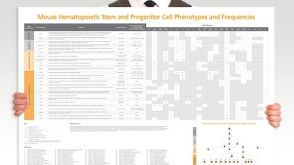 挂图Mouse Hematopoietic Stem and Progenitor Cell Phenotyping Overview of mouse HSPC subset surface markers and frequencies

 沪公网安备31010102008431号