Lee S-HH et al. (JUN 2000)
Nature biotechnology 18 6 675--9
Efficient generation of midbrain and hindbrain neurons from mouse embryonic stem cells.
Embryonic stem (ES) cells are clonal cell lines derived from the inner cell mass of the developing blastocyst that can proliferate extensively in vitro and are capable of adopting all the cell fates in a developing embryo. Clinical interest in the use of ES cells has been stimulated by studies showing that isolated human cells with ES properties from the inner cell mass or developing germ cells can provide a source of somatic precursors. Previous studies have defined in vitro conditions for promoting the development of specific somatic fates,specifically,hematopoietic,mesodermal,and neurectodermal. In this study,we present a method for obtaining dopaminergic (DA) and serotonergic neurons in high yield from mouse ES cells in vitro. Furthermore,we demonstrate that the ES cells can be obtained in unlimited numbers and that these neuron types are generated efficiently. We generated CNS progenitor populations from ES cells,expanded these cells and promoted their differentiation into dopaminergic and serotonergic neurons in the presence of mitogen and specific signaling molecules. The differentiation and maturation of neuronal cells was completed after mitogen withdrawal from the growth medium. This experimental system provides a powerful tool for analyzing the molecular mechanisms controlling the functions of these neurons in vitro and in vivo,and potentially for understanding and treating neurodegenerative and psychiatric diseases.
View Publication
产品号#:
06902
06952
07152
07157
00321
00322
00323
00324
00325
产品名:
N2 添加物-A
Kandasamy M et al. (MAR 2017)
Cell and Tissue Research 368 3 531--549
Glycoconjugates reveal diversity of human neural stem cells (hNSCs) derived from human induced pluripotent stem cells (hiPSCs)
Neural stem cells (NSCs) have the ability to self-renew and to differentiate into various cell types of the central nervous system. This potential can be recapitulated by human induced pluripotent stem cells (hiPSCs) in vitro. The differentiation capacity of hiPSCs is characterized by several stages with distinct morphologies and the expression of various marker molecules. We used the monoclonal antibodies (mAbs) 487(LeX),5750(LeX) and 473HD to analyze the expression pattern of particular carbohydrate motifs as potential markers at six differentiation stages of hiPSCs. Mouse ESCs were used as a comparison. At the pluripotent stage,487(LeX)-,5750(LeX)- and 473HD-related glycans were differently expressed. Later,cells of the three germ layers in embryoid bodies (hEBs) and,even after neuralization of hEBs,subpopulations of cells were labeled with these surface antibodies. At the human rosette-stage of NSCs (hR-NSC),LeX- and 473HD-related epitopes showed antibody-specific expression patterns. We also found evidence that these surface antibodies could be used to distinguish the hR-NSCs from the hSR-NSCs stages. Characterization of hNSCs(FGF-2/EGF) derived from hSR-NSCs revealed that both LeX antibodies and the 473HD antibody labeled subpopulations of hNSCs(FGF-2/EGF). Finally,we identified potential LeX carrier molecules that were spatiotemporally regulated in early and late stages of differentiation. Our study provides new insights into the regulation of glycoconjugates during early human stem cell development. The mAbs 487(LeX),5750(LeX) and 473HD are promising tools for identifying distinct stages during neural differentiation.
View Publication
产品号#:
05832
05850
05857
05870
05875
85850
85857
85870
85875
产品名:
STEMdiff™ 神经花环选择试剂
mTeSR™1
mTeSR™1
Bain G et al. (APR 1995)
Developmental biology 168 2 342--57
Embryonic stem cells express neuronal properties in vitro.
Mouse embryonic stem (ES) cells cultured as aggregates and exposed to retinoic acid are induced to express multiple phenotypes normally associated with neurons. A large percentage of treated aggregates produce a rich neuritic outgrowth. Dissociating the induced aggregates with trypsin and plating the cells as a monolayer results in cultures in which a sizable percentage of the cells have a neuronal appearance. These neuron-like cells express class III beta-tubulin and the neurofilament M subunit. Induced cultures express transcripts for neural-associated genes including the neurofilament L subunit,glutamate receptor subunits,the transcription factor Brn-3,and GFAP. Levels of neurofilament L and GAD67 and GAD65 transcripts rise dramatically upon induction. Physiological studies show that the neuron-like cells generate action potentials and express TTX-sensitive sodium channels,as well as voltage-gated potassium channels and calcium channels. We conclude that a complex system of neuronal gene expression can be activated in cultured ES cells. This system should be favorable for investigating some of the mechanisms that regulate neuronal differentiation.
View Publication
产品号#:
06902
06952
00321
00322
00323
00324
00325
产品名:
Jiang G et al. (SEP 2014)
Tissue engineering. Part C,Methods 20 9 731--740
Induced pluripotent stem cells from human placental chorion for perinatal tissue engineering applications.
The reliable derivation of induced pluripotent stem cells (iPSCs) from a noninvasive autologous source at birth would facilitate the study of patient-specific in vitro modeling of congenital diseases and would enhance ongoing efforts aimed at developing novel cell-based treatments for a wide array of fetal and pediatric disorders. Accordingly,we have successfully generated iPSCs from human fetal chorionic somatic cells extracted from term pregnancies by ectopic expression of OCT4,SOX2,KLF4,and cMYC. The isolated parental somatic cells exhibited an immunophenotypic profile consistent with that of chorionic mesenchymal stromal cells (CMSCs). CMSC-iPSCs maintained pluripotency in feeder-free systems for more than 15 passages based on morphology,immunocytochemistry,and gene expression studies and were capable of embryoid body formation with spontaneous trilineage differentiation. CMSC-iPSCs could be selectively differentiated in vitro into various germ layer derivatives,including neural stem cells,beating cardiomyocytes,and definitive endoderm. This study demonstrates the feasibility of term placental chorion as a novel noninvasive alternative to dermal fibroblasts and cord blood for human perinatal iPSC derivation and may provide additional insights regarding the reprogramming capabilities of extra-embryonic tissues as they relate to developmental ontogeny and perinatal tissue engineering applications.
View Publication
产品号#:
05850
05857
05870
05875
85850
85857
85870
85875
产品名:
mTeSR™1
mTeSR™1
Sareen D et al. (AUG 2014)
Journal of Comparative Neurology 522 12 2707--2728
Human induced pluripotent stem cells are a novel source of neural progenitor cells (iNPCs) that migrate and integrate in the rodent spinal cord
Transplantation of human neural progenitor cells (NPCs) into the brain or spinal cord to replace lost cells,modulate the injury environment,or create a permissive milieu to protect and regenerate host neurons is a promising therapeutic strategy for neurological diseases. Deriving NPCs from human fetal tissue is feasible,although problematic issues include limited sources and ethical concerns. Here we describe a new and abundant source of NPCs derived from human induced pluripotent stem cells (iPSCs). A novel chopping technique was used to transform adherent iPSCs into free-floating spheres that were easy to maintain and were expandable (EZ spheres) (Ebert et al. [2013] Stem Cell Res 10:417–427). These EZ spheres could be differentiated towards NPC spheres with a spinal cord phenotype using a combination of all-trans retinoic acid (RA) and epidermal growth factor (EGF) and fibroblast growth factor-2 (FGF-2) mitogens. Suspension cultures of NPCs derived from human iPSCs or fetal tissue have similar characteristics,although they were not similar when grown as adherent cells. In addition,iPSC-derived NPCs (iNPCs) survived grafting into the spinal cord of athymic nude rats with no signs of overgrowth and with a very similar profile to human fetal-derived NPCs (fNPCs). These results suggest that human iNPCs behave like fNPCs and could thus be a valuable alternative for cellular regenerative therapies of neurological diseases. J. Comp. Neurol. 522:2707–2728,2014. textcopyright 2014 Wiley Periodicals,Inc.
View Publication
产品号#:
05850
05857
05870
05875
85850
85857
85870
85875
产品名:
mTeSR™1
mTeSR™1
Musah S et al. (SEP 2014)
Proceedings of the National Academy of Sciences of the United States of America 111 38 13805--10
Substratum-induced differentiation of human pluripotent stem cells reveals the coactivator YAP is a potent regulator of neuronal specification.
Physical stimuli can act in either a synergistic or antagonistic manner to regulate cell fate decisions,but it is less clear whether insoluble signals alone can direct human pluripotent stem (hPS) cell differentiation into specialized cell types. We previously reported that stiff materials promote nuclear localization of the Yes-associated protein (YAP) transcriptional coactivator and support long-term self-renewal of hPS cells. Here,we show that even in the presence of soluble pluripotency factors,compliant substrata inhibit the nuclear localization of YAP and promote highly efficient differentiation of hPS cells into postmitotic neurons. In the absence of neurogenic factors,the effective substrata produce neurons rapidly (2 wk) and more efficiently (textgreater75%) than conventional differentiation methods. The neurons derived from substrate induction express mature markers and possess action potentials. The hPS differentiation observed on compliant surfaces could be recapitulated on stiff surfaces by adding small-molecule inhibitors of F-actin polymerization or by depleting YAP. These studies reveal that the matrix alone can mediate differentiation of hPS cells into a mature cell type,independent of soluble inductive factors. That mechanical cues can override soluble signals suggests that their contributions to early tissue development and lineage commitment are profound.
View Publication
产品号#:
05850
05857
05870
05875
85850
85857
85870
85875
产品名:
mTeSR™1
mTeSR™1
Rasmussen MA et al. (SEP 2014)
Stem Cell Reports 3 3 404--413
Transient p53 suppression increases reprogramming of human fibroblasts without affecting apoptosis and DNA damage
The discovery of human-induced pluripotent stem cells (iPSCs) has sparked great interest in the potential treatment of patients with their own in vitro differentiated cells. Recently,knockout of the Tumor Protein 53 (p53) gene was reported to facilitate reprogramming but unfortunately also led to genomic instability. Here,we report that transient suppression of p53 during nonintegrative reprogramming of human fibroblasts leads to a significant increase in expression of pluripotency markers and overall number of iPSC colonies,due to downstream suppression of p21,without affecting apoptosis and DNA damage. Stable iPSC lines generated with or without p53 suppression showed comparable expression of pluripotency markers and methylation patterns,displayed normal karyotypes,contained between 0 and 5 genomic copy number variations and produced functional neurons in vitro. In conclusion,transient p53 suppression increases reprogramming efficiency without affecting genomic stability,rendering the method suitable for in vitro mechanistic studies with the possibility for future clinical translation.
View Publication


 EasySep™小鼠TIL(CD45)正选试剂盒




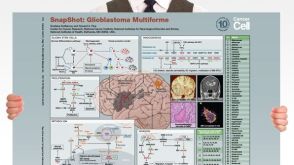 挂图SnapShot: Glioblastoma Multiforme Overview of the key concepts and mechanisms in glioblastoma multiforme biology


 沪公网安备31010102008431号