若您需要咨询产品或有任何技术问题,请通过官方电话 400 885 9050 或邮箱 info.cn@stemcell.com 与我们联系。

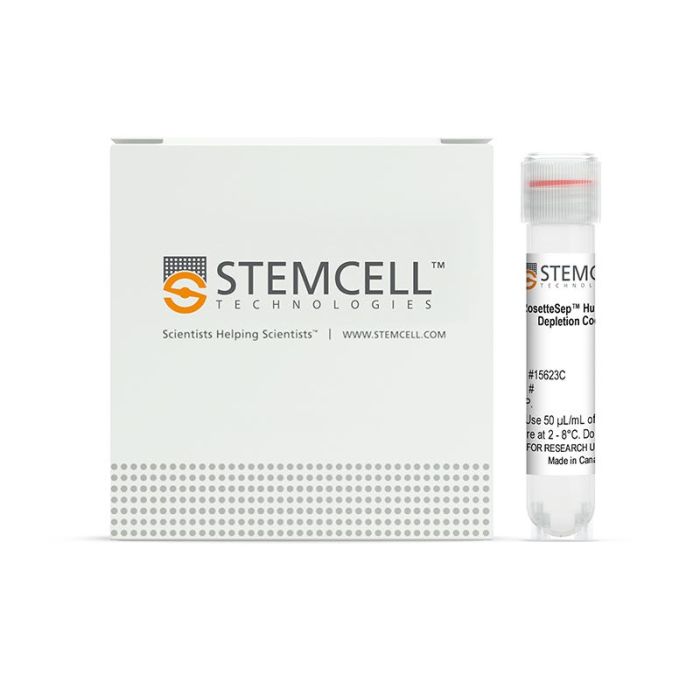
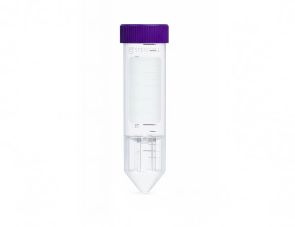
RosetteSep™人CD8去除抗体混合物

免疫密度去除试剂混合物
只有 %1
¥1,290.00

产品号 #(选择产品)

产品号 #15623_C

免疫密度去除试剂混合物

产品优势

  • 快捷、操作简单
  • 不需要特殊设备或额外培训
  • 获得的活细胞无标记
  • 可与SepMate™联合使用,实现一致的     高通量     样本处理

产品组分包括

  • RosetteSep™人CD8去除抗体混合物(产品号 #15624)
    • RosetteSep™人CD8去除抗体混合物,2mL
  • RosetteSep™人CD8去除抗体混合物(产品号 #15624)
    • RosetteSep™人CD8去除抗体混合物 ,5x2mL
专为您的实验方案打造的产品
要查看实验方案所需的所有配套产品,请参阅《实验方案与技术文档》

总览

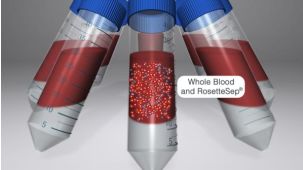
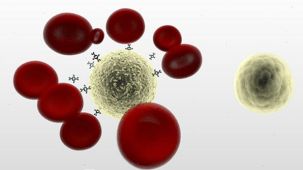
RosetteSep™ 人 CD8 去除复合物专门为通过负选从全血中去除 CD8⁺ 细胞而设计。利用识别 CD8 与红细胞膜糖蛋白 A 的四聚抗体复合物标记非目标细胞,在 Lymphoprep™(产品号#18060)上离心后,被标记的细胞与红细胞一起沉淀在底部,去除了CD8⁺ 的细胞群位于血浆与密度介质交界面。


分类
细胞分选试剂盒
 
细胞类型
T 细胞,T 细胞,CD8+
 
种属

 
样本来源
白膜层、全血
 
分选方法
去除
 
应用
细胞分选
 
品牌
RosetteSep
 
研究领域
免疫
 

实验数据

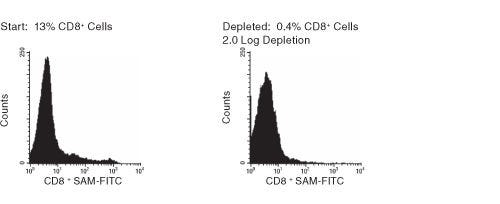
FACS Histogram Results Using RosetteSep™ Human CD8+ Cell Depletion Cocktail

Figure 1. FACS Histogram Results Using RosetteSep™ Human CD8+ Cell Depletion Cocktail

产品说明书及文档

请在《产品说明书》中查找相关支持信息和使用说明,或浏览下方更多实验方案。

Document Type
Product Name
Catalog #
Lot #
Language
Document Type
产品说明书
Catalog #
15623
Lot #
All
Language
中文
Document Type
产品说明书
Catalog #
15663
Lot #
All
Language
中文
Catalog #
15663, 15623
Lot #
All
Language
English
Document Type
Safety Data Sheet
Catalog #
15663, 15623
Lot #
All
Language
English

应用领域

本产品专为以下研究领域设计,适用于工作流程中的高亮阶段。探索这些工作流程,了解更多我们为各研究领域提供的其他配套产品。

相关材料与文献

技术资料 (4)

常见问题

What is RosetteSep™?

RosetteSep™ is a rapid cell separation procedure for the isolation of purified cells directly from whole blood, without columns or magnets.

How does RosetteSep™ work?

The antibody cocktail crosslinks unwanted cells to red blood cells (RBCs), forming rosettes. The unwanted cells then pellet with the free RBCs when centrifuged over a density centrifugation medium (e.g. Ficoll-Paque™ PLUS, Lymphoprep™).

What factors affect cell recovery?

The temperature of the reagents can affect cell recovery. All reagents should be at room temperature (sample, density centrifugation medium, PBS, centrifuge) before performing the isolations. Layering can also affect recovery so be sure to carefully layer the sample to avoid mixing with the density centrifugation medium as much as possible. Be sure to collect the entire enriched culture without disturbing the RBC pellet. A small amount of density centrifugation medium can be collected without worry.

Which cell samples can RosetteSep™ be used with?

RosetteSep™ can be used with leukapheresis samples, bone marrow or buffy coat, as long as: the concentration of cells does not exceed 5 x 10⁷ per mL (can dilute if necessary); and there are at least 100 RBCs for every nucleated cell (RBCs can be added if necessary).

Can RosetteSep™ be used with previously frozen or cultured cells?

Yes. Cells should be re-suspended at 2 - 5 x 10⁷ cells / mL in PBS + 2% FBS. Fresh whole blood should be added at 250 µL per mL of sample, as a source of red cells.

Can RosetteSep™ be used to enrich progenitors from cord blood?

Yes. Sometimes cord blood contains immature nucleated red cells that have a lower density than mature RBCs. These immature red cells do not pellet over Ficoll™, which can lead to a higher RBC contamination than peripheral blood separations.

Does RosetteSep™ work with mouse cells?

No, but we have developed EasySep™, a magnetic-based cell isolation system which works with mouse and other non-human species.

Which anticoagulant should be used with RosetteSep™?

Peripheral blood should be collected in heparinized Vacutainers. Cord blood should be collected in ACD.

Should the anticoagulant be washed off before using RosetteSep™?

No, the antibody cocktail can be added directly to the sample.

文献 (6)

The CCR5 and CXCR4 coreceptors are both used by human immunodeficiency virus type 1 primary isolates from subtype C. Cilliers T et al. Journal of virology 2003 APR

Abstract

Human immunodeficiency virus type 1 (HIV-1) subtype C viruses with different coreceptor usage profiles were isolated from 29 South African patients with advanced AIDS. All 24 R5 isolates were inhibited by the CCR5-specific agents,PRO 140 and RANTES,while the two X4 viruses and the three R5X4 viruses were sensitive to the CXCR4-specific inhibitor,AMD3100. The five X4 or R5X4 viruses were all able to replicate in peripheral blood mononuclear cells that did not express CCR5. When tested using coreceptor-transfected cell lines,one R5 virus was also able to use CXCR6,and another R5X4 virus could use CCR3,BOB/GPR15,and CXCR6. The R5X4 and X4 viruses contained more-diverse V3 loop sequences,with a higher overall positive charge,than the R5 viruses. Hence,some HIV-1 subtype C viruses are able to use CCR5,CXCR4,or both CXCR4 and CCR5 for entry,and they are sensitive to specific inhibitors of entry via these coreceptors. These observations are relevant to understanding the rapid spread of HIV-1 subtype C in the developing world and to the design of intervention and treatment strategies.
Reconstitution of virus-specific CD4 proliferative responses in pediatric HIV-1 infection. Feeney ME et al. Journal of immunology (Baltimore,Md. : 1950) 2003 DEC

Abstract

Gag-specific CD4 proliferative responses correlate inversely with HIV-1 RNA levels in infected adults,and robust responses are characteristic of long-term nonprogressive infection. However,strong responses are seldom detected in adult subjects with progressive infection and are not generally reconstituted on highly active antiretroviral therapy (HAART). To date,the role of HIV-1-specific Th responses in children has not been thoroughly examined. We characterized Gag-specific CD4 responses among 35 perinatally infected subjects,including 2 children who spontaneously control viremia without antiretroviral therapy,21 children with viral loads (VL) of textless400 on HAART,and 12 viremic children. Gag-specific Th activity was assessed by lymphoproliferative assay,and responses were mapped using overlapping Gag peptides in an IFN-gamma ELISPOT. Robust proliferative responses were detected in the children exhibiting spontaneous control of viremia,and mapping of targeted Gag regions in one such subject identified multiple epitopes. Among children textgreateror=5 years old,14 of 17 subjects with VL of textless400 on HAART demonstrated a significant p24 proliferative response (median p24 stimulation index,20),in contrast with only 1 of 9 viremic children (median p24 stimulation index,2.0; p = 0.0008). However,no subject younger than 5 years of age possessed a significant response,even when viremia was fully suppressed. When compared with adults with VL of textless400 on HAART,Th responses among children with VL of textless400 were both more frequent (p = 0.009) and of greater magnitude (p = 0.002). These data suggest that children may have a greater intrinsic capacity to reconstitute HIV-1-specific immunity than adults,and may be excellent candidates for immune-based therapies.
In vivo and in vitro escape from neutralizing antibodies 2G12, 2F5, and 4E10. Manrique A et al. Journal of virology 2007 AUG

Abstract

Recently,passive immunization of human immunodeficiency virus (HIV)-infected individuals with monoclonal antibodies (MAbs) 2G12,2F5,and 4E10 provided evidence of the in vivo activity of 2G12 but raised concerns about the function of the two membrane-proximal external region (MPER)-specific MAbs (A. Trkola,H. Kuster,P. Rusert,B. Joos,M. Fischer,C. Leemann,A. Manrique,M. Huber,M. Rehr,A. Oxenius,R. Weber,G. Stiegler,B. Vcelar,H. Katinger,L. Aceto,and H. F. Gunthard,Nat. Med. 11:615-622,2005). In the light of MPER-targeting vaccines under development,we performed an in-depth analysis of the emergence of mutations conferring resistance to these three MAbs to further elucidate their activity. Clonal analysis of the MPER of plasma virus samples derived during antibody treatment confirmed that no changes in this region had occurred in vivo. Sequence analysis of the 2G12 epitope relevant N-glycosylation sites of viruses derived from 13 patients during the trial supported the phenotypic evaluation,demonstrating that mutations in these sites are associated with resistance. In vitro selection experiments with isolates of four of these individuals corroborated the in vivo finding that virus strains rapidly escape 2G12 pressure. Notably,in vitro resistance mutations differed,in most cases,from those found in vivo. Importantly,in vitro selection with 2F5 and 4E10 demonstrated that resistance to these MAbs can be difficult to achieve and can lead to selection of variants with impaired infectivity. This remarkable vulnerability of the virus to interference within the MPER calls for a further evaluation of the safety and efficacy of MPER-targeting therapeutic and vaccination strategies.

更多信息

更多信息
物种
样本来源 全血, 白膜层
Selection Method Depletion
质量保证:

产品仅供研究使用,不用于针对人或动物的诊断或治疗。 欲获悉更多关于STEMCELL的质控信息,请访问 STEMCELL.CN/COMPLIANCE.
Copyright © 2026 by STEMCELL Technologies. All rights reserved.

在线联系