若您需要咨询产品或有任何技术问题,请通过官方电话 400 885 9050 或邮箱 info.cn@stemcell.com 与我们联系。

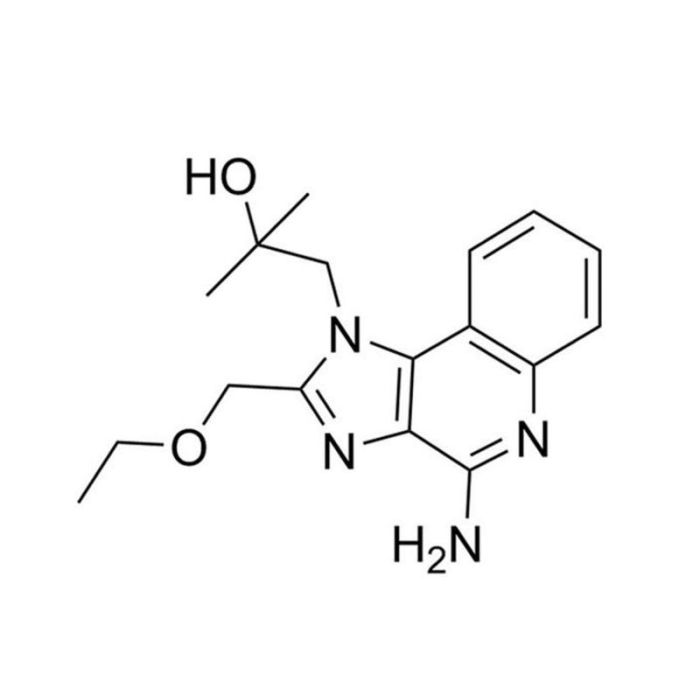
R848

免疫调节剂;TLR7和TLR8激动剂
只有 %1
¥1,040.00

产品号 #(选择产品)

产品号 #73782_C

免疫调节剂;TLR7和TLR8激动剂

总览

R848是一种咪唑喹啉类药物,是Toll样受体 (TLR) 7和8的激动剂。它模拟病原体相关的分子模式,通过TLR7和TLR8激活免疫细胞,从而可作为免疫反应调节剂。它具有强大的抗肿瘤和抗病毒特性(IC₅₀= 4.2 μM;Seganish et al.),可能主要通过刺激单核细胞、巨噬细胞和树突状细胞分泌细胞因子来进行调控,包括干扰素 (IFN) - α和白介素 (IL) -12(Bernstein et al.; Hattermann et al.; Nian et al.)。

免疫学
·触发人B细胞的激活,包括激活c-Jun激酶、p38和NF-κB转录因子(Bishop et al.)。
·诱导人CD4+ T细胞增殖和细胞因子产生(Caron et al.)。
·启动人中性粒细胞进行白三烯B4、前列腺素E2和血小板活化因子的生物合成(Hattermann et al.)。
·抑制HIV-1在单核细胞中的复制(Nian et al.)。·诱导小鼠和人外周血培养物中IL-12和IFN- ɣ的表达(Wagner et al.)。

分化
·靶向破骨细胞前体并通过TLR7抑制其分化为破骨细胞(Miyamoto et al.)。
·诱导CD34+造血祖细胞的髓系分化,包括上调细胞因子(IL-1β、TNF-α、IL-6、GM-CSF)和CD11c表面标志物的表达(Sioud et al.)。

细胞类型
B 细胞,粒细胞及其亚群,造血干/祖细胞,单核细胞,成骨细胞,T 细胞,T 细胞,CD4+
 
种属
人,小鼠,非人灵长类,其他物种,大鼠
 
应用
激活,分化
 
研究领域
免疫
 
CAS 编号
144875-48-9
 
化学式
C₁₇H₂₂N₄O₂
 
纯度
≥98%
 
通路
先天免疫(固有免疫)
 
靶点
TLR
 

产品说明书及文档

请在《产品说明书》中查找相关支持信息和使用说明,或浏览下方更多实验方案。

Document Type
Product Name
Catalog #
Lot #
Language
Product Name
R848
Catalog #
73784, 73782
Lot #
Lot# 1000048489 or higher for 73782 | Lot# 1000028168 or higher for 73784
Language
English
Document Type
Safety Data Sheet
Product Name
R848
Catalog #
73784, 73782
Lot #
All
Language
English

应用领域

本产品专为以下研究领域设计,适用于工作流程中的高亮阶段。探索这些工作流程,了解更多我们为各研究领域提供的其他配套产品。

相关材料与文献

文献 (10)

文献 (10)

Molecular mechanisms of B lymphocyte activation by the immune response modifier R-848. Bishop GA et al. Journal of immunology (Baltimore,Md. : 1950) 2000 NOV

Abstract

The imidazoquinoline R-848,originally identified as a highly effective antiviral agent,has recently been shown to be capable of potent B lymphocyte activation. The B cell-activating properties of R-848 are strikingly similar to the effects of the CD40 ligand CD154. The present study demonstrates that this similarity extends to the intracellular signaling pathways triggered by the compound,although both overlapping and distinct mechanisms of signaling were seen. Like CD40 ligation,R-848 stimulated activation of the stress-activated protein kinases c-Jun kinase and p38 and activated the NF-kappaB family of transcription factors. Both R-848- and CD40-mediated B cell differentiation were dependent upon NF-kappaB activation,although the relative importance of individual NF-kappaB family members appeared to differ between R-848- and CD40-mediated signals. Both signals were partially dependent upon induction of TNF-alpha and IL-6,and the cytoplasmic adaptor molecule TNF receptor-associated factor 2 is involved in both R-848- and CD40-mediated differentiation.
Daily or weekly therapy with resiquimod (R-848) reduces genital recurrences in herpes simplex virus-infected guinea pigs during and after treatment. Bernstein DI et al. The Journal of infectious diseases 2001 MAR

Abstract

The effect of resiquimod (R-848),an immune-response modifier that is similar to imiquimod,on recurrent herpes simplex virus (HSV) was evaluated using the guinea pig model of genital herpes. Guinea pigs were intravaginally infected with HSV-2 and then were randomized on day 14 to receive nothing or 0.1 mL/kg per dose of subcutaneous resiquimod,given either daily,every other day,or weekly from days 15-35. During a 3-week course of therapy,recurrences in all 3 treated groups were reduced by textgreater80%,compared with the control group. After therapy,recurrences remained significantly (Ptextless.05) decreased in all 3 groups for the next 3 weeks. The group treated weekly developed the fewest recurrences. Significant increases in interleukin-2 levels,produced by incubation of mononuclear cells with HSV-2 antigens,but not in circulating antibody also were detected in the treated groups. Resiquimod treatment may offer significant advantages to present antiviral therapies for the control of recurrent genital herpes.
Imiquimod and resiquimod as novel immunomodulators. Dockrell DH and Kinghorn GR The Journal of antimicrobial chemotherapy 2001 DEC

Abstract

Augmenting the host's natural immune response to viruses by the administration of exogenous cytokines such as interferon-alpha (IFN-alpha) is a strategy increasingly employed in antiviral therapeutics. Enhancing the release of endogenous cytokines is,however,an alternative approach. The imidazoquinolinamines imiquimod and resiquimod have demonstrated potency as inducers of IFN-alpha and other cytokines both in vitro and in vivo. Cytokine gene activation is mediated via the signal transducer and activator of transcription 1 (STAT-1) and involves the transcription factors NFkappaB and alpha4F1. Antiviral activity has been demonstrated against a variety of viruses,and clinical efficacy has been demonstrated against genital warts,herpes genitalis and molluscum contagiosum. Imiquimod is administered as a 5% cream (Aldara) and has been licensed for the treatment of anogenital warts in immunocompetent patients. Complete clearance of warts has been observed in up to half of treated patients with only local side effects reported. Resiquimod can be administered topically but also exists as an oral formulation. The range of potential infections for which these agents may have clinical utility includes chronic hepatitis C virus infection and Kaposi's sarcoma. In addition,the imidazoquinolinamines may find roles in the therapy of cancers and as vaccine adjuvants.

更多信息

更多信息
物种 人, 其它物种, 大鼠, 小鼠, 非人灵长类
Cas Number 144875-48-9
Chemical Formula C₁₇H₂₂N₄O₂
纯度 ≥ 98%
Target TLR
Pathway Innate Immunity
质量保证:

产品仅供研究使用,不用于针对人或动物的诊断或治疗。 欲获悉更多关于STEMCELL的质控信息,请访问 STEMCELL.CN/COMPLIANCE.
Copyright © 2026 by STEMCELL Technologies. All rights reserved.

在线联系