若您需要咨询产品或有任何技术问题,请通过官方电话 400 885 9050 或邮箱 info.cn@stemcell.com 与我们联系。

EasySep™人T细胞分选试剂盒

通过免疫磁珠负选分离无磁珠标记的人T细胞

产品号 #(选择产品)

产品号 #17951_C

通过免疫磁珠负选分离无磁珠标记的人T细胞

产品优势

  • 快速,易于使用和无需分离柱
  • 纯度高达98%,回收率高
  • 不带标记的活细胞

产品组分包括

  • EasySep™人T细胞分选试剂盒(产品号 #17951)
    • EasySep™ 人T细胞分选抗体混合物,1 mL
    • EasySep™ Dextran RapidSpheres™磁珠,1 mL
  • EasySep™人T细胞分选试剂盒(产品号 #100-0695)
    • EasySep™ 人T细胞分选抗体混合物,1 x 10 mL
    • EasySep™ Dextran RapidSpheres™磁珠,1 x 10 mL
  • RoboSep™人T细胞分选试剂盒(产品号 #17951RF)
    • EasySep™ 人T细胞分选抗体混合物,1 mL
    • EasySep™ Dextran RapidSpheres™磁珠,1 mL
    • RoboSep™ 缓冲液(产品号 #20104)
    • RoboSep™ 过滤吸头(产品号 #20125)
专为您的实验方案打造的产品
要查看实验方案所需的所有配套产品,请参阅《实验方案与技术文档》

What Our Scientist Says

Isolating T cells doesn't have to take a long time. We developed this 8-minute T cell isolation kit so you can get to your downstream experiments sooner.

Neil MacDonaldTechnical Scientist
Neil MacDonald, Technical Scientist

总览

通过免疫磁珠负选从新鲜或冻存的人外周血单个核细胞 (PBMCs) 或裂解的白细胞单采术样本中分离出无磁珠标记和高纯度的T细胞。EasySep™无柱免疫磁珠分选技术结合单克隆抗体的特异性和无需分选柱的简便性,20多年来被广泛引用于已发表的文献中。

本EasySep™负选方案通过抗体复合物与磁珠标记非目标细胞,表达以下标志物的非目标细胞将被清除:CD14、CD16、CD19、CD36、CD56、CD66b、CD123及GlyA。通过EasySep™磁极将被磁珠标记的细胞与未被标记的目的细胞分离,接着只需将目的细胞倾倒或吸取至一个新的试管中,仅需8分钟即可获得高纯度的T细胞,且可立即用于流式细胞术、细胞培养或DNA/RNA提取等下游应用。

该产品可替代EasySep™人T细胞富集试剂盒 (产品号 #19051) 以进行更快的细胞分选。

如需从白细胞分离单采术中大规模分离人T细胞,请选用大规格(1x10^10细胞)试剂盒(产品号 #100-0695)

深入了解EasySep™免疫磁珠分选技术原理,或探索RoboSep™全自动免疫磁珠细胞分选方案。亦可选择即用型、符合伦理标准的冻存的人外周血pan-T细胞(使用EasySep™人T细胞分选试剂盒分离)。探索更多为您实验流程优化的产品,包括培养基、添加剂、抗体等。

磁极兼容性
• EasySep™磁极(产品号 #18000)
• “The Big Easy” EasySep™磁极(产品号 #18001)
• EasyPlate™ EasySep™磁极(产品号 #18102)
• Easy 50 EasySep™磁极(产品号 #18002)
• EasyEights™ EasySep™磁极(产品号 #18103)
• RoboSep™-S(产品号 #21000)
• Easy 250 EasySep™磁极(产品号 #100-0821)
 
分类
细胞分选试剂盒
 
细胞类型
T 细胞
 
种属

 
样本来源
白细胞单采术样本、PBMC
 
分选方法
负选
 
应用
细胞分选
 
品牌
EasySep,RoboSep
 
研究领域
嵌合体,HLA,免疫,细胞治疗开发
 

实验数据

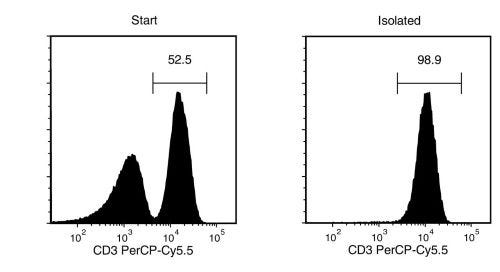
T Cell Separation using EasySep™ Human T Cell Isolation Kit

Figure 1. EasySep™ Human T Cell Isolation Kit

Starting with human peripheral blood mononuclear cells (PBMCs), the T cell content (CD3+) of the isolated fraction is typically 96.7 ± 1.5% (mean ± SD).

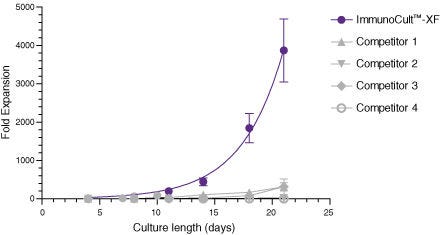
ImmunoCult™-XF T Cell Expansion Medium Supports Faster T Cell Expansion Than Other Serum-Free and Serum-Supplemented Media

Figure 2. ImmunoCult™-XF T Cell Expansion Medium Supports Faster T Cell Expansion Than Other Serum-Free and Serum-Supplemented Media

T cells were isolated from human peripheral blood samples using the EasySep™ Human T Cell Isolation Kit (Catalog #17951), stimulated with ImmunoCult™ Human CD3/CD28/CD2 T Cell Activator (Catalog #10970), and cultured in ImmunoCult™-XF T Cell Expansion Medium supplemented with rhIL-2. T cells were stimulated with ImmunoCult™ Human CD3/CD28/CD2 T Cell Activator on Day 0 and every 7 to 8 days for the duration of the culture. T cells were analyzed on Days 4, 7, 8, 10, 11, 14, 18, and 21 for fold expansion relative to the initial cell seeding density. Compared to all competitor media tested, ImmunoCult™-XF T Cell Expansion Medium showed significantly higher expansion of total T cells. Commercial alternatives 1 to 4 include, in no particular order, X-VIVO™ 15 (Lonza), AIM V® Medium (Life Tech), CellGro® DC Medium (CellGenix), and RPMI 1640 + serum. Each data point represents the mean fold expansion ± S.E.M. at the specified time points (p<0.05 for ImmunoCult™-XF versus all media for Days 8, 11, 14, 18, and 21, tested using two-tailed, paired t-test with unequal variance, n = 6 to 19 donors). The average fold expansion of T cells in ImmunoCult™-XF T Cell Expansion Medium were 15-fold on Day 7, 80-fold on Day 10, 450-fold on Day 14, and 4,000-fold on Day 21.

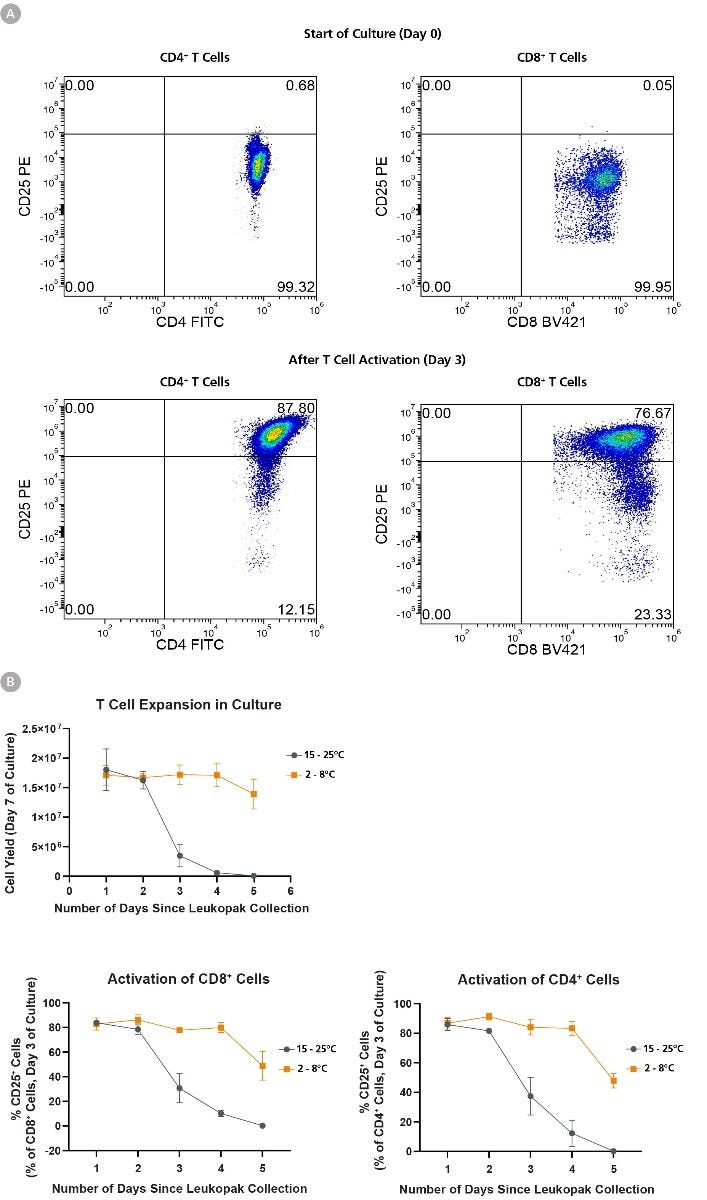
T Cell Expansion and Activation Ability Is Better Preserved When Leukopaks are Stored at Fridge Temperature

Figure 3. T Cell Expansion and Activation Ability Is Better Preserved When Leukopaks are Stored at Fridge Temperature

Using EasySep™ Human T Cell Isolation Kit (Catalog #17951), T cells were isolated from 1 leukopak fraction (Catalog # 70500) of each storage condition daily for 5 days, and 1 x 10⁶ isolated cells were cultured in ImmunoCult™-XF T Cell Expansion Medium (Catalog #10981) supplemented with ImmunoCult™ Human CD3/CD28/CD2 T Cell Activator (Catalog # 10970) and 10 ng/mL IL-2 for 10 days with assessment of CD25 activation marker expression on day 3 of culture. (A) Representative flow cytometry data from leukopaks stored 1 day at fridge temperature (FT), showing that both CD4+ and CD8+ cells are CD25-negative at the start of culture (Day 0), and upregulate CD25 expression by Day 3 of culture. (B) Cellular expansion and corresponding cell yield over 7 days of culture decreases in correlation with storage duration of leukopak fractions. Leukopaks that were stored for 1 - 2 days at either room temperature (RT) or FT had high expansion potential yielding 1.5 - 2 x 10⁷ cells, and this 15 - 20-fold expansion potential is maintained in T cells from leukopaks stored at FT for up to 5 days. In contrast, little or no expansion is observed in T cell cultures from leukopaks stored at RT for 3 or more days, indicating a loss of proliferative capacity. Moreover, T cells show a gradual reduction in their ability to become activated by ImmunoCult™ T Cell activator, as shown by a reduction in Day 3 CD25 expression in gated CD4+ (bottom left) or CD8+ (bottom right) cells over time, and the effect is most pronounced with storage at RT for 3 or more days. All data points represent average ± standard deviation values from leukopak fractions of n = 3 unique donors.

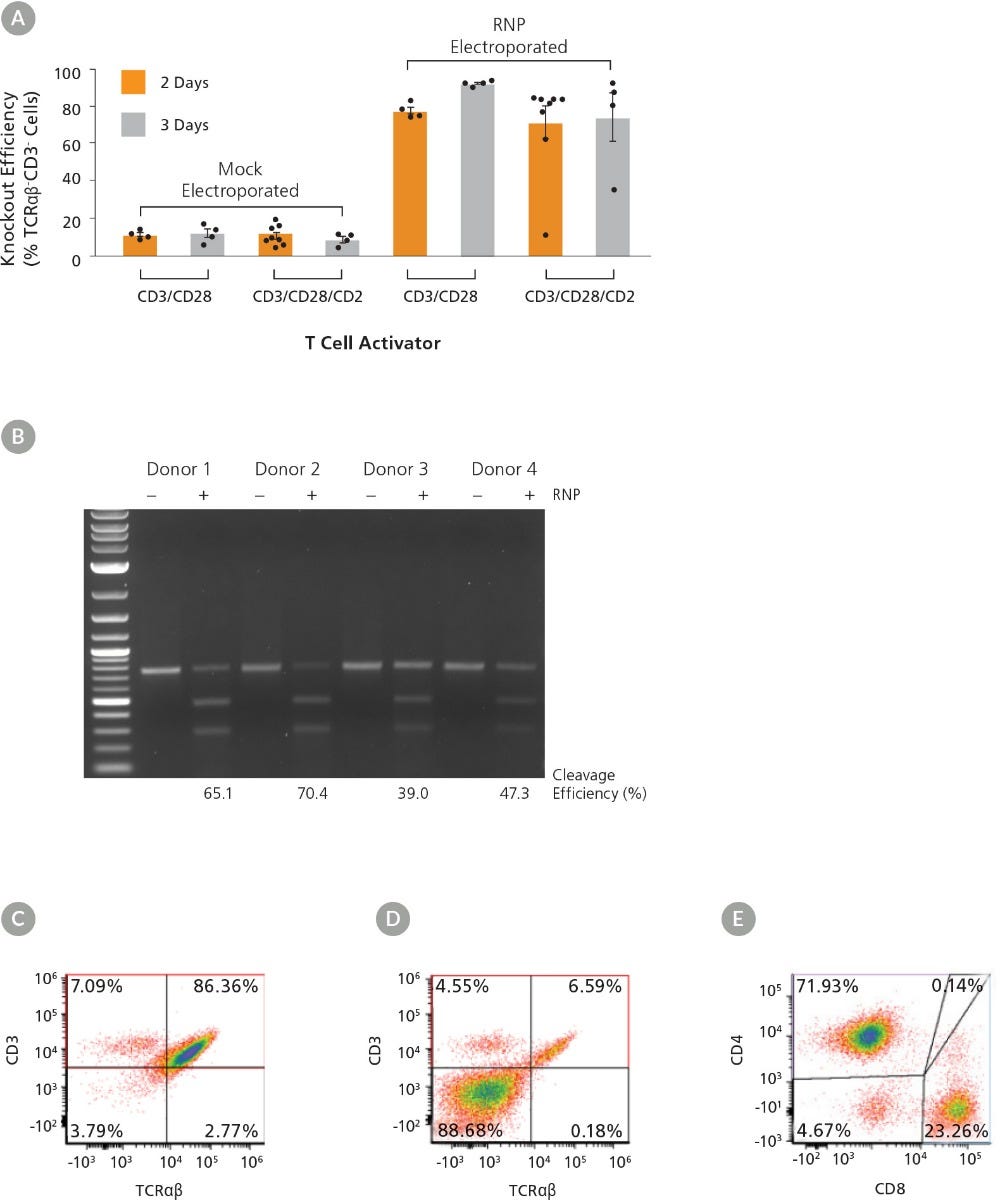
ImmunoCult™ Human T Cell Activators Can Be Used to Optimize Culture Conditions for High-Efficiency TRAC Knockout from Human Primary T Cells

Figure 4. ImmunoCult™ Human T Cell Activators Can Be Used to Optimize Culture Conditions for High-Efficiency TRAC Knockout from Human Primary T Cells

The TRAC locus of human primary T cells was edited with an RNP-based-CRISPR-Cas9 system using multiple T cell activation reagents and dynamics then evaluated to identify a condition with the highest knockout efficiency. (A) TRAC knockout efficiency in human T cells isolated using EasySep™ Human T Cell Isolation Kit (Catalog #17951) and activated with either ImmunoCult™ Human CD3/CD28 or CD3/CD28/CD2 T Cell Activator (Catalog #10971/10970) for 2 or 3 days was assessed by binding the TCRαβ and CD3 receptors with antibodies and performing flow cytometry analysis. Each data point per condition represents an individual donor; n = 4 - 8 donors. Error bars represent standard error of the mean. (B) Genome editing (cleavage) efficiency was assessed at 48 hours post electroporation in human T cells activated with ImmunoCult™ Human CD3/CD28 T Cell Activator for 3 days using the ArciTect™ T7 Endonuclease I Kit (Catalog #76021). Mock electroporated: - RNP; RNP electroporated: + RNP. (C - D) Representative dot plots of TCRαβ and CD3 flow cytometry analysis from (C) mock electroporated and (D) RNP electroporated human T cells activated with ImmunoCult™ Human CD3/CD28 T Cell Activator for 3 days. (E) Representative dot plot of CD4 and CD8 flow cytometry analysis of human T cells activated with ImmunoCult™ Human CD3/CD28 T Cell Activator for 3 days.

产品说明书及文档

请在《产品说明书》中查找相关支持信息和使用说明,或浏览下方更多实验方案。

Document Type
Product Name
Catalog #
Lot #
Language
Catalog #
17951RF
Lot #
All
Language
English
Catalog #
17951
Lot #
All
Language
English
Catalog #
100-0695
Lot #
All
Language
English
Document Type
Safety Data Sheet 1
Catalog #
17951RF
Lot #
All
Language
English
Document Type
Safety Data Sheet 2
Catalog #
17951RF
Lot #
All
Language
English
Document Type
Safety Data Sheet 3
Catalog #
17951RF
Lot #
All
Language
English
Document Type
Safety Data Sheet 1
Catalog #
17951
Lot #
All
Language
English
Document Type
Safety Data Sheet 2
Catalog #
17951
Lot #
All
Language
English
Document Type
Safety Data Sheet 1
Catalog #
100-0695
Lot #
All
Language
English
Document Type
Safety Data Sheet 2
Catalog #
100-0695
Lot #
All
Language
English

应用领域

本产品专为以下研究领域设计,适用于工作流程中的高亮阶段。探索这些工作流程,了解更多我们为各研究领域提供的其他配套产品。

相关材料与文献

技术资料 (26)

常见问题 (11)

Can EasySep™ be used for either positive or negative selection?

Yes. The EasySep™ kits use either a negative selection approach by targeting and removing unwanted cells or a positive selection approach targeting desired cells. Depletion kits are also available for the removal of cells with a specific undesired marker (e.g. GlyA).

How does the separation work?

Magnetic particles are crosslinked to cells using Tetrameric Antibody Complexes (TAC). When placed in the EasySep™ Magnet, labeled cells migrate to the wall of the tube. The unlabeled cells are then poured off into a separate fraction.

Which columns do I use?

The EasySep™ procedure is column-free. That's right - no columns!

How can I analyze the purity of my enriched sample?

The Product Information Sheet provided with each EasySep™ kit contains detailed staining information.

Can EasySep™ separations be automated?

Yes. RoboSep™, the fully automated cell separator, automates all EasySep™ labeling and cell separation steps.

Can EasySep™ be used to isolate rare cells?

Yes. We recommend a cell concentration of 2x10⁸ cells/mL and a minimum working volume of 100 µL. Samples containing 2x10⁷ cells or fewer should be suspended in 100 µL of buffer.

Are the EasySep™ magnetic particles FACS-compatible?

Yes, the EasySep™ particles are flow cytometry-compatible, as they are very uniform in size and about 5000X smaller than other commercially available magnetic beads used with column-free systems.

Can the EasySep™ magnetic particles be removed after enrichment?

No, but due to the small size of these particles, they will not interfere with downstream applications.

Can I alter the separation time in the magnet?

Yes; however, this may impact the kit's performance. The provided EasySep™ protocols have already been optimized to balance purity, recovery and time spent on the isolation.

For positive selection, can I perform more than 3 separations to increase purity?

Yes, the purity of targeted cells will increase with additional rounds of separations; however, cell recovery will decrease.

How does the binding of the EasySep™ magnetic particle affect the cells? is the function of positively selected cells altered by the bound particles?

Hundreds of publications have used cells selected with EasySep™ positive selection kits for functional studies. Our in-house experiments also confirm that selected cells are not functionally altered by the EasySep™ magnetic particles.

If particle binding is a key concern, we offer two options for negative selection. The EasySep™ negative selection kits can isolate untouched cells with comparable purities, while RosetteSep™ can isolate untouched cells directly from whole blood without using particles or magnets.

文献 (65)

High Treg and PMN-MDSC densities are a hallmark of tertiary lymphoid structures in fatal cases of cervical cancer L. A. Syding et al. Journal for Immunotherapy of Cancer 2025 Sep

Abstract

BackgroundHigh densities of tertiary lymphoid structures (TLSs) are associated with improved clinical outcomes in various malignancies, including human papillomavirus (HPV)-associated head and neck squamous cell carcinoma (HNSCC). However, the role of TLSs in shaping antitumor immunity in HPV-induced cervical cancer (CESC) remains unclear. Therefore, we analyzed the density, composition, and prognostic impact of TLSs in patients with CESC as well as patients with HNSCC.MethodsMultiplex immunofluorescence, immunohistochemistry, and spatial transcriptomics were used to analyze TLS density and composition in HNSCC and CESC tissue sections with respect to patient prognosis. The spatial approach was supplemented by flow cytometry-based analysis of the polymorphonuclear myeloid-derived suppressor cell (PMN-MDSC) phenotype in freshly resected primary tumor tissues.ResultsAlthough both indications were associated with HPV infection, we confirmed a positive correlation between TLS density and improved overall survival only in patients with HNSCC. The TLS composition differed markedly between HNSCC and CESC samples, with a shift toward high regulatory T cell (Treg) and PMN-MDSC abundance in CESC samples. The highest Treg and PMN-MDSC levels were observed in patients with CESC who died of the disease. CESC-infiltrating PMN-MDSCs showed high arginase 1 expression, which correlated with diminished T-cell receptor (TCR)ζ chain expression in CESC-infiltrating T cells. Additionally, the high number of PMN-MDSCs in TLSs was associated with the absence of HPV-specific T cells in CESC.ConclusionsUnlike in HNSCC, the composition of TLSs, rather than their quantity, was associated with the overall survival of patients with CESC. High numbers of Tregs and PMN-MDSCs infiltrating immature TLSs prevail in patients with CESC who succumbed to the disease and seem to affect tumor-specific immune responses.
Induction of Tolerogenic Dendritic Cells by a Noncoding Oligonucleotide K. Kamal et al. European Journal of Immunology 2025 Oct

Abstract

Tolerogenic dendritic cells (tolDCs) that dampen T cell responses can be induced from blood monocytes in vitro using factors such as Vitamin D3 (VitD), dexamethasone, IL‐10, or rapamycin. However, challenges remain in obtaining robust and efficient generation of cell therapy‐based tolDCs without compromising their viability. We recently reported that CCR2‐dependent recruitment of monocytic cells, with the capacity to dampen T‐helper responses, occurs in mice treated with a single‐stranded oligonucleotide (ssON). Here, we investigated the effects of this immunomodulatory noncoding ssON on differentiating human monocytes towards DC in the presence of IL‐4 and GM‐CSF (moDC). The moDC differentiated in the presence of ssON upregulated CD1a but also increased their expression of PD‐L1. The differentiation of monocytes to moDC in the presence of ssON introduced transcriptomic changes, many of which overlapped with VitD‐moDC and resulted in moDCs with altered lipopolysaccharide (LPS)‐responsiveness. Moreover, ssON‐moDC exhibited a low capacity to stimulate alloreactive T cells in vitro and instead promoted the induction of CD4+FoxP3+CD25+ T cells. Experiments using chemical reagents support a role for PPAR‐γ in the generation of ssON‐moDC. Collectively, our data show that monocytes differentiated with IL‐4, GM‐CSF, and ssON generate cells with phenotypic and functional characteristics of tolDCs. In this article, the authors elucidated the immunoregulatory role of an oligonucleotide (ssON) that favors the induction of human tolerogenic dendritic cells (DC). The tolerogenic profile was evidenced by reduced responsiveness to lipopolysaccharides (LPS) (A). Importantly, the tolerogenic DCs had upregulated PD‐L1 molecules and functionally inhibited the proliferation of alloreactive T cells and induced FoxP3+ Tregs (B). This study envisions the development of ssON as therapeutic for rebalancing overactive T‐helper cell responses.
Development of antigen multimers for detection and evaluation of CAR T cells R. U. W. Friis et al. Cancer Immunology, Immunotherapy : CII 2025 Oct

Abstract

Chimeric antigen receptor (CAR) T cell therapy has transformed the treatment landscape of hematologic cancers by engineering T cells to specifically target and destroy cancer cells. Monitoring CAR T cell activity and function is essential for optimizing therapeutic outcomes, but existing tools for CAR detection are often limited in specificity and functional assessment capability. Methods: We developed dextran multimers by conjugating multiple CAR-specific antigens to a dextran backbone. The multimers were compared to previously reported antigen tetramers for their ability to stain and detect CAR T cells. Because these multimers incorporate the CAR target antigen, they uniquely enable assessment of CAR T cell functionality. We tested the staining and functional properties of the multimers across a range of CAR constructs with different affinities, using flow cytometry and microscopy. Results: The dextran multimers demonstrated high specificity and sensitivity in staining CAR T cells, with adjustable antigen density to optimize binding. Dextran multimers also enabled effective clustering and subsequent activation of CARs, showing their utility as both a staining and functional assessment tool. The multimers revealed that CARs with different affinities and clustering tendencies displayed varied binding and activation in response to different antigen densities. Conclusions: Dextran multimers offer a dual advantage as versatile reagents for both staining and functional analysis of CAR T cells. Their capacity to engage CARs with the specific antigen provides a valuable platform for evaluating CAR functionality, informing CAR design improvements, and enhancing therapeutic precision.

更多信息

更多信息
Molecular Weight 1645,1646
物种 人类
Magnet Compatibility • EasySep™ Magnet (Catalog #18000) • “The Big Easy” EasySep™ Magnet (Catalog #18001) • Easy 50 EasySep™ Magnet (Catalog #18002) • EasyPlate™ EasySep™ Magnet (Catalog 18102) • EasyEights™ EasySep™ Magnet (Catalog #18103) • RoboSep™-S (Catalog #21000) • Eas
样本来源 PBMC, 白细胞单采术样本
Selection Method Negative
Target • EasySep™ Magnet (Catalog #18000) • “The Big Easy” EasySep™ Magnet (Catalog #18001) • Easy 50 EasySep™ Magnet (Catalog #18002) • EasyPlate™ EasySep™ Magnet (Catalog 18102) • EasyEights™ EasySep™ Magnet (Catalog #18103) • RoboSep™-S (Catalog #21000) • Eas
Pathway Negative
标记抗体
质量保证:

产品仅供研究使用,不用于针对人或动物的诊断或治疗。 欲获悉更多关于STEMCELL的质控信息,请访问 STEMCELL.CN/COMPLIANCE.
Copyright © 2025 by STEMCELL Technologies. All rights reserved.

在线联系