若您需要咨询产品或有任何技术问题,请通过官方电话 400 885 9050 或邮箱 info.cn@stemcell.com 与我们联系。

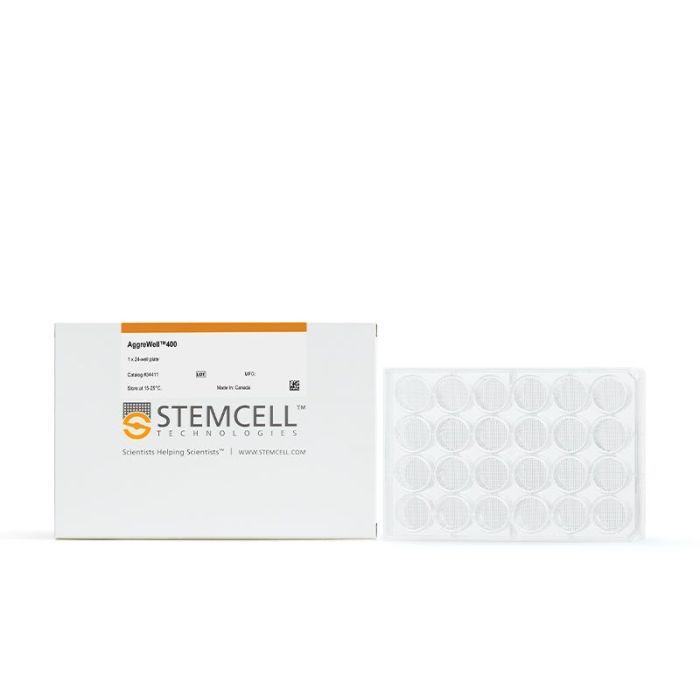
AggreWell™400

简单可重复性地制备拟胚体和球体的微孔培养板
只有 %1
¥1,100.00

产品号 #(选择产品)

产品号 #34411_C

简单可重复性地制备拟胚体和球体的微孔培养板

产品组分包括

  • AggreWell™400 24孔板
    • 1块板(产品号#34411)
    • 5块板(产品号#34415)
  • AggreWell™400 6孔板
    • 1块板(产品号#34421)
    • 5块板(产品号#34425)
  • AggreWell™400 24孔板套装(产品号#34450)
    • 2 x 24孔板
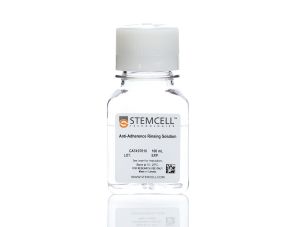
    • 1瓶抗粘附冲洗液(产品号#07010)
  • AggreWell™400 6孔板套装(产品号#34460)
    • 2 x 6孔板
    • 1瓶抗粘附冲洗液(产品号#07010)
New look, same high quality and support! You may notice that your instrument or reagent packaging looks slightly different from images displayed on the website, or from previous orders. We are updating our look but rest assured, the products themselves and how you should use them have not changed. Learn more
专为您的实验方案打造的产品
要查看实验方案所需的所有配套产品,请参阅《实验方案与技术文档》

总览

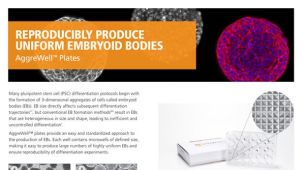
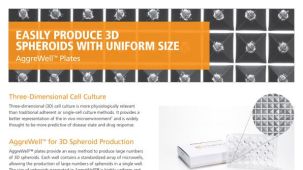
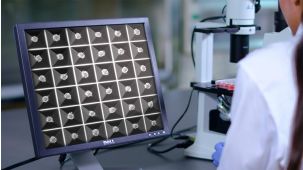
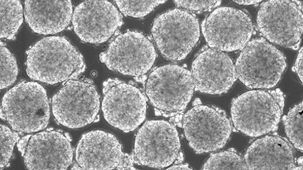
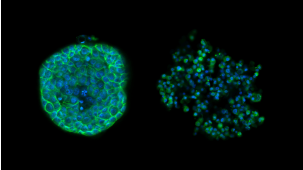
AggreWell™细胞培养板提供了一种简单、标准化的方法来生成细胞聚集体,包括拟胚体(EBs)和球体。使用AggreWell™板生成的EBs和球体在大小和形状上是均一的,并且在实验内和实验间均表现出良好的均一性。新一代改进版 AggreWell™ 板兼容多种细胞类型,包括胚胎干细胞、诱导多能干细胞、肿瘤细胞等。其增强的光学特性确保成像清晰无杂质。注意:为了获得最佳的拟胚体和球体形成效果,需配合使用 AggreWell™ 抗粘附冲洗液。

如果您使用AggreWell™800板,请参见在这里.

分类
培养皿与培养板
 
种属
人,小鼠,非人灵长类,其他物种,大鼠
 
应用
分化,球状体培养,细胞毒性检测
 
品牌
AggreWell
 

产品说明书及文档

请在《产品说明书》中查找相关支持信息和使用说明,或浏览下方更多实验方案。

Document Type
Product Name
Catalog #
Lot #
Language
Catalog #
34421
Lot #
All
Language
English
Catalog #
34460
Lot #
All
Language
English
Catalog #
34425
Lot #
All
Language
English
Catalog #
34450
Lot #
All
Language
English
Catalog #
34415
Lot #
All
Language
English
Catalog #
34411
Lot #
All
Language
English

应用领域

本产品专为以下研究领域设计,适用于工作流程中的高亮阶段。探索这些工作流程,了解更多我们为各研究领域提供的其他配套产品。

相关材料与文献

技术资料 (13)

文献 (21)

Tailoring agarose fluid gels for use in suspension bath bioprinting and culture of spheroid-based bioinks M. E. Cooke et al. Biofabrication 2025 Oct

Abstract

Suspension bath bioprinting, whereby bioinks are extruded into a yield stress bath with rapid recovery from shearing, has enabled the printing of low viscosity bioinks into constructs with high geometric complexity. Previous studies have often relied upon external stabilisation of the suspension bath (e.g. collagen) in order to culture soft materials without loss of printed structure. Here, we report a systematic investigation of suspension bath properties that support the printing, fusion, and culture of spheroid-based bioinks without added stabilisation. Specifically, agarose fluid gels of varied polymer concentrations and dilutions were produced and characterised morphologically and rheologically. Juvenile bovine chondrocytes or mesenchymal stromal cells (MSCs) were formed into spheroids of ∼150 µ m in diameter and investigated within agarose suspension baths either for their fusion in hanging drop cultures or as jammed bioinks. MSC spheroids were also printed when mixed with hydrogel microparticles to demonstrate additional versatility to the approach. Suspension baths of lower polymer concentrations and increased dilution enabled faster spheroid fusion; however, the most heavily diluted suspension bath was unable to maintain print fidelity. Other formulations supported the printing, fusion, and culture of spheroid-based inks, either as simple lines or more complex patterns. These findings help to inform the design of suspension baths for bioprinting and culture.
Human pancreatic α-cell heterogeneity and trajectory inference analyses reveal SMOC1 as a β-cell dedifferentiation gene R. B. Kang et al. Nature Communications 2025 Oct

Abstract

β-cell dysfunction and dedifferentiation towards an α-cell-like phenotype are hallmarks of type 2 diabetes. However, the cell subtypes involved in β-to-α-cell transition are unknown. Using single-cell and single-nucleus RNA-seq, RNA velocity, PAGA/cell trajectory inference, and gene commonality, we interrogated α-β-cell fate switching in human islets. We found five α-cell subclusters with distinct transcriptomes. PAGA analysis showed bifurcating cell trajectories in non-diabetic while unidirectional cell trajectories from β-to-α-cells in type 2 diabetes islets suggesting dedifferentiation towards α-cells. Ten genes comprised the common signature genes in trajectories towards α-cells. Among these, the α-cell gene SMOC1 was expressed in β-cells in type 2 diabetes. Enhanced SMOC1 expression in β-cells decreased insulin expression and secretion and increased β-cell dedifferentiation markers. Collectively, these studies reveal differences in α-β-cell trajectories in non-diabetes and type 2 diabetes human islets, identify signature genes for β-to-α-cell trajectories, and discover SMOC1 as an inducer of β-cell dysfunction and dedifferentiation. Subject terms: Cell signalling, Diabetes, Differentiation
Anti-tumor efficacy and Vδ2 T-cell activation via EGFR antibody-drug conjugates featuring novel aminobisphosphonates D. Cuffaro et al. Scientific Reports 2025 Nov

Abstract

Antibody–drug conjugates (ADCs) represent a promising strategy in cancer therapy, enabling the targeted delivery of cytotoxic agents to tumor cells. In this study, we developed and characterized novel ADCs combining the anti-EGFR monoclonal therapeutic antibody Cetuximab (Cet) with two aminobisphosphonates (N-BPs) analogues of zoledronic acid (ZA): DC310 and the aminothiazole DC315. These conjugates aim to enhance antitumor efficacy of Cet in colorectal cancer (CRC) by both directly inhibiting tumor cell growth and activating Vδ2 T lymphocytes. We optimized the drug-antibody ratio (DAR), achieving significantly higher DARs compared to previously reported Cet-ZA conjugate, particularly with Cet-DC315 (DAR ≈ 23). Both ADCs retained selective EGFR binding in CRC cell lines and patient-derived organoids (PDO). Functionally, Cet-DC315 markedly inhibited proliferation of EGFR⁺ CRC cell lines in conventional cultures and 3D spheroids. Furthermore, Cet-DC-315 uniquely induced expansion and cytotoxic activation of Vδ2 T cells in co-cultures with CRC cell lines, PDO, and primary tumor samples. These findings suggest that ADCs incorporating novel N-BPs such as DC315 represent a potent approach for dual antitumor targeting through direct cytostatic effects and immune activation, offering a potential therapeutic advantage in the treatment of EGFR+ colorectal cancer.

更多信息

更多信息
物种 人类, 其它物种, 大鼠, 小鼠, 非人灵长类
质量保证:

产品仅供研究使用,不用于针对人或动物的诊断或治疗。 欲获悉更多关于STEMCELL的质控信息,请访问 STEMCELL.CN/COMPLIANCE.
Copyright © 2025 by STEMCELL Technologies. All rights reserved.

在线联系