若您需要咨询产品或有任何技术问题,请通过官方电话 400 885 9050 或邮箱 info.cn@stemcell.com 与我们联系。

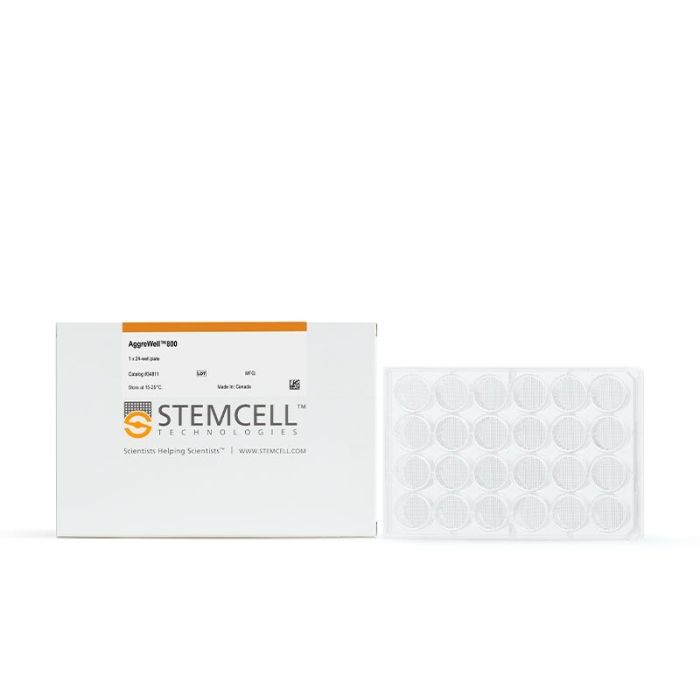
AggreWell™800

简单可重复性地制备拟胚体和球体的微孔培养板
只有 %1
¥1,016.00

产品号 #(选择产品)

产品号 #34811_C

简单可重复性地制备拟胚体和球体的微孔培养板

产品组分包括

  • AggreWell™800 24孔板
    • 1块(产品号#34811)
    • 5块(产品号#34815)
  • AggreWell™800 6孔板
    • 1块(产品号#34821)
    • 5块(产品号#34825)
  • AggreWell™800 24孔板套装(产品号#34850)
    • 2 x 24孔板
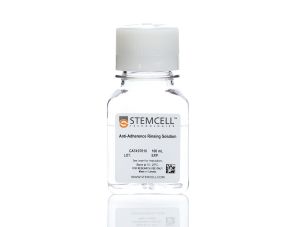
    • 1瓶防粘附冲洗液(产品号#07010)
  • AggreWell™800 6孔板套装(产品号#34860)
    • 2 x 6孔板
    • 1瓶防粘附冲洗液(产品号#07010)
New look, same high quality and support! You may notice that your instrument or reagent packaging looks slightly different from images displayed on the website, or from previous orders. We are updating our look but rest assured, the products themselves and how you should use them have not changed. Learn more
专为您的实验方案打造的产品
要查看实验方案所需的所有配套产品,请参阅《实验方案与技术文档》

总览

AggreWell™细胞培养板提供了一种简单、标准化的方法来生成细胞聚集体,包括拟胚体(EBs)和球体。使用AggreWell™板生成的EBs和球体在大小和形状上是均一的,并且在实验内和实验间均表现出良好的均一性。新一代改进版 AggreWell™ 板兼容多种细胞类型,包括胚胎干细胞、诱导多能干细胞、肿瘤细胞等。其增强的光学特性确保成像清晰无杂质。注意:为了获得最佳的拟胚体和球体形成效果,需配合使用 AggreWell™ 抗粘附冲洗液。

如果您使用AggreWell™400板,请参见在这里.

分类
培养皿与培养板
 
种属
人,小鼠,非人灵长类,其他物种,大鼠
 
应用
分化,球状体培养,细胞毒性检测
 
品牌
AggreWell
 

产品说明书及文档

请在《产品说明书》中查找相关支持信息和使用说明,或浏览下方更多实验方案。

Document Type
Product Name
Catalog #
Lot #
Language
Catalog #
34825
Lot #
All
Language
English
Catalog #
34811
Lot #
All
Language
English
Catalog #
34860
Lot #
All
Language
English
Catalog #
34821
Lot #
All
Language
English
Catalog #
34815
Lot #
All
Language
English
Catalog #
34850
Lot #
All
Language
English

相关材料与文献

技术资料 (20)

文献 (51)

Metal-organic polyhedra maintain the self-renewal of embryonic stem cells R. Wang et al. Nature Communications 2025 Sep

Abstract

Embryonic stem cells (ESC) are pluripotent, with the potential to differentiate into multiple cell types, making them a valuable tool for regenerative medicine and disease therapy. However, common culture methods face challenges, including strict operating procedures and high costs. Currently, Leukemia inhibitory factor (LIF), an indispensable bioactive protein for ESC culture, is typically applied to maintain self-renewal and pluripotency, but its instability and high cost limit its effectiveness in stable culture conditions. Hence, we have developed an innovative strategy using a soluble nanomaterial, metal-organic polyhedra (MOPs), to effectively maintain the self-renewal and pluripotency of ESC. The selected amino-modified vanadium-based MOP not only exhibits excellent biocompatibility and high stability but also possesses similar or even superior biological functions compared to commercial LIF. Due to the precise structure of MOPs, the active site responsible for maintaining ESC pluripotency has been identified and regulated at the molecular level. The new ESC culture method significantly reduces costs, simplifies preparation, and enhances the practicality of biopharmaceutical preparation and storage. This represents the first case of using MOPs to maintain self-renewal of ECS, opening an avenue for introducing advanced materials into the development of innovative ESC culture methods. Subject terms: Biomaterials - cells, Chemical biology
Protective mechanisms against Alzheimer's disease in APOE3‐Christchurch homozygous astrocytes X. Tian et al. Alzheimer's & Dementia 2025 Sep

Abstract

Alzheimer's disease (AD) is characterized by tau pathology, leading to neurodegeneration. Astrocytes regulate central nervous system homeostasis and influence AD progression. The APOE3‐Christchurch (APOE3‐Ch) variant is linked to AD resilience, but its protective mechanisms remain unclear. Human induced pluripotent stem cell–derived astrocytes (APOE3‐Ch and wild type) were used to assess tau uptake, clearance, lipid metabolism, and transcriptomic adaptations. Fluorescently labeled 2N4R‐P301L tau oligomers were tracked, and pathway‐specific inhibitors dissected tau clearance mechanisms. Lipidomic and transcriptomic analyses were performed to identify genotype‐specific adaptations. APOE3‐Ch astrocytes exhibited enhanced tau uptake via heparan sulfate proteoglycan‐ and lipoprotein receptor‐related protein 1‐mediated pathways and superior clearance through lysosomal and proteasomal degradation. They exported less tau, limiting propagation. Transcriptomic analyses revealed upregulation of genes involved in cell projection assembly and endocytosis. Lipidomic profiling showed reduced ceramides and gamma‐linolenic acid, linked to decreased neuroinflammation and ferroptosis. APOE3‐Ch astrocytes promote tau clearance and metabolic adaptations, providing insights into genetic resilience in AD and potential therapeutic targets. APOE3‐Christchurch (APOE3‐Ch) astrocytes exhibit significantly increased tau internalization compared to wild‐type astrocytes, facilitated by upregulated heparan sulfate proteoglycan and low‐density lipoprotein receptor‐related protein 1 pathways. APOE3‐Ch astrocytes demonstrate more efficient tau degradation via both lysosomal and proteasomal pathways, while exporting significantly less tau, potentially reducing tau propagation in the central nervous system. APOE3‐Ch astrocytes show upregulation of genes involved in cell projection assembly and endocytosis, suggesting structural and functional modifications that enhance tau processing. Lipidomic profiling reveals reduced ceramide levels and gamma‐linolenic acid downregulation in APOE3‐Ch astrocytes, alterations linked to reduced neuroinflammatory and ferroptotic activity, contributing to the protective phenotype.
The Parkinson’s disease-associated LRRK2-G2019S variant restricts serine metabolism, leading to microglial inflammation and dopaminergic neuron degeneration H. Kurniawan et al. Journal of Neuroinflammation 2025 Oct

Abstract

A growing body of evidence implicates inflammation as a key hallmark in the pathophysiology of Parkinson’s disease (PD), with microglia playing a central role in mediating neuroinflammatory signaling in the brain. However, the molecular mechanisms linking microglial activation to dopaminergic neuron degeneration remain poorly understood. In this study, we investigated the contribution of the PD-associated LRRK2-G2019S mutation to microglial neurotoxicity using patient-derived induced pluripotent stem cell (iPSC) models. We found that LRRK2-G2019S mutant microglia exhibited elevated activation markers, enhanced phagocytic capacity, and increased secretion of pro-inflammatory cytokines such as TNF-α. These changes were associated with metabolic dysregulation, including upregulated glycolysis and impaired serine biosynthesis. In 3D midbrain organoids, these overactivated microglia resulted in dopaminergic neuron degeneration. Notably, treating LRRK2-G2019S microglia with oxamic acid, a glycolysis inhibitor, attenuated microglial inflammation and reduced neuronal loss. Our findings underscore the link between metabolic targeting in microglia and dopaminergic neuronal loss in LRRK2-G2019S mutation, and highlight a potential strategy that warrants further preclinical evaluation.

更多信息

更多信息
物种 人类, 其它物种, 大鼠, 小鼠, 非人灵长类
质量保证:

产品仅供研究使用,不用于针对人或动物的诊断或治疗。 欲获悉更多关于STEMCELL的质控信息,请访问 STEMCELL.CN/COMPLIANCE.
Copyright © 2025 by STEMCELL Technologies. All rights reserved.

在线联系