若您需要咨询产品或有任何技术问题,请通过官方电话 400 885 9050 或邮箱 info.cn@stemcell.com 与我们联系。

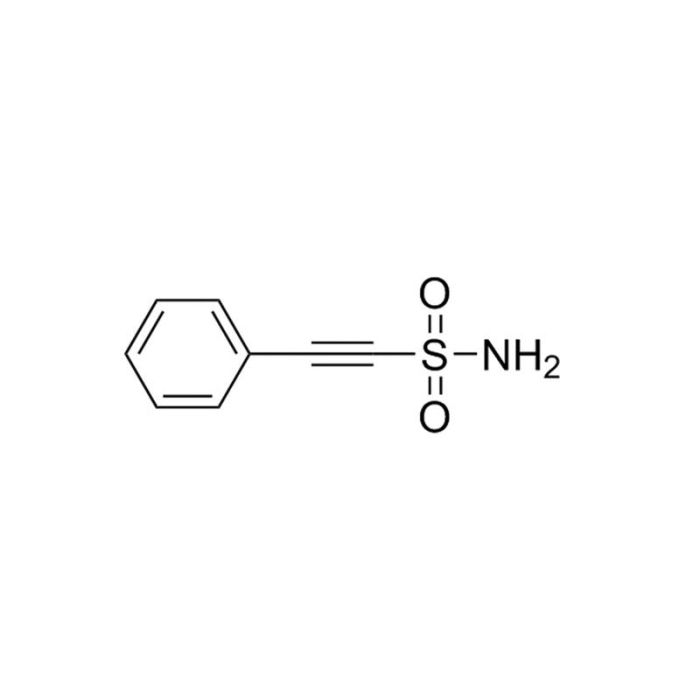
Pifithrin-mu

p53抑制剂
只有 %1
¥1,070.00

产品号 #(选择产品)

产品号 #72802_C

p53抑制剂

总览

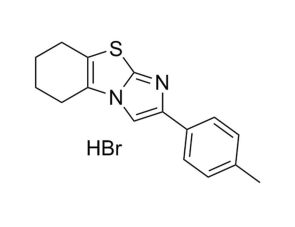
Pifithrin-mu(PFT-µ)是p53介导的细胞凋亡抑制剂,可阻止p53在线粒体表面与Bcl-xL和Bcl-2结合,而不影响p53的转录活化的功能(Strom et al.)。在体外实验中,PFT-µ可与p53 (Kd = 0.82 mM)和Bcl-xL (Kd = 0.80 mM)结合(Hagn et al.)。

维持和自我更新
·与Rho 相关卷曲螺旋蛋白激酶(ROCK)抑制剂Y-27632一起使用,可提高细胞冻存复苏后的存活率(Xu et al.)。
·抑制人胚胎干细胞中由DNA损伤引起的凋亡(Qin et al.)。

细胞类型
多能干细胞
 
种属
人,小鼠,非人灵长类,其他物种,大鼠
 
应用
培养
 
研究领域
干细胞生物学
 
CAS 编号
64984-31-2
 
化学式
C₈H₇NO₂S
 
纯度
≥98%
 
通路
p53
 
靶点
p53
 

产品说明书及文档

请在《产品说明书》中查找相关支持信息和使用说明,或浏览下方更多实验方案。

Document Type
Product Name
Catalog #
Lot #
Language
Product Name
Pifithrin-mu
Catalog #
72802
Lot #
All
Language
English
Document Type
Safety Data Sheet
Product Name
Pifithrin-mu
Catalog #
72802
Lot #
All
Language
English

应用领域

本产品专为以下研究领域设计,适用于工作流程中的高亮阶段。探索这些工作流程,了解更多我们为各研究领域提供的其他配套产品。

相关材料与文献

技术资料 (3)

文献 (5)

Small-molecule inhibitor of p53 binding to mitochondria protects mice from gamma radiation. Strom E et al. Nature chemical biology 2006 SEP

Abstract

p53-dependent apoptosis contributes to the side effects of cancer treatment,and genetic or pharmacological inhibition of p53 function can increase normal tissue resistance to genotoxic stress. It has recently been shown that p53 can induce apoptosis through a mechanism that does not depend on transactivation but instead involves translocation of p53 to mitochondria. To determine the impact of this p53 activity on normal tissue radiosensitivity,we isolated a small molecule named pifithrin-mu (PFTmu,1) that inhibits p53 binding to mitochondria by reducing its affinity to antiapoptotic proteins Bcl-xL and Bcl-2 but has no effect on p53-dependent transactivation. PFTmu has a high specificity for p53 and does not protect cells from apoptosis induced by overexpression of proapoptotic protein Bax or by treatment with dexamethasone (2). PFTmu rescues primary mouse thymocytes from p53-mediated apoptosis caused by radiation and protects mice from doses of radiation that cause lethal hematopoietic syndrome. These results indicate that selective inhibition of the mitochondrial branch of the p53 pathway is sufficient for radioprotection in vivo.
Regulation of apoptosis and differentiation by p53 in human embryonic stem cells. Qin H et al. The Journal of biological chemistry 2007 FEB

Abstract

The essentially infinite expansion potential and pluripotency of human embryonic stem cells (hESCs) makes them attractive for cell-based therapeutics. In contrast to mouse embryonic stem cells (mESCs),hESCs normally undergo high rates of spontaneous apoptosis and differentiation,making them difficult to maintain in culture. Here we demonstrate that p53 protein accumulates in apoptotic hESCs induced by agents that damage DNA. However,despite the accumulation of p53,it nevertheless fails to activate the transcription of its target genes. This inability of p53 to activate its target genes has not been observed in other cell types,including mESCs. We further demonstrate that p53 induces apoptosis of hESCs through a mitochondrial pathway. Reducing p53 expression in hESCs in turn reduces both DNA damage-induced apoptosis as well as spontaneous apoptosis. Reducing p53 expression also reduces spontaneous differentiation and slows the differentiation rate of hESCs. Our studies reveal the important roles of p53 as a critical mediator of human embryonic stem cells survival and differentiation.
A small molecule inhibitor of inducible heat shock protein 70. Leu JI-J et al. Molecular cell 2009 OCT

Abstract

The multifunctional,stress-inducible molecular chaperone HSP70 has important roles in aiding protein folding and maintaining protein homeostasis. HSP70 expression is elevated in many cancers,contributing to tumor cell survival and resistance to therapy. We have determined that a small molecule called 2-phenylethynesulfonamide (PES) interacts selectively with HSP70 and leads to a disruption of the association between HSP70 and several of its cochaperones and substrate proteins. Treatment of cultured tumor cells with PES promotes cell death that is associated with protein aggregation,impaired autophagy,and inhibition of lysosomal function. Moreover,this small molecule is able to suppress tumor development and enhance survival in a mouse model of Myc-induced lymphomagenesis. The data demonstrate that PES disrupts actions of HSP70 in multiple cell signaling pathways,offering an opportunity to better understand the diverse functions of this molecular chaperone and also to aid in the development of new cancer therapies.

更多信息

更多信息
物种 人, 其它物种, 大鼠, 小鼠, 非人灵长类
Cas Number 64984-31-2
Chemical Formula C₈H₇NO₂S
纯度 ≥ 98%
Target p53
Pathway p53
质量保证:

产品仅供研究使用,不用于针对人或动物的诊断或治疗。 欲获悉更多关于STEMCELL的质控信息,请访问 STEMCELL.CN/COMPLIANCE.
Copyright © 2026 by STEMCELL Technologies. All rights reserved.

在线联系