The CBS/H2S axis regulates intestinal stem cell homeostasis and radiation-induced intestinal damage
T. Wu et al.
Stem Cell Research & Therapy 2025 Oct
Abstract
BackgroundThe cycling intestinal stem cells (ISCs) exhibit radiosensitivity, and their death or impaired regenerative capacity following irradiation may result in intestinal barrier dysfunction. The cystathionine-β-synthase (CBS)/H2S axis plays a critical role in regulating cell proliferation, reactive oxygen species scavenging, and the DNA damage response. However, it remains unclear whether the CBS/H2S axis modulates ISC homeostasis and tissue radiosensitivity. Methods: Intestinal epithelium specific conditional CBS knockout mice were generated by crossing CBSfl/+ mice with Villin-CreERT2 mice. CAGGCre-ER™ mice were crossed with CBSfl/fl mice to achieve CBS knockout in multiple tissues and cell types. The Lgr5-Tdtaomato-Flag mice were generated by CRISPR/Cas9 system. The CBS inhibitor AOAA or the H2S donor GYY4137 was used to treat mice or intestinal crypt organoids. Hematoxylin and eosin, immunohistochemistry, immunofluorescence, Western blot, qRT-PCR, et al. were employed to investigate the role of the CBS/H2S axis in ISCs homeostasis and radiation-induced intestinal damage. Results: Lgr5 + ISCs and progenitor cells expressed higher levels of CBS than differentiated cells. The cecum and colon expressed significant higher CBS levels than the small intestine. Treatment with the H2S donor GYY4137 enhanced the proliferation of intestinal organoids in vitro, while inhibition of CBS by AOAA reduced this effect. Genetic knockout of CBS in the intestinal epithelium or global downregulation of CBS driven by CAGG-CreER™ in vivo did not affect ISC proliferation or differentiation under physiological conditions. Pharmacological regulation of the CBS/H2S axis in vitro failed to protect organoids from radiation-induced damage. Interestingly, administration of AOAA in vivo reduced radiation-induced atrophy of the intestinal mucosa. Furthermore, global downregulation of CBS significantly promoted ISC recovery after irradiation exposure. However, intestinal epithelium-specific CBS knockout did not confer radioprotective effects. Conclusions: Our findings suggest that the CBS/H2S axis contributes to the regulation of ISC homeostasis and represents a potential target for radiation protection, mediated through the intervention of non-epithelial cells.
Nylon mesh chip promotes three-dimensional visualization of intestinal organoids
J. Tan et al.
Scientific Reports 2025 Jul
Abstract
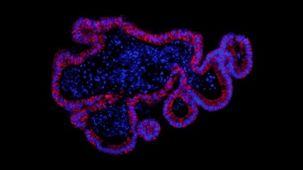
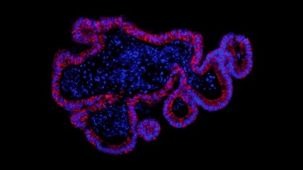
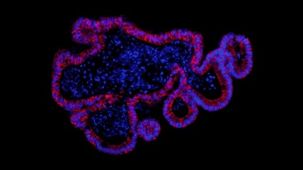
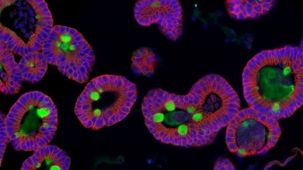
Organoids are pivotal for bridging cellular-level and organism-level biological studies; however, significant challenges persist in their three-dimensional (3D) visualization. This study presents a nylon mesh chip designed to overcome these obstacles specifically for intestinal organoids (IOs). The chip, meticulously fabricated and assembled, comprises an upper glass layer, a nylon mesh, and a lower glass layer. We cultured IOs from mouse intestinal crypts and performed fluorescent labeling on the chip. For enhanced visualization, fluorescent labeling combined with 3D reconstruction techniques was employed. Results demonstrate that the chip’s structure stabilizes IOs in liquid environments. While conventional fluorescence imaging is limited by mesh interference, laser confocal 3D reconstruction achieves high-quality visualization by effectively filtering out redundant signals. The nylon mesh chip is a robust tool for 3D visualization of IOs and holds potential for other budding organoid types. This innovation is poised to advance organoid 3D visualization research. The online version contains supplementary material available at 10.1038/s41598-025-12015-5.
Paneth cells inhibit intestinal stem cell proliferation through the bone morphogenic protein 7 pathway under rotavirus-mediated intestinal injury
Bu et al.
World Journal of Gastroenterology 2025 Jul
Abstract
Rotavirus (RV), a primary cause of diarrhea-related mortality in 2021, has been shown to damage intestinal epithelial cells while upregulating intestinal stem cells (ISCs) activities. ISCs within the crypt niche drive the continuous self-renewal of intestinal epithelium, preserving its barrier functions. Paneth cells secrete antimicrobial peptide and signaling molecules within the intestine crypt, thereby playing a crucial role in intestinal immune defense and providing ISCs functional support. However, the regulatory function of Paneth cells under pathological conditions, such as RV infection, remains unclear. To determine the impact of RV infection on Paneth cells and how Paneth cells regulate ISCs during intestinal injury repair. We constructed a reference genome for the RV enteric cytopathogenic human orphan virus strain and reanalyzed published single-cell RNA sequencing data to investigate Paneth cell responses to RV-induced intestinal injury. We derived Paneth-ISC communication networks using CellChat, tracked ISC differentiation with pseudotime analysis, and validated our findings in leucine-rich repeat-containing G protein-coupled receptor 5-enhanced green fluorescent protein-internal ribosomal entry site-Cre recombinase estrogen receptor variant 2 mice and organoids via immunofluorescence, flow cytometry, and reverse transcription quantitative polymerase chain reaction. We found that RV directly infects Paneth cells, leading to a reduction in mature Paneth cells and an increase in kallikrein 1-high immature Paneth cells. Paneth-ISC communication was significantly enhanced. In particular, the bone morphogenic protein 7 (BMP7)-activin A receptor type 2B/BMP receptor type 1A-Smad pathway was upregulated post-infection, suggesting that Paneth cells suppress excessive ISC proliferation. Functional validation confirmed activation of this pathway. Paneth cells regulate ISC proliferation during RV infection by activating BMP7 signaling, limiting excessive stem cell expansion and preserving crypt homeostasis for effective epithelial repair.
Thank you for your interest in IntestiCult™ Organoid Growth Medium (Human). Please provide us with your contact information and your local representative will contact you with a customized quote. Where appropriate, they
can also assist you with a(n):
Estimated delivery time for your area
Product sample or exclusive offer
In-lab demonstration
By submitting this form, you are providing your consent to STEMCELL Technologies Canada Inc. and its subsidiaries and affiliates (“STEMCELL”) to collect and use your information, and send you newsletters and emails in accordance with our
privacy policy. Please contact us with any questions that you may have. You can unsubscribe or change your email preferences at any time.
This product was developed under a license to intellectual property owned by Hubrecht Organoid Technology (HUB). This product is sold for research use only. Purchase of this product does not include the right to use it for drug screening aiming for commercial gain, equipment validation, biobanking, or for other commercial purposes. Purchasers wishing to use the product for purposes other than basic research use should contact HUB at www.huborganoids.nl to obtain a further license. Purchasers may apply for a License from HUB, which will not be unreasonably withheld by HUB. 质量保证: