若您需要咨询产品或有任何技术问题,请通过官方电话 400 885 9050 或邮箱 info.cn@stemcell.com 与我们联系。

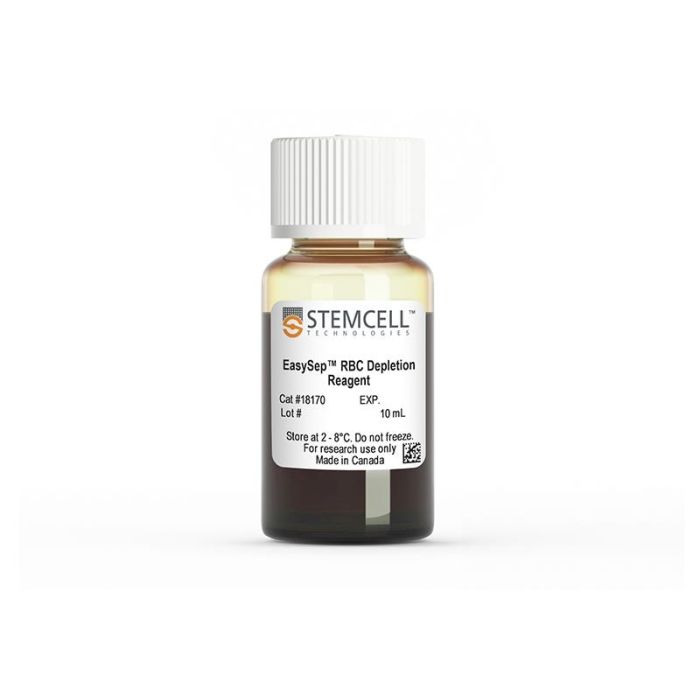
EasySep™红细胞去除试剂

红细胞的免疫磁珠去除
只有 %1
¥3,292.00

产品号 #(选择产品)

产品号 #18170_C

红细胞的免疫磁珠去除

产品优势

  • 99.9%的红细胞去除率,无需密度梯度离心、沉降或裂解
  • 快捷、操作简单,且无需分离柱
  • 分选得到的细胞无标记

产品组分包括

  • EasySep™ RBC去除试剂(产品号 #18170)
    • EasySep™红细胞去除试剂,10 mL
  • 用于RoboSep™的EasySep™ RBC去除试剂(产品号 #18170RF)
    • 用于RoboSep™的EasySep™红细胞去除试剂,4 x 2.5 mL
    • RoboSep™ 缓冲液(产品号 #20104)x 2
    • RoboSep™ 过滤吸头(产品号 #20125)x 2
New look, same high quality and support! You may notice that your instrument or reagent packaging looks slightly different from images displayed on the website, or from previous orders. We are updating our look but rest assured, the products themselves and how you should use them have not changed. Learn more

总览

EasySep™红细胞去除试剂专为从人新鲜外周血、脐带血、骨髓或白细胞单采术样本中通过免疫磁珠去除红细胞(RBCs)而设计。红细胞被被识别糖蛋白A的抗体复合物和磁珠标记,通过EasySep™磁极进行无柱分选,被磁珠标记的红细胞留在管中,而未被标记的目的细胞则被倾倒或吸取至新的管中即可。

该产品可替代EasySep™人糖蛋白A去除试剂盒 (产品号 #18352) 以进行更快的细胞分选。

了解更多关于免疫磁珠EasySep™技术的工作原理。探索更多优化您实验流程的产品,包括培养基、添加剂、抗体等。

磁极兼容性
• EasySep™磁极(产品号 #18000)
• “The Big Easy” EasySep™磁极(产品号 #18001)
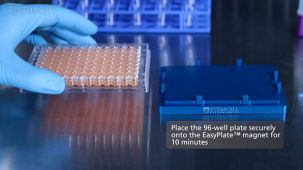
• EasyPlate™ EasySep™磁极(产品号 #18102)
• Easy 50 EasySep™磁极(产品号 #18002)
• EasyEights™ EasySep™磁极(产品号 #18103)
 
种属

 
样本来源
全血
 
分选方法
负选
 
品牌
EasySep,RoboSep
 
研究领域
嵌合体,药物发现和毒理检测,HLA,免疫
 

实验数据

Figure 1. EasySep™ RBC Depletion Reagent Provides Superior RBC Depletion Compared to Ammonium Chloride Lysis

Different types of RBC-containing samples from normal healthy donors were processed to remove RBCs by using either ammonium chloride (NH4Cl) lysis or immunomagnetic depletion with EasySep™ RBC Depletion Reagent. After RBC removal, samples were stained with fluorochrome-conjugated anti-CD45 and anti-Glycophorin A antibodies and analyzed by flow cytometry. Residual RBCs were identified as Glycophorin A+/CD45 events. (A) The percentages of residual RBCs in various samples following use of EasySep™ RBC Depletion Reagent was significantly lower compared to samples treated with ammonium chloride (mean ± SD; n = 31). (B) Both, RBC lysis with ammonium chloride and RBC removal using EasySep™ RBC Depletion Reagent resulted in an equivalent total number of white blood cells recovered from whole blood samples (mean ± SD; n = 37).

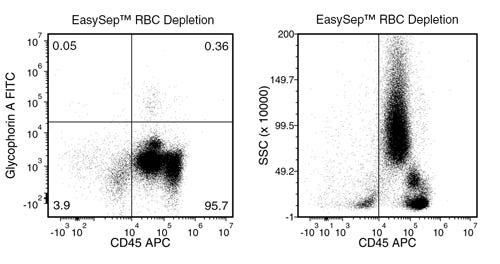
Figure 2. Typical RBC Removal Using EasySep™ RBC Depletion Reagent With Human Whole Blood Samples

Starting with human whole blood from normal healthy donors, the percentage of residual RBCs (Glycophorin A+/CD45-) following use of EasySep™ RBC Depletion Reagent is typically 2 ± 3 (mean ± SD; n = 31). In the above example, the residual RBC content is 0.05%.

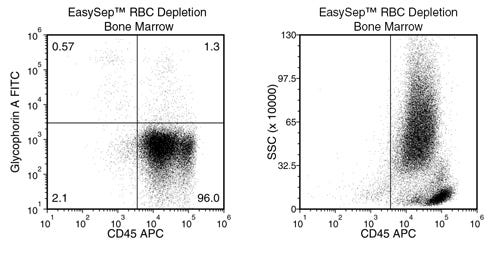
Figure 3. Typical RBC Removal Using EasySep™ RBC Depletion Reagent With Human Bone Marrow Samples

Starting with human bone marrow, the percentage of residual RBCs (Glycophorin A+/CD45-) following use of EasySep™ RBC Depletion Reagent is typically 0.39 ± 0.34 (mean ± SD; n = 5). In the above example, the residual RBC content is 0.57%.

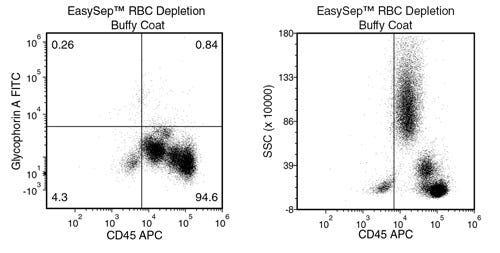
Figure 4. Typical RBC Removal Using EasySep™ RBC Depletion Reagent With Buffy Coat Samples

Starting with buffy coat, the percentage of residual RBCs (Glycophorin A+/CD45-) following use of EasySep™ RBC Depletion Reagent is typically 0.12 ± 0.08 (mean ± SD; n = 6). In the above example, the residual RBC content is 0.26%.

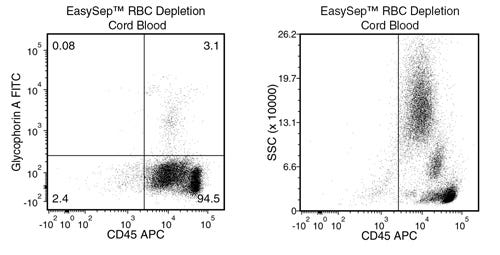
Figure 5. Typical RBC Removal Using EasySep™ RBC Depletion Reagent With Cord Blood Samples

Starting with cord blood, the percentage of residual RBCs (Glycophorin A+/CD45-) following use of EasySep™ RBC Depletion Reagent is typically 1.7 ± 2.2 (mean ± SD; n = 16). In the above example, the residual RBC content is 0.08%.

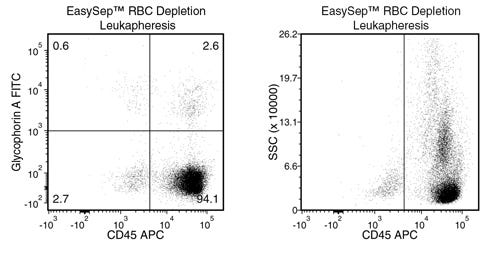
Figure 6. Typical RBC Removal Using EasySep™ RBC Depletion Reagent With Leukapheresis Samples

Starting with leukapheresis samples, the percentage of residual RBCs (Glycophorin A+/CD45-) following use of EasySep™ RBC Depletion Reagent is typically 0.5 ± 0.8 (mean ± SD; n = 15). In the above example, the residual RBC content is 0.6%.

产品说明书及文档

请在《产品说明书》中查找相关支持信息和使用说明,或浏览下方更多实验方案。

Document Type
Product Name
Catalog #
Lot #
Language
Catalog #
18170
Lot #
All
Language
English
Catalog #
18170
Lot #
All
Language
English
Catalog #
18170
Lot #
All
Language
English
Catalog #
18170
Lot #
All
Language
English
Catalog #
18170
Lot #
All
Language
English
Catalog #
18170
Lot #
All
Language
English
Catalog #
18170RF
Lot #
All
Language
English
Catalog #
18170RF
Lot #
All
Language
English
Catalog #
18170RF
Lot #
All
Language
English
Catalog #
18170RF
Lot #
All
Language
English
Catalog #
18170RF
Lot #
All
Language
English
Catalog #
18170RF
Lot #
All
Language
English
Document Type
Safety Data Sheet
Catalog #
18170
Lot #
All
Language
English
Document Type
Safety Data Sheet 1
Catalog #
18170RF
Lot #
All
Language
English
Document Type
Safety Data Sheet 2
Catalog #
18170RF
Lot #
All
Language
English

应用领域

本产品专为以下研究领域设计,适用于工作流程中的高亮阶段。探索这些工作流程,了解更多我们为各研究领域提供的其他配套产品。

相关材料与文献

技术资料 (15)

文献 (7)

Cellular interactions within the immune microenvironment underpins resistance to cell cycle inhibition in breast cancers Nature Communications 2025 Mar

Abstract

Immune evasion by cancer cells involves reshaping the tumor microenvironment (TME) via communication with non-malignant cells. However, resistance-promoting interactions during treatment remain lesser known. Here we examine the composition, communication, and phenotypes of tumor-associated cells in serial biopsies from stage II and III high-risk estrogen receptor positive (ER+ ) breast cancers of patients receiving endocrine therapy (letrozole) as single agent or in combination with ribociclib, a CDK4/6-targeting cell cycle inhibitor. Single-cell RNA sequencing analyses on longitudinally collected samples show that in tumors overcoming the growth suppressive effects of ribociclib, first cancer cells upregulate cytokines and growth factors that stimulate immune-suppressive myeloid differentiation, resulting in reduced myeloid cell- CD8 + T-cell crosstalk via IL-15/18 signaling. Subsequently, tumors growing during treatment show diminished T-cell activation and recruitment. In vitro, ribociclib does not only inhibit cancer cell growth but also T cell proliferation and activation upon co-culturing. Exogenous IL-15 improves CDK4/6 inhibitor efficacy by augmenting T-cell proliferation and cancer cell killing by T cells. In summary, response to ribociclib in stage II and III high-risk ER +  breast cancer depends on the composition, activation phenotypes and communication network of immune cells. The CDK4/6 inhibitor ribociclib holds promise in cancer therapy but how cell cycle inhibitory drugs affect the anti-tumor immune response remains a question. Here authors show that poor response of early-stage estrogen receptor positive breast cancers to ribociclib is caused by changes in the immune cell composition and cancer-cell-immune-cell communication in the tumors rather than intrinsic cancer cell resistance to cell cycle inhibition.
A cell atlas of the human fallopian tube throughout the menstrual cycle and menopause Nature Communications 2025 Jan

Abstract

The fallopian tube undergoes extensive molecular changes during the menstrual cycle and menopause. We use single-cell RNA and ATAC sequencing to construct a comprehensive cell atlas of healthy human fallopian tubes during the menstrual cycle and menopause. Our scRNA-seq comparison of 85,107 pre- and 46,111 post-menopausal fallopian tube cells reveals substantial shifts in cell type frequencies, gene expression, transcription factor activity, and cell-to-cell communications during menopause and menstrual cycle. Menstrual cycle dependent hormonal changes regulate distinct molecular states in fallopian tube secretory epithelial cells. Postmenopausal fallopian tubes show high chromatin accessibility in transcription factors associated with aging such as Jun, Fos, and BACH1/2, while hormone receptors were generally downregulated, a small proportion of secretory epithelial cells had high expression of ESR2, IGF1R, and LEPR. While a pre-menopausal secretory epithelial gene cluster is enriched in the immunoreactive molecular subtype, a subset of genes expressed in post-menopausal secretory epithelial cells show enrichment in the mesenchymal molecular type of high-grade serous ovarian cancer. The fallopian tube undergoes extensive cellular and molecular changes during the menstrual cycle and aging. Here, Weigert et al. present a single-cell atlas of the normal human fallopian tube revealing the transition of secretory epithelial cells throughout the menstrual cycle and menopause.
Proteasome localization and activity in pig brain and Frontiers in Cellular Neuroscience 2024 Feb

Abstract

IntroductionLoss of proteasome function, proteinopathy, and proteotoxicity may cause neurodegeneration across the human lifespan in several forms of brain injury and disease. Drugs that activate brain proteasomes in vivo could thus have a broad therapeutic impact in neurology.MethodsUsing pigs, a clinically relevant large animal with a functionally compartmental gyrencephalic cerebral cortex, we evaluated the localization and biochemical activity of brain proteasomes and tested the ability of small molecules to activate brain proteasomes.ResultsBy Western blotting, proteasome protein subunit PSMB5 and PSMA3 levels were similar in different pig brain regions. Immunohistochemistry for PSMB5 showed localization in the cytoplasm (diffuse and particulate) and nucleus (cytoplasm < nucleus). Some PSMB5 immunoreactivity was colocalized with mitochondrial (voltage-gated anion channel and cyclophilin D) and cell death (Aven) proteins in the neuronal soma and neuropil in the neocortex of pig and human brains. In the nucleus, PSMB5 immunoreactivity was diffuse, particulate, and clustered, including perinucleolar decorations. By fluorogenic assay, proteasome chymotrypsin-like activities (CTL) in crude tissue soluble fractions were generally similar within eight different pig brain regions. Proteasome CTL activity in the hippocampus was correlated with activity in nasal mucosa biopsies. In pilot analyses of subcellular fractions of pig cerebral cortex, proteasome CTL activity was highest in the cytosol and then ~50% lower in nuclear fractions; ~15–20% of total CTL activity was in pure mitochondrial fractions. With in-gel activity assay, 26S-singly and -doubly capped proteasomes were the dominant forms in the pig cerebral cortex. With a novel in situ histochemical activity assay, MG132-inhibitable proteasome CTL activity was localized to the neuropil, as a mosaic, and to cell bodies, nuclei, and centrosome-like perinuclear satellites. In piglets treated intravenously with pyrazolone derivative and chlorpromazine over 24 h, brain proteasome CTL activity was modestly increased.DiscussionThis study shows that the proteasome in the pig brain has relative regional uniformity, prominent nuclear and perinuclear presence with catalytic activity, a mitochondrial association with activity, 26S-single cap dominance, and indications from small molecule systemic administration of pyrazolone derivative and chlorpromazine that brain proteasome function appears safely activable.

更多信息

更多信息
物种 人类
Magnet Compatibility • EasySep™ Magnet (Catalog #18000) • “The Big Easy” EasySep™ Magnet (Catalog #18001) • EasyEights™ EasySep™ Magnet (Catalog #18103) • Easy 50 EasySep™ Magnet (Catalog #18002) • EasyPlate™ EasySep™ Magnet (Catalog #18102)
样本来源 全血
Selection Method Negative
质量保证:

产品仅供研究使用,不用于针对人或动物的诊断或治疗。 欲获悉更多关于STEMCELL的质控信息,请访问 STEMCELL.CN/COMPLIANCE.
Copyright © 2025 by STEMCELL Technologies. All rights reserved.

在线联系