若您需要咨询产品或有任何技术问题,请通过官方电话 400 885 9050 或邮箱 info.cn@stemcell.com 与我们联系。

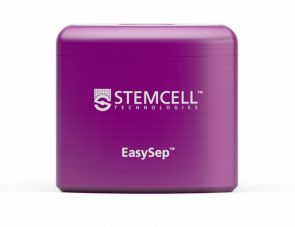
EasySep™ 人外泌体(CD61)去除与正选试剂盒

使用免疫磁珠正选或去除法轻松分离人细胞外囊泡

产品号 #(选择产品)

产品号 #(选择产品)

使用免疫磁珠正选或去除法简便分离人细胞外囊泡(EVs)

产品优势

  • 通过简便、无柱的分选操作流程快速轻松分离EVs。
  • 在不降低纯度的情况下最大化样本回收率。
  • 无需超速离心,省去耗时的传统细胞外囊泡分离步骤。
  • 获得高纯度、无生物流体杂质的EVs,以确保后续实验结果的可靠性。

产品组分包括

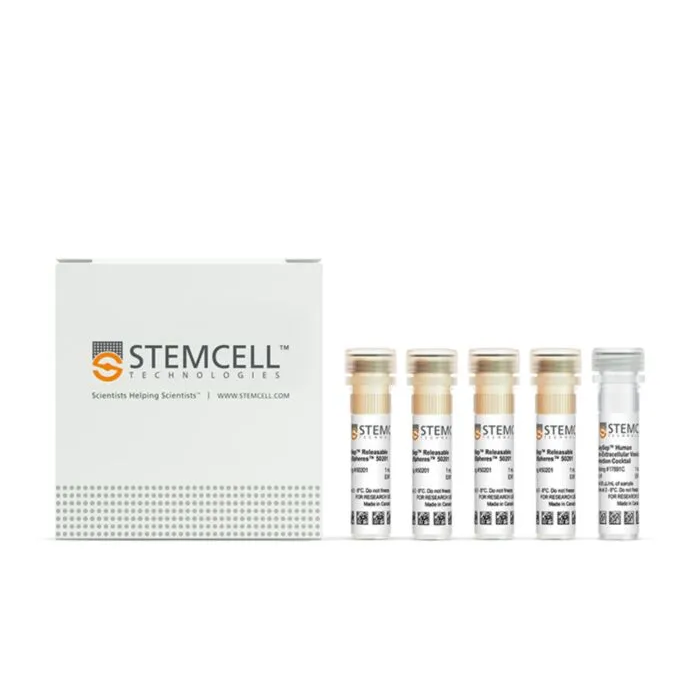
  • EasySep™ 人细胞外囊泡(CD61)去除与正选试剂盒(产品号 #100-2079)
    • EasySep™ 人细胞外囊泡(CD61)去除与正选抗体混合液,1 × 0.5 mL
    • EasySep™ Releasable RapidSpheres™ 50201,4 × 1 mL
专为您的实验方案打造的产品
要查看实验方案所需的所有配套产品,请参阅《实验方案与技术文档》

总览

使用免疫磁珠分选法轻松分离或去除人CD61+细胞外囊泡(EVs)。EasySep™人细胞外囊泡(CD61)去除与正选试剂盒可用于从血浆或血清中进行正选,也可从血浆、血清或差速超速离心制备的EVs中去除CD61+ EVs。

在EasySep™去除或正选过程中,目标细胞外囊泡通过识别人血小板膜糖蛋白IIIa(整合素β-3)CD61的抗体复合物和磁珠进行标记。使用EasySep™磁极进行分选后,只需倒掉未标记的生物流体成分,即可将CD61+细胞外囊泡保留在试管中。分选完成后,通过正选获得的CD61+ EVs可进一步用于蛋白质印迹、质谱或 DNA/RNA 提取等下游应用。去除了 CD61+ EVs 的负选组分可进一步处理以分离出其他类型的 EVs,或用于流式细胞术和 ELISA 等下游应用中。

您还可通过RoboSep™仪器实现EasySep™自动化免疫磁珠细胞及EV分选。此外,我们还提供一系列其他产品,包括培养基、添加物和抗体,以支持多样化的实验流程。

 
磁架兼容性

EasySep™ 磁极(产品号 #18000)

“The Big Easy” EasySep™ 磁极(产品号  #18001)

分类
细胞分选试剂盒
 
细胞类型
其他
 
物种
 
样本来源
其他
 
分选方式
去除,正选
 
应用
细胞分选、细胞外囊泡分选
 
产品系列
EasySep
 
研究领域
细胞外囊泡研究

实验数据

EasySep™ Human Extracellular Vesicle (CD61) Depletion and Positive Selection Kit Efficiently Depletes CD61+ Extracellular Vesicles from Human Plasma

Figure 1. EasySep™ Human Extracellular Vesicle (CD61) Depletion and Positive Selection Kit Efficiently Depletes CD61+ Extracellular Vesicles from Human Plasma

Plasma from normal, healthy donors was processed and CD61+ extracellular vesicles (EVs) were depleted using the EasySep™ Human Extracellular Vesicle (CD61) Depletion Protocol (see Product Information Sheet). EVs were then isolated from 200 µL of CD61-depleted plasma and control plasma (no depletion) using the EasySep™ Human Pan-Extracellular Vesicle Positive Selection Kit. Isolated EVs were resuspended in 20 µL, and 9 µL was used per sample for western blot analysis. Western blot analysis was performed under non-reducing conditions to assess the recovery of CD61 (the target marker), CD9 and CD63 (markers expressed on both platelet-derived and non-platelet-derived EVs), and CD81 (only expressed on non-platelet-derived EVs). Quantification of CD61 signal intensity from the same image at the same exposure time for the depleted and control plasma revealed that, on average, 94.7 ± 3.5% (mean ± SD) of CD61+ EVs were depleted compared to the control (using the purple EasySep™ Magnet). Platelet-derived EVs are expected to be CD61+, CD63+, CD9+, and CD81- (Kholia et al., 2016; Malys et al., 2023). After CD61 depletion, other markers expressed on platelet-derived EVs (CD63 and CD9) were also reduced, while markers only expressed on non-platelet EVs (CD81) were maintained. In the above example, 95% of CD61+ EVs were depleted compared to the control.

Differential Ultracentrifugation-Purified EVs Can Be Successfully Depleted Using the EasySep™ Human Extracellular Vesicle (CD61) Depletion Protocol

Figure 2. Differential Ultracentrifugation-Purified EVs Can Be Successfully Depleted Using the EasySep™ Human Extracellular Vesicle (CD61) Depletion Protocol

CD61+ extracellular vesicles were depleted from differential ultracentrifugation-purified EV preparations derived from human plasma of healthy donors using the EasySep™ Human Extracellular Vesicle (CD61) Depletion Protocol. A 9 µL fraction from depleted samples were compared to the same volume of non-depleted controls. CD61 and CD81 were analyzed by western blot under non-reducing conditions. Quantification of CD61 intensity from the same image at the same exposure time for both samples revealed that, on average, 95.7± 4.9% (mean ± SD) of CD61+ EVs were depleted compared to the control (using the purple EasySep™ Magnet). In the above example, starting with a 1 mL differential ultracentrifugation-purified EV preparation with 8.6 x 10¹⁰ extracellular particles, 85% of CD61+ EVs and 5.2 x 10¹⁰ extracellular particles were depleted based on western blot and Spectradyne nCS1 analysis (size range 72 - 400 nm, transit time < 100 µs), respectively.

CD61+ EVs Can Be Depleted from Human Plasma with the EasySep™ Human Extracellular Vesicle (CD61) Depletion Protocol, Followed by Downstream EV Size Exclusion Chromatography (SEC) EV Purification

Figure 3. CD61+ EVs Can Be Depleted from Human Plasma with the EasySep™ Human Extracellular Vesicle (CD61) Depletion Protocol, Followed by Downstream EV Size Exclusion Chromatography (SEC) EV Purification

CD61+ EVs from processed human plasma samples from normal healthy donors were depleted using the EasySep™ Human Extracellular Vesicle (CD61) Depletion Protocol. EVs from 1 mL of CD61-depleted plasma and control plasma (no depletion) were subsequently isolated using the 2 mL Extracellular Vesicle SEC Columns. 500 µL of each fraction were collected and analyzed. Both the CD61 depleted plasma and the control plasma showed the expected extracellular vesicle (EV) elution profile. (A) CD61, CD9, CD63, and CD81 were analyzed by western blot under non-reducing conditions. In the above example, CD61+ EVs were not detected in fractions 7 - 9 of the CD61 depleted plasma but were readily detected in fractions 7 - 9 of the control (no depletion) plasma. (B) Extracellular particle concentrations were measured by Spectradyne nCS1 (size range 72 - 400 nm, transit time <100 µs) and protein concentration was measured by BCA assay. Extracellular particles were detected in fractions 6 - 9 and proteins appeared in fractions 10 - 11 onward. A slight shift in elution fractions was observed, likely due to variability in manual fraction collection. In this example, 5.1 × 10⁹ extracellular particles, or 42% of the total extracellular particles, were depleted from the CD61-depleted plasma compared to the control.

CD61+ EV Depletion Improves the Ability to Detect Non-Platelet-Derived EVs

Figure 4. CD61+ EV Depletion Improves the Ability to Detect Non-Platelet-Derived EVs

Starting with differential ultracentrifugation-purified EV preparations from human plasma of normal healthy donors, CD61+ EVs were depleted using the EasySep™ Human Extracellular Vesicle (CD61) Depletion Protocol and compared to control (no depletion). Extracellular particle (EP) concentrations from EV preparations before and after CD61 depletion were measured by Spectradyne nCS1 (size range 72 - 400 nm, transit time <100 µs). For western blot analysis, 1.3 × 10¹⁰ EPs were loaded per well. (A) CD61 and CD81 were analyzed by western blot under non-reducing conditions. (B) CD61 and CD81 signal intensities were quantified from the same image at the same exposure time for both samples before and after CD61 depletion. The signal-to-noise ratio was defined as the CD81 intensity relative to the CD61 intensity of the corresponding sample. In the above example, the signal-to-noise ratio improved from 0.2 to 4.4 after CD61 depletion.

Selective Isolation of Platelet-Derived EVs Using the EasySep™ Human Extracellular Vesicle (CD61) Positive Selection Protocol

Figure 5. Selective Isolation of Platelet-Derived EVs Using the EasySep™ Human Extracellular Vesicle (CD61) Positive Selection Protocol

Processed human plasma samples from normal healthy donors were positively selected using either the EasySep™ Human Extracellular Vesicle (CD61) Positive Selection Protocol or the EasySep™ Human Pan-Extracellular Vesicle Positive Selection Kit. CD61, CD9, CD63, and CD81 were analyzed by western blot under non-reducing conditions. In the above example, the CD61 positively selected EVs demonstrated the expected phenotype of platelet-derived EVs (CD61+, CD63+, CD9+, and CD81-) (Kholia et al., 2016; Malys et al., 2023).

Sequential Isolation of CD61+ EV from Plasma and Subsequent Recapture of Remaining EVs Can Be Achieved Using the EasySep™ Human Extracellular Vesicle (CD61) Depletion and Positive Selection Protocol

Figure 6. Sequential Isolation of CD61+ EV from Plasma and Subsequent Recapture of Remaining EVs Can Be Achieved Using the EasySep™ Human Extracellular Vesicle (CD61) Depletion and Positive Selection Protocol

1 mL of processed plasma was either depleted using the EasySep™ Human Extracellular Vesicle (CD61) Depletion and Positive Selection Protocol* or left untreated as a control. Following depletion, the plasma was poured off into a new tube, while the remaining fraction in the tube was magnetically washed to recover the CD61+ EVs. The remaining EVs in the depleted (or control) plasma were then recaptured using the EasySep™ Human Pan-Extracellular Vesicle Positive Selection Kit (n = 2). In the above example, the CD61 positively selected EVs displayed the expected phenotype of platelet-derived EVs (CD61+, CD63+, CD9+, and CD81-). The remaining EVs recaptured after CD61 depletion were CD61-, CD63+, CD9+, and CD81+. In contrast, the remaining EVs isolated from the control plasma, which represented all EVs in the sample, were positive for all markers analyzed. The CD61 positive selection recovered 125% of CD61+ EVs compared to the control sample EVs, which was within the normal experiment variability. The remaining EVs captured after CD61 depletion showed a 94% reduction in CD61+ EVs and a 104% recovery of CD81+ EVs compared to the control sample.

*Not included in the Product Information Sheet. Please contact Product and Scientific Support for the combined depletion and positive selection protocol.

产品说明书及文档

请在《产品说明书》中查找相关支持信息和使用说明,或浏览下方更多实验方案。

Document Type
Product Name
Catalog #
Lot #
Language
Document Type
Safety Data Sheet
Catalog #
100-2079
Lot #
All
Language
English

应用领域

本产品专为以下研究领域设计,适用于工作流程中的高亮阶段。探索这些工作流程,了解更多我们为各研究领域提供的其他配套产品。

相关材料与文献

技术资料 (4)

更多信息

更多信息
物种 人类
样本来源 其它细胞系

质量保证:

本产品仅供科研使用,除非另有说明,不得用于人体或动物的诊断或治疗用途。如需了解 STEMCELL 的质量体系,请访问 www.stemcell.cn/compliance

Copyright © 2025 by STEMCELL Technologies. All rights reserved.

在线联系