APOE3 Christchurch modulates ?-catenin/Wnt signaling in iPS cell-derived cerebral organoids from Alzheimer's cases
A patient with the PSEN1 E280A mutation and homozygous for APOE3 Christchurch (APOE3Ch) displayed extreme resistance to Alzheimer’s disease (AD) cognitive decline and tauopathy,despite having a high amyloid burden. To further investigate the differences in biological processes attributed to APOE3Ch,we generated induced pluripotent stem (iPS) cell-derived cerebral organoids from this resistant case and a non-protected control,using CRISPR/Cas9 gene editing to modulate APOE3Ch expression. In the APOE3Ch cerebral organoids,we observed a protective pattern from early tau phosphorylation. ScRNA sequencing revealed regulation of Cadherin and Wnt signaling pathways by APOE3Ch,with immunostaining indicating elevated ?-catenin protein levels. Further in vitro reporter assays unexpectedly demonstrated that ApoE3Ch functions as a Wnt3a signaling enhancer. This work uncovered a neomorphic molecular mechanism of protection of ApoE3 Christchurch,which may serve as the foundation for the future development of protected case-inspired therapeutics targeting AD and tauopathies.
View Publication
产品类型:
产品号#:
08570
100-0483
100-0484
100-0276
100-1130
产品名:
STEMdiff™ 脑类器官试剂盒
Hausser Scientificᵀᴹ 明线血球计数板
ReLeSR™
mTeSR™ Plus
mTeSR™ Plus
(Aug 2025)
The FASEB Journal 39 15
Cytokine?Induced Cytotoxicity and Extracellular Matrix Abnormalities in Hepatocytes Derived From RAD50?Interacting Protein 1?Deficient Induced Pluripotent Stem Cells
ABSTRACTRAD50?interacting protein1 (RINT1) deficiency has been implicated in recurrent acute liver failure (RALF) triggered by fever or infections. RINT1,together with neuroblastoma amplified sequence and Zeste White 10 (forming the NRZ complex),localizes at the interface between the endoplasmic reticulum and Golgi apparatus,where it plays a key role in vesicular trafficking. However,the mechanisms by which RINT1 deficiency leads to RALF remain unclear. This study aimed to describe a woman with RALF harboring a homozygous missense mutation in RINT1. Induced pluripotent stem cells (iPSCs) were generated from the patient's mononuclear cells and differentiated into hepatocyte?like cells (HLCs). Upon exposure to high temperature (40°C),RINT1?deficient HLCs exhibited cellular damage characteristic of RALF. Furthermore,these cells also demonstrated heightened sensitivity to cytokines and viral mimetics while showing comparatively lower responsiveness to bacterial infection?related stimuli. Transcriptome sequencing revealed dysregulated gene expression associated with the extracellular matrix (ECM). Additionally,glycosaminoglycan disaccharide analysis revealed abnormal levels of chondroitin sulfate,heparan sulfate,and hyaluronan in RINT1?deficient HLCs. In conclusion,HLCs derived from RINT1?deficient iPSCs serve as a valuable model for investigating RINT1?related liver pathogenesis. The results suggest that cytokine responses,particularly those triggered by viral infections,play a central role in the development of RALF. Furthermore,ECM alterations provided novel insights into the potential role of RINT1 defects in RALF. RAD50?interacting protein1 (RINT1) deficiency causes recurrent acute liver failure (RALF) during fever or infections. To investigate its underlying mechanism,induced pluripotent stem cells were generated from a patient with RINT1 deficiency and differentiated into hepatocyte?like cells (HLCs). RINT1?deficient HLCs exhibited damage resembling RALF when exposed to high temperatures and were more susceptible to cytokines and viral mimetics than to bacterial infection?related factors. Furthermore,RNA?seq and disaccharide analyses revealed dysregulation of extracellular matrix?related genes and abnormalities in extracellular matrix levels.
View Publication
产品类型:
产品号#:
85850
85857
产品名:
mTeSR™1
mTeSR™1
(Jan 2025)
PeerJ 13 6213
Targeted correction of megabase-scale CNTN6 duplication in induced pluripotent stem cells and impacts on gene expression
Copy number variations of the human CNTN6 gene,resulting from megabase-scale microdeletions or microduplications in the 3p26.3 region,are frequently implicated in neurodevelopmental disorders such as intellectual disability and developmental delay. However,duplication of the full-length human CNTN6 gene presents with variable penetrance,resulting in phenotypes that range from neurodevelopmental disorders to no visible pathologies,even within the same family. Previously,we obtained a set of induced pluripotent stem cell lines derived from a patient with a CNTN6 gene duplication and from two healthy donors. Our findings demonstrated that CNTN6 expression in neurons carrying the duplication was significantly reduced. Additionally,the expression from the CNTN6 duplicated allele was markedly lower compared to the wild-type allele. Here,we first introduce a system for correcting megabase-scale duplications in induced pluripotent stem cells and secondly analyze the impact of this correction on CNTN6 gene expression. We showed that the deletion of one copy of the CNTN6 duplication did not affect the expression levels of the remaining allele in the neuronal cells.
View Publication
产品类型:
产品号#:
05990
产品名:
用于hESC/hiPSC维持培养的TeSR™-E8™
(Apr 2024)
International Journal of Stem Cells 17 2
Energy Metabolism in Human Pluripotent Stem and Differentiated Cells Compared Using a Seahorse XF96 Extracellular Flux Analyzer
Evaluating cell metabolism is crucial during pluripotent stem cell (PSC) differentiation and somatic cell reprogramming as it affects cell fate. As cultured stem cells are heterogeneous,a comparative analysis of relative metabolism using existing metabolic analysis methods is difficult,resulting in inaccuracies. In this study,we measured human PSC basal metabolic levels using a Seahorse analyzer. We used fibroblasts,human induced PSCs,and human embryonic stem cells to monitor changes in basal metabolic levels according to cell number and determine the number of cells suitable for analysis. We evaluated normalization methods using glucose and selected the most suitable for the metabolic analysis of heterogeneous PSCs during the reprogramming stage. The response of fibroblasts to glucose increased with starvation time,with oxygen consumption rate and extracellular acidification rate responding most effectively to glucose 4 hours after starvation and declining after 5 hours of starvation. Fibroblasts and PSCs achieved appropriate responses to glucose without damaging their metabolism 2?4 and 2?3 hours after starvation,respectively. We developed a novel method for comparing basal metabolic rates of fibroblasts and PSCs,focusing on quantitative analysis of glycolysis and oxidative phosphorylation using glucose without enzyme inhibitors. This protocol enables efficient comparison of energy metabolism among cell types,including undifferentiated PSCs,differentiated cells,and cells undergoing cellular reprogramming,and addresses critical issues,such as differences in basal metabolic levels and sensitivity to normalization,providing valuable insights into cellular energetics.
View Publication
Acquisition of neurodegenerative features in isogenic OPTN(E50K) human stem cell-derived retinal ganglion cells associated with autophagy disruption and mTORC1 signaling reduction
The ability to derive retinal ganglion cells (RGCs) from human pluripotent stem cells (hPSCs) has led to numerous advances in the field of retinal research,with great potential for the use of hPSC-derived RGCs for studies of human retinal development,in vitro disease modeling,drug discovery,as well as their potential use for cell replacement therapeutics. Of all these possibilities,the use of hPSC-derived RGCs as a human-relevant platform for in vitro disease modeling has received the greatest attention,due to the translational relevance as well as the immediacy with which results may be obtained compared to more complex applications like cell replacement. While several studies to date have focused upon the use of hPSC-derived RGCs with genetic variants associated with glaucoma or other optic neuropathies,many of these have largely described cellular phenotypes with only limited advancement into exploring dysfunctional cellular pathways as a consequence of the disease-associated gene variants. Thus,to further advance this field of research,in the current study we leveraged an isogenic hPSC model with a glaucoma-associated mutation in the Optineurin (OPTN) protein,which plays a prominent role in autophagy. We identified an impairment of autophagic-lysosomal degradation and decreased mTORC1 signaling via activation of the stress sensor AMPK,along with subsequent neurodegeneration in OPTN(E50K) RGCs differentiated from hPSCs,and have further validated some of these findings in a mouse model of ocular hypertension. Pharmacological inhibition of mTORC1 in hPSC-derived RGCs recapitulated disease-related neurodegenerative phenotypes in otherwise healthy RGCs,while the mTOR-independent induction of autophagy reduced protein accumulation and restored neurite outgrowth in diseased OPTN(E50K) RGCs. Taken together,these results highlighted that autophagy disruption resulted in increased autophagic demand which was associated with downregulated signaling through mTORC1,contributing to the degeneration of RGCs.Supplementary InformationThe online version contains supplementary material available at 10.1186/s40478-024-01872-2.
View Publication
产品类型:
产品号#:
85850
85857
产品名:
mTeSR™1
mTeSR™1
(Jul 2024)
Molecular Metabolism 88 12
Tissue Inhibitor of Metalloproteinase 3 (TIMP3) mutations increase glycolytic activity and dysregulate glutamine metabolism in RPE cells
ObjectivesMutations in Tissue Inhibitor of Metalloproteinases 3 (TIMP3) cause Sorsby's Fundus Dystrophy (SFD),a dominantly inherited,rare form of macular degeneration that results in vision loss. TIMP3 is synthesized primarily by retinal pigment epithelial (RPE) cells,which constitute the outer blood-retinal barrier. One major function of RPE is the synthesis and transport of vital nutrients,such as glucose,to the retina. Recently,metabolic dysfunction in RPE cells has emerged as an important contributing factor in retinal degenerations. We set out to determine if RPE metabolic dysfunction was contributing to SFD pathogenesis.MethodsQuantitative proteomics was conducted on RPE of mice expressing the S179C variant of TIMP3,known to be causative of SFD in humans. Proteins found to be differentially expressed (P < 0.05) were analyzed using statistical overrepresentation analysis to determine enriched pathways,processes,and protein classes using g:profiler and PANTHER Gene Ontology. We examined the effects of mutant TIMP3 on RPE metabolism using human ARPE-19 cells expressing mutant S179C TIMP3 and patient-derived induced pluripotent stem cell-derived RPE (iRPE) carrying the S204C TIMP3 mutation. RPE metabolism was directly probed using isotopic tracing coupled with GC/MS analysis. Steady state [U–13C6] glucose isotopic tracing was preliminarily conducted on S179C ARPE-19 followed by [U–13C6] glucose and [U–13C5] glutamine isotopic tracing in SFD iRPE cells.ResultsQuantitative proteomics and enrichment analysis conducted on RPE of mice expressing mutant S179C TIMP3 identified differentially expressed proteins that were enriched for metabolism-related pathways and processes. Notably these results highlighted dysregulated glycolysis and glucose metabolism. Stable isotope tracing experiments with [U–13C6] glucose demonstrated enhanced glucose utilization and glycolytic activity in S179C TIMP3 APRE-19 cells. Similarly,[U–13C6] glucose tracing in SFD iRPE revealed increased glucose contribution to glycolysis and the TCA cycle. Additionally,[U–13C5] glutamine tracing found evidence of altered malic enzyme activity.ConclusionsThis study provides important information on the dysregulation of RPE glucose metabolism in SFD and implicates a potential commonality with other retinal degenerative diseases,emphasizing RPE cellular metabolism as a therapeutic target. Highlights•SFD mice display alterations in proteins associated with metabolism.•SFD RPE cells have increased glycolytic activity and glucose contribution to the TCA cycle.•Glutamine contribution to energy metabolism is unaltered in SFD RPE cells however there is reduced malic enzyme activity.•SFD RPE cells display metabolic dysfunction potentially implicating metabolism as a viable therapeutic target.
View Publication
产品类型:
产品号#:
100-0483
100-0484
100-0276
100-1130
产品名:
Hausser Scientificᵀᴹ 明线血球计数板
ReLeSR™
mTeSR™ Plus
mTeSR™ Plus
(Sep 2024)
Stem Cell Research & Therapy 15 8
Prostatic lineage differentiation from human embryonic stem cells through inducible expression of NKX3-1
BackgroundUnderstanding the lineage differentiation of human prostate not only is crucial for basic research on human developmental biology but also significantly contributes to the management of prostate-related disorders. Current knowledge mainly relies on studies on rodent models,lacking human-derived alternatives despite clinical samples may provide a snapshot at certain stage. Human embryonic stem cells can generate all the embryonic lineages including the prostate,and indeed a few studies demonstrate such possibility based on co-culture or co-transplantation with urogenital mesenchyme into mouse renal capsule.MethodsTo establish a stepwise protocol to obtain prostatic organoids in vitro from human embryonic stem cells,we apply chemicals and growth factors by mimicking the regulation network of transcription factors and signal transduction pathways,and construct cell lines carrying an inducible NKX3-1 expressing cassette,together with three-dimensional culture system. Unpaired t test was applied for statistical analyses.ResultsWe first successfully generate the definitive endoderm,hindgut,and urogenital sinus cells. The embryonic stem cell-derived urogenital sinus cells express prostatic key transcription factors AR and FOXA1,but fail to express NKX3-1. Therefore,we construct NKX3-1-inducible cell line by homologous recombination,which is eventually able to yield AR,FOXA1,and NKX3-1 triple-positive urogenital prostatic lineage cells through stepwise differentiation. Finally,combined with 3D culture we successfully derive prostate-like organoids with certain structures and prostatic cell populations.ConclusionsThis study reveals the crucial role of NKX3-1 in prostatic differentiation and offers the inducible NKX3-1 cell line,as well as provides a stepwise differentiation protocol to generate human prostate-like organoids,which should facilitate the studies on prostate development and disease pathogenesis.Supplementary InformationThe online version contains supplementary material available at 10.1186/s13287-024-03886-y.
View Publication


 EasySep™小鼠TIL(CD45)正选试剂盒





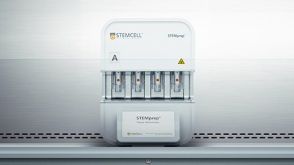 新闻STEMCELL Technologies Introduces STEMprep™ Tissue Dissociator System to Accelerate Research Discoveries



 沪公网安备31010102008431号