Liu Y et al. (FEB 1992)
The Journal of experimental medicine 175 2 437--45
Heat-stable antigen is a costimulatory molecule for CD4 T cell growth.
Optimal induction of clonal expansion by normal CD4 T cells requires a ligand that can engage the T cell receptor as well as functionally defined costimulatory activity on the same antigen-presenting cell surface. While the presence of effective costimulation induces proliferation,T cell receptor ligation in its absence renders T cells inactive or anergic. The molecular basis of this costimulatory activity remains to be defined. Here we describe a monoclonal antibody that can block the costimulatory activity of splenic accessory cells. Treatment with this antibody not only blocks the proliferation of CD4 T cells to a T cell receptor ligand,but also induces T cell nonresponsiveness to subsequent stimulation. Sequence analysis of the antigen recognized by this antibody indicates that it recognizes a protein that is identical to heat-stable antigen. Gene transfer experiments directly demonstrate that this protein has costimulatory activity. Thus,heat-stable antigen meets the criteria for a costimulator of T cell clonal expansion.
View Publication
产品类型:
产品号#:
01434
产品名:
Pulle G et al. (MAR 2006)
Journal of immunology (Baltimore,Md. : 1950) 176 5 2739--48
IL-15-dependent induction of 4-1BB promotes antigen-independent CD8 memory T cell survival.
Mice lacking CD137L (4-1BBL) show normal primary expansion and contraction of the CD8+ T cell response to influenza virus,but exhibit a defect in Ag-specific CD8+ T cell numbers at 3-6 wk postinfection. Previous results showed that the decrease in CD8+ T cell numbers in this model is not due to a programming defect during primary expansion. Thus,it appears that 4-1BB/4-1BBL interactions control the number of surviving CD8+ effector memory cells,late in the primary response. In this report,we asked how 4-1BB on T cells could play a role after Ag has apparently been cleared from the host. We show that IL-15,a cytokine involved in regulation of CD8+ memory T cell survival,induces the expression of 4-1BB on CD8+CD44(high) memory phenotype T cells,but not on CD4+ T cells. The Ag-independent induction of 4-1BB by IL-15 was dependent on MAPK p38 and ERK activation. Transfer of in vitro-generated OT-I CD8+ memory T cells into unimmunized wild-type or 4-1BBL-deficient hosts revealed a 2- to 3-fold survival advantage when 4-1BBL was present,recapitulating the effect seen in the endogenous response to influenza in mice. Decreases in the overall number of memory CD8+ T cells were also observed in the bone marrow of unmanipulated 4-1BBL-deficient mice. These data suggest a model whereby 4-1BB expression on memory CD8+ T cells,perhaps due to encounter with IL-15 in the bone marrow,allows 4-1BB/4-1BBL interactions to maintain memory CD8 T cell survival in the absence of Ag.
View Publication
产品类型:
产品号#:
19751
19751RF
产品名:
Poholek AC et al. (JUL 2010)
Journal of immunology (Baltimore,Md. : 1950) 185 1 313--26
In vivo regulation of Bcl6 and T follicular helper cell development.
Follicular helper T (T(FH)) cells,defined by expression of the surface markers CXCR5 and programmed death receptor-1 (PD-1) and synthesis of IL-21,require upregulation of the transcriptional repressor Bcl6 for their development and function in B cell maturation in germinal centers. We have explored the role of B cells and the cytokines IL-6 and IL-21 in the in vivo regulation of Bcl6 expression and T(FH) cell development. We found that T(FH) cells are characterized by a Bcl6-dependent downregulation of P-selectin glycoprotein ligand 1 (PSGL1,a CCL19- and CCL21-binding protein),indicating that,like CXCR5 and PD-1 upregulation,modulation of PSGL1 expression is part of the T(FH) cell program of differentiation. B cells were neither required for initial upregulation of Bcl6 nor PSGL1 downregulation,suggesting these events preceded T-B cell interactions,although they were required for full development of the T(FH) cell phenotype,including CXCR5 and PD-1 upregulation,and IL-21 synthesis. Bcl6 upregulation and T(FH) cell differentiation were independent of IL-6 and IL-21,revealing that either cytokine is not absolutely required for development of Bcl6(+) T(FH) cells in vivo. These data increase our understanding of Bcl6 regulation in T(FH) cells and their differentiation in vivo and identifies a new surface marker that may be functionally relevant in this subset.
View Publication
产品类型:
产品号#:
19752
19752RF
产品名:
(May 2025)
Nature Communications 16
T cell toxicity induced by tigecycline binding to the mitochondrial ribosome
Tetracyclines are essential bacterial protein synthesis inhibitors under continual development to combat antibiotic resistance yet suffer from unwanted side effects. Mitoribosomes - responsible for generating oxidative phosphorylation (OXPHOS) subunits - share structural similarities with bacterial machinery and may suffer from cross-reactivity. Since lymphocytes rely upon OXPHOS upregulation to establish immunity,we set out to assess the impact of ribosome-targeting antibiotics on human T cells. We find tigecycline,a third-generation tetracycline,to be the most cytotoxic compound tested. In vitro,5–10 μM tigecycline inhibits mitochondrial but not cytosolic translation,mitochondrial complex I,III and IV expression,and curtails the activation and expansion of unique T cell subsets. By cryo-EM,we find tigecycline to occupy three sites on T cell mitoribosomes. In addition to the conserved A-site found in bacteria,tigecycline also attaches to the peptidyl transferase center of the large subunit. Furthermore,a third,distinct binding site on the large subunit,aligns with helices analogous to those in bacteria,albeit lacking methylation in humans. The data provide a mechanism to explain part of the anti-inflammatory effects of these drugs and inform antibiotic design. Tetracyclines impair cellular function by targeting ribosomes. Here,the authors demonstrate that tigecycline impairs T cell function by selectively inhibiting mitochondrial protein synthesis and uncover the structural basis for mitoribosome inhibition and its role in immunosuppression.
View Publication
Califano D et al. (JAN 2014)
The Journal of clinical investigation 124 1 174--187
Diverting T helper cell trafficking through increased plasticity attenuates autoimmune encephalomyelitis.
Naive T helper cells differentiate into functionally distinct effector subsets that drive specialized immune responses. Recent studies indicate that some of the effector subsets have plasticity. Here,we used an EAE model and found that Th17 cells deficient in the transcription factor BCL11B upregulated the Th2-associated proteins GATA3 and IL-4 without decreasing RAR-related orphan receptor $$ (ROR$$t),IL-17,and GM-CSF levels. Surprisingly,abnormal IL-4 production affected Th17 cell trafficking,diverting migration from the draining lymph nodes/CNS route to the mesenteric lymph nodes/gut route,which ameliorated EAE without overt colitis. T helper cell rerouting in EAE was dependent on IL-4,which enhanced retinoic acid (RA) production by dendritic cells,which further induced expression of gut-homing receptors CCR9 and $$4$$7 on Bcl11b-deficient CD4+ T cells. Furthermore,IL-4 treatment or Th2 immunization of wild-type mice with EAE caused no alteration in Th17 cytokines or ROR$$t,but diverted T helper cell trafficking to the gut,which improved EAE outcome without overt colitis. Our data demonstrate that Th17 cells are permissive to Th2 gene expression without affecting Th17 gene expression. This Th17 plasticity has an impact on trafficking,which is a critical component of the immune response and may represent a possible avenue for treating multiple sclerosis.
View Publication
Chuck MI et al. (MAR 2010)
Journal of immunology (Baltimore,Md. : 1950) 184 5 2476--86
The role of the LAT-PLC-gamma1 interaction in T regulatory cell function.
The interaction between the linker for activation of T cells (LAT) with PLC-gamma1 is important for TCR-mediated Ca(2+) signaling and MAPK activation. Knock-in mice harboring a mutation at the PLC-gamma1 binding site (Y136) of LAT develop a severe lymphoproliferative syndrome. These mice have defective thymic development and selection and lack natural regulatory T cells,implicating a breakdown of both central and peripheral tolerance. To bypass this developmental defect,we developed a conditional knock-in line in which only LATY136F is expressed in mature T cells after deletion of the wild type LAT allele. Analysis of LATY136F T cells indicated that the interaction between LAT and PLC-gamma1 plays an important role in TCR-mediated signaling,proliferation,and IL-2 production. Furthermore,the deletion of LAT induced development of the lymphoproliferative syndrome in these mice. Although Foxp3(+) natural Treg cells were present in these mice after deletion,they were unable to suppress the proliferation of conventional T cells. Our data indicate that the binding of LAT to PLC-gamma1 is essential for the suppressive function of CD4(+)CD25(+) regulatory T cells.
View Publication
产品类型:
产品号#:
19782
19792
产品名:
J. T. Zoine et al. (Feb 2024)
Cell Reports Medicine 5 2
Peptide-scFv antigen recognition domains effectively confer CAR T cell multiantigen specificity
The emergence of immune escape is a significant roadblock to developing effective chimeric antigen receptor (CAR) T cell therapies against hematological malignancies,including acute myeloid leukemia (AML). Here,we demonstrate feasibility of targeting two antigens simultaneously by combining a GRP78-specific peptide antigen recognition domain with a CD123-specific scFv to generate a peptide-scFv bispecific antigen recognition domain (78.123). To achieve this,we test linkers with varying length and flexibility and perform immunophenotypic and functional characterization. We demonstrate that bispecific CAR T cells successfully recognize and kill tumor cells that express GRP78,CD123,or both antigens and have improved antitumor activity compared to their monospecific counterparts when both antigens are expressed. Protein structure prediction suggests that linker length and compactness influence the functionality of the generated bispecific CARs. Thus,we present a bispecific CAR design strategy to prevent immune escape in AML that can be extended to other peptide-scFv combinations.
View Publication
产品类型:
产品号#:
04034
04044
产品名:
MethoCult™ H4034 Optimum
MethoCult™ H4034 Optimum
R. Kitte et al. (Jan 2025)
International Journal of Molecular Sciences 26 3
Optimal Chimeric Antigen Receptor (CAR)-mRNA for Transient CAR T Cell Generation
Genetically modified T lymphocytes expressing chimeric antigen receptors (CARs) are becoming increasingly important in the treatment of hematologic malignancies and are also intensively being investigated for other diseases such as autoimmune disorders and HIV. Current CAR T cell therapies predominantly use viral transduction methods which,despite their efficacy,raise safety concerns related to genomic integration and potentially associated malignancies as well as labor- and cost-intensive manufacturing. Therefore,non-viral gene transfer methods,especially mRNA-based approaches,have attracted research interest due to their transient modification and enhanced safety profile. In this study,the optimization of CAR-mRNA for T cell applications is investigated,focusing on the impact of mRNA modifications,in vitro transcription protocols,and purification techniques on the translation efficiency and immunogenicity of mRNA. Furthermore,the refined CAR-mRNA was used to generate transient CAR T cells from acute myeloid leukemia patient samples,demonstrating efficacy in vitro and proof-of-concept for clinically relevant settings. These results highlight the potential of optimized mRNA to produce transient and safe CAR T cells.
View Publication
产品类型:
产品号#:
100-0785
100-0956
10970
10981
10990
产品名:
ImmunoCult™ 人CD3/CD28/CD2 T细胞激活剂
ImmunoCult™ XF培养基
ImmunoCult™ 人CD3/CD28/CD2 T细胞激活剂
ImmunoCult™ XF 人T细胞扩增培养基,500 mL
ImmunoCult™ 人CD3/CD28/CD2 T细胞激活剂
S. V. Gearty et al. (feb 2022)
Nature 602 7895 156--161
An autoimmune stem-like CD8 T cell population drives type 1 diabetes.
CD8 T cell-mediated autoimmune diseases result from the breakdown of self-tolerance mechanisms in autoreactive CD8 T cells1. How autoimmune T cell populations arise and are sustained,and the molecular programmes defining the autoimmune T cell state,are unknown. In type 1 diabetes,$\beta$-cell-specific CD8 T cells destroy insulin-producing $\beta$-cells. Here we followed the fate of $\beta$-cell-specific CD8 T cells in non-obese diabetic mice throughout the course of type 1 diabetes. We identified a stem-like autoimmune progenitor population in the pancreatic draining lymph node (pLN),which self-renews and gives rise to pLN autoimmune mediators. pLN autoimmune mediators migrate to the pancreas,where they differentiate further and destroy $\beta$-cells. Whereas transplantation of as few as 20 ?»¿autoimmune progenitors induced type 1 diabetes,as many as 100,000 pancreatic autoimmune mediators did not. Pancreatic autoimmune mediators are short-lived,and stem-like ?»¿autoimmune progenitors must continuously seed the pancreas to sustain $\beta$-cell destruction. Single-cell RNA sequencing and clonal analysis revealed that autoimmune CD8 T cells represent unique T cell differentiation states and identified features driving the transition from autoimmune progenitor to autoimmune mediator. Strategies aimed at targeting the stem-like autoimmune progenitor pool could emerge as novel and powerful immunotherapeutic interventions for type 1 diabetes.
View Publication


 EasySep™小鼠TIL(CD45)正选试剂盒





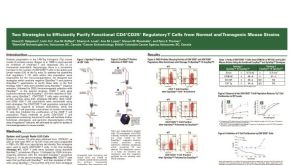 科学海报Cell Isolation of Functional CD4+CD25+ Regulatory T Cells from Mouse Strains
 新闻STEMCELL Technologies Launches Innovative Products to Support CAR T Cell Research

 沪公网安备31010102008431号