Bruserud &O et al. (MAY 2003)
Leukemia research 27 5 455--64
In vitro culture of human acute lymphoblastic leukemia (ALL) cells in serum-free media; a comparison of native ALL blasts, ALL cell lines and virus-transformed B cell lines.
The aim of this study was to standardize in vitro culture conditions for human acute lymphoblastic leukemia (ALL) cells. The cells were cultured in medium containing 10% fetal calf serum (FCS) and in the four serum-free media X-vivo 10,X-vivo 15,X-vivo 20 and Stem Span. Native ALL blasts could proliferate in all four serum-free media,but the strongest responses were usually observed with Stem Span. Native leukemia blasts were also cultured in the presence of various single cytokines or cytokine combinations. The highest proliferation was usually observed in the presence of Flt3-Ligand (Flt3-L) when single cytokines were examined,and these responses could be further increased especially by combining Flt3-L with interleukin 3 (IL3),IL7 or stem cell factor (SCF). Proliferation could also be increased when ALL blasts were cultured in the presence of two commercially available fibroblast cell lines (Hs27 and HFL1). Based on these results we suggest that in vitro culture conditions for native human ALL blasts can be standardized by using serum-free culture media supplemented with exogenous Flt3-L+IL3+SCF,and the use of accessory cells can also be standardized by using well-characterized fibroblast cell lines. Detectable ALL blast proliferation can then be observed for most patients. Our experimental model can thereby be used for in vitro evaluation of possible antileukemic treatment strategies,and it will then allow comparison of experimental results between different studies.
View Publication
产品类型:
产品号#:
产品名:
Bruserud O et al. (DEC 2000)
Journal of hematotherapy & stem cell research 9 6 923--32
In vitro culture of human acute myelogenous leukemia (AML) cells in serum-free media: studies of native AML blasts and AML cell lines.
The functional characteristics were compared for acute myelogenous leukemia (AML) cells (native blasts and AML cell lines) cultured in three serum-free media (X-vivo 10,X-vivo 15,[Bio-Whitacker,Walkersville,MD] and StemSpan [Stem Cell Technologies,Vancouver,BC,Canada]) and in medium containing 10% inactivated fetal calf serum (FCS). For native AML blasts the following functions were compared: (1) autonomous and cytokine-dependent proliferation; (2) frequency of clonogenic cell; and (3) constitutive cytokine secretion. AML blast proliferation differed between patients independent of the culture medium used,and clonogenic cells were maintained after in vitro culture in all media. In contrast,constitutive cytokine secretion was higher for cells cultured in StemSpan and FCS-containing medium than for cells cultured in the X-vivo media. Native AML blasts incubated in StemSpan also showed a low frequency of apoptotic cells. The three serum-free media could also be used for long-term expansion of well-characterized AML cell lines,but the optimal medium for cell expansion and cytokine secretion differed between cell lines. We conclude that standardized serum-free culture conditions can be used for in vitro studies of native AML blasts and AML cell lines.
View Publication
产品类型:
产品号#:
09600
09650
产品名:
StemSpan™ SFEM
StemSpan™ SFEM
Takeda A et al. (JUL 2006)
Cancer research 66 13 6628--37
NUP98-HOXA9 induces long-term proliferation and blocks differentiation of primary human CD34+ hematopoietic cells.
NUP98-HOXA9,the chimeric protein resulting from the t(7;11)(p15;p15) chromosomal translocation,is a prototype of several NUP98 fusions that occur in myelodysplastic syndromes and acute myeloid leukemia. We examined its effect on differentiation,proliferation,and gene expression in primary human CD34+ hematopoietic cells. Colony-forming cell (CFC) assays in semisolid medium combined with morphologic examination and flow cytometric immunophenotyping revealed that NUP98-HOXA9 increased the numbers of erythroid precursors and impaired both myeloid and erythroid differentiation. In continuous liquid culture,cells transduced with NUP98-HOXA9 exhibited a biphasic growth curve with initial growth inhibition followed by enhanced long-term proliferation,suggesting an increase in the numbers of primitive self-renewing cells. This was confirmed by a dramatic increase in the numbers of long-term culture-initiating cells,the most primitive hematopoietic cells detectable in vitro. To understand the molecular mechanisms underlying the effects of NUP98-HOXA9 on hematopoietic cell proliferation and differentiation,oligonucleotide microarray analysis was done at several time points over 16 days,starting at 6 hours posttransduction. The early growth suppression was preceded by up-regulation of IFNbeta1 and accompanied by marked up-regulation of IFN-induced genes,peaking at 3 days posttransduction. In contrast,oncogenes such as homeobox transcription factors,FLT3,KIT,and WT1 peaked at 8 days or beyond,coinciding with increased proliferation. In addition,several putative tumor suppressors and genes associated with hematopoietic differentiation were repressed at later time points. These findings provide a comprehensive picture of the changes in proliferation,differentiation,and global gene expression that underlie the leukemic transformation of human hematopoietic cells by NUP98-HOXA9.
View Publication
产品类型:
产品号#:
05150
产品名:
MyeloCult™ H5100
Stier S et al. (AUG 2003)
Blood 102 4 1260--6
Ex vivo targeting of p21Cip1/Waf1 permits relative expansion of human hematopoietic stem cells.
Relative quiescence is a defining characteristic of hematopoietic stem cells. Reasoning that inhibitory tone dominates control of stem cell cycling,we previously showed that mice engineered to be deficient in the cyclin-dependent kinase inhibitor,p21Cip1/Waf1 (p21),have an increased stem cell pool under homeostatic conditions. Since p21 was necessary to maintain stem cell quiescence and its absence sufficient to permit increased murine stem cell cycling,we tested whether reduction of p21 alone in human adult-derived stem cells could affect stem cell proliferation. We demonstrate here that interrupting p21 expression ex vivo resulted in expanded stem cell number and in vivo stem cell function compared with control,manipulated cells. Further,we demonstrate full multilineage reconstitution capability in cells where p21 expression was knocked down. Therefore,lifting the brake on cell proliferation by altering cell cycle checkpoints provides an alternative paradigm for increasing hematopoietic stem cell numbers. This approach may be useful for relative ex vivo human stem cell expansion.
View Publication
产品类型:
产品号#:
05150
04435
04445
产品名:
MyeloCult™ H5100
MethoCult™ H4435 Enriched
MethoCult™ H4435 Enriched
Senatus PB et al. (JAN 2006)
Molecular cancer therapeutics 5 1 20--8
Restoration of p53 function for selective Fas-mediated apoptosis in human and rat glioma cells in vitro and in vivo by a p53 COOH-terminal peptide.
We have shown that a COOH-terminal peptide of p53 (amino acids 361-382,p53p),linked to the truncated homeobox domain of Antennapedia (Ant) as a carrier for transduction,induced rapid apoptosis in human premalignant and malignant cell lines. Here,we report that human and rat glioma lines containing endogenous mutant p53 or wild-type (WT) p53 were induced into apoptosis by exposure to this peptide called p53p-Ant. The peptide was comparatively nontoxic to proliferating nonmalignant human and rat glial cell lines containing WT p53 and proliferating normal human peripheral marrow blood stem cells. Degree of sensitivity to the peptide correlated directly with the level of endogenous p53 expression and mutant p53 conformation. Apoptosis induction by p53p-Ant was quantitated by terminal deoxynucleotidyl transferase-mediated dUTP nick end labeling assay and Annexin V staining in human glioma cells in vitro and in a syngeneic orthotopic 9L glioma rat model using convection-enhanced delivery in vivo. The mechanism of cell death by this peptide was solely through the Fas extrinsic apoptotic pathway. p53p-Ant induced a 3-fold increase in extracellular membrane Fas expression in glioma cells but no significant increase in nonmalignant glial cells. These data suggest that p53 function for inducing Fas-mediated apoptosis in gliomas,which express sufficient quantities of endogenous mutant or WT p53,may be restored or activated,respectively,by a cell-permeable peptide derived from the p53 COOH-terminal regulatory domain (p53p-Ant). p53p-Ant may serve as a prototypic model for the development of new anticancer agents with unique selectivity for glioma cancer cells and it can be successfully delivered in vivo into a brain tumor by a convection-enhanced delivery system,which circumvents the blood-brain barrier.
View Publication
产品类型:
产品号#:
04434
04444
产品名:
MethoCult™ H4434 Classic
MethoCult™ H4434 Classic
Lacout C et al. (SEP 2006)
Blood 108 5 1652--60
JAK2V617F expression in murine hematopoietic cells leads to MPD mimicking human PV with secondary myelofibrosis.
A JAK2(V617F) mutation is frequently found in several BCR/ABL-negative myeloproliferative disorders. To address the contribution of this mutant to the pathogenesis of these different myeloproliferative disorders,we used an adoptive transfer of marrow cells transduced with a retrovirus expressing JAK2(V617F) in recipient irradiated mice. Hosts were analyzed during the 6 months after transplantation. For a period of 3 months,mice developed polycythemia,macrocytosis and usually peripheral blood granulocytosis. Transient thrombocytosis was only observed in a low-expresser group. All mice displayed trilineage hyperplasia in marrow and spleen along with an amplification of myeloid and erythroid progenitor cells and a formation of endogenous erythroid colonies. After 3 to 4 months,polycythemia regressed,abnormally shaped red blood cells and platelets were seen in circulation,and a deposition of reticulin fibers was observed in marrow and spleen. Development of fibrosis was associated with anemia,thrombocytopenia,high neutrophilia,and massive splenomegaly. These features mimic human polycythemia vera and its evolution toward myelofibrosis. This work demonstrates that JAK2(V617F) is sufficient for polycythemia and fibrosis development and offers an in vivo model to assess novel therapeutic approaches for JAK2(V617F)-positive pathologies. Questions remain regarding the exact contribution of JAK2(V617F) in other myeloproliferative disorders.
View Publication
产品类型:
产品号#:
03234
产品名:
MethoCult™ M3234
Finstad SL et al. (JUL 2007)
Journal of virology 81 13 7274--9
Diminished potential for B-lymphoid differentiation after murine leukemia virus infection in vivo and in EML hematopoietic progenitor cells.
Infection with a recombinant murine-feline gammaretrovirus,MoFe2,or with the parent virus,Moloney murine leukemia virus,caused significant reduction in B-lymphoid differentiation of bone marrow at 2 to 8 weeks postinfection. The suppression was selective,in that myeloid potential was significantly increased by infection. Analysis of cell surface markers and immunoglobulin H gene rearrangements in an in vitro model demonstrated normal B-lymphoid differentiation after infection but significantly reduced viability of differentiating cells. This reduction in viability may confer a selective advantage on undifferentiated lymphoid progenitors in the bone marrow of gammaretrovirus-infected animals and thereby contribute to the establishment of a premalignant state.
View Publication
产品类型:
产品号#:
03630
03434
03444
产品名:
MethoCult™ M3630
MethoCult™ GF M3434
MethoCult™ GF M3434
Hess DA et al. (SEP 2004)
Blood 104 6 1648--55
Functional characterization of highly purified human hematopoietic repopulating cells isolated according to aldehyde dehydrogenase activity.
Human hematopoietic stem cells (HSCs) are commonly purified by the expression of cell surface markers such as CD34. Because cell phenotype can be altered by cell cycle progression or ex vivo culture,purification on the basis of conserved stem cell function may represent a more reliable way to isolate various stem cell populations. We have purified primitive HSCs from human umbilical cord blood (UCB) by lineage depletion (Lin(-)) followed by selection of cells with high aldehyde dehydrogenase (ALDH) activity. ALDH(hi)Lin(-) cells contained 22.6% +/- 3.0% of the Lin(-) population and highly coexpressed primitive HSC phenotypes (CD34(+) CD38(-) and CD34(+)CD133(+)). In vitro hematopoietic progenitor function was enriched in the ALDH(hi)Lin(-) population,compared with ALDH(lo)Lin(-) cells. Multilineage human hematopoietic repopulation was observed exclusively after transplantation of ALDH(hi)Lin(-) cells. Direct comparison of repopulation with use of the nonobese diabetic/severe combined immunodeficient (NOD/SCID) and NOD/SCID beta2 microglobulin (beta2M) null models demonstrated that 10-fold greater numbers of ALDH(hi)-Lin(-) cells were needed to engraft the NOD/SCID mouse as compared with the more permissive NOD/SCID beta2M null mouse,suggesting that the ALDH(hi)Lin(-) population contained committed progenitors as well as primitive repopulating cells. Cell fractionation according to lineage depletion and ALDH activity provides a viable and prospective purification of HSCs on the basis of cell function rather than cell surface phenotype.
View Publication
Akatsuka A et al. (SEP 2010)
International immunology 22 9 783--90
Tumor cells of non-hematopoietic and hematopoietic origins express activation-induced C-type lectin, the ligand for killer cell lectin-like receptor F1.
Killer cell lectin-like receptor F1 (KLRF1) is an activating C-type lectin-like receptor expressed on human NK cells and subsets of T cells. In this study,we show that activation-induced C-type lectin (AICL) is a unique KLRF1 ligand expressed on tumor cell lines of hematopoietic and non-hematopoietic origins. We screened a panel of human tumor cell lines using the KLRF1 reporter cells and found that several tumor lines expressed KLRF1 ligands. We characterized a putative KLRF1 ligand expressed on the U937 cell line. The molecular mass for the deglycosylated ligand was 28 kDa under non-reducing condition and 17 kDa under reducing condition,suggesting that the KLRF1 ligand is a homodimer. By expression cloning from a U937 cDNA library,we identified AICL as a KLRF1 ligand. We generated mAbs against AICL to identify the KLRF1 ligands on non-hematopoietic tumor lines. The anti-AICL mAbs stained the tumor lines that express the KLRF1 ligands and importantly the interaction of KLRF1 with the KLRF1 ligand on non-hematopoietic tumors was completely blocked by the two anti-AICL mAbs. Moreover,NK cell degranulation triggered by AICL-expressing targets was partially inhibited by the anti-AICL mAb. Finally,we demonstrate that AICL is expressed in human primary liver cancers. These results suggest that AICL is expressed on tumor cells of non-hematopoietic origins and raise the possibility that AICL may contribute to NK cell surveillance of tumor cells.
View Publication


 EasySep™小鼠TIL(CD45)正选试剂盒




 抗人CD298抗体,clone LNH-94 小鼠Monoclonal IgG1抗体,抗人CD298
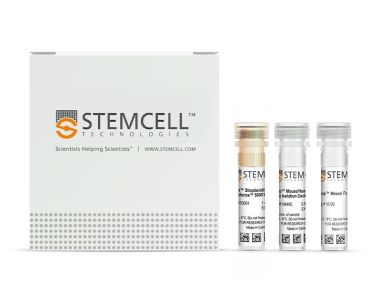 EasySep™小鼠/人嵌合体分选试剂盒
 产品手册Mammary Epithelial Cells: Standardized Media and Reagents
 沪公网安备31010102008431号