Murphy S et al. (APR 2010)
Current protocols in stem cell biology Chapter 1 Unit 1E.6
Amnion epithelial cell isolation and characterization for clinical use.
Human amnion epithelial cells (hAECs) are a heterologous population positive for stem cell markers; they display multilineage differentiation potential,differentiating into cells of the endoderm (liver,lung epithelium),mesoderm (bone,fat),and ectoderm (neural cells). They have a low immunogenic profile and possess potent immunosuppressive properties. Hence,hAECs may be a valuable source of cells for cell therapy. This unit describes an efficient and effective method of hAEC isolation,culture,and cryopreservation that is animal product-free and in accordance with current guidelines on preparation of cells for clinical use. Cells isolated using this method were characterized after 5 passages by analysis of karyotype,cell cycle distribution,and changes in telomere length. The differentiation potential of hAECs isolated using this animal product-free method was demonstrated by differentiation into lineages of the three primary germ layers and expression of lineage-specific markers analyzed by PCR,immunocytochemistry,and histology.
View Publication
产品类型:
产品号#:
07930
07931
07940
07955
07956
07959
07954
100-1061
07952
产品名:
CryoStor® CS10
CryoStor® CS10
CryoStor® CS10
CryoStor® CS10
CryoStor® CS10
CryoStor® CS10
CryoStor® CS10
Pino CJ et al. (FEB 2013)
Nephrology,dialysis,transplantation : official publication of the European Dialysis and Transplant Association - European Renal Association 28 2 296--302
Cell-based approaches for the treatment of systemic inflammation.
Acute and chronic solid organ failures are costly disease processes with high mortality rates. Inflammation plays a central role in both acute and chronic organ failure,including heart,lung and kidney. In this regard,new therapies for these disorders have focused on inhibiting the mediators of inflammation,including cytokines and free radicals,with little or no success in clinical studies. Recent novel treatment strategies have been directed to cell-based rather than mediator-based approaches,designed to immunomodulate the deleterious effects of inflammation on organ function. One approach,cell therapy,replaces cells that were damaged in the acute or chronic disease process with stem/progenitor technology,to rebalance excessive inflammatory states. As an example of this approach,the use of an immunomodulatory role of renal epithelial progenitor cells to treat acute renal failure (ARF) and multiorgan failure arising from acute kidney injury is reviewed. A second therapeutic pathway,cell processing,does not incorporate stem/progenitor cells in the device,but rather biomimetic materials that remove and modulate the primary cellular components,which promote the worsening organ tissue injury associated with inflammation. The use of an immunomodulating leukocyte selective cytopheretic inhibitory device is also reviewed as an example of this cell processing approach. Both of these unconventional strategies have shown early clinical efficacy in pilot clinical trials and may transform the therapeutic approach to organ failure disorders.
View Publication
产品类型:
产品号#:
07930
07931
07940
07955
07956
07959
07954
100-1061
07952
产品名:
CryoStor® CS10
CryoStor® CS10
CryoStor® CS10
CryoStor® CS10
CryoStor® CS10
CryoStor® CS10
CryoStor® CS10
Luckett-Chastain LR and Gallucci RM (AUG 2009)
The British journal of dermatology 161 2 237--48
Interleukin (IL)-6 modulates transforming growth factor-beta expression in skin and dermal fibroblasts from IL-6-deficient mice.
BACKGROUND Interleukin (IL-6) and transforming growth factor (TGF)-beta have been shown to play a role in skin development and maintenance. OBJECTIVES A link between these two cytokines has yet to be identified and therefore in this study we investigated the modulation of TGF-beta1 and TGF-beta type 2 receptor (TGF-betaR2) by IL-6 in skin. METHODS An IL-6 knockout (IL-6KO) fibroblast-populated lattice model and intradermal injections of IL-6 into unwounded IL-6KO mice were used to investigate the direct effects of IL-6 treatment on TGF-beta and TGF-betaR2 expression and to determine the signalling mechanism. In addition,IL-6KO and C57BL/6 control mice were wounded by a 4-mm punch biopsy to monitor expression of TGF-beta1 and TGF-betaR2 within a wound over time. The expression of TGF-beta1 and TGF-betaR2 was assessed by real-time quantitative polymerase chain reaction,enzyme-linked immunosorbent assay and immunohistology. RESULTS Recombinant IL-6 treatment of IL-6KO lattices and intradermal injections of IL-6 showed a significant induction of TGF-beta1 mRNA and protein,with TGF-beta1 expression localized in the dermis,while TGF-betaR2 expression was primarily in the epidermis in IL-6KO mice. During healing,the expression of TGF-beta1 and TGF-betaR2 mRNA was significantly greater in unwounded and 7-day-old wounds from wild-type mice; however,protein expression did not differ. Treatment with signal transduction inhibitors indicated that IL-6 modulates TGF-beta through a mitogen-activated protein kinase/extracellular signal-regulated kinase (Mapk/Erk)-dependent mechanism. CONCLUSION These studies indicate that IL-6 has the ability to modulate the expression of TGF-beta and TGF-betaR2 to varying degrees in the skin,which may provide a possible mechanism for defining the role of IL-6 in skin maintenance and a new association of IL-6 with TGF-beta in pathologies associated with fibrosis.
View Publication
产品类型:
产品号#:
07930
07931
07940
07955
07956
07959
07954
100-1061
07952
产品名:
CryoStor® CS10
CryoStor® CS10
CryoStor® CS10
CryoStor® CS10
CryoStor® CS10
CryoStor® CS10
CryoStor® CS10
Buffington DA et al. (JAN 2012)
Cell medicine 4 1 33--43
Bioartificial Renal Epithelial Cell System (BRECS): A Compact, Cryopreservable Extracorporeal Renal Replacement Device.
Renal cell therapy has shown clinical efficacy in the treatment of acute renal failure (ARF) and promise for treatment of end-stage renal disease (ESRD) by supplementing conventional small solute clearance (hemodialysis or hemofiltration) with endocrine and metabolic function provided by cells maintained in an extracorporeal circuit. A major obstacle in the widespread adoption of this therapeutic approach is the lack of a cryopreservable system to enable distribution,storage,and therapeutic use at point of care facilities. This report details the design,fabrication,and assessment of a Bioartificial Renal Epithelial Cell System (BRECS),the first all-in-one culture vessel,cryostorage device,and cell therapy delivery system. The BRECS was loaded with up to 20 cell-seeded porous disks,which were maintained by perfusion culture. Once cells reached over 5 A- 10(6) cells/disk for a total therapeutic dose of approximately 10(8) cells,the BRECS was cryopreserved for storage at -80°C or -140°C. The BRECS was rapidly thawed,and perfusion culture was resumed. Near precryopreservation values of cell viability,metabolic activity,and differentiated phenotype of functional renal cells were confirmed post-reconstitution. This technology could be extended to administer other cell-based therapies where metabolic,regulatory,or secretion functions can be leveraged in an immunoisolated extracorporeal circuit.
View Publication


 EasySep™小鼠TIL(CD45)正选试剂盒




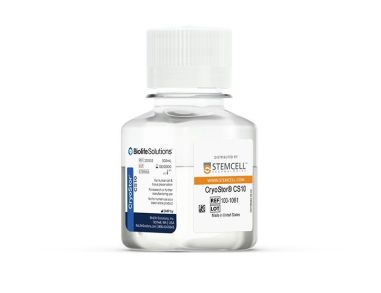 CryoStor® CS10 以cGMP标准生产、不含动物成分、成分明确、含10% DMSO的冻存液
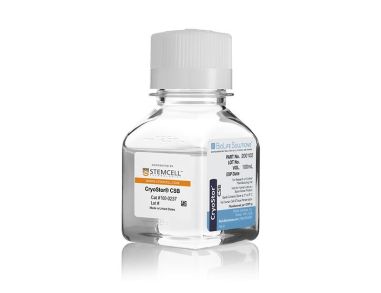 CryoStor®CSB 无动物成分和无蛋白质冷冻保存配方
 沪公网安备31010102008431号