Teichroeb JH et al. (JAN 2011)
PLoS ONE 6 10 e23436
Suppression of the imprinted gene NNAT and X-chromosome gene activation in isogenic human iPS cells.
Genetic comparison between human embryonic stem cells and induced pluripotent stem cells has been hampered by genetic variation. To solve this problem,we have developed an isogenic system that allows direct comparison of induced pluripotent stem cells (hiPSCs) to their genetically matched human embryonic stem cells (hESCs). We show that hiPSCs have a highly similar transcriptome to hESCs. Global transcriptional profiling identified 102-154 genes (textgreater2 fold) that showed a difference between isogenic hiPSCs and hESCs. A stringent analysis identified NNAT as a key imprinted gene that was dysregulated in hiPSCs. Furthermore,a disproportionate number of X-chromosome localized genes were over-expressed in female hiPSCs. Our results indicate that despite a remarkably close transcriptome to hESCs,isogenic hiPSCs have alterations in imprinting and regulation of X-chromosome genes.
View Publication
Loh KM et al. (JAN 2014)
Cell Stem Cell 14 2 237--252
Efficient endoderm induction from human pluripotent stem cells by logically directing signals controlling lineage bifurcations
Human pluripotent stem cell (hPSC) differentiation typically yields heterogeneous populations. Knowledge of signals controlling embryonic lineage bifurcations could efficiently yield desired cell types through exclusion of alternate fates. Therefore,we revisited signals driving induction and anterior-posterior patterning of definitive endoderm to generate a coherent roadmap for endoderm differentiation. With striking temporal dynamics,BMP and Wnt initially specified anterior primitive streak (progenitor to endoderm),yet,24 hr later,suppressed endoderm and induced mesoderm. At lineage bifurcations,cross-repressive signals separated mutually exclusive fates; TGF-?? and BMP/MAPK respectively induced pancreas versus liver from endoderm by suppressing the alternate lineage. We systematically blockaded alternate fates throughout multiple consecutive bifurcations,thereby efficiently differentiating multiple hPSC lines exclusively into endoderm and its derivatives. Comprehensive transcriptional and chromatin mapping of highly pure endodermal populations revealed that endodermal enhancers existed in a surprising diversity of pre-enhancer" states before activation�
View Publication
产品类型:
产品号#:
05850
05857
05870
05875
85850
85857
85870
85875
产品名:
mTeSR™1
mTeSR™1
Wattanapanitch M et al. (SEP 2014)
PloS one 9 9 e106952
Dual small-molecule targeting of SMAD signaling stimulates human induced pluripotent stem cells toward neural lineages.
Incurable neurological disorders such as Parkinson's disease (PD),Huntington's disease (HD),and Alzheimer's disease (AD) are very common and can be life-threatening because of their progressive disease symptoms with limited treatment options. To provide an alternative renewable cell source for cell-based transplantation and as study models for neurological diseases,we generated induced pluripotent stem cells (iPSCs) from human dermal fibroblasts (HDFs) and then differentiated them into neural progenitor cells (NPCs) and mature neurons by dual SMAD signaling inhibitors. Reprogramming efficiency was improved by supplementing the histone deacethylase inhibitor,valproic acid (VPA),and inhibitor of p160-Rho associated coiled-coil kinase (ROCK),Y-27632,after retroviral transduction. We obtained a number of iPS colonies that shared similar characteristics with human embryonic stem cells in terms of their morphology,cell surface antigens,pluripotency-associated gene and protein expressions as well as their in vitro and in vivo differentiation potentials. After treatment with Noggin and SB431542,inhibitors of the SMAD signaling pathway,HDF-iPSCs demonstrated rapid and efficient differentiation into neural lineages. Six days after neural induction,neuroepithelial cells (NEPCs) were observed in the adherent monolayer culture,which had the ability to differentiate further into NPCs and neurons,as characterized by their morphology and the expression of neuron-specific transcripts and proteins. We propose that our study may be applied to generate neurological disease patient-specific iPSCs allowing better understanding of disease pathogenesis and drug sensitivity assays.
View Publication
产品类型:
产品号#:
05850
05857
05870
05875
07923
85850
85857
85870
85875
产品名:
Dispase (1 U/mL)
mTeSR™1
mTeSR™1
Lindgren AG et al. (JAN 2015)
Cell regeneration (London,England) 4 1 1
ETV2 expression increases the efficiency of primitive endothelial cell derivation from human embryonic stem cells.
BACKGROUND: Endothelial cells line the luminal surface of blood vessels and form a barrier between the blood and other tissues of the body. Ets variant 2 (ETV2) is transiently expressed in both zebrafish and mice and is necessary and sufficient for vascular endothelial cell specification. Overexpression of this gene in early zebrafish and mouse embryos results in ectopic appearance of endothelial cells. Ectopic expression of ETV2 in later development results in only a subset of cells responding to the signal.backslashnbackslashnFINDINGS: We have examined the expression pattern of ETV2 in differentiating human embryonic stem cells (ESCs) to determine when the peak of ETV2 expression occurs. We show that overexpression of ETV2 in differentiating human ESC is able to increase the number of endothelial cells generated when administered during or after the endogenous peak of gene expression.backslashnbackslashnCONCLUSIONS: Addition of exogenous ETV2 to human ESCs significantly increased the number of cells expressing angioblast genes without arterial or venous specification. This may be a viable solution to generate in vitro endothelial cells for use in research and in the clinic.
View Publication
产品类型:
产品号#:
05850
05857
05870
05875
85850
85857
85870
85875
产品名:
mTeSR™1
mTeSR™1
Vauchez K et al. (NOV 2009)
Molecular therapy : the journal of the American Society of Gene Therapy 17 11 1948--58
Aldehyde dehydrogenase activity identifies a population of human skeletal muscle cells with high myogenic capacities.
Aldehyde dehydrogenase 1A1 (ALDH) activity is one hallmark of human bone marrow (BM),umbilical cord blood (UCB),and peripheral blood (PB) primitive progenitors presenting high reconstitution capacities in vivo. In this study,we have identified ALDH(+) cells within human skeletal muscles,and have analyzed their phenotypical and functional characteristics. Immunohistofluorescence analysis of human muscle tissue sections revealed rare endomysial cells. Flow cytometry analysis using the fluorescent substrate of ALDH,Aldefluor,identified brightly stained (ALDH(br)) cells with low side scatter (SSC(lo)),in enzymatically dissociated muscle biopsies,thereafter abbreviated as SMALD(+) (for skeletal muscle ALDH(+)) cells. Phenotypical analysis discriminated two sub-populations according to CD34 expression: SMALD(+)/CD34(-) and SMALD(+)/CD34(+) cells. These sub-populations did not initially express endothelial (CD31),hematopoietic (CD45),and myogenic (CD56) markers. Upon sorting,however,whereas SMALD(+)/CD34(+) cells developed in vitro as a heterogeneous population of CD56(-) cells able to differentiate in adipoblasts,the SMALD(+)/CD34(-) fraction developed in vitro as a highly enriched population of CD56(+) myoblasts able to form myotubes. Moreover,only the SMALD(+)/CD34(-) population maintained a strong myogenic potential in vivo upon intramuscular transplantation. Our results suggest that ALDH activity is a novel marker for a population of new human skeletal muscle progenitors presenting a potential for cell biology and cell therapy.
View Publication
Sharma A et al. (JUN 2013)
Journal of Biological Chemistry 288 25 18439--18447
The role of SIRT6 protein in aging and reprogramming of human induced pluripotent stem cells
Aging is known to be the single most important risk factor for multiple diseases. Sirtuin 6,or SIRT6,has recently been identified as a critical regulator of transcription,genome stability,telomere integrity,DNA repair,and metabolic homeostasis. A knockout mouse model of SIRT6 has displayed dramatic phenotypes of accelerated aging. In keeping with its role in aging,we demonstrated that human dermal fibroblasts (HDFs) from older human subjects were more resistant to reprogramming by classic Yamanaka factors than those from younger human subjects,but the addition of SIRT6 during reprogramming improved such efficiency in older HDFs substantially. Despite the importance of SIRT6,little is known about the molecular mechanism of its regulation. We show,for the first,time posttranscriptional regulation of SIRT6 by miR-766 and inverse correlation in the expression of this microRNA in HDFs from different age groups. Our results suggest that SIRT6 regulates miR-766 transcription via a feedback regulatory loop,which has implications for the modulation of SIRT6 expression in reprogramming of aging cells.
View Publication
产品类型:
产品号#:
05850
05857
05870
05875
85850
85857
85870
85875
产品名:
mTeSR™1
mTeSR™1
Bao X et al. ( 2016)
Methods in molecular biology (Clifton,N.J.) 1481 183--196
Directed Endothelial Progenitor Differentiation from Human Pluripotent Stem Cells Via Wnt Activation Under Defined Conditions.
Efficient derivation of endothelial cells and their progenitors from human pluripotent stem cells (hPSCs) can facilitate studies of human vascular development,disease modeling,drug discovery,and cell-based therapy. Here we provide a detailed protocol for directing hPSCs to functional endothelial cells and their progenitors in a completely defined,growth factor- and serum-free system by temporal modulation of Wnt/$$-catenin signaling via small molecules. We demonstrate a 10-day,two-stage process that recapitulates endothelial cell development,in which hPSCs first differentiate to endothelial progenitors that then generate functional endothelial cells and smooth muscle cells. Methods to characterize endothelial cell identity and function are also described.
View Publication
产品类型:
产品号#:
05850
05857
05870
05875
05940
85850
85857
85870
85875
产品名:
mTeSR™1
mTeSR™1
Chen C et al. (NOV 2016)
JCI insight 1 19 e88632
Humanized neuronal chimeric mouse brain generated by neonatally engrafted human iPSC-derived primitive neural progenitor cells.
The creation of a humanized chimeric mouse nervous system permits the study of human neural development and disease pathogenesis using human cells in vivo. Humanized glial chimeric mice with the brain and spinal cord being colonized by human glial cells have been successfully generated. However,generation of humanized chimeric mouse brains repopulated by human neurons to possess a high degree of chimerism have not been well studied. Here we created humanized neuronal chimeric mouse brains by neonatally engrafting the distinct and highly neurogenic human induced pluripotent stem cell (hiPSC)-derived rosette-type primitive neural progenitors. These neural progenitors predominantly differentiate to neurons,which disperse widely throughout the mouse brain with infiltration of the cerebral cortex and hippocampus at 6 and 13 months after transplantation. Building upon the hiPSC technology,we propose that this potentially unique humanized neuronal chimeric mouse model will provide profound opportunities to define the structure,function,and plasticity of neural networks containing human neurons derived from a broad variety of neurological disorders.
View Publication


 EasySep™小鼠TIL(CD45)正选试剂盒





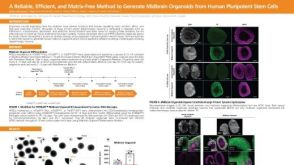 科学海报A Reliable, Efficient, and Matrix-Free Method to Generate Midbrain Organoids from Human Pluripotent Stem Cells
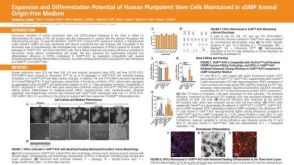 科学海报Expansion and Differentiation Potential of Human Pluripotent Stem Cells Maintained in cGMP Animal Origin-Free Medium

 沪公网安备31010102008431号