TC-PTP-deficient bone marrow stromal cells fail to support normal B lymphopoiesis due to abnormal secretion of interferon-gamma.
The T-cell protein tyrosine phosphatase (TC-PTP) is a negative regulator of the Jak/Stat cytokine signaling pathway. Our study shows that the absence of TC-PTP leads to an early bone marrow B-cell deficiency characterized by hindered transition from the pre-B cell to immature B-cell stage. This phenotype is intrinsic to the B cells but most importantly due to bone marrow stroma abnormalities. We found that bone marrow stromal cells from TC-PTP(-/-) mice have the unique property of secreting 232-890 pg/mL IFN-gamma. These high levels of IFN-gamma result in 2-fold reduction in mitotic index on IL-7 stimulation of TC-PTP(-/-) pre-B cells and lower responsiveness of IL-7 receptor downstream Jak/Stat signaling molecules. Moreover,we noted constitutive phosphorylation of Stat1 in those pre-B cells and demonstrated that this was due to soluble IFN-gamma secreted by TC-PTP(-/-) bone marrow stromal cells. Interestingly,culturing murine early pre-B leukemic cells within a TC-PTP-deficient bone marrow stroma environment leads to a 40% increase in apoptosis in these malignant cells. Our results unraveled a new role for TC-PTP in normal B lymphopoiesis and suggest that modulation of bone marrow microenvironment is a potential therapeutic approach for selected B-cell leukemia.
View Publication
产品类型:
产品号#:
03630
03434
03444
产品名:
MethoCult™ M3630
MethoCult™ GF M3434
MethoCult™ GF M3434
Weisberg E et al. (DEC 2008)
Blood 112 13 5161--70
Antileukemic effects of the novel, mutant FLT3 inhibitor NVP-AST487: effects on PKC412-sensitive and -resistant FLT3-expressing cells.
An attractive target for therapeutic intervention is constitutively activated,mutant FLT3,which is expressed in a subpopulation of patients with acute myelocyic leukemia (AML) and is generally a poor prognostic indicator in patients under the age of 65 years. PKC412 is one of several mutant FLT3 inhibitors that is undergoing clinical testing,and which is currently in late-stage clinical trials. However,the discovery of drug-resistant leukemic blast cells in PKC412-treated patients with AML has prompted the search for novel,structurally diverse FLT3 inhibitors that could be alternatively used to override drug resistance. Here,we report the potent and selective antiproliferative effects of the novel mutant FLT3 inhibitor NVP-AST487 on primary patient cells and cell lines expressing FLT3-ITD or FLT3 kinase domain point mutants. NVP-AST487,which selectively targets mutant FLT3 protein kinase activity,is also shown to override PKC412 resistance in vitro,and has significant antileukemic activity in an in vivo model of FLT3-ITD(+) leukemia. Finally,the combination of NVP-AST487 with standard chemotherapeutic agents leads to enhanced inhibition of proliferation of mutant FLT3-expressing cells. Thus,we present a novel class of FLT3 inhibitors that displays high selectivity and potency toward FLT3 as a molecular target,and which could potentially be used to override drug resistance in AML.
View Publication
产品类型:
产品号#:
04434
04444
产品名:
MethoCult™ H4434 Classic
MethoCult™ H4434 Classic
Balasubramaniam V et al. (MAR 2010)
American journal of physiology. Lung cellular and molecular physiology 298 3 L315--23
Bone marrow-derived angiogenic cells restore lung alveolar and vascular structure after neonatal hyperoxia in infant mice.
Neonatal hyperoxia impairs vascular and alveolar growth in mice and decreases endothelial progenitor cells. To determine the role of bone marrow-derived cells in restoration of neonatal lung structure after injury,we studied a novel bone marrow myeloid progenitor cell population from Tie2-green fluorescent protein (GFP) transgenic mice (bone marrow-derived angiogenic cells; BMDAC). We hypothesized that treatment with BMDAC would restore normal lung structure in infant mice during recovery from neonatal hyperoxia. Neonatal mice (1-day-old) were exposed to 80% oxygen for 10 days. BMDACs (1 x 10(5)),embryonic endothelial progenitor cells,mouse embryonic fibroblasts (control),or saline were then injected into the pulmonary circulation. At 21 days of age,saline-treated mice had enlarged alveoli,reduced septation,and a reduction in vascular density. In contrast,mice treated with BMDAC had complete restoration of lung structure that was indistinguishable from room air controls. BMDAC comprised 12% of distal lung cells localized to pulmonary vessels or alveolar type II (AT2) cells and persist (8.8%) for 8 wk postinjection. Coculture of AT2 cells or lung endothelial cells (luEC) with BMDAC augmented AT2 and luEC cell growth in vitro. We conclude that treatment with BMDAC after neonatal hyperoxia restores lung structure in this model of bronchopulmonary dysplasia.
View Publication
Enhanced chondrogenic differentiation of human bone marrow-derived mesenchymal stem cells in low oxygen environment micropellet cultures.
Chondrogenesis of mesenchymal stem cells (MSCs) is typically induced when they are condensed into a single aggregate and exposed to transforming growth factor-beta (TGF-beta). Hypoxia,like aggregation and TGF-beta delivery,may be crucial for complete chondrogenesis. However,the pellet dimensions and associated self-induced oxygen gradients of current chondrogenic methods may limit the effectiveness of in vitro differentiation and subsequent therapeutic uses. Here we describe the use of embryoid body-forming technology to produce microscopic aggregates of human bone marrow MSCs (BM-MSCs) for chondrogenesis. The use of micropellets reduces the formation of gradients within the aggregates,resulting in a more homogeneous and controlled microenvironment. These micropellet cultures (approximately 170 cells/micropellet) as well as conventional pellet cultures (approximately 2 x 10(5) cells/pellet) were chondrogenically induced under 20% and 2% oxygen environments for 14 days. Compared to conventional pellets under both environments,micropellets differentiated under 2% O(2) showed significantly increased sulfated glycosaminoglycan (sGAG) production and more homogeneous distribution of proteoglycans and collagen II. Aggrecan and collagen II gene expressions were increased in pellet cultures differentiated under 2% O(2) relative to 20% O(2) pellets but 2% O(2) micropellets showed even greater increases in these genes,as well as increased SOX9. These results suggest a more advanced stage of chondrogenesis in the micropellets accompanied by more homogeneous differentiation. Thus,we present a new method for enhancing MSC chondrogenesis that reveals a unique relationship between oxygen tension and aggregate size. The inherent advantages of chondrogenic micropellets over a single macroscopic aggregate should allow for easy integration with a variety of cartilage engineering strategies.
View Publication
产品类型:
产品号#:
27845
27945
27840
27865
27940
27965
产品名:
Ko J-YY et al. (APR 2014)
Biomaterials 35 11 3571--3581
In vitro chondrogenesis and in vivo repair of osteochondral defect with human induced pluripotent stem cells.
The purpose of this study was to investigate the chondrogenic features of human induced pluripotent stem cells (hiPSCs) and examine the differences in the chondrogenesis between hiPSCs and human bone marrow-derived MSCs (hBMMSCs). Embryoid bodies (EBs) were formed from undifferentiated hiPSCs. After EBs were dissociated into single cells,chondrogenic culture was performed in pellets and alginate hydrogel. Chondro-induced hiPSCs were implanted in osteochondral defects created on the patellar groove of immunosuppressed rats and evaluated after 12 weeks. The ESC markers NANOG,SSEA4 and OCT3/4 disappeared while the mesodermal marker BMP-4 appeared in chondro-induced hiPSCs. After 21 days of culture,greater glycosaminoglycan contents and better chondrocytic features including lacuna and abundant matrix formation were observed from chondro-induced hiPSCs compared to chondro-induced hBMMSCs. The expression of chondrogenic markers including SOX-9,type II collagen,and aggrecan in chondro-induced hiPSCs was comparable to or greater than chondro-induced hBMMSCs. A remarkably low level of hypertrophic and osteogenic markers including type X collagen,type I collagen and Runx-2 was noted in chondro-induced hiPSCs compared to chondro-induced hBMMSCs. hiPSCs had significantly greater methylation of several CpG sites in COL10A1 promoter than hBMMSCs in either undifferentiated or chondro-induced state,suggesting an epigenetic cause of the difference in hypertrophy. The defects implanted with chondro-induced hiPSCs showed a significantly better quality of cartilage repair than the control defects,and the majority of cells in the regenerated cartilage consisted of implanted hiPSCs. ?? 2014 Elsevier Ltd.
View Publication
产品类型:
产品号#:
05850
05857
05870
05875
85850
85857
85870
85875
产品名:
mTeSR™1
mTeSR™1
Lian X et al. (NOV 2014)
Stem cell reports 3 5 804--816
Efficient differentiation of human pluripotent stem cells to endothelial progenitors via small-molecule activation of WNT signaling.
Human pluripotent stem cell (hPSC)-derived endothelial cells and their progenitors may provide the means for vascularization of tissue-engineered constructs and can serve as models to study vascular development and disease. Here,we report a method to efficiently produce endothelial cells from hPSCs via GSK3 inhibition and culture in defined media to direct hPSC differentiation to CD34(+)CD31(+) endothelial progenitors. Exogenous vascular endothelial growth factor (VEGF) treatment was dispensable,and endothelial progenitor differentiation was β-catenin dependent. Furthermore,by clonal analysis,we showed that CD34(+)CD31(+)CD117(+)TIE-2(+) endothelial progenitors were multipotent,capable of differentiating into calponin-expressing smooth muscle cells and CD31(+)CD144(+)vWF(+)I-CAM1(+) endothelial cells. These endothelial cells were capable of 20 population doublings,formed tube-like structures,imported acetylated low-density lipoprotein,and maintained a dynamic barrier function. This study provides a rapid and efficient method for production of hPSC-derived endothelial progenitors and endothelial cells and identifies WNT/β-catenin signaling as a primary regulator for generating vascular cells from hPSCs.
View Publication
产品类型:
产品号#:
05850
05857
05870
05875
73042
73044
85850
85857
85870
85875
产品名:
CHIR98014
CHIR98014
mTeSR™1
mTeSR™1
Ja KPMM et al. (FEB 2016)
Journal of cellular and molecular medicine 20 2 323--332
iPSC-derived human cardiac progenitor cells improve ventricular remodelling via angiogenesis and interstitial networking of infarcted myocardium.
We investigate the effects of myocardial transplantation of human induced pluripotent stem cell (iPSC)-derived progenitors and cardiomyocytes into acutely infarcted myocardium in severe combined immune deficiency mice. A total of 2 × 10(5) progenitors,cardiomyocytes or cell-free saline were injected into peri-infarcted anterior free wall. Sham-operated animals received no injection. Myocardial function was assessed at 2-week and 4-week post-infarction by using echocardiography and pressure-volume catheterization. Early myocardial remodelling was observed at 2-week with echocardiography derived stroke volume (SV) in saline (20.45 ± 7.36 $\$,P textless 0.05) and cardiomyocyte (19.52 ± 3.97 $\$,P textless 0.05) groups,but not in progenitor group (25.65 ± 3.61 $\$),significantly deteriorated as compared to sham control group (28.41 ± 4.41 $\$). Consistently,pressure-volume haemodynamic measurements showed worsening chamber dilation in saline (EDV: 23.24 ± 5.01 $\$,P textless 0.05; ESV: 17.08 ± 5.82 $\$,P textless 0.05) and cardiomyocyte (EDV: 26.45 ± 5.69 $\$,P textless 0.05; ESV: 18.03 ± 6.58 $\$,P textless 0.05) groups by 4-week post-infarction as compared to control (EDV: 15.26 ± 2.96 $\$; ESV: 8.41 ± 2.94 $\$). In contrast,cardiac progenitors (EDV: 20.09 ± 7.76 $\$; ESV: 13.98 ± 6.74 $\$) persistently protected chamber geometry against negative cardiac remodelling. Similarly,as compared to sham control (54.64 ± 11.37%),LV ejection fraction was preserved in progenitor group from 2-(38.68 ± 7.34%) to 4-week (39.56 ± 13.26%) while cardiomyocyte (36.52 ± 11.39%,P textless 0.05) and saline (35.34 ± 11.86%,P textless 0.05) groups deteriorated early at 2-week. Improvements of myocardial function in the progenitor group corresponded to increased vascularization (16.12 ± 1.49/mm(2) to 25.48 ± 2.08/mm(2) myocardial tissue,P textless 0.05) and coincided with augmented networking of cardiac telocytes in the interstitial space of infarcted zone.
View Publication
产品类型:
产品号#:
05850
05857
05870
05875
85850
85857
85870
85875
产品名:
mTeSR™1
mTeSR™1
Hawkins RD et al. (OCT 2011)
Cell Research 21 10 1393--1409
Dynamic chromatin states in human ES cells reveal potential regulatory sequences and genes involved in pluripotency.
Pluripotency,the ability of a cell to differentiate and give rise to all embryonic lineages,defines a small number of mammalian cell types such as embryonic stem (ES) cells. While it has been generally held that pluripotency is the product of a transcriptional regulatory network that activates and maintains the expression of key stem cell genes,accumulating evidence is pointing to a critical role for epigenetic processes in establishing and safeguarding the pluripotency of ES cells,as well as maintaining the identity of differentiated cell types. In order to better understand the role of epigenetic mechanisms in pluripotency,we have examined the dynamics of chromatin modifications genome-wide in human ES cells (hESCs) undergoing differentiation into a mesendodermal lineage. We found that chromatin modifications at promoters remain largely invariant during differentiation,except at a small number of promoters where a dynamic switch between acetylation and methylation at H3K27 marks the transition between activation and silencing of gene expression,suggesting a hierarchy in cell fate commitment over most differentially expressed genes. We also mapped over 50 000 potential enhancers,and observed much greater dynamics in chromatin modifications,especially H3K4me1 and H3K27ac,which correlate with expression of their potential target genes. Further analysis of these enhancers revealed potentially key transcriptional regulators of pluripotency and a chromatin signature indicative of a poised state that may confer developmental competence in hESCs. Our results provide new evidence supporting the role of chromatin modifications in defining enhancers and pluripotency.
View Publication
产品类型:
产品号#:
05850
05857
05870
05875
85850
85857
85870
85875
产品名:
mTeSR™1
mTeSR™1
Chan LY et al. (JAN 2013)
Biomaterials 34 2 382--392
Temporal application of topography to increase the rate of neural differentiation from human pluripotent stem cells.
Human pluripotent stem cells (hPSCs) are a promising cell source for tissue engineering and regenerative medicine,especially in the field of neurobiology. Neural differentiation protocols have been developed to differentiate hPSCs into specific neural cells,but these predominantly rely on biochemical cues. Recently,differentiation protocols have incorporated topographical cues to increase the total neuronal yield. However,the means by which these topographical cues improve neuronal yield remains unknown. In this study,we explored the effect of topography on the neural differentiation of hPSC by quantitatively studying the changes in marker expression at a transcript and protein level. We found that 2 ??m gratings increase the rate of neural differentiation,and that an additional culture period of 2 ??m gratings in the absence of neurotrophic signals can improve the neural differentiation of hPSCs. We envisage that this work can be incorporated into future differentiation protocols to decrease the differentiation period as well as the biochemical signals added,thus generating hPSC-derived neural cells in a more cost effective and efficient manner. ?? 2012 Elsevier Ltd.
View Publication


 EasySep™小鼠TIL(CD45)正选试剂盒





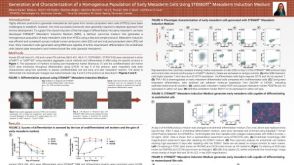 科学海报Generation and Characterization of a Homogenous Population of Early Mesoderm Cells Using STEMdiff Mesoderm Induction Medium

 沪公网安备31010102008431号