Chang M-YY et al. (NOV 2015)
Stem cell research 15 3 608--613
Doxycycline supplementation allows for the culture of human ESCs/iPSCs with media changes at 3-day intervals.
Culturing human embryonic stem and induced pluripotent stem cells (hESCs/iPSCs) is one of the most costly and labor-intensive tissue cultures,as media containing expensive factors/cytokines should be changed every day to maintain and propagate undifferentiated hESCs/iPSCs in vitro. We recently reported that doxycycline,an anti-bacterial agent,had dramatic effects on hESC/iPSC survival and promoted self-renewal. In this study,we extended the effects of doxycycline to a more practical issue to save cost and labor in hESC/iPSC cultures. Regardless of cultured cell conditions,hESCs/iPSCs in doxycycline-supplemented media were viable and proliferating for at least 3 days without media change,while none or few viable cells were detected in the absence of doxycycline in the same conditions. Thus,hESCs/iPSCs supplemented with doxycycline can be cultured for a long period of time with media changes at 3-day intervals without altering their self-renewal and pluripotent properties,indicating that doxycycline supplementation can reduce the frequency of media changes and the amount of media required by 1/3. These findings strongly encourage the use of doxycycline to save cost and labor in culturing hESCs/iPSCs.
View Publication
Differentiation of human pluripotent stem cells into nephron progenitor cells in a serum and feeder free system.
OBJECTIVES Kidney disease is emerging as a critical medical problem worldwide. Because of limited treatment options for the damaged kidney,stem cell treatment is becoming an alternative therapeutic approach. Of many possible human stem cell sources,pluripotent stem cells are most attractive due to their self-renewal and pluripotent capacity. However,little is known about the derivation of renal lineage cells from human pluripotent stem cells (hPSCs). In this study,we developed a novel protocol for differentiation of nephron progenitor cells (NPCs) from hPSCs in a serum- and feeder-free system. MATERIALS AND METHODS We designed step-wise protocols for differentiation of human pluripotent stem cells toward primitive streak,intermediate mesoderm and NPCs by recapitulating normal nephrogenesis. Expression of key marker genes was examined by RT-PCR,real time RT-PCR and immunocytochemistry. Each experiment was independently performed three times to confirm its reproducibility. RESULTS After modification of culture period and concentration of exogenous factors,hPSCs can differentiate into NPCs that markedly express specific marker genes such as SIX2,GDNF,HOXD11,WT1 and CITED1 in addition to OSR1,PAX2,SALL1 and EYA1. Moreover,NPCs possess the potential of bidirectional differentiation into both renal tubular epithelial cells and glomerular podocytes in defined culture conditions. In particular,approximately 70% of SYN-positive cells were obtained from hPSC-derived NPCs after podocytes induction. NPCs can also form in vitro tubule-like structures in three dimensional culture systems. CONCLUSIONS Our novel protocol for hPSCs differentiation into NPCs can be useful for producing alternative sources of cell replacement therapy and disease modeling for human kidney diseases.
View Publication
产品类型:
产品号#:
05850
05857
05870
05875
85850
85857
85870
85875
产品名:
mTeSR™1
mTeSR™1
Hannoun Z et al. (APR 2010)
Cellular reprogramming 12 2 133--140
The comparison between conditioned media and serum-free media in human embryonic stem cell culture and differentiation.
Human embryonic stem cells (hESCs) offer an inexhaustible supply of human somatic cell types through their ability to self-renew while retaining pluripotency. As such,hESC-derived cell types are important for applications ranging from in vitro modeling to therapeutic use. However,for their full potential to be realized,both the growth of the undifferentiated cells and their derivatives must be performed in defined culture conditions. Many research groups maintain hESCs using mouse embryonic fibroblasts (MEF) and MEF conditioned medium (CM). The use of murine systems to support hESCs has been imperative in developing hESC technology; however,they suffer from some major limitations including lack of definition,xenobiotic nature,batch-to-batch variation,and labor-intensive production. Therefore,hESC culture definition is essential if hESC lines,and their derivatives are to be quality assured and manufactured to GMP. We have initiated the process of standardizing hESC tissue culture and have employed two serum-free media: mTeSR (MT) and Stem Pro (SP). hESCs were maintained in a pluripotent state,for over 30 passages using MT and SP. Additionally,we present evidence that hESCs maintained in MT and SP generate equivalent levels of human hepatic endoderm as observed with CM. This data suggests that MT and SP are effective replacements for MEF-CM in hESC culture,contributing to the standardization of hESC in vitro models and ultimately their application.
View Publication
Lentiviral vectors containing an enhancer-less ubiquitously acting chromatin opening element (UCOE) provide highly reproducible and stable transgene expression in hematopoietic cells.
Ubiquitously acting chromatin opening elements (UCOEs) consist of methylation-free CpG islands encompassing dual divergently transcribed promoters of housekeeping genes that have been shown to confer resistance to transcriptional silencing and to produce consistent and stable transgene expression in tissue culture systems. To develop improved strategies for hematopoietic cell gene therapy,we have assessed the potential of the novel human HNRPA2B1-CBX3 UCOE (A2UCOE) within the context of a self-inactivating (SIN) lentiviral vector. Unlike viral promoters,the enhancer-less A2UCOE gave rise to populations of cells that expressed a reporter transgene at a highly reproducible level. The efficiency of expression per vector genome was also markedly increased in vivo compared with vectors incorporating either spleen focus-forming virus (SFFV) or cytomegalovirus (CMV) promoters,suggesting a relative resistance to silencing. Furthermore,an A2UCOE-IL2RG vector fully restored the IL-2 signaling pathway within IL2RG-deficient human cells in vitro and successfully rescued the X-linked severe combined immunodeficiency (SCID-X1) phenotype in a mouse model of this disease. These data indicate that the A2UCOE displays highly reliable transcriptional activity within a lentiviral vector,largely overcoming insertion-site position effects and giving rise to therapeutically relevant levels of gene expression. These properties are achieved in the absence of classic enhancer activity and therefore may confer a high safety profile.
View Publication
Renz PF and Beyer TA (FEB 2016)
Methods in molecular biology (Clifton,N.J.) 1341 369--376
A Concise Protocol for siRNA-Mediated Gene Suppression in Human Embryonic Stem Cells.
Human embryonic stem cells hold great promise for future biomedical applications such as disease modeling and regenerative medicine. However,these cells are notoriously difficult to culture and are refractory to common means of genetic manipulation,thereby limiting their range of applications. In this protocol,we present an easy and robust method of gene repression in human embryonic stem cells using lipofection of small interfering RNA (siRNA).
View Publication
产品类型:
产品号#:
05850
05857
05870
05875
05872
05873
07909
07920
85850
85857
85870
85875
100-0483
100-0484
07922
产品名:
IV型胶原酶(1mg /mL)
ACCUTASE™
mTeSR™1
mTeSR™1
Hausser Scientificᵀᴹ 明线血球计数板
ReLeSR™
ACCUTASE™
Irwin EF et al. (OCT 2011)
Biomaterials 32 29 6912--6919
Engineered polymer-media interfaces for the long-term self-renewal of human embryonic stem cells.
We have developed a synthetic polymer interface for the long-term self-renewal of human embryonic stem cells (hESCs) in defined media. We successfully cultured hESCs on hydrogel interfaces of aminopropylmethacrylamide (APMAAm) for over 20 passages in chemically-defined mTeSR™1 media and demonstrated pluripotency of multiple hESC lines with immunostaining and quantitative RT-PCR studies. Results for hESC proliferation and pluripotency markers were both qualitatively and quantitatively similar to cells cultured on Matrigel™-coated substrates. Mechanistically,it was resolved that bovine serum albumin (BSA) in the mTeSR™1 media was critical for cell adhesion on APMAAm hydrogel interfaces. This study uniquely identified a robust long-term culture surface for the self-renewal of hESCs without the use of biologic coatings (e.g.,peptides,proteins,or Matrigel™) in completely chemically-defined media that employed practical culturing techniques amenable to clinical-scale cell expansion.
View Publication
产品类型:
产品号#:
05850
05857
05870
05875
85850
85857
85870
85875
产品名:
mTeSR™1
mTeSR™1
Yang D et al. (NOV 2016)
Life sciences 164 9--14
Chemically defined serum-free conditions for cartilage regeneration from human embryonic stem cells.
AIMS The aim of this study was to improve a method that induce cartilage differentiation of human embryoid stem cells (hESCs) in vitro,and test the effect of in vivo environments on the further maturation of hESCs derived cells. MAIN METHODS Embryoid bodies (EBs) formed from hESCs,with serum-free KSR-based medium and mesodermal specification related factors,CHIR,and Noggin for first 8days. Then cells were digested and cultured as micropellets in serum-free KSR-based chondrogenic medium that was supplemented with PDGF-BB,TGF β3,BMP4 in sequence for 24days. The morphology,FACS,histological staining as well as the expression of chondrogenic specific genes were detected in each stage,and further in vivo experiments,cell injections and tissue transplantations,further verified the formation of chondrocytes. KEY FINDINGS We were able to obtain chondrocyte/cartilage from hESCs using serum-free KSR-based conditioned medium. qPCR analysis showed that expression of the chondroprogenitor genes and the chondrocyte/cartilage matrix genes. Morphology analysis demonstrated we got PG+COL2+COL1-particles. It indicated we obtained hyaline cartilage-like particles. 32-Day differential cells were injected subcutaneous. Staining results showed grafts developed further mature in vivo. But when transplanted in subrenal capsule,their effect was not good as in subcutaneous. Microenvironment might affect the cartilage formation. SIGNIFICANCE The results of this study provide an absolute serum-free and efficient approach for generation of hESC-derived chondrocytes,and cells will become further maturation in vivo. It provides evidence and technology for the hypothesis that hESCs may be a promising therapy for the treatment of cartilage disease.
View Publication
Domashenko AD et al. (OCT 2010)
Blood 116 15 2676--83
TAT-mediated transduction of NF-Ya peptide induces the ex vivo proliferation and engraftment potential of human hematopoietic progenitor cells.
Retroviral overexpression of NF-Ya,the regulatory subunit of the transcription factor NF-Y,activates the transcription of multiple genes implicated in hematopoietic stem cell (HSC) self-renewal and differentiation and directs HSCs toward self-renewal. We asked whether TAT-NF-Ya fusion protein could be used to transduce human CD34(+) cells as a safer,more regulated alternative approach to gene therapy. Here we show that externally added recombinant protein was able to enter the cell nucleus and activate HOXB4,a target gene of NF-Ya,using real-time polymerase chain reaction RNA and luciferase-based protein assays. After TAT-NF-Ya transduction,the proliferation of human CD34(+) cells in the presence of myeloid cytokines was increased 4-fold. Moreover,TAT-NF-Ya-treated human primary bone marrow cells showed a 4-fold increase in the percentage of huCD45(+) cells recovered from the bone marrow of sublethally irradiated,transplanted NOD-Scid IL2Rγ(null) mice. These data demonstrate that TAT-peptide therapies are an alternative approach to retroviral stem cell therapies and suggest that NF-Ya peptide delivery should be further evaluated as a tool for HSC/progenitors ex vivo expansion and therapy.
View Publication


 EasySep™小鼠TIL(CD45)正选试剂盒





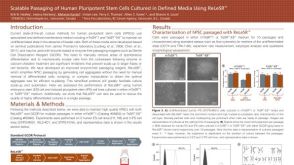 科学海报Scalable Passaging of Human Pluripotent Stem Cells Cultured in Defined Media Using ReLeSR™
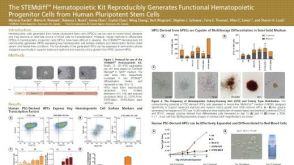 科学海报The STEMdiff™ Hematopoietic Kit Reproducibly Generates Functional Hematopoietic Progenitor Cells from Human Pluripotent Stem Cells

 沪公网安备31010102008431号