若您需要咨询产品或有任何技术问题,请通过官方电话 400 885 9050 或邮箱 info.cn@stemcell.com 与我们联系。

STEMdiff™ 单核细胞试剂盒

用于将人多能干细胞(hPSCs)分化为单核细胞
只有 %1
¥17,770.00

产品号 #(选择产品)

产品号 #05320_C

用于将人多能干细胞(hPSCs)分化为单核细胞

产品优势

  • 无血清、无饲养层配方
  • 简单的培养方案,在悬浮液中生成单核细胞,便于收获
  • 14 - 23 天内生成 CD14⁺ 单核细胞
  • 在多个 hPSC 细胞系中稳定生成单核细胞

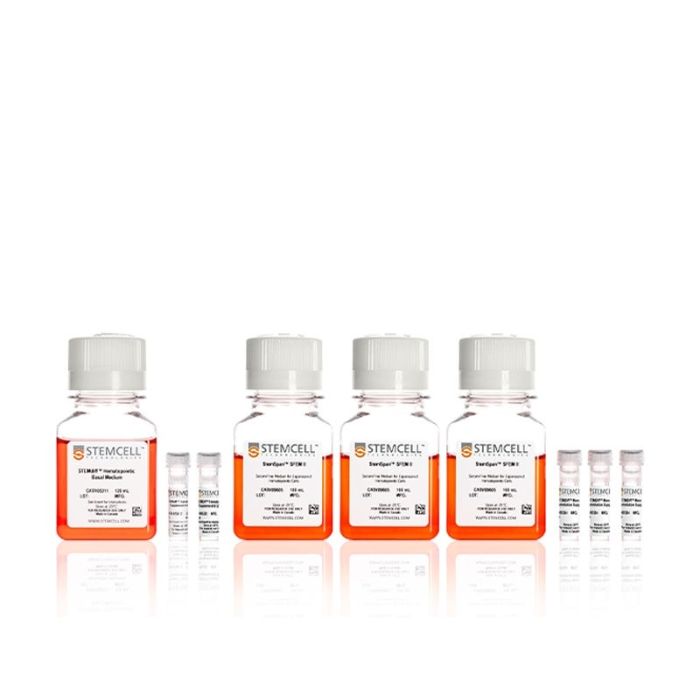
产品组分包括

  • STEMdiff™ 造血基础培养基,120 mL
  • STEMdiff™ 造血补充剂 A (200X),225 μL
  • STEMdiff™ 造血补充剂 B (200X),225 μL
  • STEMdiff™ 单核细胞分化添加剂 (100X),3 x 1 mL(产品号 #05324)
  • StemSpan™ SFEM II,3 x 100 mL
专为您的实验方案打造的产品
要查看实验方案所需的所有配套产品,请参阅《实验方案与技术文档》

总览

使用无饲养层、无血清的 STEMdiff™ 单核细胞试剂盒,可将人多能干细胞(hPSCs)分化为表达 CD14 的单核细胞。

该简便的实验方案在二维贴壁培养中进行。在前 3 天,培养基 A 诱导细胞向中胚层分化。在接下来的 4 天,使用培养基 B 进一步诱导中胚层细胞向造血谱系分化。在第 7 天,将培养基更换为单核细胞分化培养基,以促进其向单核细胞分化。CD14 +单核细胞最早可从第 14 天开始从培养上清液中直接收集,并可在后续培养过程中多次收集。CD14 +细胞的峰值频率通常在 60% - 80%之间。

hPSC 衍生的单核细胞可分别使用ImmunoCult™ 树突状细胞培养试剂盒或ImmunoCult™-SF 巨噬细胞培养基进一步分化为树突状细胞或巨噬细胞。

为了方便起见,用于配制单核细胞分化培养基所需的成分StemSpan™ SFEM II和STEMdiff™ 单核细胞分化添加剂 (100X)也可单独购买。

分类
专用培养基
 
细胞类型
树突状细胞(DCs),巨噬细胞,单核细胞,髓系细胞,多能干细胞
 
种属

 
应用
细胞培养,分化,扩增
 
品牌
STEMdiff
 
研究领域
疾病建模,免疫,干细胞生物学
 
制剂类别
无血清
 

实验数据

Differentiation of hPSC-Derived CD34+ Cells into CD14+ Monocytes

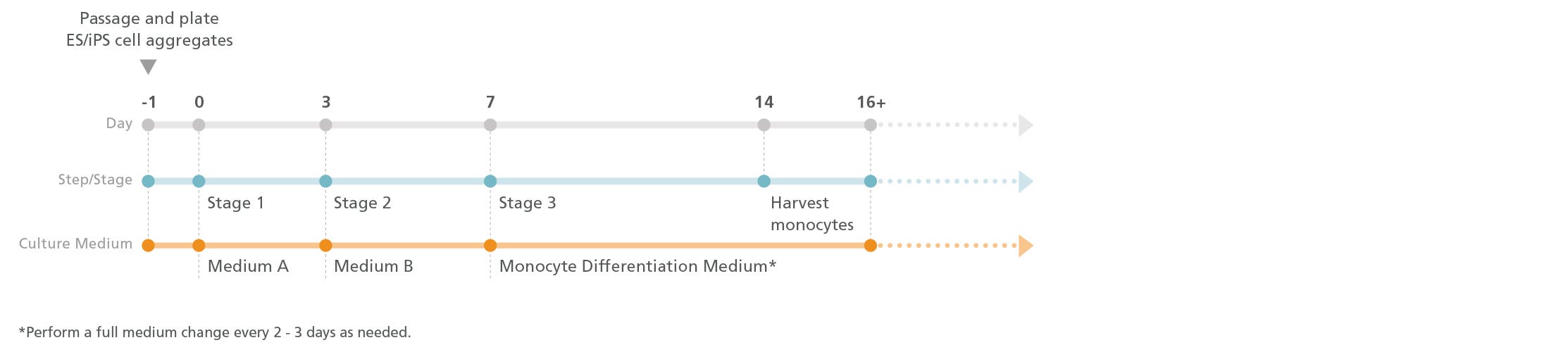
Figure 1. Monocyte Differentiation Protocol

One day prior to differentiation, human pluripotent stem cell (hPSC) colonies are harvested and seeded as small aggregates (100 - 200 μm in diameter) at 10 - 20 aggregates/cm2 in mTeSR™1, TeSR™-E8™, or mTeSR™ Plus media. After one day, the medium is replaced with Medium A (STEMdiff™ Hematopoietic Basal Medium + Supplement A) to induce mesodermal specification (stage 1). On day 3, the medium is changed to Medium B (STEMdiff™ Hematopoietic Basal Medium + Supplement B) to promote hematopoietic specification (stage 2). On day 7, the medium is replaced with Monocyte Differentiation Medium (StemSpan™ SFEM II + STEMdiff™ Monocyte Differentiation Supplement) to promote the production of CD14+ monocytes (stage 3). Monocyte Differentiation Medium is used for all medium changes for the remaining culture period. CD14+ cells can be detected in suspension starting after day 14, and their frequency gradually increases until day 17 - 23. CD14+ cells can be harvested directly from the culture supernatant during medium changes.

hPSC-Derived CD14+ Monocyte Characterization, Frequency and Yield

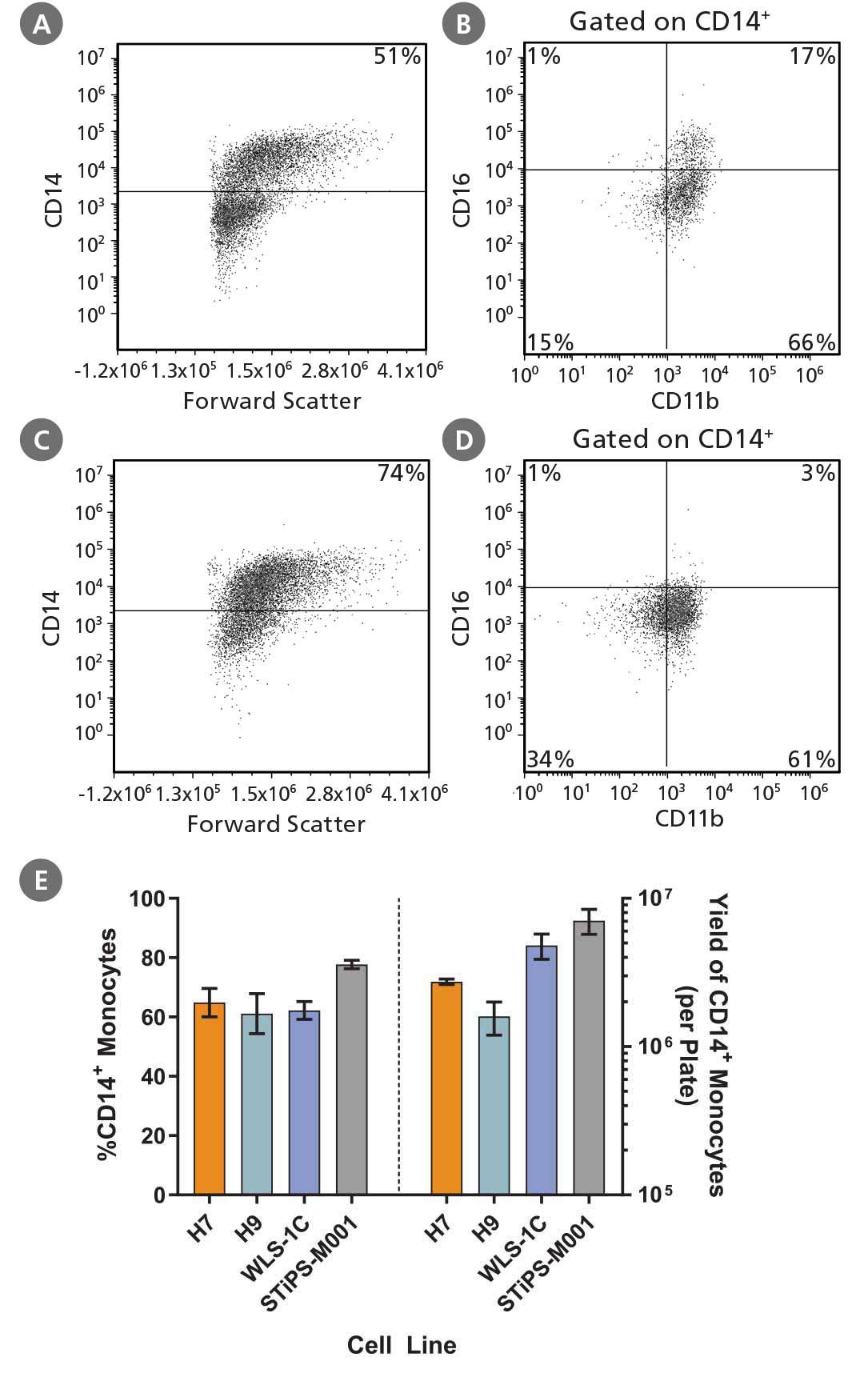
Figure 2. Robust and Efficient Generation of CD14⁺ Monocytes Using STEMdiff™ Monocyte Kit

hPSCs were differentiated to monocytes using the 2D culture system described in Figure 1. Between days 17 and 23, cells were harvested every 2 - 3 days and analyzed by flow cytometry for CD14 expression. Representative flow cytometry plots are shown for (A, B) iPS (WLS-1C)-derived cells and (C, D) ES (H9)-derived cells. (E) The average frequency of viable CD14+ monocytes at the peak harvest was 61 - 78%. The average yield of CD14+ monocytes produced per 6-well plate at the peak harvest was between 1.6 x 10^6 and 7.1 x 10^6 cells. Data are shown as mean ± SEM (n = 3 - 14).

Characterization and Phagocytosis Analysis of Macrophages

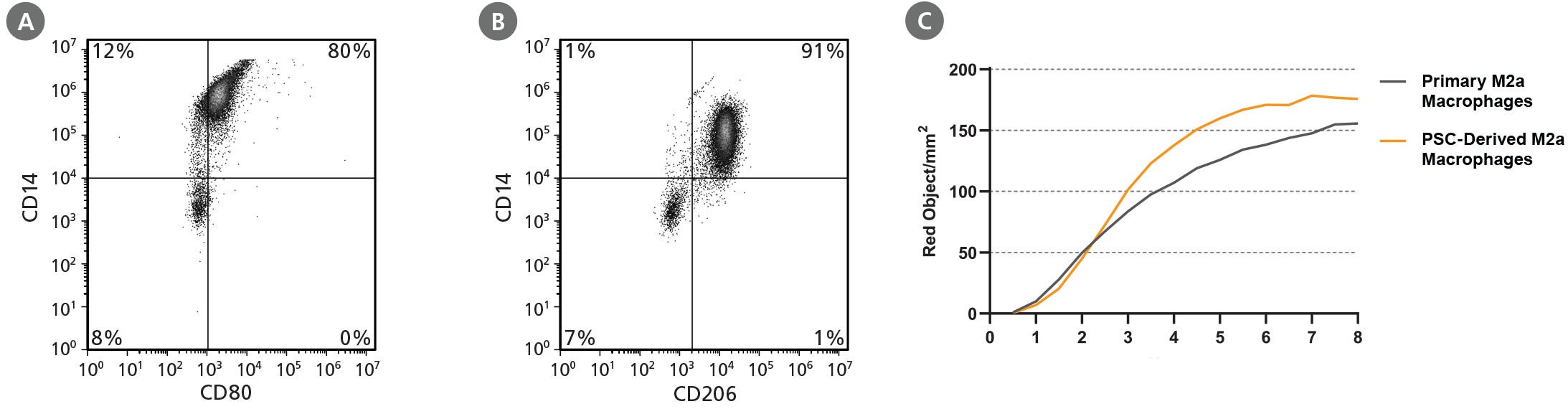
Figure 3. STEMdiff™ Monocyte Kit Generates Monocytes That Are Capable of Differentiation to Macrophages

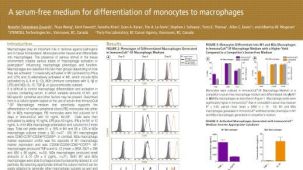
hPSC-derived monocytes were harvested after 21 days of culture. These were then differentiated to macrophages using ImmunoCult™-SF Macrophage Medium (Catalog #10961) with 100 ng/mL M-CSF for 4 days. Macrophages were then incubated for an additional 2 days with either 10 ng/mL of LPS and 50 ng/mL of IFN-γ, or 10 ng/mL IL-4, to become polarized to M1 or M2a macrophages, respectively. Representative flow cytometry plots of (A) M1 and (B) M2a macrophages produced from the WLS-1C iPS cell line are shown. (C) To measure phagocytosis, PSC-derived M2a macrophages and peripheral blood (PB) monocyte-derived M2a macrophages (primary M2a macrophages), were incubated with pHrodo™ Red Zymosan A BioParticles® Conjugate and incubated at 37°C for 8 hours. Images were acquired using the IncuCyte® ZOOM every 30 minutes and analyzed for internalization of pHrodo™ Red Zymosan A BioParticles® (measured as red object/mm2). hPSC-derived and primary M2a macrophages show similar phagocytic activity.

Characterization of Dendritic Cells

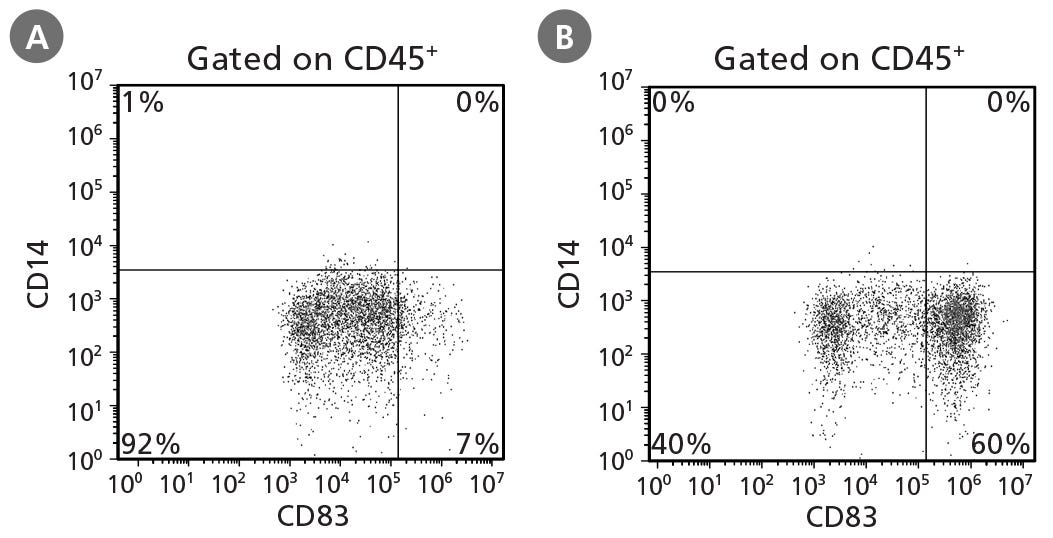
Figure 4. STEMdiff™ Monocyte Kit Generates Monocytes That Can Be Differentiated to Dendritic Cells

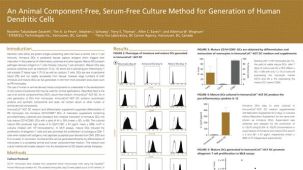
hPSCs were differentiated into monocytes, harvested after 21 days, and differentiated to dendritic cells using ImmunoCult™ Dendritic Cell Culture Kit (Catalog #10985). Half of the dendritic cells were harvested on day 7 and examined for CD14 and CD83 expression to identify CD14⁻CD83⁻/lo immature dendritic cells. The remaining dendritic cells were activated for 2 days and assessed for the presence of CD14⁻CD83⁺ mature dendritic cells at day 7. Representative cultures initiated with ES (H9) cells are shown for production of (A) immature dendritic cells and (B) mature dendritic cells.

产品说明书及文档

请在《产品说明书》中查找相关支持信息和使用说明,或浏览下方更多实验方案。

Document Type
Product Name
Catalog #
Lot #
Language
Catalog #
05320
Lot #
All
Language
English
Document Type
Safety Data Sheet 1
Catalog #
05320
Lot #
All
Language
English
Document Type
Safety Data Sheet 2
Catalog #
05320
Lot #
All
Language
English
Document Type
Safety Data Sheet 3
Catalog #
05320
Lot #
All
Language
English
Document Type
Safety Data Sheet 4
Catalog #
05320
Lot #
All
Language
English
Document Type
Safety Data Sheet 5
Catalog #
05320
Lot #
All
Language
English

应用领域

本产品专为以下研究领域设计,适用于工作流程中的高亮阶段。探索这些工作流程,了解更多我们为各研究领域提供的其他配套产品。

相关材料与文献

技术资料 (11)

文献 (3)

Development of an iPSC-derived immunocompetent skin model for identification of skin sensitizing substances M. Dubau et al. Journal of Tissue Engineering 2025 May

Abstract

The development of immunocompetent skin models marks a significant advancement in in vitro methods for detecting skin sensitizers while adhering to the 3R principles, which aim to reduce, refine, and replace animal testing. This study introduces for the first time an advanced immunocompetent skin model constructed entirely from induced pluripotent stem cell (iPSC)-derived cell types, including fibroblasts (iPSC-FB), keratinocytes (iPSC-KC), and fully integrated dendritic cells (iPSC-DC). To evaluate the skin model’s capacity, the model was treated topically with a range of well-characterized skin sensitizers varying in potency. The results indicate that the iPSC-derived immunocompetent skin model successfully replicates the physiological responses of human skin, offering a robust and reliable alternative to animal models for skin sensitization testing, allowing detection of extreme and even weak sensitizers. By addressing critical aspects of immune activation and cytokine signaling, this model provides an ethical, comprehensive tool for regulatory toxicology and dermatological research.
iPSCs and iPSC-derived cells as a model of human genetic and epigenetic variation K. Quaid et al. Nature Communications 2025 Feb

Abstract

Understanding the interaction between genetic and epigenetic variation remains a challenge due to confounding environmental factors. We propose that human induced Pluripotent Stem Cells (iPSCs) are an excellent model to study the relationship between genetic and epigenetic variation while controlling for environmental factors. In this study, we have created a comprehensive resource of high-quality genomic, epigenomic, and transcriptomic data from iPSC lines and three iPSC-derived cell types (neural stem cell (NSC), motor neuron, monocyte) from three healthy donors. We find that epigenetic variation is most strongly associated with genetic variation at the iPSC stage, and that relationship weakens as epigenetic variation increases in differentiated cells. Additionally, cell type is a stronger source of epigenetic variation than genetic variation. Further, we elucidate a utility of studying epigenetic variation in iPSCs and their derivatives for identifying important loci for GWAS studies and the cell types in which they may be acting. Subject terms: Epigenomics, Genomics, Transcriptomics
RUNX1 interacts with lncRNA SMANTIS to regulate monocytic cell functions L. M. Weiss et al. Communications Biology 2024 Sep

Abstract

Monocytes, the circulating macrophage precursors, contribute to diseases like atherosclerosis and asthma. Long non-coding RNAs (lncRNAs) have been shown to modulate the phenotype and inflammatory capacity of monocytes. We previously discovered the lncRNA SMANTIS , which contributes to cellular phenotype expression by controlling BRG1 in mesenchymal cells. Here, we report that SMANTIS is particularly highly expressed in monocytes and lost during differentiation into macrophages. Moreover, different types of myeloid leukemia presented specific SMANTIS expression patterns. Interaction studies revealed that SMANTIS binds RUNX1, a transcription factor frequently mutated in AML, primarily through its Alu-element on the RUNT domain. RNA-seq after CRISPR/Cas9-mediated deletion of SMANTIS or RUNX1 revealed an association with cell adhesion and both limited the monocyte adhesion to endothelial cells. Mechanistically, SMANTIS KO reduced RUNX1 genomic binding and altered the interaction of RUNX1 with EP300 and CBFB. Collectively, SMANTIS interacts with RUNX1 and attenuates monocyte adhesion, which might limit monocyte vascular egress. Subject terms: Long non-coding RNAs, Transcription

更多信息

更多信息
物种 人类
配方 无血清
质量保证:

产品仅供研究使用,不用于针对人或动物的诊断或治疗。 欲获悉更多关于STEMCELL的质控信息,请访问 STEMCELL.CN/COMPLIANCE.
Copyright © 2025 by STEMCELL Technologies. All rights reserved.

在线联系