Guo H-B et al. (DEC 2010)
Proceedings of the National Academy of Sciences of the United States of America 107 49 21116--21
Specific posttranslational modification regulates early events in mammary carcinoma formation.
The expression of an enzyme,GnT-V,that catalyzes a specific posttranslational modification of a family of glycoproteins,namely a branched N-glycan,is transcriptionally up-regulated during breast carcinoma oncogenesis. To determine the molecular basis of how early events in breast carcinoma formation are regulated by GnT-V,we studied both the early stages of mammary tumor formation by using 3D cell culture and a her-2 transgenic mouse mammary tumor model. Overexpression of GnT-V in MCF-10A mammary epithelial cells in 3D culture disrupted acinar morphogenesis with impaired hollow lumen formation,an early characteristic of mammary neoplastic transformation. The disrupted acinar morphogenesis of mammary tumor cells in 3D culture caused by her-2 expression was reversed in tumors that lacked GnT-V expression. Moreover,her-2-induced mammary tumor onset was significantly delayed in the GnT-V null tumors,evidence that the lack of the posttranslational modification catalyzed by GnT-V attenuated tumor formation. Inhibited activation of both PKB and ERK signaling pathways was observed in GnT-V null tumor cells. The proportion of tumor-initiating cells (TICs) in the mammary tumors from GnT-V null mice was significantly reduced compared with controls,and GnT-V null TICs displayed a reduced ability to form secondary tumors in NOD/SCID mice. These results demonstrate that GnT-V expression and its branched glycan products effectively modulate her-2-mediated signaling pathways that,in turn,regulate the relative proportion of tumor initiating cells and the latency of her-2-driven tumor onset.
View Publication
产品号#:
01700
01705
01702
产品名:
ALDEFLUOR™ 试剂盒
ALDEFLUOR™ DEAB试剂, 1.5 mM, 1 mL
ALDEFLUOR™检测缓冲液
Bagci-Onder T et al. (JAN 2011)
Cancer research 71 1 154--63
A dual PI3K/mTOR inhibitor, PI-103, cooperates with stem cell-delivered TRAIL in experimental glioma models.
The resistance of glioma cells to a number of antitumor agents and the highly invasive nature of glioma cells that escape the primary tumor mass are key impediments to the eradication of tumors in glioma patients. In this study,we evaluated the therapeutic efficacy of a novel PI3-kinase/mTOR inhibitor,PI-103,in established glioma lines and primary CD133(+) glioma-initiating cells and explored the potential of combining PI-103 with stem cell-delivered secretable tumor necrosis factor apoptosis-inducing ligand (S-TRAIL) both in vitro and in orthotopic mouse models of gliomas. We show that PI-103 inhibits proliferation and invasion,causes G(0)-G(1) arrest in cell cycle,and results in significant attenuation of orthotopic tumor growth in vivo. Establishing cocultures of neural stem cells (NSC) and glioma cells,we show that PI-103 augments the response of glioma cells to stem cell-delivered S-TRAIL. Using bimodal optical imaging,we show that when different regimens of systemic PI-103 delivery are combined with NSC-derived S-TRAIL,a significant reduction in tumor volumes is observed compared with PI-103 treatment alone. To our knowledge,this is the first study that reveals the antitumor effect of PI-103 in intracranial gliomas. Our findings offer a preclinical rationale for application of mechanism-based systemically delivered antiproliferative agents and novel stem cell-based proapoptotic therapies to improve treatment of malignant gliomas.
View Publication
产品号#:
05700
05701
05702
产品名:
NeuroCult™ 基础培养基(小鼠和大鼠)
NeuroCult™ 扩增添加物(小鼠和大鼠)
NeuroCult™扩增试剂盒(小鼠和大鼠)
Sullivan JP et al. (DEC 2010)
Cancer research 70 23 9937--48
Aldehyde dehydrogenase activity selects for lung adenocarcinoma stem cells dependent on notch signaling.
Aldehyde dehydrogenase (ALDH) is a candidate marker for lung cancer cells with stem cell-like properties. Immunohistochemical staining of a large panel of primary non-small cell lung cancer (NSCLC) samples for ALDH1A1,ALDH3A1,and CD133 revealed a significant correlation between ALDH1A1 (but not ALDH3A1 or CD133) expression and poor prognosis in patients including those with stage I and N0 disease. Flow cytometric analysis of a panel of lung cancer cell lines and patient tumors revealed that most NSCLCs contain a subpopulation of cells with elevated ALDH activity,and that this activity is associated with ALDH1A1 expression. Isolated ALDH(+) lung cancer cells were observed to be highly tumorigenic and clonogenic as well as capable of self-renewal compared with their ALDH(-) counterparts. Expression analysis of sorted cells revealed elevated Notch pathway transcript expression in ALDH(+) cells. Suppression of the Notch pathway by treatment with either a γ-secretase inhibitor or stable expression of shRNA against NOTCH3 resulted in a significant decrease in ALDH(+) lung cancer cells,commensurate with a reduction in tumor cell proliferation and clonogenicity. Taken together,these findings indicate that ALDH selects for a subpopulation of self-renewing NSCLC stem-like cells with increased tumorigenic potential,that NSCLCs harboring tumor cells with ALDH1A1 expression have inferior prognosis,and that ALDH1A1 and CD133 identify different tumor subpopulations. Therapeutic targeting of the Notch pathway reduces this ALDH(+) component,implicating Notch signaling in lung cancer stem cell maintenance.
View Publication
产品号#:
01700
01705
01702
产品名:
ALDEFLUOR™ 试剂盒
ALDEFLUOR™ DEAB试剂, 1.5 mM, 1 mL
ALDEFLUOR™检测缓冲液
Reuben JM et al. (JUL 2011)
European journal of cancer (Oxford,England : 1990) 47 10 1527--36
Primary breast cancer patients with high risk clinicopathologic features have high percentages of bone marrow epithelial cells with ALDH activity and CD44-CD24lo cancer stem cell phenotype.
BACKGROUND: Cancer stem cells (CSCs) are purported to be epithelial tumour cells expressing CD44(+)CD24(lo) that exhibit aldehyde dehydrogenase activity (Aldefluor(+)). We hypothesised that if CSCs are responsible for tumour dissemination,disseminated cells in the bone marrow (BM) would be positive for putative breast CSC markers. Therefore,we assessed the presence of Aldefluor(+) epithelial (CD326(+)CD45(dim)) cells for the presence of the CD44(+)CD24(lo) phenotype in BM of patients with primary breast cancer (PBC). METHODS: BM aspirates were collected at the time of surgery from 66 patients with PBC. Thirty patients received neoadjuvant chemotherapy (NACT) prior to aspiration. BM was analysed for Aldefluor(+) epithelial cells with or without CD44(+)CD24(lo) expression by flow cytometry. BM aspirates from three healthy donors (HD) were subjected to identical processing and analyses and served as controls. RESULTS: Patients with triple-receptor-negative (TN) tumours had a significantly higher median percentage of CD44(+)CD24(lo) CSC within Aldefluor(+) epithelial cell population than patients with other immunohistochemical subtypes (P=0.018). Patients with TN tumours or with pN2 or higher pathologic nodal status were more likely to have a proportion of CD44(+)CD24(lo) CSC within Aldefluor(+) epithelial cell population above the highest level of HD. Furthermore,patients who received NACT were more likely to have percentages of Aldefluor(+) epithelial cells than the highest level of HD (P=0.004). CONCLUSION: The percentage of CD44(+)CD24(lo) CSC in the BM is higher in PBC patients with high risk tumour features. The selection or enrichment of Aldefluor(+) epithelial cells by NACT may represent an opportunity to target these cells with novel therapies.
View Publication
产品号#:
01700
01705
01702
产品名:
ALDEFLUOR™ 试剂盒
ALDEFLUOR™ DEAB试剂, 1.5 mM, 1 mL
ALDEFLUOR™检测缓冲液
Buckley NE et al. (MAR 2011)
Cancer research 71 5 1933--44
The DeltaNp63 proteins are key allies of BRCA1 in the prevention of basal-like breast cancer.
Little is known about the origin of basal-like breast cancers,an aggressive disease that is highly similar to BRCA1-mutant breast cancers. p63 family proteins that are structurally related to the p53 suppressor protein are known to function in stem cell regulation and stratified epithelia development in multiple tissues,and p63 expression may be a marker of basal-like breast cancers. Here we report that ΔNp63 isoforms of p63 are transcriptional targets for positive regulation by BRCA1. Our analyses of breast cancer tissue microarrays and BRCA1-modulated breast cancer cell lines do not support earlier reports that p63 is a marker of basal-like or BRCA1 mutant cancers. Nevertheless,we found that BRCA1 interacts with the specific p63 isoform ΔNp63γ along with transcription factor isoforms AP-2α and AP-2γ. BRCA1 required ΔNp63γ and AP-2γ to localize to an intronic enhancer region within the p63 gene to upregulate transcription of the ΔNp63 isoforms. In mammary stem/progenitor cells,siRNA-mediated knockdown of ΔNp63 expression resulted in genomic instability,increased cell proliferation,loss of DNA damage checkpoint control,and impaired growth control. Together,our findings establish that transcriptional upregulation of ΔNp63 proteins is critical for BRCA1 suppressor function and that defects in BRCA1-ΔNp63 signaling are key events in the pathogenesis of basal-like breast cancer.
View Publication
产品号#:
01700
01705
01702
产品名:
ALDEFLUOR™ 试剂盒
ALDEFLUOR™ DEAB试剂, 1.5 mM, 1 mL
ALDEFLUOR™检测缓冲液
Jo SY et al. (MAY 2011)
Blood 117 18 4759--68
Requirement for Dot1l in murine postnatal hematopoiesis and leukemogenesis by MLL translocation.
Disruptor of telomeric silencing 1-like (Dot1l) is a histone 3 lysine 79 methyltransferase. Studies of constitutive Dot1l knockout mice show that Dot1l is essential for embryonic development and prenatal hematopoiesis. DOT1L also interacts with translocation partners of Mixed Lineage Leukemia (MLL) gene,which is commonly translocated in human leukemia. However,the requirement of Dot1l in postnatal hematopoiesis and leukemogenesis of MLL translocation proteins has not been conclusively shown. With a conditional Dot1l knockout mouse model,we examined the consequences of Dot1l loss in postnatal hematopoiesis and MLL translocation leukemia. Deletion of Dot1l led to pancytopenia and failure of hematopoietic homeostasis,and Dot1l-deficient cells minimally reconstituted recipient bone marrow in competitive transplantation experiments. In addition,MLL-AF9 cells required Dot1l for oncogenic transformation,whereas cells with other leukemic oncogenes,such as Hoxa9/Meis1 and E2A-HLF,did not. These findings illustrate a crucial role of Dot1l in normal hematopoiesis and leukemogenesis of specific oncogenes.
View Publication
产品号#:
03234
产品名:
MethoCult™ M3234
Yokoyama A et al. (JUL 2011)
Journal of cell science 124 Pt 13 2208--19
Proteolytically cleaved MLL subunits are susceptible to distinct degradation pathways.
The mixed lineage leukemia (MLL) proto-oncogenic protein is a histone-lysine N-methyltransferase that is produced by proteolytic cleavage and self-association of the respective functionally distinct subunits (MLL(N) and MLL(C)) to form a holocomplex involved in epigenetic transcriptional regulation. On the basis of studies in Drosophila it has been suggested that the separated subunits might also have distinct functions. In this study,we used a genetically engineered mouse line that lacked MLL(C) to show that the MLL(N)-MLL(C) holocomplex is responsible for MLL functions in various developmental processes. The stability of MLL(N) is dependent on its intramolecular interaction with MLL(C),which is mediated through the first and fourth plant homeodomain (PHD) fingers (PHD1 and PHD4) and the phenylalanine/tyrosine-rich (FYRN) domain of MLL(N). Free MLL(N) is destroyed by a mechanism that targets the FYRN domain,whereas free MLL(C) is exported to the cytoplasm and degraded by the proteasome. PHD1 is encoded by an alternatively spliced exon that is occasionally deleted in T-cell leukemia,and its absence produces an MLL mutant protein that is deficient for holocomplex formation. Therefore,this should be a loss-of-function mutant allele,suggesting that the known tumor suppression role of MLL may also apply to the T-cell lineage. Our data demonstrate that the dissociated MLL subunits are subjected to distinct degradation pathways and thus not likely to have separate functions unless the degradation mechanisms are inhibited.
View Publication
产品号#:
03231
产品名:
MethoCult™ M3231
Liu C et al. (MAY 2012)
Molecular biology reports 39 5 5875--81
Co-expression of Oct-4 and Nestin in human breast cancers.
The aim is to investigate the clinical implications of the Oct-4 and Nestin protein in human breast cancers. A total of 346 cases including 26 fresh and 320 paraffin-embedded tumor tissues were selected for characterizing the frequency of CD44(+)CD24(-) tumor cells by flow cytometry and the differential expression of the stem cell-related genes between CD44(+)CD24(-) and non-CD44(+)CD24(-) tumor cells was analyzed by PCR Array and immunofluorescence. In comparison with the non-CD44(+)CD24(-) tumor cells,the CD44(+)CD24(-),particularly for those with high percentage of Oct-4(+) and Nestin(+),tumor cells had higher tumorigenicity by forming mammospheres in vitro. More importantly,42 (13.125%) out of 320 tumor tissues were positive for Oct-4 and Nestin staining. Universal analysis and multivariate analysis revealed that the expression of Oct-4 and Nestin was associated significantly with younger age,pathogenic degrees,lymph node metastasis and triple-negative breast cancer independently (P textless 0.05) as well as shorter survival (P = 0.001). Oct-4 and Nestin were important regulators of the development of breast cancer,and Oct-4 and Nestin may be used as predictors for the prognosis of breast cancers.
View Publication
产品号#:
05620
产品名:
MammoCult™ 人源培养基套装
Barrett LE et al. (JAN 2012)
Cancer cell 21 1 11--24
Self-renewal does not predict tumor growth potential in mouse models of high-grade glioma.
Within high-grade gliomas,the precise identities and functional roles of stem-like cells remain unclear. In the normal neurogenic niche,ID (Inhibitor of DNA-binding) genes maintain self-renewal and multipotency of adult neural stem cells. Using PDGF- and KRAS-driven murine models of gliomagenesis,we show that high Id1 expression (Id1(high)) identifies tumor cells with high self-renewal capacity,while low Id1 expression (Id1(low)) identifies tumor cells with proliferative potential but limited self-renewal capacity. Surprisingly,Id1(low) cells generate tumors more rapidly and with higher penetrance than Id1(high) cells. Further,eliminating tumor cell self-renewal through deletion of Id1 has modest effects on animal survival,while knockdown of Olig2 within Id1(low) cells has a significant survival benefit,underscoring the importance of non-self-renewing lineages in disease progression.
View Publication
产品号#:
05700
05701
05702
产品名:
NeuroCult™ 基础培养基(小鼠和大鼠)
NeuroCult™ 扩增添加物(小鼠和大鼠)
NeuroCult™扩增试剂盒(小鼠和大鼠)
Koivunen P et al. (MAR 2012)
Nature 483 7390 484--8
Transformation by the (R)-enantiomer of 2-hydroxyglutarate linked to EGLN activation.
The identification of succinate dehydrogenase (SDH),fumarate hydratase (FH) and isocitrate dehydrogenase (IDH) mutations in human cancers has rekindled the idea that altered cellular metabolism can transform cells. Inactivating SDH and FH mutations cause the accumulation of succinate and fumarate,respectively,which can inhibit 2-oxoglutarate (2-OG)-dependent enzymes,including the EGLN prolyl 4-hydroxylases that mark the hypoxia inducible factor (HIF) transcription factor for polyubiquitylation and proteasomal degradation. Inappropriate HIF activation is suspected of contributing to the pathogenesis of SDH-defective and FH-defective tumours but can suppress tumour growth in some other contexts. IDH1 and IDH2,which catalyse the interconversion of isocitrate and 2-OG,are frequently mutated in human brain tumours and leukaemias. The resulting mutants have the neomorphic ability to convert 2-OG to the (R)-enantiomer of 2-hydroxyglutarate ((R)-2HG). Here we show that (R)-2HG,but not (S)-2HG,stimulates EGLN activity,leading to diminished HIF levels,which enhances the proliferation and soft agar growth of human astrocytes. These findings define an enantiomer-specific mechanism by which the (R)-2HG that accumulates in IDH mutant brain tumours promotes transformation and provide a justification for exploring EGLN inhibition as a potential treatment strategy.
View Publication
Harris MA et al. (DEC 2008)
Cancer research 68 24 10051--9
Cancer stem cells are enriched in the side population cells in a mouse model of glioma.
The recent identification of cancer stem cells (CSCs) in multiple human cancers provides a new inroad to understanding tumorigenesis at the cellular level. CSCs are defined by their characteristics of self-renewal,multipotentiality,and tumor initiation upon transplantation. By testing for these defining characteristics,we provide evidence for the existence of CSCs in a transgenic mouse model of glioma,S100beta-verbB;Trp53. In this glioma model,CSCs are enriched in the side population (SP) cells. These SP cells have enhanced tumor-initiating capacity,self-renewal,and multipotentiality compared with non-SP cells from the same tumors. Furthermore,gene expression analysis comparing fluorescence-activated cell sorting-sorted cancer SP cells to non-SP cancer cells and normal neural SP cells identified 45 candidate genes that are differentially expressed in glioma stem cells. We validated the expression of two genes from this list (S100a4 and S100a6) in primary mouse gliomas and human glioma samples. Analyses of xenografted human glioblastoma multiforme cell lines and primary human glioma tissues show that S100A4 and S100A6 are expressed in a small subset of cancer cells and that their abundance is positively correlated to tumor grade. In conclusion,this study shows that CSCs exist in a mouse glioma model,suggesting that this model can be used to study the molecular and cellular characteristics of CSCs in vivo and to further test the CSC hypothesis.
View Publication


 EasySep™小鼠TIL(CD45)正选试剂盒




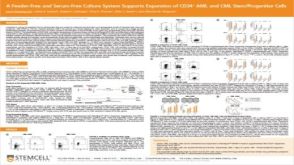 科学海报A Feeder-Free and Serum-Free Culture System Supports Expansion of CD34+ AML and CML Stem/Progenitor Cells
 沪公网安备31010102008431号