M. Holliday et al. ( 2018)
Stem cell research 33 269--273
Development of induced pluripotent stem cells from a patient with hypertrophic cardiomyopathy who carries the pathogenic myosin heavy chain 7 mutation p.Arg403Gln.
Hypertrophic cardiomyopathy (HCM) is an inherited cardiomyopathy characterized by left ventricular hypertrophy ≥15 mm in the absence of loading conditions. HCM has a prevalence of up to one in 200,and can result in significant adverse outcomes including heart failure and sudden cardiac death. An induced pluripotent stem cell (iPSC) line was generated from peripheral blood mononuclear cells obtained from the whole blood of a 38-year-old female patient with HCM in which genetic testing identified the well-known pathogenic p.Arg403Gln mutation in myosin heavy chain 7. iPSCs express pluripotency markers,demonstrate trilineage differentiation capacity,and display a normal 46,XX female karyotype. This resource will allow further assessment of the pathophysiological development of HCM.
View Publication
N. C. Leite et al. (jul 2020)
Cell reports 32 2 107894
Modeling Type 1 Diabetes In Vitro Using Human Pluripotent Stem Cells.
Understanding the root causes of autoimmune diseases is hampered by the inability to access relevant human tissues and identify the time of disease onset. To examine the interaction of immune cells and their cellular targets in type 1 diabetes,we differentiated human induced pluripotent stem cells into pancreatic endocrine cells,including $\beta$ cells. Here,we describe an in vitro platform that models features of human type 1 diabetes using stress-induced patient-derived endocrine cells and autologous immune cells. We demonstrate a cell-type-specific response by autologous immune cells against induced pluripotent stem cell-derived $\beta$ cells,along with a reduced effect on $\alpha$ cells. This approach represents a path to developing disease models that use patient-derived cells to predict the outcome of an autoimmune response.
View Publication
S. E. Wamaitha et al. ( 2020)
Nature communications 11 1 764
IGF1-mediated human embryonic stem cell self-renewal recapitulates the embryonic niche.
Our understanding of the signalling pathways regulating early human development is limited,despite their fundamental biological importance. Here,we mine transcriptomics datasets to investigate signalling in the human embryo and identify expression for the insulin and insulin growth factor 1 (IGF1) receptors,along with IGF1 ligand. Consequently,we generate a minimal chemically-defined culture medium in which IGF1 together with Activin maintain self-renewal in the absence of fibroblast growth factor (FGF) signalling. Under these conditions,we derive several pluripotent stem cell lines that express pluripotency-associated genes,retain high viability and a normal karyotype,and can be genetically modified or differentiated into multiple cell lineages. We also identify active phosphoinositide 3-kinase (PI3K)/AKT/mTOR signalling in early human embryos,and in both primed and na{\{i}}ve pluripotent culture conditions. This demonstrates that signalling insights from human blastocysts can be used to define culture conditions that more closely recapitulate the embryonic niche."
View Publication


 EasySep™小鼠TIL(CD45)正选试剂盒





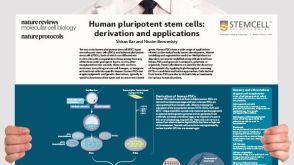 挂图Derivation and Applications of Human Pluripotent Stem Cells Overview of the derivation of human embryonic stem cells (hESCs) and induced pluripotent stem cells (iPSCs)


 沪公网安备31010102008431号