Molinski SV et al. ( 2017)
EMBO Molecular Medicine 9 9 1224--1243
Orkambi® and amplifier co-therapy improves function from a rare CFTR mutation in gene edited cells and patient tissue
The combination therapy of lumacaftor and ivacaftor (Orkambi®) is approved for patients bearing the major cystic fibrosis (CF) mutation: ΔF508 It has been predicted that Orkambi® could treat patients with rarer mutations of similar theratype"; however a standardized approach confirming efficacy in these cohorts has not been reported. Here we demonstrate that patients bearing the rare mutation: c.3700 A>G causing protein misprocessing and altered channel function-similar to ΔF508-CFTR are unlikely to yield a robust Orkambi® response. While in silico and biochemical studies confirmed that this mutation could be corrected and potentiated by lumacaftor and ivacaftor respectively this combination led to a minor in vitro response in patient-derived tissue. A CRISPR/Cas9-edited bronchial epithelial cell line bearing this mutation enabled studies showing that an "amplifier" compound effective in increasing the levels of immature CFTR protein augmented the Orkambi® response. Importantly this "amplifier" effect was recapitulated in patient-derived nasal cultures-providing the first evidence for its efficacy in augmenting Orkambi® in tissues harboring a rare CF-causing mutation. We propose that this multi-disciplinary approach including creation of CRISPR/Cas9-edited cells to profile modulators together with validation using primary tissue will facilitate therapy development for patients with rare CF mutations.
View Publication
产品号#:
05001
05021
05022
产品名:
PneumaCult™-ALI 培养基
PneumaCult™-ALI 培养基含12 mm Transwell®插件
PneumaCult™-ALI 培养基含6.5 mm Transwell®插件
Ishikawa S and Ito S ( 2016)
Toxicology in Vitro 38 170--178
Repeated whole cigarette smoke exposure alters cell differentiation and augments secretion of inflammatory mediators in air-liquid interface three-dimensional co-culture model of human bronchial tissue
In vitro models of human bronchial epithelium are useful for toxicological testing because of their resemblance to in vivo tissue. We constructed a model of human bronchial tissue which has a fibroblast layer embedded in a collagen matrix directly below a fully-differentiated epithelial cell layer. The model was applied to whole cigarette smoke (CS) exposure repeatedly from an air-liquid interface culture while bronchial epithelial cells were differentiating. The effects of CS exposure on differentiation were determined by histological and gene expression analyses on culture day 21. We found a decrease in ciliated cells and perturbation of goblet cell differentiation. We also analyzed the effects of CS exposure on the inflammatory response,and observed a significant increase in secretion of IL-8,GRO-α,IL-1β,and GM-CSF. Interestingly,secretion of these mediators was augmented with repetition of whole CS exposure. Our data demonstrate the usefulness of our bronchial tissue model for in vitro testing and the importance of exposure repetition in perturbing the differentiation and inflammation processes.
View Publication
Cao X et al. (JAN 2015)
Respiratory research 16 30
Tight junction disruption by cadmium in an in vitro human airway tissue model.
BACKGROUND: The cadmium (Cd) present in air pollutants and cigarette smoke has the potential of causing multiple adverse health outcomes involving damage to pulmonary and cardiovascular tissue. Injury to pulmonary epithelium may include alterations in tight junction (TJ) integrity,resulting in impaired epithelial barrier function and enhanced penetration of chemicals and biomolecules. Herein,we investigated mechanisms involved in the disruption of TJ integrity by Cd exposure using an in vitro human air-liquid-interface (ALI) airway tissue model derived from normal primary human bronchial epithelial cells. METHODS: ALI cultures were exposed to noncytotoxic doses of CdCl2 basolaterally and TJ integrity was measured by Trans-Epithelial Electrical Resistance (TEER) and immunofluorescence staining with TJ markers. PCR array analysis was used to identify genes involved with TJ collapse. To explore the involvement of kinase signaling pathways,cultures were treated with CdCl2 in the presence of kinase inhibitors specific for cellular Src or Protein Kinase C (PKC). RESULTS: Noncytotoxic doses of CdCl2 resulted in the collapse of barrier function,as demonstrated by TEER measurements and Zonula occludens-1 (ZO-1) and occludin staining. CdCl2 exposure altered the expression of several groups of genes encoding proteins involved in TJ homeostasis. In particular,down-regulation of select junction-interacting proteins suggested that a possible mechanism for Cd toxicity involves disruption of the peripheral junctional complexes implicated in connecting membrane-bound TJ components to the actin cytoskeleton. Inhibition of kinase signaling using inhibitors specific for cellular Src or PKC preserved the integrity of TJs,possibly by preventing occludin tyrosine hyperphosphorylation,rather than reversing the down-regulation of the junction-interacting proteins. CONCLUSIONS: Our findings indicate that acute doses of Cd likely disrupt TJ integrity in human ALI airway cultures both through occludin hyperphosphorylation via kinase activation and by direct disruption of the junction-interacting complex.
View Publication
产品号#:
05001
05021
05022
产品名:
PneumaCult™-ALI 培养基
PneumaCult™-ALI 培养基含12 mm Transwell®插件
PneumaCult™-ALI 培养基含6.5 mm Transwell®插件
Shikotra A et al. ( 2017)
Journal of immunology (Baltimore,Md. : 1950) 198 8 3307--3317
A CEACAM6-High Airway Neutrophil Phenotype and CEACAM6-High Epithelial Cells Are Features of Severe Asthma.
Severe asthma represents a major unmet clinical need; understanding the pathophysiology is essential for the development of new therapies. Using microarray analysis,we previously found three immunological clusters in asthma: Th2-high,Th17-high,and Th2/17-low. Although new therapies are emerging for Th2-high disease,identifying molecular pathways in Th2-low disease remains an important goal. Further interrogation of our previously described microarray dataset revealed upregulation of gene expression for carcinoembryonic Ag cell adhesion molecule (CEACAM) family members in the bronchi of patients with severe asthma. Our aim was therefore to explore the distribution and cellular localization of CEACAM6 using immunohistochemistry on bronchial biopsy tissue obtained from patients with mild-to-severe asthma and healthy control subjects. Human bronchial epithelial cells were used to investigate cytokine and corticosteroid in vitro regulation of CEACAM6 gene expression. CEACAM6 protein expression in bronchial biopsies was increased in airway epithelial cells and lamina propria inflammatory cells in severe asthma compared with healthy control subjects. CEACAM6 in the lamina propria was localized to neutrophils predominantly. Neutrophil density in the bronchial mucosa was similar across health and the spectrum of asthma severity,but the percentage of neutrophils expressing CEACAM6 was significantly increased in severe asthma,suggesting the presence of an altered neutrophil phenotype. CEACAM6 gene expression in cultured epithelial cells was upregulated by wounding and neutrophil elastase. In summary,CEACAM6 expression is increased in severe asthma and primarily associated with airway epithelial cells and tissue neutrophils. CEACAM6 may contribute to the pathology of treatment-resistant asthma via neutrophil and airway epithelial cell-dependent pathways.
View Publication


 EasySep™小鼠TIL(CD45)正选试剂盒




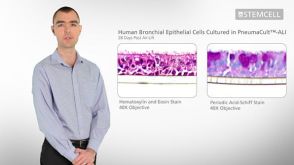
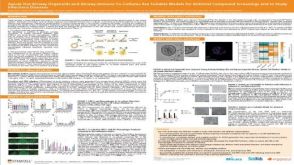
 实验方案How to Co-Culture Human Airway Epithelial and Immune Cells for RSV Infection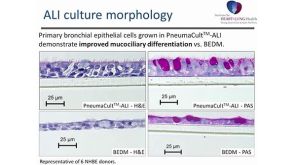


 沪公网安备31010102008431号