Maestre-Batlle D et al. (FEB 2017)
Scientific reports 7 42214
Novel flow cytometry approach to identify bronchial epithelial cells from healthy human airways.
Sampling various compartments within the lower airways to examine human bronchial epithelial cells (HBEC) is essential for understanding numerous lung diseases. Conventional methods to identify HBEC in bronchoalveolar lavage (BAL) and wash (BW) have throughput limitations in terms of efficiency and ensuring adequate cell numbers for quantification. Flow cytometry can provide high-throughput quantification of cell number and function in BAL and BW samples,while requiring low cell numbers. To date,a flow cytometric method to identify HBEC recovered from lower human airway samples is unavailable. In this study we present a flow cytometric method identifying HBEC as CD45 negative,EpCAM/pan-cytokeratin (pan-CK) double-positive population after excluding debris,doublets and dead cells from the analysis. For validation,the HBEC panel was applied to primary HBEC resulting in 98.6% of live cells. In healthy volunteers,HBEC recovered from BAL (2.3% of live cells),BW (32.5%) and bronchial brushing samples (88.9%) correlated significantly (p = 0.0001) with the manual microscopy counts with an overall Pearson correlation of 0.96 across the three sample types. We therefore have developed,validated,and applied a flow cytometric method that will be useful to interrogate the role of the respiratory epithelium in multiple lung diseases.
View Publication
产品号#:
05001
05021
05022
05008
产品名:
PneumaCult™-ALI 培养基
PneumaCult™-ALI 培养基含12 mm Transwell®插件
PneumaCult™-ALI 培养基含6.5 mm Transwell®插件
PneumaCult™-Ex 培养基
Prince OA et al. (MAR 2018)
Cellular microbiology 20 3 e12810
Modelling persistent Mycoplasma pneumoniae infection of human airway epithelium.
Mycoplasma pneumoniae is a human respiratory tract pathogen causing acute and chronic airway disease states that can include long-term carriage and extrapulmonary spread. The mechanisms of persistence and migration beyond the conducting airways,however,remain poorly understood. We previously described an acute exposure model using normal human bronchial epithelium (NHBE) in air-liquid interface culture,showing that M. pneumoniae gliding motility is essential for initial colonisation and subsequent spread,including localisation to epithelial cell junctions. We extended those observations here,characterizing M. pneumoniae infection of NHBE for up to 4 weeks. Colonisation of the apical surface was followed by pericellular invasion of the basolateral compartment and migration across the underlying transwell membrane. Despite fluctuations in transepithelial electrical resistance and increased NHBE cell desquamation,barrier function remained largely intact. Desquamation was accompanied by epithelial remodelling that included cytoskeletal reorganisation and development of deep furrows in the epithelium. Finally,M. pneumoniae strains S1 and M129 differed with respect to invasion and histopathology,consistent with contrasting virulence in experimentally infected mice. In summary,this study reports pericellular invasion,NHBE cytoskeletal reorganisation,and tissue remodelling with persistent infection in a human airway epithelium model,providing clear insight into the likely route for extrapulmonary spread.
View Publication
产品号#:
05001
05021
05022
产品名:
PneumaCult™-ALI 培养基
PneumaCult™-ALI 培养基含12 mm Transwell®插件
PneumaCult™-ALI 培养基含6.5 mm Transwell®插件
A. Sch\ogler et al." (dec 2017)
Respiratory research 18 1 215
Characterization of pediatric cystic fibrosis airway epithelial cell cultures at the air-liquid interface obtained by non-invasive nasal cytology brush sampling.
BACKGROUND In vitro systems of primary cystic fibrosis (CF) airway epithelial cells are an important tool to study molecular and functional features of the native respiratory epithelium. However,undifferentiated CF airway cell cultures grown under submerged conditions do not appropriately represent the physiological situation. A more advanced CF cell culture system based on airway epithelial cells grown at the air-liquid interface (ALI) recapitulates most of the in vivo-like properties but requires the use of invasive sampling methods. In this study,we describe a detailed characterization of fully differentiated primary CF airway epithelial cells obtained by non-invasive nasal brushing of pediatric patients. METHODS Differentiated cell cultures were evaluated with immunolabelling of markers for ciliated,mucus-secreting and basal cells,and tight junction and CFTR proteins. Epithelial morphology and ultrastructure was examined by histology and transmission electron microscopy. Ciliary beat frequency was investigated by a video-microscopy approach and trans-epithelial electrical resistance was assessed with an epithelial Volt-Ohm meter system. Finally,epithelial permeability was analysed by using a cell layer integrity test and baseline cytokine levels where measured by an enzyme-linked immunosorbent assay. RESULTS Pediatric CF nasal cultures grown at the ALI showed a differentiation into a pseudostratified epithelium with a mucociliary phenotype. Also,immunofluorescence analysis revealed the presence of ciliated,mucus-secreting and basal cells and tight junctions. CFTR protein expression was observed in CF (F508del/F508del) and healthy cultures and baseline interleukin (IL)-8 and IL-6 release were similar in control and CF ALI cultures. The ciliary beat frequency was 9.67 Hz and the differentiated pediatric CF epithelium was found to be functionally tight. CONCLUSION In summary,primary pediatric CF nasal epithelial cell cultures grown at the ALI showed full differentiation into ciliated,mucus-producing and basal cells,which adequately reflect the in vivo properties of the human respiratory epithelium.
View Publication


 EasySep™小鼠TIL(CD45)正选试剂盒




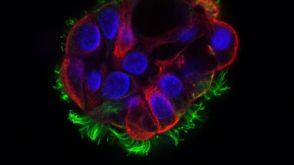
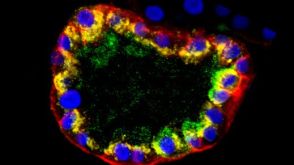
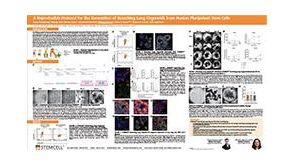 科学海报A Reproducible Protocol for the Generation of Branching Lung Organoids From Human Pluripotent Stem Cells


 沪公网安备31010102008431号