Grunseich C et al. (OCT 2014)
Neurobiology of Disease 70 12--20
Stem cell-derived motor neurons from spinal and bulbar muscular atrophy patients.
Spinal and bulbar muscular atrophy (SBMA,Kennedy's disease) is a motor neuron disease caused by polyglutamine repeat expansion in the androgen receptor. Although degeneration occurs in the spinal cord and muscle,the exact mechanism is not clear. Induced pluripotent stem cells from spinal and bulbar muscular atrophy patients provide a useful model for understanding the disease mechanism and designing effective therapy. Stem cells were generated from six patients and compared to control lines from three healthy individuals. Motor neurons from four patients were differentiated from stem cells and characterized to understand disease-relevant phenotypes. Stem cells created from patient fibroblasts express less androgen receptor than control cells,but show androgen-dependent stabilization and nuclear translocation. The expanded repeat in several stem cell clones was unstable,with either expansion or contraction. Patient stem cell clones produced a similar number of motor neurons compared to controls,with or without androgen treatment. The stem cell-derived motor neurons had immunoreactivity for HB9,Isl1,ChAT,and SMI-32,and those with the largest repeat expansions were found to have increased acetylated ??-tubulin and reduced HDAC6. Reduced HDAC6 was also found in motor neuron cultures from two other patients with shorter repeats. Evaluation of stably transfected mouse cells and SBMA spinal cord showed similar changes in acetylated ??-tubulin and HDAC6. Perinuclear lysosomal enrichment,an HDAC6 dependent process,was disrupted in motor neurons from two patients with the longest repeats. SBMA stem cells present new insights into the disease,and the observations of reduced androgen receptor levels,repeat instability,and reduced HDAC6 provide avenues for further investigation of the disease mechanism and development of effective therapy. ?? 2014.
View Publication
产品号#:
05850
05857
05870
05875
85850
85857
85870
85875
产品名:
mTeSR™1
mTeSR™1
Qu Q et al. (MAR 2014)
Nature communications 5 3449
High-efficiency motor neuron differentiation from human pluripotent stem cells and the function of Islet-1.
Efficient derivation of large-scale motor neurons (MNs) from human pluripotent stem cells is central to the understanding of MN development,modelling of MN disorders in vitro and development of cell-replacement therapies. Here we develop a method for rapid (20 days) and highly efficient (˜70%) differentiation of mature and functional MNs from human pluripotent stem cells by tightly modulating neural patterning temporally at a previously undefined primitive neural progenitor stage. This method also allows high-yield (textgreater250%) MN production in chemically defined adherent cultures. Furthermore,we show that Islet-1 is essential for formation of mature and functional human MNs,but,unlike its mouse counterpart,does not regulate cell survival or suppress the V2a interneuron fate. Together,our discoveries improve the strategy for MN derivation,advance our understanding of human neural specification and MN development,and provide invaluable tools for human developmental studies,drug discovery and regenerative medicine.
View Publication
产品号#:
05850
05857
05870
05875
85850
85857
85870
85875
产品名:
mTeSR™1
mTeSR™1
Utami KH et al. (NOV 2014)
Human mutation 35 11 1311--1320
Impaired development of neural-crest cell-derived organs and intellectual disability caused by MED13L haploinsufficiency.
MED13L is a component subunit of the Mediator complex,an important regulator of transcription that is highly conserved across eukaryotes. Here we report MED13L disruption in a translocation t(12;19) breakpoint of a patient with Pierre-Robin syndrome,moderate intellectual disability (ID),craniofacial anomalies,and muscular defects. The phenotype is similar to previously described patients with MED13L haploinsufficiency. Knockdown of MED13L orthologue in zebrafish,med13b,showed early defective migration of cranial neural crest cells (NCCs) that contributed into cartilage structure deformities in the later stage,recapitulating craniofacial anomalies seen in human patients. Notably,we observed abnormal distribution of developing neurons in different brain regions of med13b morphant embryos,which could be rescued upon introduction of full-length human MED13L mRNA. To compare with mammalian system,we suppressed MED13L expression by short-hairpin RNA in ES-derived human neural progenitors,and differentiated them into neurons. Transcriptome analysis revealed differential expression of components of Wnt and FGF signalling pathways in MED13L-deficient neurons. Our finding provides a novel insight into the mechanism of overlapping phenotypic outcome targeting NCCs derivatives organs in patients with MED13L haploinsufficiency,and emphasizes a clinically recognizable syndromic phenotype in these patients. This article is protected by copyright. All rights reserved.
View Publication


 EasySep™小鼠TIL(CD45)正选试剂盒




 27:19
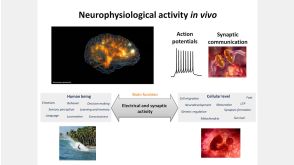
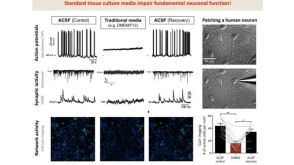
线上讲座BrainPhys™ Medium Supports the Physiological Activity of Neuronal Tissue in vitro发布日期: 07/22/2016
27:19
线上讲座BrainPhys™ Medium Supports the Physiological Activity of Neuronal Tissue in vitro发布日期: 07/22/2016

 沪公网安备31010102008431号