Dahl R et al. (MAR 2007)
The Journal of biological chemistry 282 9 6473--83
The transcriptional repressor GFI-1 antagonizes PU.1 activity through protein-protein interaction.
Mice lacking the zinc finger transcriptional repressor protein GFI-1 are neutropenic. These mice generate abnormal immature myeloid cells exhibiting characteristics of both macrophages and granulocytes. Furthermore,Gfi-1(-/-) mice are highly susceptible to bacterial infection. Interestingly,Gfi-1(-/-) myeloid cells overexpress target genes of the PU.1 transcription factor such as the macrophage colony-stimulating factor receptor and PU.1 itself. We therefore determined whether GFI-1 modulates the transcriptional activity of PU.1. Our data demonstrate that GFI-1 physically interacts with PU.1,repressing PU.1-dependent transcription. This repression is functionally significant,as GFI-1 blocked PU.1-induced macrophage differentiation of a multipotential hematopoietic progenitor cell line. Retroviral expression of GFI-1 in primary murine hematopoietic progenitors increased granulocyte differentiation at the expense of macrophage differentiation. We interbred Gfi-1(+/-) and PU.1(+/-) mice and observed that heterozygosity at the PU.1 locus partially rescued the Gfi-1(-/-) mixed myeloid lineage phenotype,but failed to restore granulocyte differentiation. Our data demonstrate that GFI-1 represses PU.1 activity and that lack of this repression in Gfi-1(-/-) myeloid cells contributes to the observed mixed lineage phenotype.
View Publication
产品号#:
03434
03444
产品名:
MethoCult™ GF M3434
MethoCult™ GF M3434
Spike BT et al. (SEP 2007)
Blood 110 6 2173--81
Hypoxic stress underlies defects in erythroblast islands in the Rb-null mouse.
Definitive erythropoiesis occurs in islands composed of a central macrophage in contact with differentiating erythroblasts. Erythroid maturation including enucleation can also occur in the absence of macrophages both in vivo and in vitro. We reported previously that loss of Rb induces cell-autonomous defects in red cell maturation under stress conditions,while other reports have suggested that the failure of Rb-null erythroblasts to enucleate is due to defects in associated macrophages. Here we show that erythropoietic islands are disrupted by hypoxic stress,such as occurs in the Rb-null fetal liver,that Rb(-/-) macrophages are competent for erythropoietic island formation in the absence of exogenous stress and that enucleation defects persist in Rb-null erythroblasts irrespective of macrophage function.
View Publication
产品号#:
03434
03444
09600
09650
产品名:
MethoCult™ GF M3434
MethoCult™ GF M3434
StemSpan™ SFEM
StemSpan™ SFEM
Clarke MCH et al. (FEB 2003)
The Journal of cell biology 160 4 577--87
Compartmentalized megakaryocyte death generates functional platelets committed to caspase-independent death.
Caspase-directed apoptosis usually fragments cells,releasing nonfunctional,prothrombogenic,membrane-bound apoptotic bodies marked for rapid engulfment by macrophages. Blood platelets are functional anucleate cells generated by specialized fragmentation of their progenitors,megakaryocytes (MKs),but committed to a constitutive caspase-independent death. Constitutive formation of the proplatelet-bearing MK was recently reported to be caspase-dependent,apparently involving mitochondrial release of cytochrome c,a known pro-apoptogenic factor. We extend those studies and report that activation of caspases in MKs,either constitutively or after Fas ligation,yields platelets that are functionally responsive and evade immediate phagocytic clearance,and retain mitochondrial transmembrane potential until constitutive platelet death ensues. Furthermore,the exclusion from the platelet progeny of caspase-9 present in the progenitor accounts for failure of mitochondrial release of cytochrome c to activate caspase-3 during platelet death. Thus,progenitor cell death by apoptosis can result in birth of multiple functional anucleate daughter cells.
View Publication
S. Balu et al. ( 2011)
The Journal of Immunology 186 3113-3119
A novel human IgA monoclonal antibody protects against tuberculosis
Abs have been shown to be protective in passive immunotherapy of tuberculous infection using mouse experimental models. In this study,we report on the properties of a novel human IgA1,constructed using a single-chain variable fragment clone (2E9),selected from an Ab phage library. The purified Ab monomer revealed high binding affinities for the mycobacterial ?-crystallin Ag and for the human Fc?RI (CD89) IgA receptor. Intranasal inoculations with 2E9IgA1 and recombinant mouse IFN-? significantly inhibited pulmonary H37Rv infection in mice transgenic for human CD89 but not in CD89-negative littermate controls,suggesting that binding to CD89 was necessary for the IgA-imparted passive protection. 2E9IgA1 added to human whole-blood or monocyte cultures inhibited luciferase-tagged H37Rv infection although not for all tested blood donors. Inhibition by 2E9IgA1 was synergistic with human rIFN-? in cultures of purified human monocytes but not in whole-blood cultures. The demonstration of the mandatory role of Fc?RI (CD89) for human IgA-mediated protection is important for understanding of the mechanisms involved and also for translation of this approach toward development of passive immunotherapy of tuberculosis.
View Publication
While a third of the world carries the burden of tuberculosis,disease control has been hindered by a lack of tools,including a rapid,point-of-care diagnostic and a protective vaccine. In many infectious diseases,antibodies (Abs) are powerful biomarkers and important immune mediators. However,in Mycobacterium tuberculosis (Mtb) infection,a discriminatory or protective role for humoral immunity remains unclear. Using an unbiased antibody profiling approach,we show that individuals with latent tuberculosis infection (Ltb) and active tuberculosis disease (Atb) have distinct Mtb-specific humoral responses,such that Ltb infection is associated with unique Ab Fc functional profiles,selective binding to FcγRIII,and distinct Ab glycosylation patterns. Moreover,compared to Abs from Atb,Abs from Ltb drove enhanced phagolysosomal maturation,inflammasome activation,and,most importantly,macrophage killing of intracellular Mtb. Combined,these data point to a potential role for Fc-mediated Ab effector functions,tuned via differential glycosylation,in Mtb control.
View Publication
产品号#:
18085
18085RF
18058
18058RF
15025
15065
产品名:
RosetteSep™人NK细胞富集抗体混合物
RosetteSep™人NK细胞富集抗体混合物
Figueroa G et al. (OCT 2016)
Journal of visualized experiments : JoVE 116
Characterization of Human Monocyte-derived Dendritic Cells by Imaging Flow Cytometry: A Comparison between Two Monocyte Isolation Protocols.
Dendritic cells (DCs) are antigen presenting cells of the immune system that play a crucial role in lymphocyte responses,host defense mechanisms,and pathogenesis of inflammation. Isolation and study of DCs have been important in biological research because of their distinctive features. Although they are essential key mediators of the immune system,DCs are very rare in blood,accounting for approximately 0.1 - 1% of total blood mononuclear cells. Therefore,alternatives for isolation methods rely on the differentiation of DCs from monocytes isolated from peripheral blood mononuclear cells (PBMCs). The utilization of proper isolation techniques that combine simplicity,affordability,high purity,and high yield of cells is imperative to consider. In the current study,two distinct methods for the generation of DCs will be compared. Monocytes were selected by adherence or negatively enriched using magnetic separation procedure followed by differentiation into DCs with IL-4 and GM-CSF. Monocyte and MDDC viability,proliferation,and phenotype were assessed using viability dyes,MTT assay,and CD11c/ CD14 surface marker analysis by imaging flow cytometry. Although the magnetic separation method yielded a significant higher percentage of monocytes with higher proliferative capacity when compared to the adhesion method,the findings have demonstrated the ability of both techniques to simultaneously generate monocytes that are capable of proliferating and differentiating into viable CD11c+ MDDCs after seven days in culture. Both methods yielded textgreater 70% CD11c+ MDDCs. Therefore,our results provide insights that contribute to the development of reliable methods for isolation and characterization of human DCs.
View Publication
产品号#:
19059
19059RF
产品名:
EasySep™人单核细胞富集试剂盒
RoboSep™ 人单核细胞富集试剂盒含滤芯吸头
Li R et al. (NOV 2016)
Cancer research
Macrophage-secreted TNFα and TGFβ1 Influence Migration Speed and Persistence of Cancer Cells in 3D Tissue Culture via Independent Pathways.
The ability of a cancer cell to migrate through the dense extracellular matrix (ECM) within and surrounding the solid tumor is a critical determinant of metastasis. Macrophages enhance invasion and metastasis in the tumor microenvironment but the basis for their effects are not fully understood. Using a microfluidic 3D cell migration assay,we found that the presence of macrophages enhanced the speed and persistence of cancer cell migration through a 3D extracellular matrix in a matrix metalloproteinases (MMP)-dependent fashion. Mechanistic investigations revealed that macrophage-released TNFα and TGFβ1 mediated the observed behaviors by two distinct pathways. These factors synergistically enhanced migration persistence through a synergistic induction of NF-κB-dependent MMP1 expression in cancer cells. In contrast,macrophage-released TGFβ1 enhanced migration speed primarily by inducing MT1-MMP expression. Taken together,our results reveal new insights into how macrophages enhance cancer cell metastasis,and they identify TNFα and TGFβ1 dual blockade as an anti-metastatic strategy in solid tumors.
View Publication


 EasySep™小鼠TIL(CD45)正选试剂盒






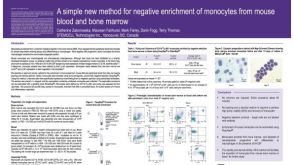 科学海报Method for Negative Enrichment of Monocytes from Mouse Blood and Bone Marrow
 挂图Antigen Processing and Presentation Overview of the mechanisms by which antigens are processed and presented to T cells

 沪公网安备31010102008431号