Human Immune Cytokines
Infographic of key cytokines for expansion, differentiation and characterization of major immune cell types
Eash KJ et al. (MAY 2009)
Blood 113 19 4711--9
CXCR4 is a key regulator of neutrophil release from the bone marrow under basal and stress granulopoiesis conditions.
The number of neutrophils in the blood is tightly regulated to ensure adequate protection against microbial pathogens while minimizing damage to host tissue. Neutrophil homeostasis in the blood is achieved through a balance of neutrophil production,release from the bone marrow,and clearance from the circulation. Accumulating evidence suggests that signaling by CXCL12,through its major receptor CXCR4,plays a key role in maintaining neutrophil homeostasis. Herein,we generated mice with a myeloid lineage-restricted deletion of CXCR4 to define the mechanisms by which CXCR4 signals regulate this process. We show that CXCR4 negatively regulates neutrophil release from the bone marrow in a cell-autonomous fashion. However,CXCR4 is dispensable for neutrophil clearance from the circulation. Neutrophil mobilization responses to granulocyte colony-stimulating factor (G-CSF),CXCL2,or Listeria monocytogenes infection are absent or impaired,suggesting that disruption of CXCR4 signaling may be a common step mediating neutrophil release. Collectively,these data suggest that CXCR4 signaling maintains neutrophil homeostasis in the blood under both basal and stress granulopoiesis conditions primarily by regulating neutrophil release from the bone marrow.
View Publication
产品号#:
03434
03444
产品名:
MethoCult™ GF M3434
MethoCult™ GF M3434
Simons MP et al. (MAR 2008)
Journal of leukocyte biology 83 3 621--9
TNF-related apoptosis-inducing ligand (TRAIL) is expressed throughout myeloid development, resulting in a broad distribution among neutrophil granules.
TRAIL induces apoptosis in a variety of tumor cells. Our laboratory found that human neutrophils contain an intracellular reservoir of prefabricated TRAIL that is released after stimulation with Mycobacterium bovis bacillus Calmette-Guérin. In this study,we examined the subcellular distribution of TRAIL in freshly isolated neutrophils. Neutrophil granules,secretory vesicles (SV),and plasma membrane vesicles were isolated by subcellular fractionation,followed by free-flow electrophoresis,and examined by ELISA and immunoblot. TRAIL was found in all membrane-bound fractions with the highest amounts in the fractions enriched in azurophilic granule (AG) and SV. Immunofluorescence confocal microscopy showed that TRAIL colocalized independently with myeloperoxidase (MPO),lactoferrin (LF),and albumin,respective markers of AG,specific granules,and SV. Furthermore,immunotransmission electron microscopy demonstrated that TRAIL colocalized intracellularly with MPO and albumin. We examined TRAIL expression in PLB-985 cells induced with dimethylformamide and in CD34-positive stem cells treated with G-CSF. Quantitative RT-PCR analysis showed that TRAIL was expressed in each stage of development,whereas MPO and LF were only expressed at distinct times during differentiation. Collectively,these findings suggest that TRAIL is expressed throughout neutrophil development,resulting in a broad distribution among different granule subtypes.
View Publication
产品号#:
09600
09650
09850
产品名:
StemSpan™ SFEM
StemSpan™ SFEM
Shead EF et al. (AUG 2006)
American journal of respiratory and critical care medicine 174 3 306--11
Osteoclastogenesis during infective exacerbations in patients with cystic fibrosis.
RATIONALE: Adults with cystic fibrosis (CF) are at increased risk of developing osteoporosis. During infective exacerbations,increased production of proinflammatory cytokines and markers of bone resorption have been reported. OBJECTIVE: The aim of this study is to investigate the growth and proliferation of potential osteoclast precursor cells before,during,and after intravenous antibiotic treatment of infective exacerbations in patients with CF. METHODS: Hematopoietic precursor cell growth was examined using colony formation assays using Methocult culture medium. Circulating potential osteoclast precursors were identified using four-color flow cytometry by CD14,CD33,CD34,and CD45 expression. RESULTS: At the start of an infective exacerbation increases in hematopoietic precursor colony formation (15.42 colonies/10(5) cells plated,p = 0.025),proliferation (28.5%,p textless 0.001),and the numbers of circulating potential osteoclast precursors (6.5%,p textless 0.001) were seen in comparison with baseline levels. These increases declined after treatment with intravenous antibiotics to a level close to baseline. CONCLUSIONS: The results demonstrate an increase in the production of potential osteoclast precursors in the peripheral blood during CF infective exacerbations. This may result in increased bone resorption and contribute to bone loss in patients with CF.
View Publication
产品号#:
产品名:
Gu Z et al. (FEB 2006)
Antimicrobial agents and chemotherapy 50 2 625--31
In vitro antiretroviral activity and in vitro toxicity profile of SPD754, a new deoxycytidine nucleoside reverse transcriptase inhibitor for treatment of human immunodeficiency virus infection.
SPD754 (AVX754) is a deoxycytidine analogue nucleotide reverse transcriptase inhibitor (NRTI) in clinical development. These studies characterized the in vitro activity of SPD754 against NRTI-resistant human immunodeficiency virus type 1 (HIV-1) and non-clade B HIV-1 isolates,its activity in combination with other antiretrovirals,and its potential myelotoxicity and mitochondrial toxicity. SPD754 was tested against 50 clinical HIV-1 isolates (5 wild-type isolates and 45 NRTI-resistant isolates) in MT-4 cells using the Antivirogram assay. SPD754 susceptibility was reduced 1.2- to 2.2-fold against isolates resistant to zidovudine (M41L,T215Y/F,plus a median of three additional nucleoside analogue mutations [NAMs]) and/or lamivudine (M184V) and was reduced 1.3- to 2.8-fold against isolates resistant to abacavir (L74V,Y115F,and M184V plus one other NAM) or stavudine (V75T/M,M41L,T215F/Y,and four other NAMs). Insertions at amino acid position 69 and Q151M mutations (with or without M184V) reduced SPD754 susceptibility 5.2-fold and 14- to 16-fold,respectively (these changes gave values comparable to or less than the corresponding values for zidovudine,lamivudine,abacavir,and didanosine). SPD754 showed similar activity against isolates of group M HIV-1 clades,including A/G,B,C,D,A(E),D/F,F,and H. SPD754 showed additive effects in combination with other NRTIs,tenofovir,nevirapine,or saquinavir. SPD754 had no significant effects on cell viability or mitochondrial DNA in HepG2 or MT-4 cells during 28-day exposure at concentrations up to 200 microM. SPD754 showed a low potential for myelotoxicity against human bone marrow. In vitro,SPD754 retained activity against most NRTI-resistant HIV-1 clinical isolates and showed a low propensity to cause myelotoxicity and mitochondrial toxicity.
View Publication
产品号#:
04434
04444
产品名:
MethoCult™ H4434 Classic
MethoCult™ H4434 Classic
El-Ouriaghli F et al. (NOV 2003)
Blood 102 10 3786--92
Clonal dominance of chronic myelogenous leukemia is associated with diminished sensitivity to the antiproliferative effects of neutrophil elastase.
Clinical observations suggest that in chronic myelogenous leukemia (CML),the Philadelphia chromosome (Ph+) clone has a growth advantage over normal hematopoiesis. Patients with CML have high levels of neutrophil elastase,which has recently been shown to antagonize the action of granulocyte-colony-stimulating factor (G-CSF) and other growth factors. We therefore compared the effect of elastase on the growth of normal and CML progenitor cells. In 10-day suspension cultures of normal or CML CD34+ cells supplemented with G-CSF,stem cell factor (SCF),and granulocyte macrophage-colony-stimulating factor (GM-CSF),CML cells had diminished sensitivity to the growth inhibitory effect of elastase. When equal numbers of CML and normal CD34+ cells were cocultured for 10 days,there was no change in the relative proportions of normal and leukemic cells (measured by fluorescence in situ hybridization [FISH] or flow cytometry). However,when elastase was added,CML cells predominated at the end of the culture period (78% vs 22% with 1 microg/mL and 80% vs 20% with 5 microg/mL elastase). CML neutrophils substituted effectively for elastase in suppressing the proliferation of normal CD34+ cells,but this effect was abrogated by serine protease inhibitors. These results suggest that elastase overproduction by the leukemic clone can change the growth environment by digesting growth factors,thereby giving advantage to Ph+ hematopoiesis.
View Publication
产品号#:
09500
09600
09650
产品名:
BIT 9500血清替代物
StemSpan™ SFEM
StemSpan™ SFEM
专家访谈
Payel Sil, PhD
Understanding the Role of Autophagy in Inflammation and Autoimmunity
研究方向:
免疫学
Topics:
The role of non-canonical autophagy on inflammation and autoimmunity
Immunoregulatory role of the LC3-associated phagocytosis (LAP) pathway
Fan Y et al. (JAN 2018)
The Biochemical journal 475 1 23--44
Interrogating Parkinson's disease LRRK2 kinase pathway activity by assessing Rab10 phosphorylation in human neutrophils.
There is compelling evidence for the role of the leucine-rich repeat kinase 2 (LRRK2) and in particular its kinase function in Parkinson's disease. Orally bioavailable,brain penetrant and potent LRRK2 kinase inhibitors are in the later stages of clinical development. Here,we describe a facile and robust assay to quantify LRRK2 kinase pathway activity by measuring LRRK2-mediated phosphorylation of Rab10 in human peripheral blood neutrophils. We use the selective MJFF-pRab10 monoclonal antibody recognising the Rab10 Thr73 phospho-epitope that is phosphorylated by LRRK2. We highlight the feasibility and practicability of using our assay in the clinical setting by studying a few patients with G2019S LRRK2 associated and sporadic Parkinson's as well as healthy controls. We suggest that peripheral blood neutrophils are a valuable resource for LRRK2 research and should be considered for inclusion in Parkinson's bio-repository collections as they are abundant,homogenous and express relatively high levels of LRRK2 as well as Rab10. In contrast,the widely used peripheral blood mononuclear cells are heterogeneous and only a minority of cells (monocytes and contaminating neutrophils) express LRRK2. While our LRRK2 kinase pathway assay could assist in patient stratification based on LRRK2 kinase activity,we envision that it may find greater utility in pharmacodynamic and target engagement studies in future LRRK2 inhibitor trials.
View Publication
产品号#:
19666
85450
85460
100-0404
产品名:
EasySep™ Direct人中性粒细胞分选试剂盒
SepMate™-50 (IVD)
SepMate™-50 (IVD)
RoboSep™ 人中性粒细胞分选试剂盒
Dutt S et al. (MAR 2011)
Blood 117 9 2567--76
Haploinsufficiency for ribosomal protein genes causes selective activation of p53 in human erythroid progenitor cells.
Haploinsufficiency for ribosomal protein genes has been implicated in the pathophysiology of Diamond-Blackfan anemia (DBA) and the 5q-syndrome,a subtype of myelodysplastic syndrome. The p53 pathway is activated by ribosome dysfunction,but the molecular basis for selective impairment of the erythroid lineage in disorders of ribosome function has not been determined. We found that p53 accumulates selectively in the erythroid lineage in primary human hematopoietic progenitor cells after expression of shRNAs targeting RPS14,the ribosomal protein gene deleted in the 5q-syndrome,or RPS19,the most commonly mutated gene in DBA. Induction of p53 led to lineage-specific accumulation of p21 and consequent cell cycle arrest in erythroid progenitor cells. Pharmacologic inhibition of p53 rescued the erythroid defect,whereas nutlin-3,a compound that activates p53 through inhibition of HDM2,selectively impaired erythropoiesis. In bone marrow biopsies from patients with DBA or del(5q) myelodysplastic syndrome,we found an accumulation of nuclear p53 staining in erythroid progenitor cells that was not present in control samples. Our findings indicate that the erythroid lineage has a low threshold for the induction of p53,providing a basis for the failure of erythropoiesis in the 5q-syndrome,DBA,and perhaps other bone marrow failure syndromes.
View Publication
产品号#:
03334
03434
03444
产品名:
MethoCult™ M3334
MethoCult™ GF M3434
MethoCult™ GF M3434
Ye B-Q et al. (NOV 2010)
Journal of immunology (Baltimore,Md. : 1950) 185 10 6294--305
Slit2 regulates attractive eosinophil and repulsive neutrophil chemotaxis through differential srGAP1 expression during lung inflammation.
Directional migration of leukocytes is an essential step in leukocyte trafficking during inflammatory responses. However,the molecular mechanisms governing directional chemotaxis of leukocytes remain poorly understood. The Slit family of guidance cues has been implicated for inhibition of leuocyte migration. We report that Clara cells in the bronchial epithelium secreted Slit2,whereas eosinophils and neutrophils expressed its cell-surface receptor,Robo1. Compared to neutrophils,eosinophils exhibited a significantly lower level of Slit-Robo GTPase-activating protein 1 (srGAP1),leading to activation of Cdc42,recruitment of PI3K to Robo1,enhancment of eotaxin-induced eosinophil chemotaxis,and exaggeration of allergic airway inflammation. Notably,OVA sensitization elicited a Slit2 gradient at so-called bronchus-alveoli axis,with a higher level of Slit2 in the bronchial epithelium and a lower level in the alveolar tissue. Aerosol administration of rSlit2 accelerated eosinophil infiltration,whereas i.v. administered Slit2 reduced eosinophil deposition. In contrast,Slit2 inactivated Cdc42 and suppressed stromal cell-derived factor-1α-induced chemotaxis of neutrophils for inhibiting endotoxin-induced lung inflammation,which were reversed by blockade of srGAP1 binding to Robo1. These results indicate that the newly identified Slit2 gradient at the bronchus-alveoli axis induces attractive PI3K signaling in eosinophils and repulsive srGAP1 signaling in neutrophils through differential srGAP1 expression during lung inflammation.
View Publication
产品号#:
19256
19256RF
产品名:
Cowburn AS et al. (JUN 2011)
American journal of respiratory cell and molecular biology 44 6 879--87
Granulocyte/macrophage colony-stimulating factor causes a paradoxical increase in the BH3-only pro-apoptotic protein Bim in human neutrophils.
Neutrophil apoptosis is essential for the resolution of inflammation but is delayed by several inflammatory mediators. In such terminally differentiated cells it has been uncertain whether these agents can inhibit apoptosis through transcriptional regulation of anti-death (Bcl-X(L),Mcl-1,Bcl2A1) or BH3-only (Bim,Bid,Puma) Bcl2-family proteins. We report that granulocyte/macrophage colony-stimulating factor (GM-CSF) and tumor necrosis factor (TNF)-α prevent the normal time-dependent loss of Mcl-1 and Bcl2A1 in neutrophils,and we demonstrate that they cause an NF-κB-dependent increase in Bcl-X(L) transcription/translation. We show that GM-CSF and TNF-α increase and/or maintain mRNA levels for the pro-apoptotic BH3-only protein Bid and that GM-CSF has a similar NF-κB-dependent effect on Bim transcription and BimEL expression. The in-vivo relevance of these findings was indicated by demonstrating that GM-CSF is the dominant neutrophil survival factor in lung lavage from patients with ventilator-associated pneumonia,confirming an increase in lung neutrophil Bim mRNA. Finally GM-CSF caused mitochondrial location of Bim and a switch in phenotype to a cell that displays accelerated caspase-9-dependent apoptosis. This study demonstrates the capacity of neutrophil survival agents to induce a paradoxical increase in the pro-apoptotic proteins Bid and Bim and suggests that this may function to facilitate rapid apoptosis at the termination of the inflammatory cycle.
View Publication


 EasySep™小鼠TIL(CD45)正选试剂盒




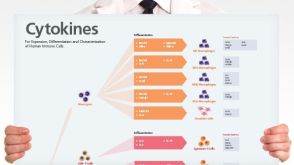 挂图Human Immune Cytokines Infographic of key cytokines for expansion, differentiation and characterization of major immune cell types
 专家访谈Payel Sil, PhD Understanding the Role of Autophagy in Inflammation and Autoimmunity
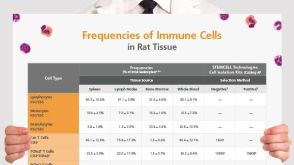 挂图Frequencies of Immune Cells in Rat Tissue Lists the estimated frequencies of more than 15 immune cell types in Sprague Dawley rats
 沪公网安备31010102008431号