von Vietinghoff S et al. (MAY 2007)
Blood 109 10 4487--93
NB1 mediates surface expression of the ANCA antigen proteinase 3 on human neutrophils.
Antineutrophil cytoplasmic antibodies (ANCAs) with specificity for proteinase 3 (PR3) are central to a form of ANCA-associated vasculitis. Membrane PR3 (mPR3) is expressed only on a subset of neutrophils. The aim of this study was to determine the mechanism of PR3 surface expression on human neutrophils. Neutrophils were isolated from patients and healthy controls,and hematopoietic stem cells from cord blood served as a model of neutrophil differentiation. Surface expression was analyzed by flow cytometry and confocal microscopy,and proteins were analyzed by Western blot experiments. Neutrophil subsets were separated by magnetic cell sorting. Transfection experiments were carried out in HEK293 and HL60 cell lines. Using neutrophils from healthy donors,patients with vasculitis,and neutrophilic differentiated stem cells we found that mPR3 display was restricted to cells expressing neutrophil glycoprotein NB1,a glycosylphosphatidylinositol (GPI)-linked surface receptor. mPR3 expression was decreased by enzymatic removal of GPI anchors from cell membranes and was absent in a patient with paroxysmal nocturnal hemoglobinuria. PR3 and NB1 coimmunoprecipitated from and colocalized on the neutrophil plasma membrane. Transfection with NB1 resulted in specific PR3 surface binding in different cell types. We conclude that PR3 membrane expression on neutrophils is mediated by the NB1 receptor.
View Publication
产品号#:
09600
09650
产品名:
StemSpan™ SFEM
StemSpan™ SFEM
Zou J et al. (MAY 2011)
Blood 117 21 5561--5572
Oxidase-deficient neutrophils from X-linked chronic granulomatous disease iPS cells: functional correction by zinc finger nuclease-mediated safe harbor targeting.
We have developed induced pluripotent stem cells (iPSCs) from a patient with X-linked chronic granulomatous disease (X-CGD),a defect of neutrophil microbicidal reactive oxygen species (ROS) generation resulting from gp91(phox) deficiency. We demonstrated that mature neutrophils differentiated from X-CGD iPSCs lack ROS production,reproducing the pathognomonic CGD cellular phenotype. Targeted gene transfer into iPSCs,with subsequent selection and full characterization to ensure no off-target changes,holds promise for correction of monogenic diseases without the insertional mutagenesis caused by multisite integration of viral or plasmid vectors. Zinc finger nuclease-mediated gene targeting of a single-copy gp91(phox) therapeutic minigene into one allele of the safe harbor" AAVS1 locus in X-CGD iPSCs without off-target inserts resulted in sustained expression of gp91(phox) and substantially restored neutrophil ROS production. Our findings demonstrate how precise gene targeting may be applied to correction of X-CGD using zinc finger nuclease and patient iPSCs."
View Publication
产品号#:
05850
05857
05870
05875
09600
09650
85850
85857
85870
85875
产品名:
StemSpan™ SFEM
StemSpan™ SFEM
mTeSR™1
mTeSR™1
Valayer A et al. (SEP 2016)
Journal of leukocyte biology
Neutrophils can disarm NK cell response through cleavage of NKp46.
Polymorphonuclear neutrophils (PMNs) can contribute to the regulation of the host immune response by crosstalk with innate and adaptive leukocytes,including NK cells. Mechanisms by which this immunoregulation process occurs remain incompletely understood. Here,we focused on the effect of human neutrophil-derived serine proteases on NKp46,a crucial activating receptor expressed on NK cells. We used flow cytometry,Western blotting,and mass spectrometry (MS) analysis to reveal that cathepsin G [CG; and not elastase or proteinase 3 (PR3)] induces a time- and concentration-dependent,down-regulatory effect on NKp46 expression through a restricted proteolytic mechanism. We also used a functional assay to demonstrate that NKp46 cleavage by CG severely impairs NKp46-mediated responses of NK cells,including IFN-γ production and cell degranulation. Importantly,sputa of cystic fibrosis (CF) patients,which have high concentrations of CG,also alter NKp46 on NK cells. Hence,we have identified a new immunoregulatory mechanism of neutrophils that proteolytically disarms NK cell responses.
View Publication
产品号#:
19666
100-0404
产品名:
EasySep™ Direct人中性粒细胞分选试剂盒
RoboSep™ 人中性粒细胞分选试剂盒
Y. Kuwano et al. (MAY 2016)
Journal of Immunology 196 9 3828--33
G$\alpha$i2 and G$\alpha$i3 Differentially Regulate Arrest from Flow and Chemotaxis in Mouse Neutrophils.
Leukocyte recruitment to inflammation sites progresses in a multistep cascade. Chemokines regulate multiple steps of the cascade,including arrest,transmigration,and chemotaxis. The most important chemokine receptor in mouse neutrophils is CXCR2,which couples through G$\alpha$i2- and G$\alpha$i3-containing heterotrimeric G proteins. Neutrophils arrest in response to CXCR2 stimulation. This is defective in G$\alpha$i2-deficient neutrophils. In this study,we show that G$\alpha$i3-deficient neutrophils showed reduced transmigration but normal arrest in mice. We also tested G$\alpha$i2- or G$\alpha$i3-deficient neutrophils in a CXCL1 gradient generated by a microfluidic device. G$\alpha$i3-,but not G$\alpha$i2-,deficient neutrophils showed significantly reduced migration and directionality. This was confirmed in a model of sterile inflammation in vivo. G$\alpha$i2-,but not G$\alpha$i3-,deficient neutrophils showed decreased Ca(2+) flux in response to CXCR2 stimulation. Conversely,G$\alpha$i3-,but not G$\alpha$i2-,deficient neutrophils exhibited reduced AKT phosphorylation upon CXCR2 stimulation. We conclude that G$\alpha$i2 controls arrest and G$\alpha$i3 controls transmigration and chemotaxis in response to chemokine stimulation of neutrophils.
View Publication
产品号#:
19762
19762RF
20155
产品名:
EasySep™小鼠中性粒细胞富集试剂盒
RoboSep™ 小鼠中性粒细胞富集试剂盒含滤芯吸头
RoboSep™分选管套装(9个塑料管)
Fan Y et al. (JAN 2018)
The Biochemical journal 475 1 23--44
Interrogating Parkinson's disease LRRK2 kinase pathway activity by assessing Rab10 phosphorylation in human neutrophils.
There is compelling evidence for the role of the leucine-rich repeat kinase 2 (LRRK2) and in particular its kinase function in Parkinson's disease. Orally bioavailable,brain penetrant and potent LRRK2 kinase inhibitors are in the later stages of clinical development. Here,we describe a facile and robust assay to quantify LRRK2 kinase pathway activity by measuring LRRK2-mediated phosphorylation of Rab10 in human peripheral blood neutrophils. We use the selective MJFF-pRab10 monoclonal antibody recognising the Rab10 Thr73 phospho-epitope that is phosphorylated by LRRK2. We highlight the feasibility and practicability of using our assay in the clinical setting by studying a few patients with G2019S LRRK2 associated and sporadic Parkinson's as well as healthy controls. We suggest that peripheral blood neutrophils are a valuable resource for LRRK2 research and should be considered for inclusion in Parkinson's bio-repository collections as they are abundant,homogenous and express relatively high levels of LRRK2 as well as Rab10. In contrast,the widely used peripheral blood mononuclear cells are heterogeneous and only a minority of cells (monocytes and contaminating neutrophils) express LRRK2. While our LRRK2 kinase pathway assay could assist in patient stratification based on LRRK2 kinase activity,we envision that it may find greater utility in pharmacodynamic and target engagement studies in future LRRK2 inhibitor trials.
View Publication
产品号#:
19666
85450
85460
100-0404
产品名:
EasySep™ Direct人中性粒细胞分选试剂盒
SepMate™-50 (IVD)
SepMate™-50 (IVD)
RoboSep™ 人中性粒细胞分选试剂盒
Simons MP et al. (MAR 2008)
Journal of leukocyte biology 83 3 621--9
TNF-related apoptosis-inducing ligand (TRAIL) is expressed throughout myeloid development, resulting in a broad distribution among neutrophil granules.
TRAIL induces apoptosis in a variety of tumor cells. Our laboratory found that human neutrophils contain an intracellular reservoir of prefabricated TRAIL that is released after stimulation with Mycobacterium bovis bacillus Calmette-Guérin. In this study,we examined the subcellular distribution of TRAIL in freshly isolated neutrophils. Neutrophil granules,secretory vesicles (SV),and plasma membrane vesicles were isolated by subcellular fractionation,followed by free-flow electrophoresis,and examined by ELISA and immunoblot. TRAIL was found in all membrane-bound fractions with the highest amounts in the fractions enriched in azurophilic granule (AG) and SV. Immunofluorescence confocal microscopy showed that TRAIL colocalized independently with myeloperoxidase (MPO),lactoferrin (LF),and albumin,respective markers of AG,specific granules,and SV. Furthermore,immunotransmission electron microscopy demonstrated that TRAIL colocalized intracellularly with MPO and albumin. We examined TRAIL expression in PLB-985 cells induced with dimethylformamide and in CD34-positive stem cells treated with G-CSF. Quantitative RT-PCR analysis showed that TRAIL was expressed in each stage of development,whereas MPO and LF were only expressed at distinct times during differentiation. Collectively,these findings suggest that TRAIL is expressed throughout neutrophil development,resulting in a broad distribution among different granule subtypes.
View Publication
产品号#:
09600
09650
09850
产品名:
StemSpan™ SFEM
StemSpan™ SFEM
Gu Z et al. (FEB 2006)
Antimicrobial agents and chemotherapy 50 2 625--31
In vitro antiretroviral activity and in vitro toxicity profile of SPD754, a new deoxycytidine nucleoside reverse transcriptase inhibitor for treatment of human immunodeficiency virus infection.
SPD754 (AVX754) is a deoxycytidine analogue nucleotide reverse transcriptase inhibitor (NRTI) in clinical development. These studies characterized the in vitro activity of SPD754 against NRTI-resistant human immunodeficiency virus type 1 (HIV-1) and non-clade B HIV-1 isolates,its activity in combination with other antiretrovirals,and its potential myelotoxicity and mitochondrial toxicity. SPD754 was tested against 50 clinical HIV-1 isolates (5 wild-type isolates and 45 NRTI-resistant isolates) in MT-4 cells using the Antivirogram assay. SPD754 susceptibility was reduced 1.2- to 2.2-fold against isolates resistant to zidovudine (M41L,T215Y/F,plus a median of three additional nucleoside analogue mutations [NAMs]) and/or lamivudine (M184V) and was reduced 1.3- to 2.8-fold against isolates resistant to abacavir (L74V,Y115F,and M184V plus one other NAM) or stavudine (V75T/M,M41L,T215F/Y,and four other NAMs). Insertions at amino acid position 69 and Q151M mutations (with or without M184V) reduced SPD754 susceptibility 5.2-fold and 14- to 16-fold,respectively (these changes gave values comparable to or less than the corresponding values for zidovudine,lamivudine,abacavir,and didanosine). SPD754 showed similar activity against isolates of group M HIV-1 clades,including A/G,B,C,D,A(E),D/F,F,and H. SPD754 showed additive effects in combination with other NRTIs,tenofovir,nevirapine,or saquinavir. SPD754 had no significant effects on cell viability or mitochondrial DNA in HepG2 or MT-4 cells during 28-day exposure at concentrations up to 200 microM. SPD754 showed a low potential for myelotoxicity against human bone marrow. In vitro,SPD754 retained activity against most NRTI-resistant HIV-1 clinical isolates and showed a low propensity to cause myelotoxicity and mitochondrial toxicity.
View Publication
产品号#:
04434
04444
产品名:
MethoCult™ H4434 Classic
MethoCult™ H4434 Classic
El-Ouriaghli F et al. (NOV 2003)
Blood 102 10 3786--92
Clonal dominance of chronic myelogenous leukemia is associated with diminished sensitivity to the antiproliferative effects of neutrophil elastase.
Clinical observations suggest that in chronic myelogenous leukemia (CML),the Philadelphia chromosome (Ph+) clone has a growth advantage over normal hematopoiesis. Patients with CML have high levels of neutrophil elastase,which has recently been shown to antagonize the action of granulocyte-colony-stimulating factor (G-CSF) and other growth factors. We therefore compared the effect of elastase on the growth of normal and CML progenitor cells. In 10-day suspension cultures of normal or CML CD34+ cells supplemented with G-CSF,stem cell factor (SCF),and granulocyte macrophage-colony-stimulating factor (GM-CSF),CML cells had diminished sensitivity to the growth inhibitory effect of elastase. When equal numbers of CML and normal CD34+ cells were cocultured for 10 days,there was no change in the relative proportions of normal and leukemic cells (measured by fluorescence in situ hybridization [FISH] or flow cytometry). However,when elastase was added,CML cells predominated at the end of the culture period (78% vs 22% with 1 microg/mL and 80% vs 20% with 5 microg/mL elastase). CML neutrophils substituted effectively for elastase in suppressing the proliferation of normal CD34+ cells,but this effect was abrogated by serine protease inhibitors. These results suggest that elastase overproduction by the leukemic clone can change the growth environment by digesting growth factors,thereby giving advantage to Ph+ hematopoiesis.
View Publication
Taylor D et al. (MAY 2011)
Journal of immunology (Baltimore,Md. : 1950) 186 10 5956--67
Prevention of bone marrow cell apoptosis and regulation of hematopoiesis by type I IFNs during systemic responses to pneumocystis lung infection.
We recently demonstrated that lack of type I IFN signaling (IFNAR knockout) in lymphocyte-deficient mice (IFrag(-/-)) results in bone marrow (BM) failure after Pneumocystis lung infection,whereas lymphocyte-deficient mice with intact IFNAR (RAG(-/-)) had normal hematopoiesis. In the current work,we performed studies to define further the mechanisms involved in the induction of BM failure in this system. BM chimera experiments revealed that IFNAR expression was required on BM-derived but not stroma-derived cells to prevent BM failure. Signals elicited after day 7 postinfection appeared critical in determining BM cell fate. We observed caspase-8- and caspase-9-mediated apoptotic cell death,beginning with neutrophils. Death of myeloid precursors was associated with secondary oxidative stress,and decreasing colony-forming activity in BM cell cultures. Treatment with N-acetylcysteine could slow the progression of,but not prevent,BM failure. Type I IFN signaling has previously been shown to expand the neutrophil life span and regulate the expression of some antiapoptotic factors. Quantitative RT-PCR demonstrated reduced mRNA abundance for the antiapoptotic factors BCL-2,IAP2,MCL-1,and others in BM cells from IFrag(-/-) compared with that in BM cells from RAG(-/-) mice at day 7. mRNA and protein for the proapoptotic cytokine TNF-α was increased,whereas mRNA for the growth factors G-CSF and GM-CSF was reduced. In vivo anti-TNF-α treatment improved precursor cell survival and activity in culture. Thus,we propose that lack of type I IFN signaling results in decreased resistance to inflammation-induced proapoptotic stressors and impaired replenishment by precursors after systemic responses to Pneumocystis lung infection. Our finding may have implications in understanding mechanisms underlying regenerative BM depression/failure during complex immune deficiencies such as AIDS.
View Publication
产品号#:
03534
产品名:
MethoCult™ GF M3534
Surdziel E et al. (APR 2011)
Blood 117 16 4338--48
Enforced expression of miR-125b affects myelopoiesis by targeting multiple signaling pathways.
MicroRNAs (miRNAs) are small,noncoding RNAs that regulate gene expression by sequence-specific targeting of multiple mRNAs. Although lineage-,maturation-,and disease-specific miRNA expression has been described,miRNA-dependent phenotypes and miRNA-regulated signaling in hematopoietic cells are largely unknown. Combining functional genomics,biochemical analysis,and unbiased and hypothesis-driven miRNA target prediction,we show that lentivirally over-expressed miR-125b blocks G-CSF-induced granulocytic differentiation and enables G-CSF-dependent proliferation of murine 32D cells. In primary lineage-negative cells,miR-125b over-expression enhances colony-formation in vitro and promotes myelopoiesis in mouse bone marrow chimeras. We identified Stat3 and confirmed Bak1 as miR-125b target genes with approximately 30% and 50% reduction in protein expression,respectively. However,gene-specific RNAi reveals that this reduction,alone and in combination,is not sufficient to block G-CSF-dependent differentiation. STAT3 protein expression,DNA-binding,and transcriptional activity but not induction of tyrosine-phosphorylation and nuclear translocation are reduced upon enforced miR-125b expression,indicating miR-125b-mediated reduction of one or more STAT3 cofactors. Indeed,we identified c-Jun and Jund as potential miR-125b targets and demonstrated reduced protein expression in 32D/miR-125b cells. Interestingly,gene-specific silencing of JUND but not c-JUN partially mimics the miR-125b over-expression phenotype. These data demonstrate coordinated regulation of several signaling pathways by miR-125b linked to distinct phenotypes in myeloid cells.
View Publication


 EasySep™小鼠TIL(CD45)正选试剂盒




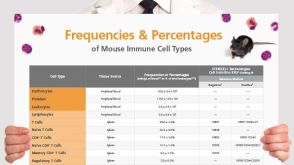 挂图Frequencies and Percentages of Mouse Immune Cell Types List of the frequencies of over 25 immune cell types in C57BL/6 mice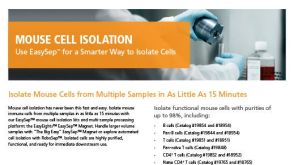

 沪公网安备31010102008431号