von Vietinghoff S et al. (MAY 2007)
Blood 109 10 4487--93
NB1 mediates surface expression of the ANCA antigen proteinase 3 on human neutrophils.
Antineutrophil cytoplasmic antibodies (ANCAs) with specificity for proteinase 3 (PR3) are central to a form of ANCA-associated vasculitis. Membrane PR3 (mPR3) is expressed only on a subset of neutrophils. The aim of this study was to determine the mechanism of PR3 surface expression on human neutrophils. Neutrophils were isolated from patients and healthy controls,and hematopoietic stem cells from cord blood served as a model of neutrophil differentiation. Surface expression was analyzed by flow cytometry and confocal microscopy,and proteins were analyzed by Western blot experiments. Neutrophil subsets were separated by magnetic cell sorting. Transfection experiments were carried out in HEK293 and HL60 cell lines. Using neutrophils from healthy donors,patients with vasculitis,and neutrophilic differentiated stem cells we found that mPR3 display was restricted to cells expressing neutrophil glycoprotein NB1,a glycosylphosphatidylinositol (GPI)-linked surface receptor. mPR3 expression was decreased by enzymatic removal of GPI anchors from cell membranes and was absent in a patient with paroxysmal nocturnal hemoglobinuria. PR3 and NB1 coimmunoprecipitated from and colocalized on the neutrophil plasma membrane. Transfection with NB1 resulted in specific PR3 surface binding in different cell types. We conclude that PR3 membrane expression on neutrophils is mediated by the NB1 receptor.
View Publication
产品号#:
09600
09650
产品名:
StemSpan™ SFEM
StemSpan™ SFEM
Deonarain R et al. (NOV 2003)
Proceedings of the National Academy of Sciences of the United States of America 100 23 13453--8
Critical roles for IFN-beta in lymphoid development, myelopoiesis, and tumor development: links to tumor necrosis factor alpha.
We have generated mice null for IFN-beta and report the diverse consequences of IFN-beta for both the innate and adaptive arms of immunity. Despite no abnormalities in the proportional balance of CD4 and CD8 T cell populations in the peripheral blood,thymus,and spleen of IFN-beta-/- mice,activated lymph node and splenic T lymphocytes exhibit enhanced T cell proliferation and decreased tumor necrosis factor alpha production,relative to IFN-beta+/+ mice. Notably,constitutive and induced expression of tumor necrosis factor alpha is reduced in the spleen and bone marrow (BM) macrophages,respectively,of IFN-beta-/- mice. We also observe an altered splenic architecture in IFN-beta-/- mice and a reduction in resident macrophages. We identify a potential defect in B cell maturation in IFN-beta-/- mice,associated with a decrease in B220+ve/high/CD43-ve BM-derived cells and a reduction in BP-1,IgM,and CD23 expression. Circulating IgM-,Mac-1-,and Gr-1-positive cells are also substantially decreased in IFN-beta-/- mice. The decrease in the numbers of circulating macrophages and granulocytes likely reflects defective maturation of primitive BM hematopoiesis in mice,shown by the reduction of colony-forming units,granulocyte-macrophage. We proceeded to evaluate the in vivo growth of malignant cells in the IFN-beta-/- background and give evidence that Lewis lung carcinoma-specific tumor growth is more aggressive in IFN-beta-/- mice. Taken altogether,our data suggest that,in addition to the direct growth-inhibitory effects on tumor cells,IFN-beta is required during different stages of maturation in the development of the immune system.
View Publication
产品号#:
03434
03444
产品名:
MethoCult™ GF M3434
MethoCult™ GF M3434
挂图
血液相关来源中人细胞类型的比例
List of the frequencies of over 35 cell types in normal human blood-related sources.
Ye B-Q et al. (NOV 2010)
Journal of immunology (Baltimore,Md. : 1950) 185 10 6294--305
Slit2 regulates attractive eosinophil and repulsive neutrophil chemotaxis through differential srGAP1 expression during lung inflammation.
Directional migration of leukocytes is an essential step in leukocyte trafficking during inflammatory responses. However,the molecular mechanisms governing directional chemotaxis of leukocytes remain poorly understood. The Slit family of guidance cues has been implicated for inhibition of leuocyte migration. We report that Clara cells in the bronchial epithelium secreted Slit2,whereas eosinophils and neutrophils expressed its cell-surface receptor,Robo1. Compared to neutrophils,eosinophils exhibited a significantly lower level of Slit-Robo GTPase-activating protein 1 (srGAP1),leading to activation of Cdc42,recruitment of PI3K to Robo1,enhancment of eotaxin-induced eosinophil chemotaxis,and exaggeration of allergic airway inflammation. Notably,OVA sensitization elicited a Slit2 gradient at so-called bronchus-alveoli axis,with a higher level of Slit2 in the bronchial epithelium and a lower level in the alveolar tissue. Aerosol administration of rSlit2 accelerated eosinophil infiltration,whereas i.v. administered Slit2 reduced eosinophil deposition. In contrast,Slit2 inactivated Cdc42 and suppressed stromal cell-derived factor-1α-induced chemotaxis of neutrophils for inhibiting endotoxin-induced lung inflammation,which were reversed by blockade of srGAP1 binding to Robo1. These results indicate that the newly identified Slit2 gradient at the bronchus-alveoli axis induces attractive PI3K signaling in eosinophils and repulsive srGAP1 signaling in neutrophils through differential srGAP1 expression during lung inflammation.
View Publication
Human Immune Cytokines
Infographic of key cytokines for expansion, differentiation and characterization of major immune cell types
Shead EF et al. (AUG 2006)
American journal of respiratory and critical care medicine 174 3 306--11
Osteoclastogenesis during infective exacerbations in patients with cystic fibrosis.
RATIONALE: Adults with cystic fibrosis (CF) are at increased risk of developing osteoporosis. During infective exacerbations,increased production of proinflammatory cytokines and markers of bone resorption have been reported. OBJECTIVE: The aim of this study is to investigate the growth and proliferation of potential osteoclast precursor cells before,during,and after intravenous antibiotic treatment of infective exacerbations in patients with CF. METHODS: Hematopoietic precursor cell growth was examined using colony formation assays using Methocult culture medium. Circulating potential osteoclast precursors were identified using four-color flow cytometry by CD14,CD33,CD34,and CD45 expression. RESULTS: At the start of an infective exacerbation increases in hematopoietic precursor colony formation (15.42 colonies/10(5) cells plated,p = 0.025),proliferation (28.5%,p textless 0.001),and the numbers of circulating potential osteoclast precursors (6.5%,p textless 0.001) were seen in comparison with baseline levels. These increases declined after treatment with intravenous antibiotics to a level close to baseline. CONCLUSIONS: The results demonstrate an increase in the production of potential osteoclast precursors in the peripheral blood during CF infective exacerbations. This may result in increased bone resorption and contribute to bone loss in patients with CF.
View Publication
The monoclonal antibody 97A6 defines a novel surface antigen expressed on human basophils and their multipotent and unipotent progenitors.
Basophils (Ba) and mast cells (MC) are important effector cells of inflammatory reactions. Both cell types derive from CD34(+) hematopoietic progenitors. However,little is known about the cell subsets that become committed to and give rise to Ba and/or MC. We have generated a monoclonal antibody (MoAb),97A6,that specifically detects human Ba,MC (lung,skin),and their CD34(+) progenitors. Other mature hematopoietic cells (neutrophils,eosinophils,monocytes,lymphocytes,platelets) did not react with MoAb 97A6,and sorting of 97A6(+) peripheral blood (PB) and bone marrow (BM) cells resulted in an almost pure population (textgreater98%) of Ba. Approximately 1% of CD34(+) BM and PB cells was found to be 97A6(+). Culture of sorted CD34(+)97A6(+) BM cells in semisolid medium containing phytohemagglutinin-stimulated leukocyte supernatant for 16 days (multilineage assay) resulted in the formation of pure Ba colonies (10 of 40),Ba-eosinophil colonies (7 of 40),Ba-macrophage colonies (3 of 40),and multilineage Ba-eosinophil-macrophage and/or neutrophil colonies (12 of 40). In contrast,no Ba could be cultured from CD34(+)97A6(-) cells. Liquid culture of CD34(+) PB cells in the presence of 100 ng/mL interleukin (IL)-3 (Ba progenitor assay) resulted in an increase of 97A6(+) cells,starting from 1% of day-0 cells to almost 70% (basophils) after day 7. Culture of sorted BM CD34(+)97A6(+) cells in the presence of 100 ng/mL stem cell factor (SCF) for 35 days (mast cell progenitor assay) resulted in the growth of MC (textgreater30% on day 35). Anti-IgE-induced IgE receptor cross-linking on Ba for 15 minutes resulted in a 4-fold to 5-fold upregulation of 97A6 antigen expression. These data show that the 97A6-reactive antigen plays a role in basophil activation and is expressed on multipotent CD34(+) progenitors,MC progenitors,Ba progenitors,as well as on mature Ba and tissue MC. The lineage-specificity of MoAb 97A6 suggests that this novel marker may be a useful tool to isolate and analyze Ba/MC and their progenitors.
View Publication
Hiyoshi H et al. (FEB 2018)
Cell reports 22 7 1787--1797
Mechanisms to Evade the Phagocyte Respiratory Burst Arose by Convergent Evolution in Typhoidal Salmonella Serovars.
Typhoid fever caused by Salmonella enterica serovar (S.) Typhi differs in its clinical presentation from gastroenteritis caused by S. Typhimurium and other non-typhoidal Salmonella serovars. The different clinical presentations are attributed in part to the virulence-associated capsular polysaccharide (Vi antigen) of S. Typhi,which prevents phagocytes from triggering a respiratory burst by preventing antibody-mediated complement activation. Paradoxically,the Vi antigen is absent from S. Paratyphi A,which causes a disease that is indistinguishable from typhoid fever. Here,we show that evasion of the phagocyte respiratory burst by S. Paratyphi A required very long O antigen chains containing the O2 antigen to inhibit antibody binding. We conclude that the ability to avoid the phagocyte respiratory burst is a property distinguishing typhoidal from non-typhoidal Salmonella serovars that was acquired by S. Typhi and S. Paratyphi A independently through convergent evolution.
View Publication


 EasySep™小鼠TIL(CD45)正选试剂盒




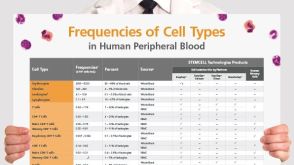 挂图血液相关来源中人细胞类型的比例 List of the frequencies of over 35 cell types in normal human blood-related sources.

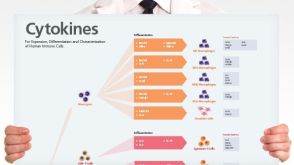 挂图Human Immune Cytokines Infographic of key cytokines for expansion, differentiation and characterization of major immune cell types

 沪公网安备31010102008431号