Heinonen KM et al. (FEB 2006)
Proceedings of the National Academy of Sciences of the United States of America 103 8 2776--81
Protein tyrosine phosphatase 1B negatively regulates macrophage development through CSF-1 signaling.
Protein tyrosine phosphatase 1B (PTP-1B) is a ubiquitously expressed cytosolic phosphatase with the ability to dephosphorylate JAK2 and TYK2,and thereby down-regulate cytokine receptor signaling. Furthermore,PTP-1B levels are up-regulated in certain chronic myelogenous leukemia patients,which points to a potential role for PTP-1B in myeloid development. The results presented here show that the absence of PTP-1B affects murine myelopoiesis by modifying the ratio of monocytes to granulocytes in vivo. This bias toward monocytic development is at least in part due to a decreased threshold of response to CSF-1,because the PTP-1B -/- bone marrow presents no abnormalities at the granulocyte-monocyte progenitor level but produces significantly more monocytic colonies in the presence of CSF-1. This phenomenon is not due to an increase in receptor levels but rather to enhanced phosphorylation of the activation loop tyrosine. PTP-1B -/- cells display increased inflammatory activity in vitro and in vivo through the constitutive up-regulation of activation markers as well as increased sensitivity to endotoxin. Collectively,our data indicate that PTP-1B is an important modulator of myeloid differentiation and macrophage activation in vivo and provide a demonstration of a physiological role for PTP-1B in immune regulation.
View Publication
产品号#:
03231
03434
03444
产品名:
MethoCult™ M3231
MethoCult™ GF M3434
MethoCult™ GF M3434
Bai M et al. ( 2017)
Blood 130 19 2092--2100
CD177 modulates human neutrophil migration through activation-mediated integrin and chemoreceptor regulation.
CD177 is a glycosylphosphatidylinositol (GPI)-anchored protein expressed by a variable proportion of human neutrophils that mediates surface expression of the antineutrophil cytoplasmic antibody antigen proteinase 3. CD177 associates with β2 integrins and recognizes platelet endothelial cell adhesion molecule 1 (PECAM-1),suggesting a role in neutrophil migration. However,CD177pos neutrophils exhibit no clear migratory advantage in vivo,despite interruption of in vitro transendothelial migration by CD177 ligation. We sought to understand this paradox. Using a PECAM-1-independent transwell system,we found that CD177pos and CD177neg neutrophils migrated comparably. CD177 ligation selectively impaired migration of CD177pos neutrophils,an effect mediated through immobilization and cellular spreading on the transwell membrane. Correspondingly,CD177 ligation enhanced its interaction with β2 integrins,as revealed by fluorescence lifetime imaging microscopy,leading to integrin-mediated phosphorylation of Src and extracellular signal-regulated kinase (ERK). CD177-driven cell activation enhanced surface β2 integrin expression and affinity,impaired internalization of integrin attachments,and resulted in ERK-mediated attenuation of chemokine signaling. We conclude that CD177 signals in a β2 integrin-dependent manner to orchestrate a set of activation-mediated mechanisms that impair human neutrophil migration.
View Publication
Neutrophil development and function critically depend on Bruton tyrosine kinase in a mouse model of X-linked agammaglobulinemia.
Bruton tyrosine kinase (Btk) is essential for B cell development and function and also appears to be important for myeloid cells. The bone marrow of Btk-deficient mice shows enhanced granulopoiesis compared with that of wild-type mice. In purified granulocyte-monocyte-progenitors (GMP) from Btk-deficient mice,the development of granulocytes is favored at the expense of monocytes. However,Btk-deficient neutrophils are impaired in maturation and function. Using bone marrow chimeras,we show that this defect is cell-intrinsic to neutrophils. In GMP and neutrophils,Btk plays a role in GM-CSF- and Toll-like receptor-induced differentiation. Molecular analyses revealed that expression of the lineage-determining transcription factors C/EBPα,C/EBPβ,and PU.1,depends on Btk. In addition,expression of several granule proteins,including myeloperoxidase,neutrophilic granule protein,gelatinase and neutrophil elastase,is Btk-dependent. In the Arthus reaction,an acute inflammatory response,neutrophil migration into tissues,edema formation,and hemorrhage are significantly reduced in Btk-deficient animals. Together,our findings implicate Btk as an important regulator of neutrophilic granulocyte maturation and function in vivo.
View Publication
产品号#:
03231
产品名:
MethoCult™ M3231
Costantini C et al. (OCT 2010)
International immunology 22 10 827--38
Neutrophil activation and survival are modulated by interaction with NK cells.
It is increasingly evident that neutrophils are able to cross-talk with other leukocytes to shape ongoing inflammatory and immune responses. In this study,we analyzed whether human NK cells may influence the survival and activation of neutrophils under co-culture conditions. We report that NK cells exposed to either IL-15 or IL-18 alone strongly protect the survival of neutrophils via the release of IFNγ and granulocyte macrophage colony-stimulating factor (GM-CSF) plus IFNγ,respectively,and cause a slight up-regulation of neutrophil CD64 and CD11b expression. In comparison,NK cells exposed to both IL-15 and IL-18 show a lesser ability to increase the survival of neutrophils but can more potently up-regulate CD64 and CD11b expression,as well as induce the de novo surface expression of CD69,in neutrophils. Analysis of the events occurring in neutrophil/NK co-cultures exposed to IL-15 plus IL-18 revealed that (i) neutrophil survival is positively affected by NK-derived GM-CSF but negatively influenced by a CD18-dependent neutrophil/NK contact,(ii) NK-derived IFNγ is almost entirely responsible for the induction of CD64,(iii) both soluble factors (primarily GM-CSF) and direct cell-cell contact up-regulate CD11b and CD69 and (iv) NK-derived GM-CSF induces the expression of biologically active heparin-binding EGF-like growth factor (HB-EGF) in neutrophils. Finally,we demonstrate that NK cells can also express HB-EGF when stimulated with either IL-2 or IL-15,yet independently of endogenous GM-CSF. Altogether,our results define a novel interaction within the innate immune system whereby NK cells,by directly modulating neutrophil functions,might contribute to the pathogenesis of inflammatory diseases.
View Publication


 EasySep™小鼠TIL(CD45)正选试剂盒




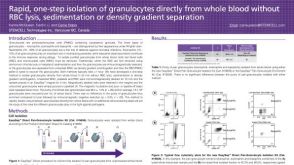 科学海报Rapid, one-step isolation of granulocytes directly from whole blood without RBC lysis, sedimentation or density spearation
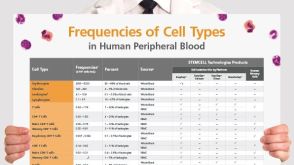 挂图血液相关来源中人细胞类型的比例 List of the frequencies of over 35 cell types in normal human blood-related sources.

 沪公网安备31010102008431号