Enforced expression of CUL-4A interferes with granulocytic differentiation and exit from the cell cycle.
The cullin family of proteins is involved in the ubiquitin-mediated degradation of cell cycle regulators. Relatively little is known about the function of the CUL-4A cullin,but its overexpression in breast cancer suggests CUL-4A might also regulate the cell cycle. In addition,since other cullins are required for normal development,we hypothesized that CUL-4A is involved in regulating cell cycle progression during differentiation. We observed that CUL-4A mRNA and protein levels decline 2.5-fold during the differentiation of PLB-985 myeloid cells into granulocytes. To examine the significance of this observation,we overexpressed CUL-4A in these cells and found that modest (textless 2-fold),enforced expression of CUL-4A attenuates terminal granulocytic differentiation and instead promotes proliferation. This overexpression similarly affects the differentiation of these cells into macrophages. We recently reported that nearly one half of CUL-4A+/- mice are nonviable,and in this report,we show that the viable heterozygous mice,which have reduced CUL-4A expression,have dramatically fewer erythroid and multipotential progenitors than normal controls. Together these results indicate that appropriate CUL-4A expression is essential for embryonic development and for cell cycle regulation during granulocytic differentiation and suggest this gene plays a broader role in hematopoiesis. Since enforced CUL-4A expression does not alter the cell cycle distribution of uninduced cells but dramatically increases the proportion of induced cells that remains in S-phase and reduces the proportion that accumulates in G0/G1,our results show that this CUL-4A regulatory function is interconnected with differentiation,a novel finding for mammalian cullins.
View Publication
产品号#:
03134
产品名:
MethoCult™ M3134
挂图
血液相关来源中人细胞类型的比例
List of the frequencies of over 35 cell types in normal human blood-related sources.
Heinonen KM et al. (FEB 2006)
Proceedings of the National Academy of Sciences of the United States of America 103 8 2776--81
Protein tyrosine phosphatase 1B negatively regulates macrophage development through CSF-1 signaling.
Protein tyrosine phosphatase 1B (PTP-1B) is a ubiquitously expressed cytosolic phosphatase with the ability to dephosphorylate JAK2 and TYK2,and thereby down-regulate cytokine receptor signaling. Furthermore,PTP-1B levels are up-regulated in certain chronic myelogenous leukemia patients,which points to a potential role for PTP-1B in myeloid development. The results presented here show that the absence of PTP-1B affects murine myelopoiesis by modifying the ratio of monocytes to granulocytes in vivo. This bias toward monocytic development is at least in part due to a decreased threshold of response to CSF-1,because the PTP-1B -/- bone marrow presents no abnormalities at the granulocyte-monocyte progenitor level but produces significantly more monocytic colonies in the presence of CSF-1. This phenomenon is not due to an increase in receptor levels but rather to enhanced phosphorylation of the activation loop tyrosine. PTP-1B -/- cells display increased inflammatory activity in vitro and in vivo through the constitutive up-regulation of activation markers as well as increased sensitivity to endotoxin. Collectively,our data indicate that PTP-1B is an important modulator of myeloid differentiation and macrophage activation in vivo and provide a demonstration of a physiological role for PTP-1B in immune regulation.
View Publication
Neutrophil development and function critically depend on Bruton tyrosine kinase in a mouse model of X-linked agammaglobulinemia.
Bruton tyrosine kinase (Btk) is essential for B cell development and function and also appears to be important for myeloid cells. The bone marrow of Btk-deficient mice shows enhanced granulopoiesis compared with that of wild-type mice. In purified granulocyte-monocyte-progenitors (GMP) from Btk-deficient mice,the development of granulocytes is favored at the expense of monocytes. However,Btk-deficient neutrophils are impaired in maturation and function. Using bone marrow chimeras,we show that this defect is cell-intrinsic to neutrophils. In GMP and neutrophils,Btk plays a role in GM-CSF- and Toll-like receptor-induced differentiation. Molecular analyses revealed that expression of the lineage-determining transcription factors C/EBPα,C/EBPβ,and PU.1,depends on Btk. In addition,expression of several granule proteins,including myeloperoxidase,neutrophilic granule protein,gelatinase and neutrophil elastase,is Btk-dependent. In the Arthus reaction,an acute inflammatory response,neutrophil migration into tissues,edema formation,and hemorrhage are significantly reduced in Btk-deficient animals. Together,our findings implicate Btk as an important regulator of neutrophilic granulocyte maturation and function in vivo.
View Publication
产品号#:
03231
产品名:
MethoCult™ M3231
Costantini C et al. (OCT 2010)
International immunology 22 10 827--38
Neutrophil activation and survival are modulated by interaction with NK cells.
It is increasingly evident that neutrophils are able to cross-talk with other leukocytes to shape ongoing inflammatory and immune responses. In this study,we analyzed whether human NK cells may influence the survival and activation of neutrophils under co-culture conditions. We report that NK cells exposed to either IL-15 or IL-18 alone strongly protect the survival of neutrophils via the release of IFNγ and granulocyte macrophage colony-stimulating factor (GM-CSF) plus IFNγ,respectively,and cause a slight up-regulation of neutrophil CD64 and CD11b expression. In comparison,NK cells exposed to both IL-15 and IL-18 show a lesser ability to increase the survival of neutrophils but can more potently up-regulate CD64 and CD11b expression,as well as induce the de novo surface expression of CD69,in neutrophils. Analysis of the events occurring in neutrophil/NK co-cultures exposed to IL-15 plus IL-18 revealed that (i) neutrophil survival is positively affected by NK-derived GM-CSF but negatively influenced by a CD18-dependent neutrophil/NK contact,(ii) NK-derived IFNγ is almost entirely responsible for the induction of CD64,(iii) both soluble factors (primarily GM-CSF) and direct cell-cell contact up-regulate CD11b and CD69 and (iv) NK-derived GM-CSF induces the expression of biologically active heparin-binding EGF-like growth factor (HB-EGF) in neutrophils. Finally,we demonstrate that NK cells can also express HB-EGF when stimulated with either IL-2 or IL-15,yet independently of endogenous GM-CSF. Altogether,our results define a novel interaction within the innate immune system whereby NK cells,by directly modulating neutrophil functions,might contribute to the pathogenesis of inflammatory diseases.
View Publication


 EasySep™小鼠TIL(CD45)正选试剂盒




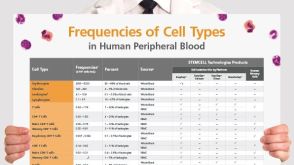 挂图血液相关来源中人细胞类型的比例 List of the frequencies of over 35 cell types in normal human blood-related sources.
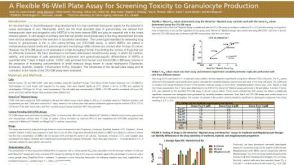 科学海报A Flexible 96-Well Plate Assay for Screening Toxicity to Granulocyte Production

 沪公网安备31010102008431号