Distinct signals control the hematopoiesis of lymphoid-related dendritic cells.
The molecular and cellular requirements for the development of different populations of human dendritic cells (DC) were studied. Conditions were defined that support DC production from lymphoid progenitors but that fail to induce DC formation from peripheral monocytes. The production of these lymphoid-related DC was severely blocked when hematopoietic progenitors overexpressed Ik7,a mutant dominant-negative Ikaros protein. In contrast,Ik7 did not block the formation of DC in conditions supporting the development of monocyte-derived DC. Furthermore,Ik7 did not block the formation of monocyte/macrophages and enhanced granulopoiesis. One of the molecular mechanisms mediated by Ik7 appears to be down-regulation of the flt3-receptor mRNA. Thus,distinct signals control the formation of DC demonstrating that some aspects of DC diversity are determined in part by distinct molecular cues at the hematopoietic level. (Blood. 2000;95:128-137)
View Publication
产品号#:
04431
产品名:
MethoCult™ H4431
Dadaglio G et al. (MAR 2002)
Journal of immunology (Baltimore,Md. : 1950) 168 5 2219--24
Efficient in vivo priming of specific cytotoxic T cell responses by neonatal dendritic cells.
In early life,a high susceptibility to infectious diseases as well as a poor capacity to respond to vaccines are generally observed as compared with observations in adults. The mechanisms underlying immune immaturity have not been fully elucidated and could be due to the immaturity of the T/B cell responses and/or to a defect in the nature and quality of Ag presentation by the APC. This prompted us to phenotypically and functionally characterize early life murine dendritic cells (DC) purified from spleens of 7-day-old mice. We showed that neonatal CD11c(+) DC express levels of costimulatory molecules and MHC molecules similar to those of adult DC and are able to fully maturate after LPS activation. Furthermore,we demonstrated that neonatal DC can efficiently take up,process,and present Ag to T cells in vitro and induce specific CTL responses in vivo. Although a reduced number of these cells was observed in the spleen of neonatal mice as compared with adults,this study clearly shows that neonatal DC have full functional capacity and may well prime Ag-specific naive T cells in vivo.
View Publication
产品号#:
09600
09650
产品名:
StemSpan™ SFEM
StemSpan™ SFEM
Figueroa G et al. (OCT 2016)
Journal of visualized experiments : JoVE 116
Characterization of Human Monocyte-derived Dendritic Cells by Imaging Flow Cytometry: A Comparison between Two Monocyte Isolation Protocols.
Dendritic cells (DCs) are antigen presenting cells of the immune system that play a crucial role in lymphocyte responses,host defense mechanisms,and pathogenesis of inflammation. Isolation and study of DCs have been important in biological research because of their distinctive features. Although they are essential key mediators of the immune system,DCs are very rare in blood,accounting for approximately 0.1 - 1% of total blood mononuclear cells. Therefore,alternatives for isolation methods rely on the differentiation of DCs from monocytes isolated from peripheral blood mononuclear cells (PBMCs). The utilization of proper isolation techniques that combine simplicity,affordability,high purity,and high yield of cells is imperative to consider. In the current study,two distinct methods for the generation of DCs will be compared. Monocytes were selected by adherence or negatively enriched using magnetic separation procedure followed by differentiation into DCs with IL-4 and GM-CSF. Monocyte and MDDC viability,proliferation,and phenotype were assessed using viability dyes,MTT assay,and CD11c/ CD14 surface marker analysis by imaging flow cytometry. Although the magnetic separation method yielded a significant higher percentage of monocytes with higher proliferative capacity when compared to the adhesion method,the findings have demonstrated the ability of both techniques to simultaneously generate monocytes that are capable of proliferating and differentiating into viable CD11c+ MDDCs after seven days in culture. Both methods yielded textgreater 70% CD11c+ MDDCs. Therefore,our results provide insights that contribute to the development of reliable methods for isolation and characterization of human DCs.
View Publication
产品号#:
19059
19059RF
产品名:
EasySep™人单核细胞富集试剂盒
RoboSep™ 人单核细胞富集试剂盒含滤芯吸头
Tyagi RK et al. (FEB 2017)
Scientific reports 7 41083
Human IDO-competent, long-lived immunoregulatory dendritic cells induced by intracellular pathogen, and their fate in humanized mice.
Targeting of myeloid-dendritic cell receptor DC-SIGN by numerous chronic infectious agents,including Porphyromonas gingivalis,is shown to drive-differentiation of monocytes into dysfunctional mDCs. These mDCs exhibit alterations of their fine-tuned homeostatic function and contribute to dysregulated immune-responses. Here,we utilize P. gingivalis mutant strains to show that pathogen-differentiated mDCs from primary human-monocytes display anti-apoptotic profile,exhibited by elevated phosphorylated-Foxo1,phosphorylated-Akt1,and decreased Bim-expression. This results in an overall inhibition of DC-apoptosis. Direct stimulation of complex component CD40 on DCs leads to activation of Akt1,suggesting CD40 involvement in anti-apoptotic effects observed. Further,these DCs drove dampened CD8(+) T-cell and Th1/Th17 effector-responses while inducing CD25(+)Foxp3(+)CD127(-) Tregs. In vitro Treg induction was mediated by DC expression of indoleamine 2,3-dioxygenase,and was confirmed in IDO-KO mouse model. Pathogen-infected &CMFDA-labeled MoDCs long-lasting survival was confirmed in a huMoDC reconstituted humanized mice. In conclusion,our data implicate PDDCs as an important target for resolution of chronic infection.
View Publication


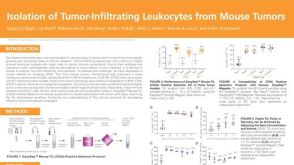
 EasySep™小鼠TIL(CD45)正选试剂盒




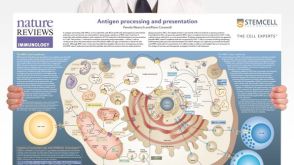 挂图Antigen Processing and Presentation Overview of the mechanisms by which antigens are processed and presented to T cells



 沪公网安备31010102008431号