Poulsen C et al. (AUG 2015)
Toxicology letters 237 1 21--9
Differential cytotoxicity of long-chain bases for human oral gingival epithelial keratinocytes, oral fibroblasts, and dendritic cells.
Long-chain bases are present in the oral cavity. Previously we determined that sphingosine,dihydrosphingosine,and phytosphingosine have potent antimicrobial activity against oral pathogens. Here,we determined the cytotoxicities of long-chain bases for oral cells,an important step in considering their potential as antimicrobial agents for oral infections. This information would clearly help in establishing prophylactic or therapeutic doses. To assess this,human oral gingival epithelial (GE) keratinocytes,oral gingival fibroblasts (GF),and dendritic cells (DC) were exposed to 10.0-640.0 μM long-chain bases and glycerol monolaurate (GML). The effects of long-chain bases on cell metabolism (conversion of resazurin to resorufin),membrane permeability (uptake of propidium iodide or SYTOX-Green),release of cellular contents (LDH),and cell morphology (confocal microscopy) were all determined. GE keratinocytes were more resistant to long-chain bases as compared to GF and DC,which were more susceptible. For DC,0.2-10.0 μM long-chain bases and GML were not cytotoxic; 40.0-80.0 μM long-chain bases,but not GML,were cytotoxic; and 80.0 μM long-chain bases induced cellular damage and death in less than 20 min. The LD50 of long-chain bases for GE keratinocytes,GF,and DC were considerably higher than their minimal inhibitory concentrations for oral pathogens,a finding important to pursuing their future potential in treating periodontal and oral infections.
View Publication
产品号#:
70041
产品名:
Laumont C et al. (JAN 2016)
Nature Communications 7 10238
Global proteogenomic analysis of human MHC class I-associated peptides derived from non-canonical reading frames.
In view of recent reports documenting pervasive translation outside of canonical protein-coding sequences,we wished to determine the proportion of major histocompatibility complex (MHC) class I-associated peptides (MAPs) derived from non-canonical reading frames. Here we perform proteogenomic analyses of MAPs eluted from human B cells using high-throughput mass spectrometry to probe the six-frame translation of the B-cell transcriptome. We report that ∼ 10% of MAPs originate from allegedly noncoding genomic sequences or exonic out-of-frame translation. The biogenesis and properties of these 'cryptic MAPs' differ from those of conventional MAPs. Cryptic MAPs come from very short proteins with atypical C termini,and are coded by transcripts bearing long 3'UTRs enriched in destabilizing elements. Relative to conventional MAPs,cryptic MAPs display different MHC class I-binding preferences and harbour more genomic polymorphisms,some of which are immunogenic. Cryptic MAPs increase the complexity of the MAP repertoire and enhance the scope of CD8 T-cell immunosurveillance.
View Publication
产品号#:
产品名:
Onai N et al. (JAN 2006)
The Journal of experimental medicine 203 1 227--38
Activation of the Flt3 signal transduction cascade rescues and enhances type I interferon-producing and dendritic cell development.
Flt3 ligand (Flt3L) is a nonredundant cytokine in type I interferon-producing cell (IPC) and dendritic cell (DC) development,and IPC and DC differentiation potential is confined to Flt3+ hematopoietic progenitor cells. Here,we show that overexpression of human Flt3 in Flt3- (Flt3(-)Lin(-)IL-7Ralpha(-)Thy1.1(-)c-Kit+) and Flt3+ (Flt3(+)Lin(-)IL-7Ralpha(-)Thy1.1(-)c-Kit+) hematopoietic progenitors rescues and enhances their IPC and DC differentiation potential,respectively. In defined hematopoietic cell populations,such as Flt3- megakaryocyte/erythrocyte-restricted progenitors (MEPs),enforced Flt3 signaling induces transcription of IPC,DC,and granulocyte/macrophage (GM) development-affiliated genes,including STAT3,PU.1,and G-/M-/GM-CSFR,and activates differentiation capacities to these lineages. Moreover,ectopic expression of Flt3 downstream transcription factors STAT3 or PU.1 in Flt3- MEPs evokes Flt3 receptor expression and instructs differentiation into IPCs,DCs,and myelomonocytic cells,whereas GATA-1 expression and consecutive megakaryocyte/erythrocyte development is suppressed. Based on these data,we propose a demand-regulated,cytokine-driven DC and IPC regeneration model,in which high Flt3L levels initiate a self-sustaining,Flt3-STAT3- and Flt3-PU.1-mediated IPC and DC differentiation program in Flt3+ hematopoietic progenitor cells.
View Publication
产品号#:
04100
产品名:
MethoCult™ H4100
Imbert A-M et al. (OCT 2006)
Blood 108 8 2578--86
CD99 expressed on human mobilized peripheral blood CD34+ cells is involved in transendothelial migration.
Hematopoietic progenitor cell trafficking is an important phenomenon throughout life. It is thought to occur in sequential steps,similar to what has been described for mature leukocytes. Molecular actors have been identified for each step of leukocyte migration; recently,CD99 was shown to play a part during transendothelial migration. We explored the expression and role of CD99 on human hematopoietic progenitors. We demonstrate that (1) CD34+ cells express CD99,albeit with various intensities; (2) subsets of CD34+ cells with high or low levels of CD99 expression produce different numbers of erythroid,natural killer (NK),or dendritic cells in the in vitro differentiation assays; (3) the level of CD99 expression is related to the ability to differentiate toward B cells; (4) CD34+ cells that migrate through an endothelial monolayer in response to SDF-1alpha and SCF display the highest level of CD99 expression; (5) binding of a neutralizing antibody to CD99 partially inhibits transendothelial migration of CD34+ progenitors in an in vitro assay; and (6) binding of a neutralizing antibody to CD99 reduces homing of CD34+ progenitors xenotransplanted in NOD-SCID mice. We conclude that expression of CD99 on human CD34+ progenitors has functional significance and that CD99 may be involved in transendothelial migration of progenitors.
View Publication
产品号#:
01700
01705
04230
01702
产品名:
ALDEFLUOR™ 试剂盒
ALDEFLUOR™ DEAB试剂, 1.5 mM, 1 mL
MethoCult™ H4230
ALDEFLUOR™检测缓冲液
G. B. Cross et al. ( 2019)
PloS one 14 5 e0216616
Impact of selective immune-cell depletion on growth of Mycobacterium tuberculosis (Mtb) in a whole-blood bactericidal activity (WBA) assay.
We investigated the contribution of host immune cells to bacterial killing in a whole-blood bactericidal activity (WBA) assay,an ex vivo model used to test efficacy of drugs against mycobacterium tuberculosis (Mtb). We performed WBA assays with immuno-magnetic depletion of specific cell types,in the presence or absence of rifampicin. Innate immune cells decreased Mtb growth in absence of drug,but appeared to diminish the cidal activity of rifampicin,possibly attributable to intracellular bacterial sequestration. Adaptive immune cells had no effect with or without drug. The WBA assay may have potential for testing adjunctive host-directed therapies acting on phagocytic cells.
View Publication


 EasySep™小鼠TIL(CD45)正选试剂盒




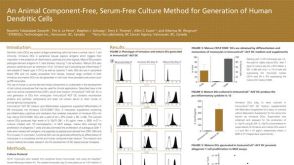 科学海报An Animal Component-Free, Serum-Free Culture Method for Generation of Human Dendritic Cells
 技术公告Achieve Scalable, High-Quality Nucleic Acid Extractions with the EasySep™ Total Nucleic Acid Extraction Kit



 沪公网安备31010102008431号