Fischbach NA et al. (FEB 2005)
Blood 105 4 1456--66
HOXB6 overexpression in murine bone marrow immortalizes a myelomonocytic precursor in vitro and causes hematopoietic stem cell expansion and acute myeloid leukemia in vivo.
The HOX family of homeobox genes plays an important role in normal and malignant hematopoiesis. Dysregulated HOX gene expression profoundly effects the proliferation and differentiation of hematopoietic stem cells (HSCs) and committed progenitors,and aberrant activation of HOX genes is a common event in human myeloid leukemia. HOXB6 is frequently overexpressed in human acute myeloid leukemia (AML). To gain further insight into the role of HOXB6 in hematopoiesis,we overexpressed HOXB6 in murine bone marrow using retrovirus-mediated gene transfer. We also explored structure-function relationships using mutant HOXB6 proteins unable to bind to DNA or a key HOX-binding partner,pre-B-cell leukemia transcription factor-1 (PBX1). Additionally,we investigated the potential cooperative interaction with myeloid ecotropic viral integration site 1 homolog (MEIS1). In vivo,HOXB6 expanded HSCs and myeloid precursors while inhibiting erythropoiesis and lymphopoiesis. Overexpression of HOXB6 resulted in AML with a median latency of 223 days. Coexpression of MEIS1 dramatically shortened the onset of AML. Cytogenetic analysis of a subset of HOXB6-induced AMLs revealed recurrent deletions of chromosome bands 2D-E4,a region frequently deleted in HOXA9-induced AMLs. In vitro,HOXB6 immortalized a factor-dependent myelomonocytic precursor capable of granulocytic and monocytic differentiation. These biologic effects of HOXB6 were largely dependent on DNA binding but independent of direct interaction with PBX1.
View Publication
产品号#:
03434
03444
28600
产品名:
MethoCult™ GF M3434
MethoCult™ GF M3434
L-Calc™有限稀释软件
Doyonnas R et al. (SEP 2004)
Proceedings of the National Academy of Sciences of the United States of America 101 37 13507--12
Hematopoietic contribution to skeletal muscle regeneration by myelomonocytic precursors.
Adult bone marrow-derived cells can participate in muscle regeneration after bone marrow transplantation. In recent studies a single hematopoietic stem cell (HSC) was shown to give rise to cells that not only reconstituted all of the lineages of the blood,but also contributed to mature muscle fibers. However,the relevant HSC derivative with this potential has not yet been definitively identified. Here we use fluorescence-activated cell sorter-based protocols to test distinct hematopoietic fractions and show that only fractions containing c-kit(+) immature myelomonocytic precursors are capable of contributing to muscle fibers after i.m. injection. Although these cells belong to the myeloid lineage,they do not include mature CD11b(+) myelomonocytic cells,such as macrophages. Of the four sources of mature macrophages tested that were derived either from monocytic culture,bone marrow,peripheral blood after granulocyte colony-stimulating factor mobilization,or injured muscle,none contributed to muscle. In addition,after transplantation of bone marrow isolated from CD11b-Cre-transgenic mice into the Cre-reporter strain (Z/EG),no GFP myofibers were detected,demonstrating that macrophages expressing CD11b do not fuse with myofibers. Irrespective of the underlying mechanisms,these data suggest that the HSC derivatives that integrate into regenerating muscle fibers exist in the pool of hematopoietic cells known as myelomonocytic progenitors.
View Publication
产品号#:
03434
03444
产品名:
MethoCult™ GF M3434
MethoCult™ GF M3434
Gurevich RM et al. (AUG 2004)
Blood 104 4 1127--36
NUP98-topoisomerase I acute myeloid leukemia-associated fusion gene has potent leukemogenic activities independent of an engineered catalytic site mutation.
Chromosomal rearrangements of the 11p15 locus have been identified in hematopoietic malignancies,resulting in translocations involving the N-terminal portion of the nucleoporin gene NUP98. Fifteen different fusion partner genes have been identified for NUP98,and more than one half of these are homeobox transcription factors. By contrast,the NUP98 fusion partner in t(11;20) is Topoisomerase I (TOP1),a catalytic enzyme recognized for its key role in relaxing supercoiled DNA. We now show that retrovirally engineered expression of NUP98-TOP1 in murine bone marrow confers a potent in vitro growth advantage and a block in differentiation in hematopoietic precursors,evidenced by a competitive growth advantage in liquid culture,increased replating efficient of colony-forming cells (CFCs),and a marked increase in spleen colony-forming cell output. Moreover,in a murine bone marrow transplantation model,NUP98-TOP1 expression led to a lethal,transplantable leukemia characterized by extremely high white cell counts,splenomegaly,and mild anemia. Strikingly,a mutation to a TOP1 site to inactivate the isomerase activity essentially left unaltered the growth-promoting and leukemogenic effects of NUP98-TOP1. These findings,together with similar biologic effects reported for NUP98-HOX fusions,suggest unexpected,overlapping functions of NUP98 fusion genes,perhaps related to common DNA binding properties.
View Publication
产品号#:
03234
03434
03444
产品名:
MethoCult™ M3234
MethoCult™ GF M3434
MethoCult™ GF M3434
Morrow M et al. (MAY 2004)
Blood 103 10 3890--6
TEL-AML1 promotes development of specific hematopoietic lineages consistent with preleukemic activity.
The t(12;21)(p13;q22) translocation is the most common chromosomal abnormality yet identified in any pediatric leukemia and gives rise to the TEL-AML1 fusion product. To investigate the effects of TEL-AML1 on hematopoiesis,fetal liver hematopoietic progenitor cells (HPCs) were transduced with retroviral vectors expressing this fusion protein. We show that TEL-AML1 dramatically alters differentiation of HPCs in vitro,preferentially promoting B-lymphocyte development,enhancing self-renewal of B-cell precursors,and leading to the establishment of long-term growth factor-dependent pre-B-cell lines. However,it had no effect on myeloid development in vitro. Further experiments were performed to determine whether TEL-AML1 also demonstrates lineage-specific activity in vivo. TEL-AML1-expressing HPCs displayed a competitive advantage in reconstituting both B-cell and myeloid lineages in vivo but had no effect on reconstitution of the T-cell lineage. Despite promoting these alterations in hematopoiesis,TEL-AML1 did not induce leukemia in transplanted mice. Our study provides a unique insight into the role of TEL-AML1 in leukemia predisposition and a potential model to study the mechanism of leukemogenesis associated with this fusion.
View Publication
产品号#:
03534
03231
产品名:
MethoCult™ GF M3534
MethoCult™ M3231
Johnson JJ et al. (APR 2003)
Blood 101 8 3229--35
Prenatal and postnatal myeloid cells demonstrate stepwise progression in the pathogenesis of MLL fusion gene leukemia.
The steps to leukemia following an in utero fusion of MLL (HRX,ALL-1) to a partner gene in humans are not known. Introduction of the Mll-AF9 fusion gene into embryonic stem cells results in leukemia in mice with cell-type specificity similar to humans. In this study we used myeloid colony assays,immunophenotyping,and transplantation to evaluate myelopoiesis in Mll-AF9 mice. Colony assays demonstrated that both prenatal and postnatal Mll-AF9 tissues have significantly increased numbers of CD11b(+)/CD117(+)/Gr-1(+/-) myeloid cells,often in compact clusters. The self-renewal capacity of prenatal myeloid progenitors was found to decrease following serial replating of colony-forming cells. In contrast,early postnatal myeloid progenitors increased following replating; however,the enhanced self-renewal of early postnatal myeloid progenitor cells was limited and did not result in long-term cell lines or leukemia in vivo. Unlimited replating,long-term CD11b/Gr-1(+) myeloid cell lines,and the ability to produce early leukemia in vivo in transplantation experiments,were found only in mice with overt leukemia. Prenatal Mll-AF9 tissues had reduced total (mature and progenitor) CD11b/Gr-1(+) cells compared with wild-type tissues. Colony replating,immunophenotyping,and cytochemistry suggest that any perturbation of cellular differentiation from the prenatal stage onward is partial and largely reversible. We describe a novel informative in vitro and in vivo model system that permits study of the stages in the pathogenesis of Mll fusion gene leukemia,beginning in prenatal myeloid cells,progressing to a second stage in the postnatal period and,finally,resulting in overt leukemia in adult animals.
View Publication
产品号#:
03534
产品名:
MethoCult™ GF M3534
Scappini B et al. (DEC 2001)
Clinical cancer research : an official journal of the American Association for Cancer Research 7 12 3884--93
Effects of signal transduction inhibitor 571 in acute myelogenous leukemia cells.
STI571 is a 2-phenylalaminopyrimidine derivative that inhibits c-abl,Bcr-Abl,and platelet-derived growth factor receptor tyrosine kinases. Recently,inhibition of stem cell factor (SCF)-induced c-kit phosphorylation and cell proliferation by STI571 was reported in the human myeloid cell line MO7e. Because approximately 70% of acute myelogenous leukemia (AML) cases are c-kit positive,we evaluated in vitro effects of STI571 on c-kit-positive cell lines and primary AML blast cells. At concentrations textgreater5 microM,the drug marginally inhibited SCF-independent proliferation of cell lines and most of AML blasts. Treatment of AML cells with cytarabine and STI571 showed synergistic effect at low concentrations. Western blotting analysis documented a distinct band of M(r) 145,000 specific for c-kit in cell lines and in AML samples. There was no correlation between the level of the c-kit expression evaluated by Western blotting and percentage of c-kit-positive blasts as measured by flow cytometry. Neither in cell lines nor in primary AML cells,c-kit autophosphorylation was detectable under standard growth conditions. SCF-induced phosphorylation of c-kit in MO7e cells was inhibited by STI571. In a c-kit-positive AML-4 cell line,as well as in AML samples,c-kit phosphorylation was not induced by SCF exposure,suggesting that in these cases,the receptor could not be functionally activated. In conclusion,with the exception of MO7e,SCF did not induce phosphorylation of c-kit,and cell proliferation was not modulated in the presence of STI571. We did not detect any SCF-independent c-kit phosphorylation in our experimental systems. Consequently,STI571 exerted only a limited inhibitory effect on the cell growth.
View Publication
Guo L et al. (AUG 2011)
Molecular pharmacology 80 2 321--7
DNA-dependent protein kinase and ataxia telangiectasia mutated (ATM) promote cell survival in response to NK314, a topoisomerase IIα inhibitor.
4-Hydroxy-5-methoxy-2,3-dihydro-1H-[1,3]benzodioxolo[5,6-c]pyrrolo[1,2-f]-phenanthridium chloride (NK314) is a benzo[c] phenanthridine alkaloid that inhibits topoisomerase IIα,leading to the generation of DNA double-strand breaks (DSBs) and activating the G(2) checkpoint pathway. The purpose of the present studies was to investigate the DNA intercalating properties of NK314,to evaluate the DNA repair mechanisms activated in cells that may lead to resistance to NK314,and to develop mechanism-based combination strategies to maximize the antitumor effect of the compound. A DNA unwinding assay indicated that NK314 intercalates in DNA,a property that likely cooperates with its ability to trap topoisomerase IIα in its cleavage complex form. The consequence of this is the formation of DNA DSBs,as demonstrated by pulsed-field gel electrophoresis and H2AX phosphorylation. Clonogenic assays demonstrated a significant sensitization in NK314-treated cells deficient in DNA-dependent protein kinase (DNA-PK) catalytic subunit,Ku80,ataxia telangiectasia mutated (ATM),BRCA2,or XRCC3 compared with wild-type cells,indicating that both nonhomologous end-joining and homologous recombination DNA repair pathways contribute to cell survival. Furthermore,both the DNA-PK inhibitor 8-(4-dibenzothienyl)-2-(4-morpholinyl)-4H-1-benzopyran-4-one (NU7441) and the ATM inhibitor 2-(4-morpholinyl)-6-(1-thianthrenyl)-4H-pyran-4-one (KU55933) significantly sensitized cells to NK314. We conclude that DNA-PK and ATM contribute to cell survival in response to NK314 and could be potential targets for abrogating resistance and maximizing the antitumor effect of NK314.
View Publication
产品号#:
04230
产品名:
MethoCult™ H4230
Malerba I et al. (OCT 2002)
Toxicological sciences : an official journal of the Society of Toxicology 69 2 433--8
In vitro myelotoxicity of propanil and 3,4-dichloroaniline on murine and human CFU-E/BFU-E progenitors.
Because of the wide use of pesticides for domestic and industrial purposes,the evaluation of their potential effects is of major concern for public health. The myelotoxicity of the herbicide propanil (3,4-dichloroproprioanilide) and its metabolite 3,4-dichloroaniline (DCA) is well documented in mice,but evidence that pesticides may severely compromise hematopoiesis in humans is lacking. In this study,an interspecies comparison of in vitro toxicity of these two compounds on murine and human burst- and colony-forming unit-erythrocyte (BFU-E,CFU-E) and colony-forming unit-granulocyte/macrophage (CFU-GM) progenitors,has been carried out. Murine bone marrow progenitors and human cord blood cells were exposed to propanil or DCA in doses ranging from 10 micro M to 1000 micro M,and the toxic effect was detected by a clonogenic assay with continuous exposure to the compounds. The results on murine cells indicate that the erythrocytic lineage is the most sensitive target for propanil and DCA. On the other hand,human progenitors seem to be less sensitive to the toxic effects of both compounds than murine progenitors at the same concentrations (IC(50) values are 305.2 +/- 22.6 micro M [total erythroid colonies] and textgreater500 micro M [CFU-GM] for propanil). Propanil was significantly more toxic to human erythroid progenitors than to human CFU-GM progenitors,as was found for the murine cells,emphasizing the role of the heme pathway as the target for propanil. These data confirm the evidence that the compounds investigated interfere with erythroid colony formation at different stages of the differentiation pathway and have different effects according to the dose.
View Publication


 EasySep™小鼠TIL(CD45)正选试剂盒




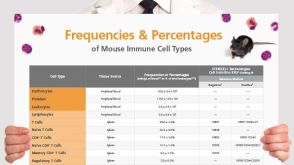 挂图Frequencies and Percentages of Mouse Immune Cell Types List of the frequencies of over 25 immune cell types in C57BL/6 mice


 沪公网安备31010102008431号