Vauchez K et al. (NOV 2009)
Molecular therapy : the journal of the American Society of Gene Therapy 17 11 1948--58
Aldehyde dehydrogenase activity identifies a population of human skeletal muscle cells with high myogenic capacities.
Aldehyde dehydrogenase 1A1 (ALDH) activity is one hallmark of human bone marrow (BM),umbilical cord blood (UCB),and peripheral blood (PB) primitive progenitors presenting high reconstitution capacities in vivo. In this study,we have identified ALDH(+) cells within human skeletal muscles,and have analyzed their phenotypical and functional characteristics. Immunohistofluorescence analysis of human muscle tissue sections revealed rare endomysial cells. Flow cytometry analysis using the fluorescent substrate of ALDH,Aldefluor,identified brightly stained (ALDH(br)) cells with low side scatter (SSC(lo)),in enzymatically dissociated muscle biopsies,thereafter abbreviated as SMALD(+) (for skeletal muscle ALDH(+)) cells. Phenotypical analysis discriminated two sub-populations according to CD34 expression: SMALD(+)/CD34(-) and SMALD(+)/CD34(+) cells. These sub-populations did not initially express endothelial (CD31),hematopoietic (CD45),and myogenic (CD56) markers. Upon sorting,however,whereas SMALD(+)/CD34(+) cells developed in vitro as a heterogeneous population of CD56(-) cells able to differentiate in adipoblasts,the SMALD(+)/CD34(-) fraction developed in vitro as a highly enriched population of CD56(+) myoblasts able to form myotubes. Moreover,only the SMALD(+)/CD34(-) population maintained a strong myogenic potential in vivo upon intramuscular transplantation. Our results suggest that ALDH activity is a novel marker for a population of new human skeletal muscle progenitors presenting a potential for cell biology and cell therapy.
View Publication
产品号#:
01700
01705
01701
01702
产品名:
ALDEFLUOR™ 试剂盒
ALDEFLUOR™ DEAB试剂, 1.5 mM, 1 mL
ALDEFLUOR™检测缓冲液
Steiner LA et al. (OCT 2009)
Molecular and cellular biology 29 20 5399--412
Chromatin architecture and transcription factor binding regulate expression of erythrocyte membrane protein genes.
Erythrocyte membrane protein genes serve as excellent models of complex gene locus structure and function,but their study has been complicated by both their large size and their complexity. To begin to understand the intricate interplay of transcription,dynamic chromatin architecture,transcription factor binding,and genomic organization in regulation of erythrocyte membrane protein genes,we performed chromatin immunoprecipitation (ChIP) coupled with microarray analysis and ChIP coupled with massively parallel DNA sequencing in both erythroid and nonerythroid cells. Unexpectedly,most regions of GATA-1 and NF-E2 binding were remote from gene promoters and transcriptional start sites,located primarily in introns. Cooccupancy with FOG-1,SCL,and MTA-2 was found at all regions of GATA-1 binding,with cooccupancy of SCL and MTA-2 also found at regions of NF-E2 binding. Cooccupancy of GATA-1 and NF-E2 was found frequently. A common signature of histone H3 trimethylation at lysine 4,GATA-1,NF-E2,FOG-1,SCL,and MTA-2 binding and consensus GATA-1-E-box binding motifs located 34 to 90 bp away from NF-E2 binding motifs was found frequently in erythroid cell-expressed genes. These results provide insights into our understanding of membrane protein gene regulation in erythropoiesis and the regulation of complex genetic loci in erythroid and nonerythroid cells and identify numerous candidate regions for mutations associated with membrane-linked hemolytic anemia.
View Publication
产品号#:
09600
09650
产品名:
StemSpan™ SFEM
StemSpan™ SFEM
Eminli S et al. (SEP 2009)
Nature genetics 41 9 968--76
Differentiation stage determines potential of hematopoietic cells for reprogramming into induced pluripotent stem cells.
The reprogramming of somatic cells into induced pluripotent stem (iPS) cells upon overexpression of the transcription factors Oct4,Sox2,Klf4 and cMyc is inefficient. It has been assumed that the somatic differentiation state provides a barrier for efficient reprogramming; however,direct evidence for this notion is lacking. Here,we tested the potential of mouse hematopoietic cells at different stages of differentiation to be reprogrammed into iPS cells. We show that hematopoietic stem and progenitor cells give rise to iPS cells up to 300 times more efficiently than terminally differentiated B and T cells do,yielding reprogramming efficiencies of up to 28%. Our data provide evidence that the differentiation stage of the starting cell has a critical influence on the efficiency of reprogramming into iPS cells. Moreover,we identify hematopoietic progenitors as an attractive cell type for applications of iPS cell technology in research and therapy.
View Publication
GATA1-Cre mediates Piga gene inactivation in the erythroid/megakaryocytic lineage and leads to circulating red cells with a partial deficiency in glycosyl phosphatidylinositol-linked proteins (paroxysmal nocturnal hemoglobinuria type II cells).
Patients with paroxysmal nocturnal hemoglobinuria (PNH) have blood cells deficient in glycosyl phosphatidylinositol (GPI)-linked proteins owing to a somatic mutation in the X-linked PIGA gene. To target Piga recombination to the erythroid/megakaryocytic lineage in mice,the Cre/loxP system was used,and Cre was expressed under the transcriptional regulatory sequences of GATA-1. Breeding of GATA1-cre (G) transgenic mice with mice carrying a floxed Piga (L) allele was associated with high embryonic lethality. However,double-transgenic (GL) mice that escaped early recombination looked healthy and were observed for 16 months. Flow cytometric analysis of peripheral blood cells showed that GL mice had up to 100% of red cells deficient in GPI-linked proteins. The loss of GPI-linked proteins on the cell surface occurred late in erythroid differentiation,causing a proportion of red cells to express low residual levels of GPI-linked proteins. Red cells with residual expression of GPI-linked proteins showed an intermediate sensitivity toward complement and thus resemble PNH type II cells in patients with PNH. Recombination of the floxed Piga allele was also detected in cultured megakaryocytes,mast cells,and eosinophils,but not in neutrophils,lymphocytes,or nonhematopoietic tissues. In summary,GATA1-Cre causes high-efficiency Piga gene inactivation in a GATA-1-specific pattern. For the first time,mice were generated that have almost 100% of red cells deficient in GPI-linked proteins. These animals will be valuable to further investigate the consequences of GPI-anchor deficiency on erythroid/megakaryocytic cells.
View Publication
产品号#:
05350
产品名:
Osada H et al. (APR 2001)
Transfusion 41 4 499--503
Detection of fetal HPCs in maternal circulation after delivery.
BACKGROUND: Circulation of mature fetal blood cells in the maternal blood for a certain postpartum period has been verified,but detailed study of the fetal HPCs has not been reported. The objective of this study was to evaluate the frequency and clearance of these cells in the peripheral blood of puerperal women. STUDY DESIGN AND METHODS: PBMNCs from 15 puerperal women who gave birth to male infants were cultured in semi-solid medium containing hematopoietic stimulating factors. Colonies formed in the medium were individually characterized,collected,and subjected to PCR amplification of the SRY gene on Y chromosome to confirm fetal origin. RESULTS: The mean numbers of fetal progenitor cell colonies isolated per mL of maternal blood were 1.63,2.48,0.56,0.12,and 0 on the day of delivery,at 4 days,1 month,6 months,and 1 year after delivery,respectively. There was no difference in the ratio of fetal versus maternal colonies between erythroid and granulocyte/macrophage lineages. CONCLUSION: The present study demonstrated that a significant number of fetal HPCs circulate in the maternal blood for a duration of at least 6 months after delivery.
View Publication
产品号#:
产品名:
Brandl M et al. (AUG 1999)
Experimental hematology 27 8 1264--70
Bispecific antibody fragments with CD20 X CD28 specificity allow effective autologous and allogeneic T-cell activation against malignant cells in peripheral blood and bone marrow cultures from patients with B-cell lineage leukemia and lymphoma.
Bispecific antibodies directed against tumor-associated target antigens and to surface receptors mediating T-cell activation,such as the TCR/CD3 complex and the costimulatory receptor CD28,are capable of mediating T-cell activation resulting in tumor cell killing. In this study,we used the B-cell-associated antigens CD19 and CD20 as target structures on human leukemic cells. We found that a combination of bispecific antibody fragments (bsFab2) with target x CD3 and target x CD28 specificity induces vigorous autologous T-cell activation and killing of malignant cells in peripheral blood and bone marrow cultures from patients with chronic lymphocytic leukemia and follicular lymphoma. The bsFab2 targeting CD20 were considerably more effective than those binding to CD19. The colony-forming capacity of treated bone marrow was impaired due to large amounts of tumor necrosis factor alpha produced during bsFab2-induced T-cell activation. Neutralizing tumor necrosis factor alpha antibodies were found to reverse this negative effect without affecting T-cell activation and tumor cell killing. CD20 x CD28 bsFab2,when used alone rather than in combination,markedly improved the recognition of leukemic cells by allogeneic T cells. Therefore,these reagents may be capable of enhancing the immunogenicity of leukemic cells in general and,in particular,of increasing the antileukemic activity of allogeneic donor buffy coat cells in relapsed bone marrow transplanted patients.
View Publication
产品号#:
04431
产品名:
MethoCult™ H4431
专家访谈
David Knapp, PhD
A Hematopoiesis Researcher's Goals,Challenges,and Needs for Superpowers
Ma N et al. (MAY 2015)
Journal of Biological Chemistry 290 19 12079--12089
Factor-induced Reprogramming and Zinc Finger Nuclease-aided Gene Targeting Cause Different Genome Instability in $\$-Thalassemia Induced Pluripotent Stem Cells (iPSCs).
The generation of personalized induced pluripotent stem cells (iPSCs) followed by targeted genome editing provides an opportunity for developing customized effective cellular therapies for genetic disorders. However,it is critical to ascertain whether edited iPSCs harbor unfavorable genomic variations before their clinical application. To examine the mutation status of the edited iPSC genome and trace the origin of possible mutations at different steps,we have generated virus-free iPSCs from amniotic cells carrying homozygous point mutations in beta-hemoglobin gene (HBB) that cause severe beta-thalassemia (beta-Thal),corrected the mutations in both HBB alleles by zinc finger nuclease-aided gene targeting,and obtained the final HBB gene-corrected iPSCs by excising the exogenous drug resistance gene with Cre recombinase. Through comparative genomic hybridization and whole-exome sequencing,we uncovered seven copy number variations,five small insertions/deletions,and 64 single nucleotide variations (SNVs) in beta-Thal iPSCs before the gene targeting step and found a single small copy number variation,19 insertions/deletions,and 340 single nucleotide variations in the final gene-corrected beta-Thal iPSCs. Our data revealed that substantial but different genomic variations occurred at factor-induced somatic cell reprogramming and zinc finger nuclease-aided gene targeting steps,suggesting that stringent genomic monitoring and selection are needed both at the time of iPSC derivation and after gene targeting.
View Publication


 EasySep™小鼠TIL(CD45)正选试剂盒




 技术窍门为ALDHbr检测分析设置对照和设门
 专家访谈David Knapp, PhD A Hematopoiesis Researcher's Goals,Challenges,and Needs for Superpowers
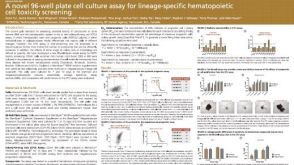 科学海报A Novel 96-well Plate Cell Culture Assay for Lineage-Specific Hematopoietic Cell Toxicity Screening
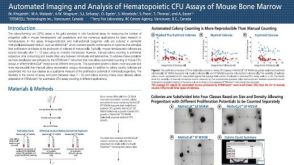 科学海报Automated Imaging and Analysis of Hematopoietic CFU Assays of Mouse Bone Marrow
 科学海报A Flexible 96-Well Plate Assay for Screening Toxicity to Granulocyte Production
 沪公网安备31010102008431号