Segregation of lipid raft markers including CD133 in polarized human hematopoietic stem and progenitor cells.
During ontogenesis and the entire adult life hematopoietic stem and progenitor cells have the capability to migrate. In comparison to the process of peripheral leukocyte migration in inflammatory responses,the molecular and cellular mechanisms governing the migration of these cells remain poorly understood. A common feature of migrating cells is that they need to become polarized before they migrate. Here we have investigated the issue of cell polarity of hematopoietic stem/progenitor cells in detail. We found that human CD34(+) hematopoietic cells (1) acquire a polarized cell shape upon cultivation,with the formation of a leading edge at the front pole and a uropod at the rear pole; (2) exhibit an amoeboid movement,which is similar to the one described for migrating peripheral leukocytes; and (3) redistribute several lipid raft markers including cholesterol-binding protein prominin-1 (CD133) in specialized plasma membrane domains. Furthermore,polarization of CD34(+) cells is stimulated by early acting cytokines and requires the activity of phosphoinositol-3-kinase as previously reported for peripheral leukocyte polarization. Together,our data reveal a strong correlation between polarization and migration of peripheral leukocytes and hematopoietic stem/progenitor cells and suggest that they are governed by similar mechanisms.
View Publication
产品号#:
05150
09850
产品名:
MyeloCult™ H5100
Hess DA et al. (SEP 2004)
Blood 104 6 1648--55
Functional characterization of highly purified human hematopoietic repopulating cells isolated according to aldehyde dehydrogenase activity.
Human hematopoietic stem cells (HSCs) are commonly purified by the expression of cell surface markers such as CD34. Because cell phenotype can be altered by cell cycle progression or ex vivo culture,purification on the basis of conserved stem cell function may represent a more reliable way to isolate various stem cell populations. We have purified primitive HSCs from human umbilical cord blood (UCB) by lineage depletion (Lin(-)) followed by selection of cells with high aldehyde dehydrogenase (ALDH) activity. ALDH(hi)Lin(-) cells contained 22.6% +/- 3.0% of the Lin(-) population and highly coexpressed primitive HSC phenotypes (CD34(+) CD38(-) and CD34(+)CD133(+)). In vitro hematopoietic progenitor function was enriched in the ALDH(hi)Lin(-) population,compared with ALDH(lo)Lin(-) cells. Multilineage human hematopoietic repopulation was observed exclusively after transplantation of ALDH(hi)Lin(-) cells. Direct comparison of repopulation with use of the nonobese diabetic/severe combined immunodeficient (NOD/SCID) and NOD/SCID beta2 microglobulin (beta2M) null models demonstrated that 10-fold greater numbers of ALDH(hi)-Lin(-) cells were needed to engraft the NOD/SCID mouse as compared with the more permissive NOD/SCID beta2M null mouse,suggesting that the ALDH(hi)Lin(-) population contained committed progenitors as well as primitive repopulating cells. Cell fractionation according to lineage depletion and ALDH activity provides a viable and prospective purification of HSCs on the basis of cell function rather than cell surface phenotype.
View Publication
产品号#:
01700
01705
04434
04444
01702
产品名:
ALDEFLUOR™ 试剂盒
ALDEFLUOR™ DEAB试剂, 1.5 mM, 1 mL
MethoCult™ H4434 Classic
MethoCult™ H4434 Classic
ALDEFLUOR™检测缓冲液
Carotta S et al. (SEP 2004)
Blood 104 6 1873--80
Directed differentiation and mass cultivation of pure erythroid progenitors from mouse embryonic stem cells.
Differentiating embryonic stem (ES) cells are an increasingly important source of hematopoietic progenitors,useful for both basic research and clinical applications. Besides their characterization in colony assays,protocols exist for the cultivation of lymphoid,myeloid,and erythroid cells. With the possible exception of mast cells,however,long-term expansion of pure hematopoietic progenitors from ES cells has not been possible without immortalization caused by overexpression of exogenous genes. Here,we describe for the first time an efficient yet easy strategy to generate mass cultures of pure,immature erythroid progenitors from mouse ES cells (ES-EPs),using serum-free medium plus recombinant cytokines and hormones. ES-EPs represent long-lived,adult,definitive erythroid progenitors that resemble immature erythroid cells expanding in vivo during stress erythropoiesis. When exposed to terminal differentiation conditions,ES-EPs differentiated into mature,enucleated erythrocytes. Importantly,ES-EPs injected into mice did not exhibit tumorigenic potential but differentiated into normal erythrocytes. Both the virtually unlimited supply of cells and the defined culture conditions render our system a valuable tool for the analysis of factors influencing proliferation and maturation of erythroid progenitors. In addition,the system allows detailed characterization of processes during erythroid proliferation and differentiation using wild-type (wt) and genetically modified ES cells.
View Publication
产品号#:
03234
03434
03444
产品名:
MethoCult™ M3234
MethoCult™ GF M3434
MethoCult™ GF M3434
Kobune M et al. (AUG 2004)
Blood 104 4 1002--9
Indian hedgehog gene transfer augments hematopoietic support of human stromal cells including NOD/SCID-beta2m-/- repopulating cells.
Hematopoietic stem cells (HSCs) are a subset of bone marrow cells that are capable of self-renewal and of giving rise to all types of blood cells. However,the mechanisms involved in controlling the number and abilities of HSCs remain largely unknown. The Indian hedgehog (Ihh) signal has an essential role in inducing hematopoietic tissue during embryogenesis. We investigated the roles of the Ihh in coculture with CD34+ cells and human stromal cells. Ihh mRNA was expressed in primary and telomerized human (hTERT) stromal cells,and its receptor molecules were detected in CD34+ cells. Ihh gene transfer into hTERT stromal cells enhanced their hematopoietic supporting potential,which was elevated compared with control stromal cells,as indicated by the colony-forming units in culture (CFU-Cs) (26-fold +/- 2-fold versus 59-fold +/- 3-fold of the initial cell number; mixed colony-forming units [CFU-Mix's],63-fold +/- 37-fold versus 349-fold +/- 116-fold). Engraftments of nonobese diabetic/severe combined immunodeficiency-beta2m-/- (NOD/SCID-beta2-/-) repopulating cells (RCs) expanded on Ihh stromal cells were significantly higher compared with control coculture results,and engraftment was neutralized by addition of an antihedgehog antibody. Limiting dilution analysis indicated that NOD/SCID-beta2m-/- RCs proliferated efficiently on Ihh stromal cells,compared with control stromal cells. These results indicate that Ihh gene transfer could enhance the primitive hematopoietic support ability of human stromal cells.
View Publication
产品号#:
84434
84444
产品名:
Jasinski M et al. (OCT 2001)
Blood 98 7 2248--55
GATA1-Cre mediates Piga gene inactivation in the erythroid/megakaryocytic lineage and leads to circulating red cells with a partial deficiency in glycosyl phosphatidylinositol-linked proteins (paroxysmal nocturnal hemoglobinuria type II cells).
Patients with paroxysmal nocturnal hemoglobinuria (PNH) have blood cells deficient in glycosyl phosphatidylinositol (GPI)-linked proteins owing to a somatic mutation in the X-linked PIGA gene. To target Piga recombination to the erythroid/megakaryocytic lineage in mice,the Cre/loxP system was used,and Cre was expressed under the transcriptional regulatory sequences of GATA-1. Breeding of GATA1-cre (G) transgenic mice with mice carrying a floxed Piga (L) allele was associated with high embryonic lethality. However,double-transgenic (GL) mice that escaped early recombination looked healthy and were observed for 16 months. Flow cytometric analysis of peripheral blood cells showed that GL mice had up to 100% of red cells deficient in GPI-linked proteins. The loss of GPI-linked proteins on the cell surface occurred late in erythroid differentiation,causing a proportion of red cells to express low residual levels of GPI-linked proteins. Red cells with residual expression of GPI-linked proteins showed an intermediate sensitivity toward complement and thus resemble PNH type II cells in patients with PNH. Recombination of the floxed Piga allele was also detected in cultured megakaryocytes,mast cells,and eosinophils,but not in neutrophils,lymphocytes,or nonhematopoietic tissues. In summary,GATA1-Cre causes high-efficiency Piga gene inactivation in a GATA-1-specific pattern. For the first time,mice were generated that have almost 100% of red cells deficient in GPI-linked proteins. These animals will be valuable to further investigate the consequences of GPI-anchor deficiency on erythroid/megakaryocytic cells.
View Publication
产品号#:
05350
产品名:
Tan BL et al. (MAR 2003)
The Journal of biological chemistry 278 13 11686--95
Functional and biochemical consequences of abrogating the activation of multiple diverse early signaling pathways in Kit. Role for Src kinase pathway in Kit-induced cooperation with erythropoietin receptor.
Kit receptor tyrosine kinase and erythropoietin receptor (Epo-R) cooperate in regulating blood cell development. Mice that lack the expression of Kit or Epo-R die in utero of severe anemia. Stimulation of Kit by its ligand,stem cell factor activates several distinct early signaling pathways,including phospholipase C gamma,phosphatidylinositol 3-kinase,Src kinase,Grb2,and Grb7. The role of these pathways in Kit-induced growth,proliferation,or cooperation with Epo-R is not known. We demonstrate that inactivation of any one of these early signaling pathways in Kit significantly impairs growth and proliferation. However,inactivation of the Src pathway demonstrated the most profound defect. Combined stimulation with Epo also resulted in impaired cooperation between Src-defective Kit mutant and Epo-R and,to a lesser extent,with Kit mutants defective in the activation of phosphatidylinositol 3-kinase or Grb2. The impaired cooperation between the Src-defective Kit mutant and Epo-R was associated with reduced transphosphorylation of Epo-R and expression of c-Myc. Remarkably,restoration of only the Src pathway in a Kit receptor defective in the activation of all early signaling pathways demonstrated a 50% correction in proliferation in response to Kit stimulation and completely restored the cooperation with Epo-R. These data demonstrate an essential role for Src pathway in regulating growth,proliferation,and cooperation with Epo-R downstream from Kit.
View Publication
产品号#:
03434
03444
产品名:
MethoCult™ GF M3434
MethoCult™ GF M3434
Portis T and Longnecker R (JAN 2003)
Journal of virology 77 1 105--14
Epstein-Barr virus LMP2A interferes with global transcription factor regulation when expressed during B-lymphocyte development.
Epstein-Barr virus (EBV) is associated with the development of malignant lymphomas and lymphoproliferative disorders in immunocompromised individuals. The LMP2A protein of EBV is thought to play a central role in this process by allowing the virus to persist in latently infected B lymphocytes. We have demonstrated that LMP2A,when expressed in B cells of transgenic mice,allows normal B-cell developmental checkpoints to be bypassed. To identify cellular genes targeted by LMP2A that are involved in this process,we have utilized DNA microarrays to compare gene transcription in B cells from wild-type versus LMP2A transgenic mice. In B cells from LMP2A transgenic mice,we observed decreased expression of many genes associated with normal B-cell development as well as reduced levels of the transcription factors that regulate their expression. In particular,expression of the transcription factor E2A was down-regulated in bone marrow and splenic B cells. Furthermore,E2A activity was inhibited in these cells as determined by decreased DNA binding and reduced expression of its target genes,including the transcription factors early B-cell factor and Pax-5. Expression of two E2A inhibitors,Id2 and SCL,was up-regulated in splenic B cells expressing LMP2A,suggesting a possible mechanism for E2A inhibition. These results indicate that LMP2A deregulates transcription factor expression and activity in developing B cells,and this likely allows for a bypass of normal signaling events required for proper B-cell development. The ability of LMP2A to interfere with B-cell transcription factor regulation has important implications regarding its role in EBV latency.
View Publication
产品号#:
03630
产品名:
MethoCult™ M3630
Truong B-TH et al. (FEB 2003)
Blood 101 3 1141--8
CCAAT/Enhancer binding proteins repress the leukemic phenotype of acute myeloid leukemia.
CCAAT/enhancer binding proteins (C/EBPs) are a family of factors that regulate cell growth and differentiation. These factors,particularly C/EBPalpha and C/EBPepsilon,have important roles in normal myelopoiesis. In addition,loss of C/EBP activity appears to have a role in the pathogenesis of myeloid disorders including acute myeloid leukemia (AML). Acute promyelocytic leukemia (APL) is a subtype of AML in which a role for C/EBPs has been postulated. In almost all cases of APL,a promyelocytic leukemia-retinoic acid receptor alpha (PML-RARalpha) fusion protein is expressed as a result of a t(15;17)(q22;q12) chromosomal translocation. PML-RARalpha inhibits expression of C/EBPepsilon,whereas all-trans retinoic acid (tRA),a differentiating agent to which APL is particularly susceptible,induces C/EBPepsilon expression. PML-RARalpha may also inhibit C/EBPalpha activity. Thus,the effects of PML-RARalpha on C/EBPs may contribute to both the development of leukemia and the unique sensitivity of APL to tRA. We tested the hypothesis that increasing the activity of C/EBPs would revert the leukemic phenotype. C/EBPalpha and C/EBPepsilon were introduced into the FDC-P1 myeloid cell line and into leukemic cells from PML-RARA transgenic mice. C/EBP factors suppressed growth and induced partial differentiation in vitro. In vivo,enhanced expression of C/EBPs prolonged survival. By using a tamoxifen-responsive version of C/EBPepsilon,we observed that C/EBPepsilon could mimic the effect of tRA,driving neutrophilic differentiation in leukemic animals. Our results support the hypothesis that induction of C/EBP activity is a critical effect of tRA in APL. Furthermore,our findings suggest that targeted modulation of C/EBP activities could provide a new approach to therapy of AML.
View Publication
产品号#:
05350
产品名:
Malerba I et al. (OCT 2002)
Toxicological sciences : an official journal of the Society of Toxicology 69 2 433--8
In vitro myelotoxicity of propanil and 3,4-dichloroaniline on murine and human CFU-E/BFU-E progenitors.
Because of the wide use of pesticides for domestic and industrial purposes,the evaluation of their potential effects is of major concern for public health. The myelotoxicity of the herbicide propanil (3,4-dichloroproprioanilide) and its metabolite 3,4-dichloroaniline (DCA) is well documented in mice,but evidence that pesticides may severely compromise hematopoiesis in humans is lacking. In this study,an interspecies comparison of in vitro toxicity of these two compounds on murine and human burst- and colony-forming unit-erythrocyte (BFU-E,CFU-E) and colony-forming unit-granulocyte/macrophage (CFU-GM) progenitors,has been carried out. Murine bone marrow progenitors and human cord blood cells were exposed to propanil or DCA in doses ranging from 10 micro M to 1000 micro M,and the toxic effect was detected by a clonogenic assay with continuous exposure to the compounds. The results on murine cells indicate that the erythrocytic lineage is the most sensitive target for propanil and DCA. On the other hand,human progenitors seem to be less sensitive to the toxic effects of both compounds than murine progenitors at the same concentrations (IC(50) values are 305.2 +/- 22.6 micro M [total erythroid colonies] and textgreater500 micro M [CFU-GM] for propanil). Propanil was significantly more toxic to human erythroid progenitors than to human CFU-GM progenitors,as was found for the murine cells,emphasizing the role of the heme pathway as the target for propanil. These data confirm the evidence that the compounds investigated interfere with erythroid colony formation at different stages of the differentiation pathway and have different effects according to the dose.
View Publication
产品号#:
04564
04534
04544
产品名:
MethoCult™ H4534 Classic 无 EPO 入门试剂盒
MethoCult™ H4534 Classic(不含 EPO)
MethoCult™ H4534 Classic(不含 EPO)
Dobo I et al. (JAN 2001)
The hematology journal : the official journal of the European Haematology Association / EHA 2 6 396--403
Comparison of four serum-free, cytokine-free media for analysis of endogenous erythroid colony growth in polycythemia vera and essential thrombocythemia.
INTRODUCTION: The assay of endogenous erythroid colony formation (EEC),a characteristic of polycythemia vera and essential thrombocythemia,is not standardized. In this multicentric study,we tested four semisolid,serum-free,cytokine-free media based on either methylcellulose (M1,M2) or collagen (C1,C2) commercialized for the EEC assay. MATERIALS AND METHODS: Bone marrow mononuclear cells (BMMC) from 73 individuals (62 patients with either polycythemia vera (26),essential thrombocythemia (19),secondary polyglobuly (17) or chronic myeloid leukemia (2) and 11 healthy donors) were grown in parallel in the four media without,or with 0.01 U/ml erythropoietin (EPo). RESULTS: In all four media EEC formation was specific,as it was not observed in cultures of patients with secondary polyglobuly or chronic myeloid leukemia,nor of healthy donors. Analysis of fresh or MGG-stained collagen gel cultures allowed detection of EEC formation significantly more frequently than methylcellulose-based media; addition of 0.01 U/ml of EPo had little or no effect on EEC formation. Collagen-based medium C1 gave better results than the other media tested: the 'C1' EEC assay was positive for 68.2% of polycythemia vera cultures with significantly higher median EEC numbers (6.5/10(5) BMMC for patients with one major criteria of polycythemia vera and 19 and 21/10(5) BMMC for patients with two or three major criteria,respectively). Medium C1 was also better for essential thrombocythemia cultures with 47.4% of positive results but with a low median EEC number (6.7/10(5) BMMC). When associated with the ELISA dosage of serum EPo,the 'C1' EEC assay allowed confirmation or elimination of the diagnosis of polycythemia vera for 91% (20/22) of polyglobulic patients. CONCLUSION: We propose that serum-free collagen-based culture systems be considered to standardize the EEC assay,now part of the new criteria of polycythemia vera.
View Publication
产品号#:
04961
04965
04962
04915
04807
04809
04906
04913
04803
04804
04905
04850
04974
04902
04960
04900
04901
04963
04970
04971
产品名:
MegaCult™-C胶原和含细胞因子培养基
MegaCult™-C CFU-Mk染色试剂盒
MegaCult-C 10% BSA, 6mL
MegaCult-C Human Serum, 6mL
Alkaline Phosphatase Substrate Tabs, pk
Biotin/Conjugate Goat Anti-Mu lgG, 125uL
MegaCult-C Evans Blue Stain, 5mL
Primary Ab, Anti-HuAnti-GPIIb/IIIa 360uL
MegaCult-C Control Antibody, 100 µL
Avidin-Alk Phosphatase Conjugate, 200 uL
MegaCult™-C含脂质培养基
MegaCult™-C胶原和含脂质培养基
胶原蛋白溶液
MegaCult™-C胶原和无细胞因子培养基
MegaCult™-C无细胞因子培养基
MegaCult™-C含细胞因子培养基
双室载玻片套件
MegaCult™-C无细胞因子全套试剂盒
MegaCult™-C含细胞因子全套试剂盒
Moreau-Gaudry F et al. (NOV 2001)
Blood 98 9 2664--72
High-level erythroid-specific gene expression in primary human and murine hematopoietic cells with self-inactivating lentiviral vectors.
Use of oncoretroviral vectors in gene therapy for hemoglobinopathies has been impeded by low titer vectors,genetic instability,and poor expression. Fifteen self- inactivating (SIN) lentiviral vectors using 4 erythroid promoters in combination with 4 erythroid enhancers with or without the woodchuck hepatitis virus postregulatory element (WPRE) were generated using the enhanced green fluorescent protein as a reporter gene. Vectors with high erythroid-specific expression in cell lines were tested in primary human CD34(+) cells and in vivo in the murine bone marrow (BM) transplantation model. Vectors containing the ankyrin-1 promoter showed high-level expression and stable proviral transmission. Two vectors containing the ankyrin-1 promoter and 2 erythroid enhancers (HS-40 plus GATA-1 or HS-40 plus 5-aminolevulinate synthase intron 8 [I8] enhancers) and WPRE expressed at levels higher than the HS2/beta-promoter vector in bulk unilineage erythroid cultures and individual erythroid blast-forming units derived from human BM CD34(+) cells. Sca1(+)/lineage(-) Ly5.1 mouse hematopoietic cells,transduced with these 2 ankyrin-1 promoter vectors,were injected into lethally irradiated Ly5.2 recipients. Eleven weeks after transplantation,high-level expression was seen from both vectors in blood (63%-89% of red blood cells) and erythroid cells in BM (70%-86% engraftment),compared with negligible expression in myeloid and lymphoid lineages in blood,BM,spleen,and thymus (0%-4%). The I8/HS-40-containing vector encoding a hybrid human beta/gamma-globin gene led to 43% to 113% human gamma-globin expression/copy of the mouse alpha-globin gene. Thus,modular use of erythroid-specific enhancers/promoters and WPRE in SIN-lentiviral vectors led to identification of high-titer,stably transmitted vectors with high-level erythroid-specific expression for gene therapy of red cell diseases.
View Publication


 EasySep™小鼠TIL(CD45)正选试剂盒




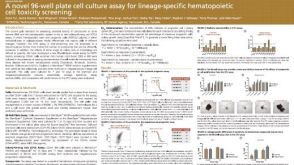 科学海报A Novel 96-well Plate Cell Culture Assay for Lineage-Specific Hematopoietic Cell Toxicity Screening
 沪公网安备31010102008431号