Meziane EK et al. (JUL 2011)
Journal of cell science 124 Pt 13 2175--86
Knockdown of Fbxo7 reveals its regulatory role in proliferation and differentiation of haematopoietic precursor cells.
Fbxo7 is an unusual F-box protein because most of its interacting proteins are not substrates for ubiquitin-mediated degradation. Fbxo7 directly binds p27 and Cdk6,enhances the level of cyclin D-Cdk6 complexes,and its overexpression causes Cdk6-dependent transformation of immortalised fibroblasts. Here,we test the ability of Fbxo7 to transform haematopoietic pro-B (Ba/F3) cells which,unexpectedly,it was unable to do despite high levels of Cdk6. Instead,reduction of Fbxo7 expression increased proliferation,decreased cell size and shortened G1 phase. Analysis of cell cycle regulators showed that cells had decreased levels of p27,and increased levels of S phase cyclins and Cdk2 activity. Also,Fbxo7 protein levels correlated inversely with those of CD43,suggesting direct regulation of its expression and,therefore,of B cell maturation. Alterations to Cdk6 protein levels did not affect the cell cycle,indicating that Cdk6 is neither rate-limiting nor essential in Ba/F3 cells; however,decreased expression of Cdk6 also enhanced levels of CD43,indicating that expression of CD43 is independent of cell cycle regulation. The physiological effect of reduced levels of Fbxo7 was assessed by creating a transgenic mouse with a LacZ insertion into the Fbxo7 locus. Homozygous Fbxo7(LacZ) mice showed significantly increased pro-B cell and pro-erythroblast populations,consistent with Fbxo7 having an anti-proliferative function and/or a role in promoting maturation of precursor cells.
View Publication
产品号#:
03234
产品名:
MethoCult™ M3234
Dixon AS et al. (AUG 2011)
The Journal of biological chemistry 286 31 27751--60
Disruption of Bcr-Abl coiled coil oligomerization by design.
Oligomerization is an important regulatory mechanism for many proteins,including oncoproteins and other pathogenic proteins. The oncoprotein Bcr-Abl relies on oligomerization via its coiled coil domain for its kinase activity,suggesting that a designed coiled coil domain with enhanced binding to Bcr-Abl and reduced self-oligomerization would be therapeutically useful. Key mutations in the coiled coil domain of Bcr-Abl were identified that reduce homo-oligomerization through intermolecular charge-charge repulsion yet increase interaction with the Bcr-Abl coiled coil through additional salt bridges,resulting in an enhanced ability to disrupt the oligomeric state of Bcr-Abl. The mutations were modeled computationally to optimize the design. Assays performed in vitro confirmed the validity and functionality of the optimal mutations,which were found to exhibit reduced homo-oligomerization and increased binding to the Bcr-Abl coiled coil domain. Introduction of the mutant coiled coil into K562 cells resulted in decreased phosphorylation of Bcr-Abl,reduced cell proliferation,and increased caspase-3/7 activity and DNA segmentation. Importantly,the mutant coiled coil domain was more efficacious than the wild type in all experiments performed. The improved inhibition of Bcr-Abl through oligomeric disruption resulting from this modified coiled coil domain represents a viable alternative to small molecule inhibitors for therapeutic intervention.
View Publication
产品号#:
04230
产品名:
MethoCult™ H4230
Yokoyama A et al. (JUL 2011)
Journal of cell science 124 Pt 13 2208--19
Proteolytically cleaved MLL subunits are susceptible to distinct degradation pathways.
The mixed lineage leukemia (MLL) proto-oncogenic protein is a histone-lysine N-methyltransferase that is produced by proteolytic cleavage and self-association of the respective functionally distinct subunits (MLL(N) and MLL(C)) to form a holocomplex involved in epigenetic transcriptional regulation. On the basis of studies in Drosophila it has been suggested that the separated subunits might also have distinct functions. In this study,we used a genetically engineered mouse line that lacked MLL(C) to show that the MLL(N)-MLL(C) holocomplex is responsible for MLL functions in various developmental processes. The stability of MLL(N) is dependent on its intramolecular interaction with MLL(C),which is mediated through the first and fourth plant homeodomain (PHD) fingers (PHD1 and PHD4) and the phenylalanine/tyrosine-rich (FYRN) domain of MLL(N). Free MLL(N) is destroyed by a mechanism that targets the FYRN domain,whereas free MLL(C) is exported to the cytoplasm and degraded by the proteasome. PHD1 is encoded by an alternatively spliced exon that is occasionally deleted in T-cell leukemia,and its absence produces an MLL mutant protein that is deficient for holocomplex formation. Therefore,this should be a loss-of-function mutant allele,suggesting that the known tumor suppression role of MLL may also apply to the T-cell lineage. Our data demonstrate that the dissociated MLL subunits are subjected to distinct degradation pathways and thus not likely to have separate functions unless the degradation mechanisms are inhibited.
View Publication
产品号#:
03231
产品名:
MethoCult™ M3231
Yu QC et al. (JUN 2012)
Blood 119 26 6243--54
APELIN promotes hematopoiesis from human embryonic stem cells.
Transcriptional profiling of differentiating human embryonic stem cells (hESCs) revealed that MIXL1-positive mesodermal precursors were enriched for transcripts encoding the G-protein-coupled APELIN receptor (APLNR). APLNR-positive cells,identified by binding of the fluoresceinated peptide ligand,APELIN (APLN),or an anti-APLNR mAb,were found in both posterior mesoderm and anterior mesendoderm populations and were enriched in hemangioblast colony-forming cells (Bl-CFC). The addition of APLN peptide to the media enhanced the growth of embryoid bodies (EBs),increased the expression of hematoendothelial genes in differentiating hESCs,and increased the frequency of Bl-CFCs by up to 10-fold. Furthermore,APLN peptide also synergized with VEGF to promote the growth of hESC-derived endothelial cells. These studies identified APLN as a novel growth factor for hESC-derived hematopoietic and endothelial cells.
View Publication


 EasySep™小鼠TIL(CD45)正选试剂盒




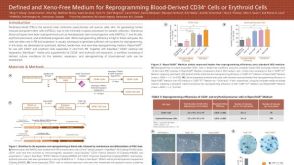 科学海报Defined and Xeno-Free Medium for Reprogramming Blood-Derived CD34+ Cells or Erythroid Cells



 沪公网安备31010102008431号