Interleukin-6 deficiency affects bone marrow stromal precursors, resulting in defective hematopoietic support.
Interleukin-6 (IL-6) is a critical factor in the regulation of stromal function and hematopoiesis. In vivo bromodeoxyuridine incorporation analysis indicates that the percentage of Lin(-)Sca-1(+) hematopoietic progenitors undergoing DNA synthesis is diminished in IL-6-deficient (IL-6(-/-)) bone marrow (BM) compared with wild-type BM. Reduced proliferation of IL-6(-/-) BM progenitors is also observed in IL-6(-/-) long-term BM cultures,which show defective hematopoietic support as measured by production of total cells,granulocyte macrophage-colony-forming units (CFU-GMs),and erythroid burst-forming units (BFU-Es). Seeding experiments of wild-type and IL-6(-/-) BM cells on irradiated wild-type or IL-6-deficient stroma indicate that the hematopoietic defect can be attributed to the stromal and not to the hematopoietic component. In IL-6(-/-) BM,stromal mesenchymal precursors,fibroblast CFUs (CFU-Fs),and stroma-initiating cells (SICs) are reduced to almost 50% of the wild-type BM value. Moreover,IL-6(-/-) stromata show increased CD34 and CD49e expression and reduced expression of the membrane antigens vascular cell adhesion molecule-1 (VCAM-1),Sca-1,CD49f,and Thy1. These data strongly suggest that IL-6 is an in vivo growth factor for mesenchymal precursors,which are in part implicated in the reduced longevity of the long-term repopulating stem cell compartment of IL-6(-/-) mice.
View Publication
产品号#:
03534
05501
05502
05350
28600
产品名:
MethoCult™ GF M3534
L-Calc™有限稀释软件
Eirew P et al. (DEC 2008)
Nature medicine 14 12 1384--9
A method for quantifying normal human mammary epithelial stem cells with in vivo regenerative ability.
Previous studies have demonstrated that normal mouse mammary tissue contains a rare subset of mammary stem cells. We now describe a method for detecting an analogous subpopulation in normal human mammary tissue. Dissociated cells are suspended with fibroblasts in collagen gels,which are then implanted under the kidney capsule of hormone-treated immunodeficient mice. After 2-8 weeks,the gels contain bilayered mammary epithelial structures,including luminal and myoepithelial cells,their in vitro clonogenic progenitors and cells that produce similar structures in secondary transplants. The regenerated clonogenic progenitors provide an objective indicator of input mammary stem cell activity and allow the frequency and phenotype of these human mammary stem cells to be determined by limiting-dilution analysis. This new assay procedure sets the stage for investigations of mechanisms regulating normal human mammary stem cells (and possibly stem cells in other tissues) and their relationship to human cancer stem cell populations.
View Publication
产品号#:
05601
产品名:
EpiCult™-B 人培养基
Bieback K et al. (JAN 2004)
Stem cells (Dayton,Ohio) 22 4 625--34
Critical parameters for the isolation of mesenchymal stem cells from umbilical cord blood.
Evidence has emerged that mesenchymal stem cells (MSCs) represent a promising population for supporting new clinical concepts in cellular therapy. However,attempts to isolate MSCs from umbilical cord blood (UCB) of full-term deliveries have previously either failed or been characterized by a low yield. We investigated whether cells with MSC characteristics and multi-lineage differentiation potential can be cultivated from UCB of healthy newborns and whether yields might be maximized by optimal culture conditions or by defining UCB quality criteria. Using optimized isolation and culture conditions,in up to 63% of 59 low-volume UCB units,cells showing a characteristic mesenchymal morphology and immune phenotype (MSC-like cells) were isolated. These were similar to control MSCs from adult bone marrow (BM). The frequency of MSC-like cells ranged from 0 to 2.3 clones per 1 x 10(8) mononuclear cells (MNCs). The cell clones proliferated extensively with at least 20 population doublings within eight passages. In addition,osteogenic and chondrogenic differentiation demonstrated a multi-lineage capacity comparable with BM MSCs. However,in contrast to MSCs,MSC-like cells showed a reduced sensitivity to undergo adipogenic differentiation. Crucial points to isolate MSC-like cells from UCB were a time from collection to isolation of less than 15 hours,a net volume of more than 33 ml,and an MNC count of more than 1 x 10(8) MNCs. Because MSC-like cells can be isolated at high efficacy from full-term UCB donations,we regard UCB as an additional stem cell source for experimental and potentially clinical purposes.
View Publication
产品号#:
05401
05402
05411
产品名:
MesenCult™ MSC 基础培养基(人)
MesenCult™ MSC 刺激补充剂(人)
MesenCult™ 增殖试剂盒(人)
Lee J-H et al. (JUL 2005)
Experimental cell research 307 1 174--82
Contribution of human bone marrow stem cells to individual skeletal myotubes followed by myogenic gene activation.
Much attention is focused on characterizing the contribution of bone marrow (BM)-derived cells to regenerating skeletal muscle,fuelled by hopes for stem cell-mediated therapy of muscle degenerative diseases. Though physical integration of BM stem cells has been well documented,little evidence of functional commitment to myotube phenotype has been reported. This is due to the innate difficulty in distinguishing gene products derived from donor versus host nuclei. Here,we demonstrate that BM-derived stem cells contribute via gene expression following incorporation to skeletal myotubes. By co-culturing human BM-derived mesenchymal stem cells (MSC) with mouse skeletal myoblasts,physical incorporation was observed by genetic lineage tracing and species-specific immunofluorescence. We used a human-specific antibody against the intermediate filament protein nestin,a marker of regenerating skeletal muscle,to identify functional contribution of MSC to myotube formation. Although nestin expression was never detected in MSC,human-specific expression was detected in myotubes that also contained MSC-derived nuclei. This induction of gene expression following myotube integration suggests that bone marrow-derived stem cells can reprogram and functionally contribute to the muscle cell phenotype. We propose that this model of myogenic commitment may provide the means to further characterize functional reprogramming of MSC to skeletal muscle.
View Publication


 EasySep™小鼠TIL(CD45)正选试剂盒




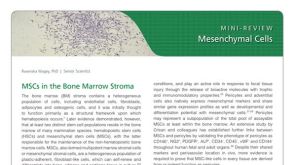 研究综述Mesenchymal Stromal Cells: Markers, Isolation and Culture, Differentiation, and Therapeutic Potential


 沪公网安备31010102008431号