Dosage and Cell Line Dependent Inhibitory Effect of bFGF Supplement in Human Pluripotent Stem Cell Culture on Inactivated Human Mesenchymal Stem Cells.
Many different culture systems have been developed for expanding human pluripotent stem cells (hESCs and hiPSCs). In general,4-10 ng/ml of bFGF is supplemented in culture media in feeder-dependent systems regardless of feeder cell types,whereas in feeder-free systems,up to 100 ng/ml of bFGF is required for maintaining long-term culture on various substrates. The amount of bFGF required in native hESCs growth niche is unclear. Here we report using inactivated adipose-derived human mesenchymal stem cells as feeder cells to examine long-term parallel cultures of two hESCs lines (H1 and H9) and one hiPSCs line (DF19-9-7T) in media supplemented with 0,0.4 or 4 ng/ml of bFGF for up to 23 passages,as well as parallel cultures of H9 and DF19 in media supplemented with 4,20 or 100 ng/ml bFGF for up to 13 passages for comparison. Across all cell lines tested,bFGF supplement demonstrated inhibitory effect over growth expansion,single cell colonization and recovery from freezing in a dosage dependent manner. In addition,bFGF exerted differential effects on different cell lines,inducing H1 and DF19 differentiation at 4 ng/ml or higher,while permitting long-term culture of H9 at the same concentrations with no apparent dosage effect. Pluripotency was confirmed for all cell lines cultured in 0,0.4 or 4 ng/ml bFGF excluding H1-4 ng,as well as H9 cultured in 4,20 and 100 ng/ml bFGF. However,DF19 demonstrated similar karyotypic abnormality in both 0 and 4 ng/ml bFGF media while H1 and H9 were karyotypically normal in 0 ng/ml bFGF after long-term culture. Our results indicate that exogenous bFGF exerts dosage and cell line dependent effect on human pluripotent stem cells cultured on mesenchymal stem cells,and implies optimal use of bFGF in hESCs/hiPSCs culture should be based on specific cell line and its culture system.
View Publication
产品号#:
05850
05857
05870
05875
85850
85857
85870
85875
产品名:
mTeSR™1
mTeSR™1
Eirew P et al. (DEC 2008)
Nature medicine 14 12 1384--9
A method for quantifying normal human mammary epithelial stem cells with in vivo regenerative ability.
Previous studies have demonstrated that normal mouse mammary tissue contains a rare subset of mammary stem cells. We now describe a method for detecting an analogous subpopulation in normal human mammary tissue. Dissociated cells are suspended with fibroblasts in collagen gels,which are then implanted under the kidney capsule of hormone-treated immunodeficient mice. After 2-8 weeks,the gels contain bilayered mammary epithelial structures,including luminal and myoepithelial cells,their in vitro clonogenic progenitors and cells that produce similar structures in secondary transplants. The regenerated clonogenic progenitors provide an objective indicator of input mammary stem cell activity and allow the frequency and phenotype of these human mammary stem cells to be determined by limiting-dilution analysis. This new assay procedure sets the stage for investigations of mechanisms regulating normal human mammary stem cells (and possibly stem cells in other tissues) and their relationship to human cancer stem cell populations.
View Publication
产品号#:
05601
产品名:
EpiCult™-B 人培养基
Seeger FH et al. (MAR 2007)
European heart journal 28 6 766--72
Cell isolation procedures matter: a comparison of different isolation protocols of bone marrow mononuclear cells used for cell therapy in patients with acute myocardial infarction.
AIM: The recently published REPAIR-AMI and ASTAMI trial showed differences in contractile recovery of left ventricular function after infusion of bone marrow-derived cells in acute myocardial infarction. Since the trials used different protocols for cell isolation and storage (REPAIR-AMI: Ficoll,storage in X-vivo 10 medium plus serum; ASTAMI: Lymphoprep,storage in NaCl plus plasma),we compared the functional activity of BMC isolated by the two different protocols. METHODS AND RESULTS: The recovery of total cell number,colony-forming units (CFU),and the number of mesenchymal stem cells were significantly reduced to 77 +/- 4%,83 +/- 16%,and 65 +/- 15%,respectively,when using the ASTAMI protocol compared with the REPAIR protocol. The capacity of the isolated BMC to migrate in response to stromal cell-derived factor 1 (SDF-1) was profoundly reduced when using the ASTAMI cell isolation procedure (42 +/- 8% and 78 +/- 3% reduction in healthy and CAD-patient cells,respectively). Finally,infusion of BMC into a hindlimb ischaemia model demonstrated a significantly blunted blood-flow-recovery by BMC isolated with the ASTAMI protocol (54 +/- 6% of the effect obtained by REPAIR cells). Comparison of the individual steps identified the use of NaCl and plasma for cell storage as major factors for functional impairment of the BMC. CONCLUSION: Cell isolation protocols have a major impact on the functional activity of bone marrow-derived progenitor cells. The assessment of cell number and viability may not entirely reflect the functional capacity of cells in vivo. Additional functional testing appears to be mandatory to assure proper cell function before embarking on clinical cell therapy trials.
View Publication
产品号#:
04564
04534
04544
产品名:
MethoCult™ H4534 Classic 无 EPO 入门试剂盒
MethoCult™ H4534 Classic(不含 EPO)
MethoCult™ H4534 Classic(不含 EPO)
Alamein MA et al. (SEP 2015)
Journal of Tissue Engineering and Regenerative Medicine 9 9 1078--1083
Polymeric nanofibrous substrates stimulate pluripotent stem cells to form three-dimensional multilayered patty-like spheroids in feeder-free culture and maintain their pluripotency
Expansion of pluripotent stem cells in defined media devoid of animal-derived feeder cells to generate multilayered three-dimensional (3D) bulk preparations or spheroids,rather than two-dimensional (2D) monolayers,is advantageous for many regenerative,biological or disease-modelling studies. Here we show that electrospun polymer matrices comprised of nanofibres that mimic the architecture of the natural fibrous extracellular matrix allow for feeder-free expansion of pluripotent human induced pluripotent stem cells (IPSCs) and human embryonic stem cells (HESCs) into multilayered 3D 'patty-like' spheroid structures in defined xeno-free culture medium. The observation that IPSCs and HESCs readily revert to 2D growth in the absence of the synthetic nanofibre membranes suggests that this 3D expansion behaviour is mediated by the physical microenvironment and artificial niche provided by the nanofibres only. Importantly,we could show that such 3D growth as patties maintained the pluripotency of cells as long as they were kept on nanofibres. The generation of complex multilayered 3D structures consisting of only pluripotent cells on biodegradable nanofibre matrices of the desired shape and size will enable both industrial-scale expansion and intricate organ-tissue engineering applications with human pluripotent stem cells,where simultaneous coupling of differentiation pathways of all germ layers from one stem cell source may be required for organ formation.
View Publication


 EasySep™小鼠TIL(CD45)正选试剂盒




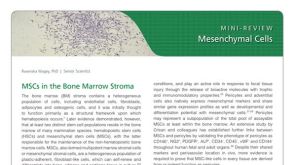 研究综述Mesenchymal Stromal Cells: Markers, Isolation and Culture, Differentiation, and Therapeutic Potential


 沪公网安备31010102008431号