Porayette P et al. (DEC 2007)
Biochemical and biophysical research communications 364 3 522--527
Amyloid-?? precursor protein expression and modulation in human embryonic stem cells: A novel role for human chorionic gonadotropin
The amyloid-beta precursor protein (AbetaPP) is a ubiquitously expressed adhesion and neuritogenic protein whose processing has previously been shown to be regulated by reproductive hormones including the gonadotropin luteinizing hormone (LH) in human neuroblastoma cells. We report for the first time the expression of AbetaPP in human embryonic stem (hES) cells at the mRNA and protein levels. Using N- and C-terminal antibodies against AbetaPP,we detected both the mature and immature forms of AbetaPP as well as truncated variants ( approximately 53kDa,47kDa,and 29kDa) by immunoblot analyses. Expression of AbetaPP is regulated by both the stemness of the cells and pregnancy-associated hormones. Addition of human chorionic gonadotropin,the fetal equivalent of LH that is dramatically elevated during pregnancy,markedly increased the expression of all AbetaPP forms. These results indicate a critical molecular signaling link between the hormonal environment of pregnancy and the expression of AbetaPP in hES cells that is suggestive of an important function for this protein during early human embryogenesis prior to the formation of neural precursor cells.
View Publication
产品号#:
05850
05857
05870
05875
85850
85857
85870
85875
产品名:
mTeSR™1
mTeSR™1
Qiu C et al. (FEB 2008)
Blood 111 4 2400--8
Globin switches in yolk sac-like primitive and fetal-like definitive red blood cells produced from human embryonic stem cells.
We have previously shown that coculture of human embryonic stem cells (hESCs) for 14 days with immortalized fetal hepatocytes yields CD34(+) cells that can be expanded in serum-free liquid culture into large numbers of megaloblastic nucleated erythroblasts resembling yolk sac-derived cells. We show here that these primitive erythroblasts undergo a switch in hemoglobin (Hb) composition during late terminal erythroid maturation with the basophilic erythroblasts expressing predominantly Hb Gower I (zeta(2)epsilon(2)) and the orthochromatic erythroblasts hemoglobin Gower II (alpha(2)epsilon(2)). This suggests that the switch from Hb Gower I to Hb Gower II,the first hemoglobin switch in humans is a maturation switch not a lineage switch. We also show that extending the coculture of the hESCs with immortalized fetal hepatocytes to 35 days yields CD34(+) cells that differentiate into more developmentally mature,fetal liver-like erythroblasts,that are smaller,express mostly fetal hemoglobin,and can enucleate. We conclude that hESC-derived erythropoiesis closely mimics early human development because the first 2 human hemoglobin switches are recapitulated,and because yolk sac-like and fetal liver-like cells are sequentially produced. Development of a method that yields erythroid cells with an adult phenotype remains necessary,because the most mature cells that can be produced with current systems express less than 2% adult beta-globin mRNA.
View Publication
Yamashita J et al. (NOV 2000)
Nature 408 6808 92--6
Flk1-positive cells derived from embryonic stem cells serve as vascular progenitors.
Interaction between endothelial cells and mural cells (pericytes and vascular smooth muscle) is essential for vascular development and maintenance. Endothelial cells arise from Flk1-expressing (Flk1+) mesoderm cells,whereas mural cells are believed to derive from mesoderm,neural crest or epicardial cells and migrate to form the vessel wall. Difficulty in preparing pure populations of these lineages has hampered dissection of the mechanisms underlying vascular formation. Here we show that Flk1+ cells derived from embryonic stem cells can differentiate into both endothelial and mural cells and can reproduce the vascular organization process. Vascular endothelial growth factor promotes endothelial cell differentiation,whereas mural cells are induced by platelet-derived growth factor-BB. Vascular cells derived from Flk1+ cells can organize into vessel-like structures consisting of endothelial tubes supported by mural cells in three-dimensional culture. Injection of Flk1+ cells into chick embryos showed that they can incorporate as endothelial and mural cells and contribute to the developing vasculature in vivo. Our findings indicate that Flk1+ cells can act as 'vascular progenitor cells' to form mature vessels and thus offer potential for tissue engineering of the vascular system.
View Publication
产品号#:
06902
06952
00321
00322
00323
00324
00325
产品名:
Kong C-W et al. (MAR 2017)
Stem cell research 19 76--81
Increasing the physical size and nucleation status of human pluripotent stem cell-derived ventricular cardiomyocytes by cell fusion.
Human pluripotent stem cell-derived cardiomyocytes (hPSC-CMs) provide an unlimited source of donor cells for potential cardiac regenerative therapies. However,hPSC-CMs are immature. For instance,hPSC-CMs are only 1/10 of the physical size of their adult counterparts; the majority are mono- rather than bi- or multi-nucleated,which is an evolutionary adaptive feature in metabolically active cells such as adult CMs. Here,we attempted to increase the physical size and nucleation status of hPSC-derived ventricular (V) cardiomyocytes (hPSC-VCMs) using chemically-induced cell fusion,and examined the subsequent functional effects. Polyethylene glycol (PEG) was employed to fuse a 1:1 mixture of lentiviral vectors LV-MLC2v-GFP- or -tdTomato-labeled hPSC-VCMs,such that hPSC-VCMs fused syncytia (FS) were identified as doubly GFP(+)/tdTomato(+) multi-nucleated cells. These microscopically-identified FS were doubled in size as gauged by their capacitance when compared to the control mononucleated hPSC-VCMs using patch-clamp analysis. Reduced automaticity or action potential (AP) firing rate and moderately prolonged AP duration were observed in FS from day 6 post-fusion induction. However,Ca(2+) handling,mitochondrial biogenesis and the extent of apoptosis were not significantly altered. We conclude that larger,multi-nucleated hPSC-VCMs FS can be created by chemically-induced cell fusion but global maturation requires additional triggering cues.
View Publication
产品号#:
85850
85857
85870
85875
产品名:
mTeSR™1
mTeSR™1
Liu X et al. (NOV 2017)
Nature methods 14 11 1055--1062
Comprehensive characterization of distinct states of human naive pluripotency generated by reprogramming.
Recent reports on the characteristics of naive human pluripotent stem cells (hPSCs) obtained using independent methods differ. Naive hPSCs have been mainly derived by conversion from primed hPSCs or by direct derivation from human embryos rather than by somatic cell reprogramming. To provide an unbiased molecular and functional reference,we derived genetically matched naive hPSCs by direct reprogramming of fibroblasts and by primed-to-naive conversion using different naive conditions (NHSM,RSeT,5iLAF and t2iLGöY). Our results show that hPSCs obtained in these different conditions display a spectrum of naive characteristics. Furthermore,our characterization identifies KLF4 as sufficient for conversion of primed hPSCs into naive t2iLGöY hPSCs,underscoring the role that reprogramming factors can play for the derivation of bona fide naive hPSCs.
View Publication
产品号#:
05970
产品名:
Mizuguchi Y et al. (MAY 2017)
Mitochondrion 34 43--48
Mitochondrial disease is associated with a wide variety of clinical presentations,even among patients carrying heteroplasmic mitochondrial DNA (mtDNA) mutations,probably because of variations in mutant mtDNA proportions at the tissue and organ levels. Although several case reports and clinical trials have assessed the effectiveness of various types of drugs and supplements for the treatment of mitochondrial diseases,there are currently no cures for these conditions. In this study,we demonstrated for the first time that low dose resveratrol (RSV) ameliorated mitochondrial respiratory dysfunction in patient-derived fibroblasts carrying homoplasmic mtDNA mutations. Furthermore,low dose RSV also facilitated efficient cellular reprogramming of the patient-derived fibroblasts into induced pluripotent stem cells,partly due to improved cellular viability. Our results highlight the potential of RSV as a new therapeutic drug candidate for the treatment of mitochondrial diseases.
View Publication
产品号#:
05910
85850
85857
85870
85875
产品名:
mTeSR™1
mTeSR™1
Tagliafierro L et al. (NOV 2017)
Alzheimer's & dementia : the journal of the Alzheimer's Association 13 11 1237--1250
Genetic analysis of α-synuclein 3' untranslated region and its corresponding microRNAs in relation to Parkinson's disease compared to dementia with Lewy bodies.
INTRODUCTION The α-synuclein (SNCA) gene has been implicated in the etiology of Parkinson's disease (PD) and dementia with Lewy bodies (DLB). METHODS A computational analysis of SNCA 3' untranslated region to identify potential microRNA (miRNA) binding sites and quantitative real-time polymerase chain reaction (PCR) to determine their expression in isogenic induced pluripotent stem cell-derived dopaminergic and cholinergic neurons as a model of PD and DLB,respectively,were performed. In addition,we performed a deep sequencing analysis of the SNCA 3' untranslated region of autopsy-confirmed cases of PD,DLB,and normal controls,followed by genetic association analysis of the identified variants. RESULTS We identified four miRNA binding sites and observed a neuronal-type-specific expression profile for each miRNA in the different isogenic induced pluripotent stem cell-derived dopaminergic and cholinergic neurons. Furthermore,we found that the short structural variant rs777296100-polyT was moderately associated with DLB but not with PD. DISCUSSION We suggest that the regulation of SNCA expression through miRNAs is neuronal-type-specific and possibly plays a part in the phenotypic heterogeneity of synucleinopathies. Furthermore,genetic variability in the SNCA gene may contribute to synucleinopathies in a pathology-specific manner.
View Publication
产品号#:
05790
05792
05793
05794
05795
产品名:
BrainPhys™神经元培养基
BrainPhys™神经元培养基和SM1试剂盒
BrainPhys™ 神经元培养基N2-A和SM1试剂盒
BrainPhys™原代神经元试剂盒
BrainPhys™ hPSC 神经元试剂盒
Baud A et al. (FEB 2017)
Analytical chemistry 89 4 2440--2448
Induced pluripotent stem cells have great potential as a human model system in regenerative medicine,disease modeling,and drug screening. However,their use in medical research is hampered by laborious reprogramming procedures that yield low numbers of induced pluripotent stem cells. For further applications in research,only the best,competent clones should be used. The standard assays for pluripotency are based on genomic approaches,which take up to 1 week to perform and incur significant cost. Therefore,there is a need for a rapid and cost-effective assay able to distinguish between pluripotent and nonpluripotent cells. Here,we describe a novel multiplexed,high-throughput,and sensitive peptide-based multiple reaction monitoring mass spectrometry assay,allowing for the identification and absolute quantitation of multiple core transcription factors and pluripotency markers. This assay provides simpler and high-throughput classification into either pluripotent or nonpluripotent cells in 7 min analysis while being more cost-effective than conventional genomic tests.
View Publication


 EasySep™小鼠TIL(CD45)正选试剂盒




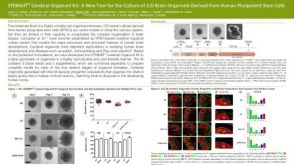 科学海报STEMdiff™ Cerebral Organoid Kit: A New Tool for the Culture of 3D Brain Organoids Derived from hPSCs
 沪公网安备31010102008431号