Bruin JE et al. (JAN 2014)
Stem Cell Research 12 1 194--208
Characterization of polyhormonal insulin-producing cells derived in vitro from human embryonic stem cells.
Human embryonic stem cells (hESCs) were used as a model system of human pancreas development to study characteristics of the polyhormonal cells that arise during fetal pancreas development. HESCs were differentiated into fetal-like pancreatic cells in vitro using a 33-day,7-stage protocol. Cultures were ˜90-95% PDX1-positive by day (d) 11 and 70-75% NKX6.1-positive by d17. Polyhormonal cells were scattered at d17,but developed into islet-like clusters that expressed key transcription factors by d33. Human C-peptide and glucagon secretion were first detected at d17 and increased thereafter in parallel with INS and GCG transcript levels. HESC-derived cells were responsive to KCl and arginine,but not glucose in perifusion studies. Compared to adult human islets,hESC-derived cells expressed ˜10-fold higher levels of glucose transporter 1 (GLUT1) mRNA,but similar levels of glucokinase (GCK). In situ hybridization confirmed the presence of GLUT1 transcript within endocrine cells. However,GLUT1 protein was excluded from this population and was instead observed predominantly in non-endocrine cells,whereas GCK was co-expressed in insulin-positive cells. In rubidium efflux assays,hESC-derived cells displayed mild potassium channel activity,but no responsiveness to glucose,metabolic inhibitors or glibenclamide. Western blotting experiments revealed that the higher molecular weight SUR1 band was absent in hESC-derived cells,suggesting a lack of functional KATP channels at the cell surface. In addition,KATP channel subunit transcript levels were not at a 1:1 ratio,as would be expected (SUR1 levels were ˜5-fold lower than KIR6.2). Various ratios of SUR1:KIR6.2 plasmids were transfected into COSM6 cells and rubidium efflux was found to be particularly sensitive to a reduction in SUR1. These data suggest that an impaired ratio of SUR1:KIR6.2 may contribute to the observed KATP channel defects in hESC-derived islet endocrine cells,and along with lack of GLUT1,may explain the absence of glucose-stimulated insulin secretion.?? 2013 Elsevier B.V.
View Publication
Yamashita J et al. (NOV 2000)
Nature 408 6808 92--6
Flk1-positive cells derived from embryonic stem cells serve as vascular progenitors.
Interaction between endothelial cells and mural cells (pericytes and vascular smooth muscle) is essential for vascular development and maintenance. Endothelial cells arise from Flk1-expressing (Flk1+) mesoderm cells,whereas mural cells are believed to derive from mesoderm,neural crest or epicardial cells and migrate to form the vessel wall. Difficulty in preparing pure populations of these lineages has hampered dissection of the mechanisms underlying vascular formation. Here we show that Flk1+ cells derived from embryonic stem cells can differentiate into both endothelial and mural cells and can reproduce the vascular organization process. Vascular endothelial growth factor promotes endothelial cell differentiation,whereas mural cells are induced by platelet-derived growth factor-BB. Vascular cells derived from Flk1+ cells can organize into vessel-like structures consisting of endothelial tubes supported by mural cells in three-dimensional culture. Injection of Flk1+ cells into chick embryos showed that they can incorporate as endothelial and mural cells and contribute to the developing vasculature in vivo. Our findings indicate that Flk1+ cells can act as 'vascular progenitor cells' to form mature vessels and thus offer potential for tissue engineering of the vascular system.
View Publication
Recurrent gain of chromosomes 17q and 12 in cultured human embryonic stem cells.
We have observed karyotypic changes involving the gain of chromosome 17q in three independent human embryonic stem (hES) cell lines on five independent occasions. A gain of chromosome 12 was seen occasionally. This implies that increased dosage of chromosome 17q and 12 gene(s) provides a selective advantage for the propagation of undifferentiated hES cells. These observations are instructive for the future application of hES cells in transplantation therapies in which the use of aneuploid cells could be detrimental.
View Publication
产品号#:
05859
05850
05857
05870
05875
85850
85857
85870
85875
77003
77004
200-0117
产品名:
FreSR™- S
mTeSR™1
mTeSR™1
CellAdhere™ Laminin-521
CellAdhere™ Laminin-521
Wang Z et al. (JAN 2004)
Blood 103 1 100--9
Ephrin receptor, EphB4, regulates ES cell differentiation of primitive mammalian hemangioblasts, blood, cardiomyocytes, and blood vessels.
Differentiation of pluripotent embryonic stem (ES) cells is associated with expression of fate-specifying gene products. Coordinated development,however,must involve modifying factors that enable differentiation and growth to adjust in response to local microenvironmental determinants. We report here that the ephrin receptor,EphB4,known to be spatially restricted in expression and critical for organized vessel formation,modifies the rate and magnitude of ES cells acquiring genotypic and phenotypic characteristics of mesodermal tissues. Hemangioblast,blood cell,cardiomyocyte,and vascular differentiation was impaired in EphB4-/- ES cells in conjunction with decreased expression of mesoderm-associated,but not neuroectoderm-associated,genes. Therefore,EphB4 modulates the response to mesoderm induction signals. These data add differentiation kinetics to the known effects of ephrin receptors on mammalian cell migration and adhesion. We propose that modifying sensitivity to differentiation cues is a further means for ephrin receptors to contribute to tissue patterning and organization.
View Publication


 EasySep™小鼠TIL(CD45)正选试剂盒




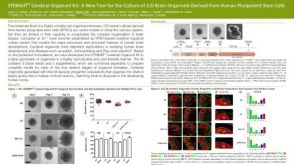 科学海报STEMdiff™ Cerebral Organoid Kit: A New Tool for the Culture of 3D Brain Organoids Derived from hPSCs


 沪公网安备31010102008431号