Keller GM (DEC 1995)
Current opinion in cell biology 7 6 862--9
In vitro differentiation of embryonic stem cells.
Under appropriate conditions in culture,embryonic stem cells will differentiate and form embryoid bodies that have been shown to contain cells of the hematopoietic,endothelial,muscle and neuronal lineages. Many aspects of the lineage-specific differentiation programs observed within the embryoid bodies reflect those found in the embryo,indicating that this model system provides access to early cell populations that develop in a normal fashion. Recent studies involving the differentiation of genetically altered embryonic stem cells highlight the potential of this in vitro differentiation system for defining the function of genes in early development.
View Publication
产品号#:
06902
06952
00321
00322
00323
00324
00325
产品名:
F. T. Merkle et al. (APR 2017)
Nature
Human pluripotent stem cells recurrently acquire and expand dominant negative P53 mutations
The authors surveyed whole-exome and RNA-sequencing data from 252 unique pluripotent stem cell lines,some of which are in the pipeline for clinical use,and found that approximately 5{\%} of cell lines had acquired mutations in the TP53 gene that allow mutant cells to rapidly outcompete non-mutant cells,but do not prevent differentiation.
View Publication
产品号#:
05850
05857
05870
05875
85850
85857
85870
85875
产品名:
mTeSR™1
mTeSR™1
Meyer C et al. ( 2017)
International journal of nanomedicine 12 3153--3170
Pseudotyping exosomes for enhanced protein delivery in mammalian cells.
Exosomes are cell-derived nanovesicles that hold promise as living vehicles for intracellular delivery of therapeutics to mammalian cells. This potential,however,is undermined by the lack of effective methods to load exosomes with therapeutic proteins and to facilitate their uptake by target cells. Here,we demonstrate how a vesicular stomatitis virus glycoprotein (VSVG) can both load protein cargo onto exosomes and increase their delivery ability via a pseudotyping mechanism. By fusing a set of fluorescent and luminescent reporters with VSVG,we show the successful targeting and incorporation of VSVG fusions into exosomes by gene transfection and fluorescence tracking. We subsequently validate our system by live cell imaging of VSVG and its participation in endosomes/exosomes that are ultimately released from transfected HEK293 cells. We show that VSVG pseudotyping of exosomes does not affect the size or distributions of the exosomes,and both the full-length VSVG and the VSVG without the ectodomain are shown to integrate into the exosomal membrane,suggesting that the ectodomain is not required for protein loading. Finally,exosomes pseudotyped with full-length VSVG are internalized by multiple-recipient cell types to a greater degree compared to exosomes loaded with VSVG without the ectodomain,confirming a role of the ectodomain in cell tropism. In summary,our work introduces a new genetically encoded pseudotyping platform to load and enhance the intracellular delivery of therapeutic proteins via exosome-based vehicles to target cells.
View Publication
产品号#:
05850
05857
05870
05875
85850
85857
85870
85875
产品名:
mTeSR™1
mTeSR™1
Wang Y et al. (MAY 2017)
Stem cell reports
Reprogramming of Dermal Fibroblasts into Osteo-Chondrogenic Cells with Elevated Osteogenic Potency by Defined Transcription Factors.
Recent studies using defined transcription factors to convert skin fibroblasts into chondrocytes have raised the question of whether osteo-chondroprogenitors expressing SOX9 and RUNX2 could also be generated during the course of the reprogramming process. Here,we demonstrated that doxycycline-inducible expression of reprogramming factors (KLF4 [K] and c-MYC [M]) for 6 days were sufficient to convert murine fibroblasts into SOX9(+)/RUNX2(+) cellular aggregates and together with SOX9 (S) promoted the conversion efficiency when cultured in a defined stem cell medium,mTeSR. KMS-reprogrammed cells possess gene expression profiles akin to those of native osteo-chondroprogenitors with elevated osteogenic properties and can differentiate into osteoblasts and chondrocytes in vitro,but form bone tissue upon transplantation under the skin and in the fracture site of mouse tibia. Altogether,we provide a reprogramming strategy to enable efficient derivation of osteo-chondrogenic cells that may hold promise for cell replacement therapy not limited to cartilage but also for bone tissues.
View Publication
产品号#:
05850
05857
05870
05875
85850
85857
85870
85875
产品名:
mTeSR™1
mTeSR™1
Guo M et al. (MAY 2017)
Cell reports 19 8 1512--1521
Using hESCs to Probe the Interaction of the Diabetes-Associated Genes CDKAL1 and MT1E.
Genome-wide association studies (GWASs) have identified many disease-associated variant alleles,but understanding whether and how different genes/loci interact requires a platform for probing how the variant alleles act mechanistically. Isogenic mutant human embryonic stem cells (hESCs) provide an unlimited resource to derive and study human disease-relevant cells. Here,we focused on CDKAL1,linked by GWASs to diabetes. Through transcript profiling,we find that expression of the metallothionein (MT) gene family,also linked by GWASs to diabetes,is significantly downregulated in CDKAL1(-/-) cells that have been differentiated to insulin-expressing pancreatic beta-like cells. Forced MT1E expression rescues both hypersensitivity of CDKAL1 mutant cells to glycolipotoxicity and pancreatic beta-cell dysfunction in vitro and in vivo. MT1E functions at least in part through relief of ER stress. This study establishes an isogenic hESC-based platform to study the interaction of GWAS-identified diabetes gene variants and illuminate the molecular network impacting disease progression.
View Publication
产品号#:
05850
05857
05870
05875
85850
85857
85870
85875
产品名:
mTeSR™1
mTeSR™1
Hino K et al. (JUL 2017)
The Journal of clinical investigation
Activin-A enhances mTOR signaling to promote aberrant chondrogenesis in fibrodysplasia ossificans progressiva.
Fibrodysplasia ossificans progressiva (FOP) is a rare and intractable disease characterized by extraskeletal bone formation through endochondral ossification. Patients with FOP harbor point mutations in ACVR1,a type I receptor for BMPs. Although mutated ACVR1 (FOP-ACVR1) has been shown to render hyperactivity in BMP signaling,we and others have uncovered a mechanism by which FOP-ACVR1 mistransduces BMP signaling in response to Activin-A,a molecule that normally transduces TGF-β signaling. Although Activin-A evokes enhanced chondrogenesis in vitro and heterotopic ossification (HO) in vivo,the underlying mechanisms have yet to be revealed. To this end,we developed a high-throughput screening (HTS) system using FOP patient-derived induced pluripotent stem cells (FOP-iPSCs) to identify pivotal pathways in enhanced chondrogenesis that are initiated by Activin-A. In a screen of 6,809 small-molecule compounds,we identified mTOR signaling as a critical pathway for the aberrant chondrogenesis of mesenchymal stromal cells derived from FOP-iPSCs (FOP-iMSCs). Two different HO mouse models,an FOP model mouse expressing FOP-ACVR1 and an FOP-iPSC-based HO model mouse,revealed critical roles for mTOR signaling in vivo. Moreover,we identified ENPP2,an enzyme that generates lysophosphatidic acid,as a linker of FOP-ACVR1 and mTOR signaling in chondrogenesis. These results uncovered the crucial role of the Activin-A/FOP-ACVR1/ENPP2/mTOR axis in FOP pathogenesis.
View Publication
产品号#:
05850
05857
05870
05875
85850
85857
85870
85875
产品名:
mTeSR™1
mTeSR™1
Martin GR (DEC 1981)
Proceedings of the National Academy of Sciences of the United States of America 78 12 7634--8
Isolation of a pluripotent cell line from early mouse embryos cultured in medium conditioned by teratocarcinoma stem cells.
This report describes the establishment directly from normal preimplantation mouse embryos of a cell line that forms teratocarcinomas when injected into mice. The pluripotency of these embryonic stem cells was demonstrated conclusively by the observation that subclonal cultures,derived from isolated single cells,can differentiate into a wide variety of cell types. Such embryonic stem cells were isolated from inner cell masses of late blastocysts cultured in medium conditioned by an established teratocarcinoma stem cell line. This suggests that such conditioned medium might contain a growth factor that stimulates the proliferation or inhibits the differentiation of normal pluripotent embryonic cells,or both. This method of obtaining embryonic stem cells makes feasible the isolation of pluripotent cells lines from various types of noninbred embryo,including those carrying mutant genes. The availability of such cell lines should made possible new approaches to the study of early mammalian development.
View Publication
Yamashita J et al. (NOV 2000)
Nature 408 6808 92--6
Flk1-positive cells derived from embryonic stem cells serve as vascular progenitors.
Interaction between endothelial cells and mural cells (pericytes and vascular smooth muscle) is essential for vascular development and maintenance. Endothelial cells arise from Flk1-expressing (Flk1+) mesoderm cells,whereas mural cells are believed to derive from mesoderm,neural crest or epicardial cells and migrate to form the vessel wall. Difficulty in preparing pure populations of these lineages has hampered dissection of the mechanisms underlying vascular formation. Here we show that Flk1+ cells derived from embryonic stem cells can differentiate into both endothelial and mural cells and can reproduce the vascular organization process. Vascular endothelial growth factor promotes endothelial cell differentiation,whereas mural cells are induced by platelet-derived growth factor-BB. Vascular cells derived from Flk1+ cells can organize into vessel-like structures consisting of endothelial tubes supported by mural cells in three-dimensional culture. Injection of Flk1+ cells into chick embryos showed that they can incorporate as endothelial and mural cells and contribute to the developing vasculature in vivo. Our findings indicate that Flk1+ cells can act as 'vascular progenitor cells' to form mature vessels and thus offer potential for tissue engineering of the vascular system.
View Publication


 EasySep™小鼠TIL(CD45)正选试剂盒




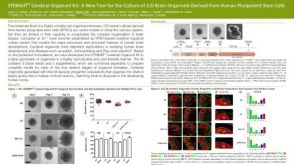 科学海报STEMdiff™ Cerebral Organoid Kit: A New Tool for the Culture of 3D Brain Organoids Derived from hPSCs


 沪公网安备31010102008431号