Ephrin receptor, EphB4, regulates ES cell differentiation of primitive mammalian hemangioblasts, blood, cardiomyocytes, and blood vessels.
Differentiation of pluripotent embryonic stem (ES) cells is associated with expression of fate-specifying gene products. Coordinated development,however,must involve modifying factors that enable differentiation and growth to adjust in response to local microenvironmental determinants. We report here that the ephrin receptor,EphB4,known to be spatially restricted in expression and critical for organized vessel formation,modifies the rate and magnitude of ES cells acquiring genotypic and phenotypic characteristics of mesodermal tissues. Hemangioblast,blood cell,cardiomyocyte,and vascular differentiation was impaired in EphB4-/- ES cells in conjunction with decreased expression of mesoderm-associated,but not neuroectoderm-associated,genes. Therefore,EphB4 modulates the response to mesoderm induction signals. These data add differentiation kinetics to the known effects of ephrin receptors on mammalian cell migration and adhesion. We propose that modifying sensitivity to differentiation cues is a further means for ephrin receptors to contribute to tissue patterning and organization.
View Publication
Recurrent gain of chromosomes 17q and 12 in cultured human embryonic stem cells.
We have observed karyotypic changes involving the gain of chromosome 17q in three independent human embryonic stem (hES) cell lines on five independent occasions. A gain of chromosome 12 was seen occasionally. This implies that increased dosage of chromosome 17q and 12 gene(s) provides a selective advantage for the propagation of undifferentiated hES cells. These observations are instructive for the future application of hES cells in transplantation therapies in which the use of aneuploid cells could be detrimental.
View Publication
产品号#:
05859
05850
05857
05870
05875
85850
85857
85870
85875
77003
77004
200-0117
产品名:
FreSR™- S
mTeSR™1
mTeSR™1
CellAdhere™ Laminin-521
CellAdhere™ Laminin-521
Carotta S et al. (SEP 2004)
Blood 104 6 1873--80
Directed differentiation and mass cultivation of pure erythroid progenitors from mouse embryonic stem cells.
Differentiating embryonic stem (ES) cells are an increasingly important source of hematopoietic progenitors,useful for both basic research and clinical applications. Besides their characterization in colony assays,protocols exist for the cultivation of lymphoid,myeloid,and erythroid cells. With the possible exception of mast cells,however,long-term expansion of pure hematopoietic progenitors from ES cells has not been possible without immortalization caused by overexpression of exogenous genes. Here,we describe for the first time an efficient yet easy strategy to generate mass cultures of pure,immature erythroid progenitors from mouse ES cells (ES-EPs),using serum-free medium plus recombinant cytokines and hormones. ES-EPs represent long-lived,adult,definitive erythroid progenitors that resemble immature erythroid cells expanding in vivo during stress erythropoiesis. When exposed to terminal differentiation conditions,ES-EPs differentiated into mature,enucleated erythrocytes. Importantly,ES-EPs injected into mice did not exhibit tumorigenic potential but differentiated into normal erythrocytes. Both the virtually unlimited supply of cells and the defined culture conditions render our system a valuable tool for the analysis of factors influencing proliferation and maturation of erythroid progenitors. In addition,the system allows detailed characterization of processes during erythroid proliferation and differentiation using wild-type (wt) and genetically modified ES cells.
View Publication


 EasySep™小鼠TIL(CD45)正选试剂盒




 技术窍门人多能干细胞(hPSC)的形态评估
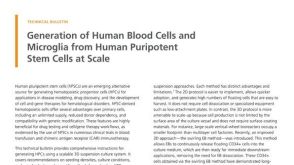 技术公告Generation of Human Blood Cells and Microglia from Human Pluripotent Stem Cells at Scale
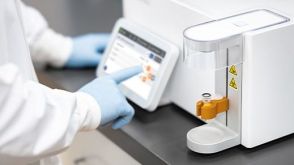 实验方案Optimizing Delivery Efficiency with Fluorescent Dextran Using the CellPore™ Transfection System



 沪公网安备31010102008431号