Sun N et al. (JAN 2009)
Nature protocols 4 8 1192--201
Long term non-invasive imaging of embryonic stem cells using reporter genes.
Development of non-invasive and accurate methods to track cell fate after delivery will greatly expedite transition of embryonic stem (ES) cell therapy to the clinic. In this protocol,we describe the in vivo monitoring of stem cell survival,proliferation and migration using reporter genes. We established stable ES cell lines constitutively expressing double fusion (DF; enhanced green fluorescent protein and firefly luciferase) or triple fusion (TF; monomeric red fluorescent protein,firefly luciferase and herpes simplex virus thymidine kinase (HSVtk)) reporter genes using lentiviral transduction. We used fluorescence-activated cell sorting to purify these populations in vitro,bioluminescence imaging and positron emission tomography (PET) imaging to track them in vivo and fluorescence immunostaining to confirm the results ex vivo. Unlike other methods of cell tracking,such as iron particle and radionuclide labeling,reporter genes are inherited genetically and can be used to monitor cell proliferation and survival for the lifetime of transplanted cells and their progeny.
View Publication
产品号#:
05850
05857
05870
05875
85850
85857
85870
85875
产品名:
mTeSR™1
mTeSR™1
Lu M et al. (AUG 2009)
Experimental hematology 37 8 924--36
Enhanced generation of hematopoietic cells from human hepatocarcinoma cell-stimulated human embryonic and induced pluripotent stem cells
Objective: Human embryonic stem cells (hESCs) and human induced pluripotent stem cells (hiPSCs) constitute unique sources of pluripotent cells,although the molecular mechanisms involved in their differentiation into specific lineages are just beginning to be defined. Here we evaluated the ability of MEDII (medium conditioned by HepG2 cells,a human hepatocarcinoma cell line) to selectively enhance generation of mesodermal derivatives,including hematopoietic cells,from hESCs and hiPSCs. Materials and Methods: Test cells were exposed to MEDII prior to being placed in conditions that promote embryoid body (EB) formation. Hematopoietic activity was measured by clonogenic assays,flow cytometry,quantitative real-time polymerase chain reaction of specific transcript complementary DNAs and the ability of cells to repopulate sublethally irradiated nonobese diabetic/severe combined immunodeficient interleukin-2 receptor ??-chain-null mice for almost 1 year. Results: Exposure of both hESCs and hiPSCs to MEDII induced a rapid and preferential differentiation of hESCs into mesodermal elements. Subsequently produced EBs showed a further enhanced expression of transcripts characteristic of multiple mesodermal lineages,and a concurrent decrease in endodermal and ectodermal cell transcripts. Frequency of all types of clonogenic hematopoietic progenitors in subsequently derived EBs was also increased. In vivo assays of MEDII-treated hESC-derived EBs also showed they contained cells able to undertake low-level but longterm multilineage repopulation of primary and secondary nonobese diabetic/severe combined immunodeficient interleukin-2 receptor ??-chain-null mice. Conclusions: MEDII treatment of hESCs and hiPSCs alike selectively enhances their differentiation into mesodermal cells and allows subsequent generation of detectable levels of hematopoietic progenitors with in vitro and in vivo differentiating activity. ?? 2009 ISEH - Society for Hematology and Stem Cells.
View Publication
产品号#:
04230
05850
05857
05870
05875
36254
85850
85857
85870
85875
产品名:
MethoCult™ H4230
DMEM/F-12 with 15 mM HEPES
mTeSR™1
mTeSR™1
Hakala H et al. (JUL 2009)
Tissue engineering Part A 15 7 1775--85
Comparison of biomaterials and extracellular matrices as a culture platform for multiple, independently derived human embryonic stem cell lines
Long-term in vitro culture of undifferentiated human embryonic stem cells (hESCs) traditionally requires a fibroblast feeder cell layer. Using feeder cells in hESC cultures is highly laborious and limits large-scale hESC production for potential application in regenerative medicine. Replacing feeder cells with defined human extracellular matrix (ECM) components or synthetic biomaterials would be ideal for large-scale production of clinical-grade hESCs. We tested and compared different feeder cell-free hESC culture methods based on different human ECM proteins,human and animal sera matrices,and a Matrigel matrix. Also selected biomaterials were tested for feeder cell-free propagation of undifferentiated hESCs. The matrices were tested together with conventional and modified hESC culture media,human foreskin fibroblast-conditioned culture medium,chemically defined medium,TeSR1,and modified TeSR1 media. The results showed the undefined,xenogeneic Matrigel to be a superior matrix for hESC culture compared with the purified human ECM proteins,serum matrices,and the biomaterials tested. A long-term,feeder cell-free culture system was successful on Matrigel in combination with mTeSR1 culture medium,but a xeno-free,fully defined,and reproducible feeder cell-free hESC culture method still remains to be developed.
View Publication
产品号#:
05850
05857
05870
05875
85850
85857
85870
85875
产品名:
mTeSR™1
mTeSR™1
Lagarkova MA et al. (NOV 2008)
Cell Cycle 7 22 3610--3612
CD 30 is a marker of undifferentiated human embryonic stem cells rather than a biomarker of transformed hESCs
Recently it has been demonstrated that CD30 expression was rather specific for transformed than for normal human ES cells and therefore CD30 maybe suggested as a potential marker for human ES cells bearing chromosomal abnormalities. Using immunohistochemistry and RT-PCR analysis we examined �?¡D30 expression in 10 hESCs lines with normal and abberant karyotypes. All hESC lines expressed CD30 antigen and RNA in undifferentiated state whether cell line beared chromosomal abnormalities or not. In contrast to previous notions our data demonstrate that CD30 could be considered as marker of undifferentiated hESCs without respect to karyotype changes.
View Publication
Goodman ML et al. (JUL 2008)
Stem cells and development 18 1 195--200
Novel method of murine embryonic stem cell-derived osteoclast development.
Murine embryonic stem (mES) cells are self-renewing pluripotent cells that bear the capacity to differentiate into ectoderm-,endoderm-,and mesoderm-derived tissues. In suspension culture,embryonic stem (ES) cells grow into spherical embryoid bodies (EBs) and are useful for the study of specific gene products in the development and function of various tissue types. Osteoclasts are hematopoietic stem cell-derived cells that participate in bone turnover by secreting resorptive molecules such as hydrochloric acid and acidic proteases,which degrade the bone extracellular matrix. Aberrant osteoclast function leads to dysplastic,erosive,and sclerosing bone diseases. Previous studies have reported the derivation of osteoclasts from mES cells; however,most of these protocols require coculture with stromal cell lines. We describe two simplified,novel methods of stromal cell-independent ES cell-derived osteoclast development.
View Publication
Sun N and Zhao H (MAY 2014)
Biotechnology and Bioengineering 111 5 1048--53
Seamless correction of the sickle cell disease mutation of the HBB gene in human induced pluripotent stem cells using TALENs.
Sickle cell disease (SCD) is the most common human genetic disease which is caused by a single mutation of human β-globin (HBB) gene. The lack of long-term treatment makes the development of reliable cell and gene therapies highly desirable. Disease-specific patient-derived human induced pluripotent stem cells (hiPSCs) have great potential for developing novel cell and gene therapies. With the disease-causing mutations corrected in situ,patient-derived hiPSCs can restore normal cell functions and serve as a renewable autologous cell source for the treatment of genetic disorders. Here we successfully utilized transcription activator-like effector nucleases (TALENs),a recently emerged novel genome editing tool,to correct the SCD mutation in patient-derived hiPSCs. The TALENs we have engineered are highly specific and generate minimal off-target effects. In combination with piggyBac transposon,TALEN-mediated gene targeting leaves no residual ectopic sequences at the site of correction and the corrected hiPSCs retain full pluripotency and a normal karyotype. Our study demonstrates an important first step of using TALENs for the treatment of genetic diseases such as SCD,which represents a significant advance toward hiPSC-based cell and gene therapies.
View Publication
NANOG Is a Direct Target of TGF$\$/Activin-Mediated SMAD Signaling in Human ESCs
Self-renewal of human embryonic stem cells (ESCs) is promoted by FGF and TGFbeta/Activin signaling,and differentiation is promoted by BMP signaling,but how these signals regulate genes critical to the maintenance of pluripotency has been unclear. Using a defined medium,we show here that both TGFbeta and FGF signals synergize to inhibit BMP signaling; sustain expression of pluripotency-associated genes such as NANOG,OCT4,and SOX2; and promote long-term undifferentiated proliferation of human ESCs. We also show that both TGFbeta- and BMP-responsive SMADs can bind with the NANOG proximal promoter. NANOG promoter activity is enhanced by TGFbeta/Activin and FGF signaling and is decreased by BMP signaling. Mutation of putative SMAD binding elements reduces NANOG promoter activity to basal levels and makes NANOG unresponsive to BMP and TGFbeta signaling. These results suggest that direct binding of TGFbeta/Activin-responsive SMADs to the NANOG promoter plays an essential role in sustaining human ESC self-renewal.
View Publication


 EasySep™小鼠TIL(CD45)正选试剂盒




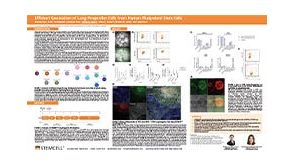 科学海报Efficient Generation of Lung Progenitor Cells From Human Pluripotent Stem Cells


 沪公网安备31010102008431号