Krawetz R et al. (AUG 2010)
Tissue engineering. Part C,Methods 16 4 573--582
Large-scale expansion of pluripotent human embryonic stem cells in stirred-suspension bioreactors.
Since the derivation of human embryonic stem (hES) cells,their translation to clinical therapies has been met with several challenges,including the need for large-scale expansion and controlled differentiation processes. Suspension bioreactors are an effective alternative to static culture flasks as they enable the generation of clinically relevant cell numbers with greater efficacy in a controlled culture system. We,along with other groups,have developed bioreactor protocols for the expansion of pluripotent murine ES cells. Here we present a novel bioreactor protocol that yields a 25-fold expansion of hES cells over 6 days. Using immunofluorescence,flow cytometry,and teratoma formation assays,we demonstrated that these bioreactor cultures retained high levels of pluripotency and a normal karyotype. Importantly,the use of bioreactors enables the expansion of hES cells in the absence of feeder layers or matrices,which will facilitate the adaptation of good manufacturing process (GMP) standards to the development of hES cell therapies.
View Publication
nAChRs mediate human embryonic stem cell-derived endothelial cells: proliferation, apoptosis, and angiogenesis.
BACKGROUND: Many patients with ischemic heart disease have cardiovascular risk factors such as cigarette smoking. We tested the effect of nicotine (a key component of cigarette smoking) on the therapeutic effects of human embryonic stem cell-derived endothelial cells (hESC-ECs).backslashnbackslashnMETHODS AND RESULTS: To induce endothelial cell differentiation,undifferentiated hESCs (H9 line) underwent 4-day floating EB formation and 8-day outgrowth differentiation in EGM-2 media. After 12 days,CD31(+) cells (13.7+/-2.5%) were sorted by FACScan and maintained in EGM-2 media for further differentiation. After isolation,these hESC-ECs expressed endothelial specific markers such as vWF (96.3+/-1.4%),CD31 (97.2+/-2.5%),and VE-cadherin (93.7+/-2.8%),form vascular-like channels,and incorporated DiI-labeled acetylated low-density lipoprotein (DiI-Ac-LDL). Afterward,5x10(6) hESC-ECs treated for 24 hours with nicotine (10(-8) M) or PBS (as control) were injected into the hearts of mice undergoing LAD ligation followed by administration for two weeks of vehicle or nicotine (100 microg/ml) in the drinking water. Surprisingly,bioluminescence imaging (BLI) showed significant improvement in the survival of transplanted hESC-ECs in the nicotine treated group at 6 weeks. Postmortem analysis confirmed increased presence of small capillaries in the infarcted zones. Finally,in vitro mechanistic analysis suggests activation of the MAPK and Akt pathways following activation of nicotinic acetylcholine receptors (nAChRs).backslashnbackslashnCONCLUSIONS: This study shows for the first time that short-term systemic administrations of low dose nicotine can improve the survival of transplanted hESC-ECs,and enhance their angiogenic effects in vivo. Furthermore,activation of nAChRs has anti-apoptotic,angiogenic,and proliferative effects through MAPK and Akt signaling pathways.
View Publication
产品号#:
05850
05857
05870
05875
85850
85857
85870
85875
产品名:
mTeSR™1
mTeSR™1
Xu X et al. ( 2010)
Biotechnology progress 26 3 781--8
Enhancement of cell recovery for dissociated human embryonic stem cells after cryopreservation.
Due to widespread applications of human embryonic stem (hES) cells,it is essential to establish effective protocols for cryopreservation and subsequent culture of hES cells to improve cell recovery. We have developed a new protocol for cryopreservation of dissociated hES cells and subsequent culture. We examined the effects of new formula of freezing solution containing 7.5% dimethylsulfoxide (DMSO) (v/v %) and 2.5% polyethylene glycol (PEG) (w/v %) on cell survival and recovery of hES cells after cryopreservation,and further investigated the role of the combination of Rho-associated kinase (ROCK) inhibitor and p53 inhibitor on cell recovery during the subsequent culture. Compared with the conventional slow-freezing method which uses 10% DMSO as a freezing solution and then cultured in the presence of ROCK inhibitor at the first day of culture,we found out that hES cell recovery was significantly enhanced by around 30 % (P textless 0.05) by the new freezing solution. Moreover,at the first day of post-thaw culture,the presence of 10 microM ROCK inhibitor (Y-27632) and 1 microM pifithrin-mu together further significantly improved cell recovery by around 20% (P textless 0.05) either for feeder-dependent or feeder-independent culture. hES cells remained their undifferentiated status after using this novel protocol for cryopreservation and subsequent culture. Furthermore,this protocol is a scalable cryopreservation method for handling large quantities of hES cells.
View Publication
产品号#:
05850
05857
05870
05875
72802
72804
85850
85857
85870
85875
产品名:
Pifithrin-mu
mTeSR™1
mTeSR™1
Lin GG et al. (JAN 2010)
Methods in molecular biology (Clifton,N.J.) 636 1--24
Human embryonic stem cell derivation, maintenance, and differentiation to trophoblast.
Since the first report of derivation of human embryonic stem cell (hESC) lines in 1998,many progresses have been achieved to reliably and efficiently derive,maintain,and differentiate this therapeutically promising cell type. This chapter introduces some basic and widely recognized methods that we use in our hESC core laboratory. Specifically,it includes methods for (1) deriving hESC lines without using enzyme and antibody to isolate the inner cell mass; (2) sustaining hESC self-renewal under feeder-dependent,feeder-conditioned,and defined conditions as well as pluripotency validation and quality control assays; and (3) inducing hESC differentiation to trophoblast with BMP4.
View Publication
产品号#:
05850
05857
05870
05875
85850
85857
85870
85875
产品名:
mTeSR™1
mTeSR™1
Azarin SM and Palecek SP (FEB 2010)
Biochemical engineering journal 48 3 378
Development of Scalable Culture Systems for Human Embryonic Stem Cells.
The use of human pluripotent stem cells,including embryonic and induced pluripotent stem cells,in therapeutic applications will require the development of robust,scalable culture technologies for undifferentiated cells. Advances made in large-scale cultures of other mammalian cells will facilitate expansion of undifferentiated human embryonic stem cells (hESCs),but challenges specific to hESCs will also have to be addressed,including development of defined,humanized culture media and substrates,monitoring spontaneous differentiation and heterogeneity in the cultures,and maintaining karyotypic integrity in the cells. This review will describe our current understanding of environmental factors that regulate hESC self-renewal and efforts to provide these cues in various scalable bioreactor culture systems.
View Publication
产品号#:
05850
05857
05870
05875
85850
85857
85870
85875
产品名:
mTeSR™1
mTeSR™1
Xu X et al. ( 2010)
Biotechnology Progress 26 3 827--837
The roles of apoptotic pathways in the low recovery rate after cryopreservation of dissociated human embryonic stem cells
Human embryonic stem (hES) cells have enormous potential for clinical applications. However,one major challenge is to achieve high cell recovery rate after cryopreservation. Understanding how the conventional cryopreservation protocol fails to protect the cells is a prerequisite for developing efficient and successful cryopreservation methods for hES cell lines and banks. We investigated how the stimuli from cryopreservation result in apoptosis,which causes the low cell recovery rate after cryopreservation. The level of reactive oxygen species (ROS) is significantly increased,F-actin content and distribution is altered,and caspase-8 and caspase-9 are activated after cryopreservation. p53 is also activated and translocated into nucleus. During cryopreservation apoptosis is induced by activation of both caspase-8 through the extrinsic pathway and caspase-9 through the intrinsic pathway. However,exactly how the extrinsic pathway is activated is still unclear and deserves further investigation.
View Publication
产品号#:
05850
05857
05870
05875
85850
85857
85870
85875
产品名:
mTeSR™1
mTeSR™1
Moore JC et al. (MAR 2010)
Stem Cell Research 4 2 92--106
A high-resolution molecular-based panel of assays for identification and characterization of human embryonic stem cell lines
Meticulous characterization of human embryonic stem cells (hESC) is critical to their eventual use in cell-based therapies,particularly in view of the diverse methods for derivation and maintenance of these cell lines. However,characterization methods are generally not standardized and many currently used assays are subjective,making dependable and direct comparison of cell lines difficult. In order to address this problem,we selected 10 molecular-based high-resolution assays as components of a panel for characterization of hESC. The selection of the assays was primarily based on their quantitative or objective (rather than subjective) nature. We demonstrate the efficacy of this panel by characterizing 4 hESC lines,derived in two different laboratories using different derivation techniques,as pathogen free,genetically stable,and able to differentiate into derivatives of all three germ layers. Our panel expands and refines a characterization panel previously proposed by the International Stem Cell Initiative and is another step toward standardized hESC characterization and quality control,a crucial element of successful hESC research and clinical translation.
View Publication
产品号#:
05850
05857
05870
05875
85850
85857
85870
85875
产品名:
mTeSR™1
mTeSR™1
Li Z et al. (JAN 2009)
PLoS ONE 4 12 e8443
Functional and transcriptional characterization of human embryonic stem cell-derived endothelial cells for treatment of myocardial infarction
BACKGROUND: Differentiation of human embryonic stem cells into endothelial cells (hESC-ECs) has the potential to provide an unlimited source of cells for novel transplantation therapies of ischemic diseases by supporting angiogenesis and vasculogenesis. However,the endothelial differentiation efficiency of the conventional embryoid body (EB) method is low while the 2-dimensional method of co-culturing with mouse embryonic fibroblasts (MEFs) require animal product,both of which can limit the future clinical application of hESC-ECs. Moreover,to fully understand the beneficial effects of stem cell therapy,investigators must be able to track the functional biology and physiology of transplanted cells in living subjects over time. METHODOLOGY: In this study,we developed an extracellular matrix (ECM) culture system for increasing endothelial differentiation and free from contaminating animal cells. We investigated the transcriptional changes that occur during endothelial differentiation of hESCs using whole genome microarray,and compared to human umbilical vein endothelial cells (HUVECs). We also showed functional vascular formation by hESC-ECs in a mouse dorsal window model. Moreover,our study is the first so far to transplant hESC-ECs in a myocardial infarction model and monitor cell fate using molecular imaging methods. CONCLUSION: Taken together,we report a more efficient method for derivation of hESC-ECs that express appropriate patterns of endothelial genes,form functional vessels in vivo,and improve cardiac function. These studies suggest that hESC-ECs may provide a novel therapy for ischemic heart disease in the future.
View Publication


 EasySep™小鼠TIL(CD45)正选试剂盒




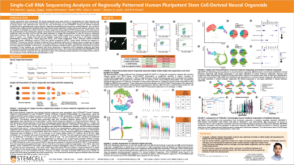 科学海报Single-Cell RNA Sequencing Analysis of Regionally Patterned Human Pluripotent Stem Cell-Derived Neural Organoids
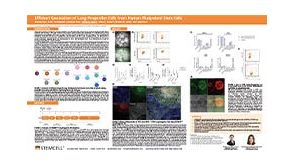 科学海报Efficient Generation of Lung Progenitor Cells From Human Pluripotent Stem Cells


 沪公网安备31010102008431号