Rapid single-step induction of functional neurons from human pluripotent stem cells
Available methods for differentiating human embryonic stem cells (ESCs) and induced pluripotent cells (iPSCs) into neurons are often cumbersome,slow,and variable. Alternatively,human fibroblasts can be directly converted into induced neuronal (iN) cells. However,with present techniques conversion is inefficient,synapse formation is limited,and only small amounts of neurons can be generated. Here,we show that human ESCs and iPSCs can be converted into functional iN cells with nearly 100% yield and purity in less than 2weeks by forced expression of a single transcription factor. The resulting ES-iN or iPS-iN cells exhibit quantitatively reproducible properties independent of the cell line of origin,form mature pre- and postsynaptic specializations,and integrate into existing synaptic networks when transplanted into mouse brain. As illustrated by selected examples,our approach enables large-scale studies of human neurons for questions such as analyses of human diseases,examination of human-specific genes,and drug screening
View Publication
产品号#:
05850
05857
05870
05875
85850
85857
85870
85875
产品名:
mTeSR™1
mTeSR™1
Kreitzer FR et al. (JUN 2013)
American journal of stem cells 2 2 119--31
A robust method to derive functional neural crest cells from human pluripotent stem cells.
Neural crest (NC) cells contribute to the development of many complex tissues of all three germ layers during embryogenesis,and its abnormal development accounts for several congenital birth defects. Generating NC cells-including specific subpopulations such as cranial,cardiac,and trunk NC cells-from human pluripotent stem cells will provide a valuable model system to study human development and disease. Here,we describe a rapid and robust NC differentiation method called LSB-short" that is based on dual SMAD pathway inhibition. This protocol yields high percentages of NC cell populations from multiple human induced pluripotent stem and human embryonic stem cell lines in 8 days. The resulting cells can be propagated easily�
View Publication
产品号#:
05850
05857
05870
05875
72142
72144
85850
85857
85870
85875
产品名:
mTeSR™1
mTeSR™1
Awe JP et al. (JUL 2013)
Stem cell research & therapy 4 4 87
Generation and characterization of transgene-free human induced pluripotent stem cells and conversion to putative clinical-grade status
INTRODUCTION: The reprogramming of a patient's somatic cells back into induced pluripotent stem cells (iPSCs) holds significant promise for future autologous cellular therapeutics. The continued presence of potentially oncogenic transgenic elements following reprogramming,however,represents a safety concern that should be addressed prior to clinical applications. The polycistronic stem cell cassette (STEMCCA),an excisable lentiviral reprogramming vector,provides,in our hands,the most consistent reprogramming approach that addresses this safety concern. Nevertheless,most viral integrations occur in genes,and exactly how the integration,epigenetic reprogramming,and excision of the STEMCCA reprogramming vector influences those genes and whether these cells still have clinical potential are not yet known. METHODS: In this study,we used both microarray and sensitive real-time PCR to investigate gene expression changes following both intron-based reprogramming and excision of the STEMCCA cassette during the generation of human iPSCs from adult human dermal fibroblasts. Integration site analysis was conducted using nonrestrictive linear amplification PCR. Transgene-free iPSCs were fully characterized via immunocytochemistry,karyotyping and teratoma formation,and current protocols were implemented for guided differentiation. We also utilized current good manufacturing practice guidelines and manufacturing facilities for conversion of our iPSCs into putative clinical grade conditions. RESULTS: We found that a STEMCCA-derived iPSC line that contains a single integration,found to be located in an intronic location in an actively transcribed gene,PRPF39,displays significantly increased expression when compared with post-excised stem cells. STEMCCA excision via Cre recombinase returned basal expression levels of PRPF39. These cells were also shown to have proper splicing patterns and PRPF39 gene sequences. We also fully characterized the post-excision iPSCs,differentiated them into multiple clinically relevant cell types (including oligodendrocytes,hepatocytes,and cardiomyocytes),and converted them to putative clinical-grade conditions using the same approach previously approved by the US Food and Drug Administration for the conversion of human embryonic stem cells from research-grade to clinical-grade status. CONCLUSION: For the first time,these studies provide a proof-of-principle for the generation of fully characterized transgene-free human iPSCs and,in light of the limited availability of current good manufacturing practice cellular manufacturing facilities,highlight an attractive potential mechanism for converting research-grade cell lines into putatively clinical-grade biologics for personalized cellular therapeutics.
View Publication
产品号#:
05860
05880
05850
05857
05870
05875
85850
85857
85870
85875
产品名:
mTeSR™1
mTeSR™1
Wang Y et al. (MAY 2017)
Stem cell reports
Reprogramming of Dermal Fibroblasts into Osteo-Chondrogenic Cells with Elevated Osteogenic Potency by Defined Transcription Factors.
Recent studies using defined transcription factors to convert skin fibroblasts into chondrocytes have raised the question of whether osteo-chondroprogenitors expressing SOX9 and RUNX2 could also be generated during the course of the reprogramming process. Here,we demonstrated that doxycycline-inducible expression of reprogramming factors (KLF4 [K] and c-MYC [M]) for 6 days were sufficient to convert murine fibroblasts into SOX9(+)/RUNX2(+) cellular aggregates and together with SOX9 (S) promoted the conversion efficiency when cultured in a defined stem cell medium,mTeSR. KMS-reprogrammed cells possess gene expression profiles akin to those of native osteo-chondroprogenitors with elevated osteogenic properties and can differentiate into osteoblasts and chondrocytes in vitro,but form bone tissue upon transplantation under the skin and in the fracture site of mouse tibia. Altogether,we provide a reprogramming strategy to enable efficient derivation of osteo-chondrogenic cells that may hold promise for cell replacement therapy not limited to cartilage but also for bone tissues.
View Publication
Human pluripotent stem cells recurrently acquire and expand dominant negative P53 mutations
The authors surveyed whole-exome and RNA-sequencing data from 252 unique pluripotent stem cell lines,some of which are in the pipeline for clinical use,and found that approximately 5{\%} of cell lines had acquired mutations in the TP53 gene that allow mutant cells to rapidly outcompete non-mutant cells,but do not prevent differentiation.
View Publication
产品号#:
05850
05857
05870
05875
85850
85857
85870
85875
产品名:
mTeSR™1
mTeSR™1
Butts JC et al. (APR 2017)
Proceedings of the National Academy of Sciences of the United States of America
Differentiation of V2a interneurons from human pluripotent stem cells.
The spinal cord consists of multiple neuronal cell types that are critical to motor control and arise from distinct progenitor domains in the developing neural tube. Excitatory V2a interneurons in particular are an integral component of central pattern generators that control respiration and locomotion; however,the lack of a robust source of human V2a interneurons limits the ability to molecularly profile these cells and examine their therapeutic potential to treat spinal cord injury (SCI). Here,we report the directed differentiation of CHX10(+) V2a interneurons from human pluripotent stem cells (hPSCs). Signaling pathways (retinoic acid,sonic hedgehog,and Notch) that pattern the neural tube were sequentially perturbed to identify an optimized combination of small molecules that yielded ∼25% CHX10(+) cells in four hPSC lines. Differentiated cultures expressed much higher levels of V2a phenotypic markers (CHX10 and SOX14) than other neural lineage markers. Over time,CHX10(+) cells expressed neuronal markers [neurofilament,NeuN,and vesicular glutamate transporter 2 (VGlut2)],and cultures exhibited increased action potential frequency. Single-cell RNAseq analysis confirmed CHX10(+) cells within the differentiated population,which consisted primarily of neurons with some glial and neural progenitor cells. At 2 wk after transplantation into the spinal cord of mice,hPSC-derived V2a cultures survived at the site of injection,coexpressed NeuN and VGlut2,extended neurites textgreater5 mm,and formed putative synapses with host neurons. These results provide a description of V2a interneurons differentiated from hPSCs that may be used to model central nervous system development and serve as a potential cell therapy for SCI.
View Publication
产品号#:
05850
05857
05870
05875
85850
85857
85870
85875
产品名:
mTeSR™1
mTeSR™1
Ferreira RB et al. (APR 2017)
Oncotarget 8 17 28971--28989
Disulfide bond disrupting agents activate the unfolded protein response in EGFR- and HER2-positive breast tumor cells.
Many breast cancer deaths result from tumors acquiring resistance to available therapies. Thus,new therapeutic agents are needed for targeting drug-resistant breast cancers. Drug-refractory breast cancers include HER2+ tumors that have acquired resistance to HER2-targeted antibodies and kinase inhibitors,and Triple-Negative" Breast Cancers (TNBCs) that lack the therapeutic targets Estrogen Receptor�
View Publication
产品号#:
05850
05857
05870
05875
85850
85857
85870
85875
产品名:
mTeSR™1
mTeSR™1
Ellis BW et al. (MAR 2017)
Biomicrofluidics 11 2 024105
Human iPSC-derived myocardium-on-chip with capillary-like flow for personalized medicine.
The heart wall tissue,or the myocardium,is one of the main targets in cardiovascular disease prevention and treatment. Animal models have not been sufficient in mimicking the human myocardium as evident by the very low clinical translation rates of cardiovascular drugs. Additionally,current in vitro models of the human myocardium possess several shortcomings such as lack of physiologically relevant co-culture of myocardial cells,lack of a 3D biomimetic environment,and the use of non-human cells. In this study,we address these shortcomings through the design and manufacture of a myocardium-on-chip (MOC) using 3D cell-laden hydrogel constructs and human induced pluripotent stem cell (hiPSC) derived myocardial cells. The MOC utilizes 3D spatially controlled co-culture of hiPSC derived cardiomyocytes (iCMs) and hiPSC derived endothelial cells (iECs) integrated among iCMs as well as in capillary-like side channels,to better mimic the microvasculature seen in native myocardium. We first fully characterized iCMs using immunostaining,genetic,and electrochemical analysis and iECs through immunostaining and alignment analysis to ensure their functionality,and then seeded these cells sequentially into the MOC device. We showed that iECs could be cultured within the microfluidic device without losing their phenotypic lineage commitment,and align with the flow upon physiological level shear stresses. We were able to incorporate iCMs within the device in a spatially controlled manner with the help of photocrosslinkable polymers. The iCMs were shown to be viable and functional within the device up to 7 days,and were integrated with the iECs. The iCMs and iECs in this study were derived from the same hiPSC cell line,essentially mimicking the myocardium of an individual human patient. Such devices are essential for personalized medicine studies where the individual drug response of patients with different genetic backgrounds can be tested in a physiologically relevant manner.
View Publication
产品号#:
05850
05857
05870
05875
85850
85857
85870
85875
产品名:
mTeSR™1
mTeSR™1
Pepper J-P et al. (MAY 2017)
JAMA facial plastic surgery 19 3 197--205
Human Induced Pluripotent Stem Cell-Derived Motor Neuron Transplant for Neuromuscular Atrophy in a Mouse Model of Sciatic Nerve Injury.
Importance Human motor neurons may be reliably derived from induced pluripotent stem cells (iPSCs). In vivo transplant studies of human iPSCs and their cellular derivatives are essential to gauging their clinical utility. Objective To determine whether human iPSC-derived motor neurons can engraft in an immunodeficient mouse model of sciatic nerve injury. Design,Setting,and Subjects This nonblinded interventional study with negative controls was performed at a biomedical research institute using an immunodeficient,transgenic mouse model. Induced pluripotent stem cell-derived motor neurons were cultured and differentiated. Cells were transplanted into 32 immunodeficient mice with sciatic nerve injury aged 6 to 15 weeks. Tissue analysis was performed at predetermined points after the mice were killed humanely. Animal experiments were performed from February 24,2015,to May 2,2016,and data were analyzed from April 7,2015,to May 27,2016. Interventions Human iPSCs were used to derive motor neurons in vitro before transplant. Main Outcomes and Measures Evidence of engraftment based on immunohistochemical analysis (primary outcome measure); evidence of neurite outgrowth and neuromuscular junction formation (secondary outcome measure); therapeutic effect based on wet muscle mass preservation and/or electrophysiological evidence of nerve and muscle function (exploratory end point). Results In 13 of the 32 mice undergoing the experiment,human iPSC-derived motor neurons successfully engrafted and extended neurites to target denervated muscle. Human iPSC-derived motor neurons reduced denervation-induced muscular atrophy (mean [SD] muscle mass preservation,54.2% [4.0%]) compared with negative controls (mean [SD] muscle mass preservation,33.4% [2.3%]) (P = .04). No electrophysiological evidence of muscle recovery was found. Conclusions and Relevance Human iPSC-derived motor neurons may have future use in the treatment of peripheral motor nerve injury,including facial paralysis. Level of Evidence NA.
View Publication
产品号#:
05850
05857
05870
05875
85850
85857
85870
85875
产品名:
mTeSR™1
mTeSR™1
Gentemann L et al. (JAN 2017)
Biomedical optics express 8 1 177--192
Modulation of cardiomyocyte activity using pulsed laser irradiated gold nanoparticles.
Can photothermal gold nanoparticle mediated laser manipulation be applied to induce cardiac contraction? Based on our previous work,we present a novel concept of cell stimulation. A 532 nm picosecond laser was employed to heat gold nanoparticles on cardiomyocytes. This leads to calcium oscillations in the HL-1 cardiomyocyte cell line. As calcium is connected to the contractility,we aimed to alter the contraction rate of native and stem cell derived cardiomyocytes. A contraction rate increase was particularly observed in calcium containing buffer with neonatal rat cardiomyocytes. Consequently,the study provides conceptual ideas for a light based,nanoparticle mediated stimulation system.
View Publication
产品号#:
05850
05857
05870
05875
85850
85857
85870
85875
产品名:
mTeSR™1
mTeSR™1
Imai T et al. ( 2017)
Anticancer research 37 1 47--55
KIF11 Is Required for Spheroid Formation by Oesophageal and Colorectal Cancer Cells.
BACKGROUND Oesophageal squamous cell carcinoma (ESCC) and colorectal cancer (CRC) are common types of human cancer. Spheroid colony formation is used to characterize cancer stem cell (CSCs). In the present study,we analyzed the significance of kinesin family 11 (KIF11 in human ESCC and CRC. MATERIALS AND METHODS Expression of KIF11 in 105 ESCC and 100 CRC cases was determined using immunohistochemistry. RNA interference was used to inhibit KIF11 expression in ESCC and CRC cell lines. RESULTS In total,61 out of 105 (58%) ESCC and 62 out of 100 (62%) CRC cases were positive for KIF11. Expression of KIF11 was not associated with any clinicopathological characteristics. Both the number and size of spheres produced by from TE-5 ESCC cells and DLD-1 CRC cells were significantly reduced upon KIF11 siRNA transfection compared to negative control siRNA transfection. CONCLUSION These results indicate that KIF11 plays an important role in CSCs of ESCC and CRC.
View Publication


 EasySep™小鼠TIL(CD45)正选试剂盒




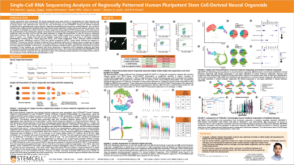 科学海报Single-Cell RNA Sequencing Analysis of Regionally Patterned Human Pluripotent Stem Cell-Derived Neural Organoids
 沪公网安备31010102008431号